

Issue 394: Peru's final election results came in, and I told you it will be super tight. It was. Keiko Fujimori won with the help of the diaspora, and everybody's still coping. I asked Valeria Vicente, a Peruvian journalist, about what this win means for the country.
Also this week: Dementia awareness for Nigerians, treatment trials for Ebola in the DR Congo, more babies in Vietnam, Japan's first openly gay actor, and Algeria's very, very low voter turnout, and so much more.
This newsletter has been edited by Jonathan Ramsay.
The final results of Peru's elections are in. What does Keiko Fujimori's win actually mean? An interview with a Peruvian journalist
What happened:
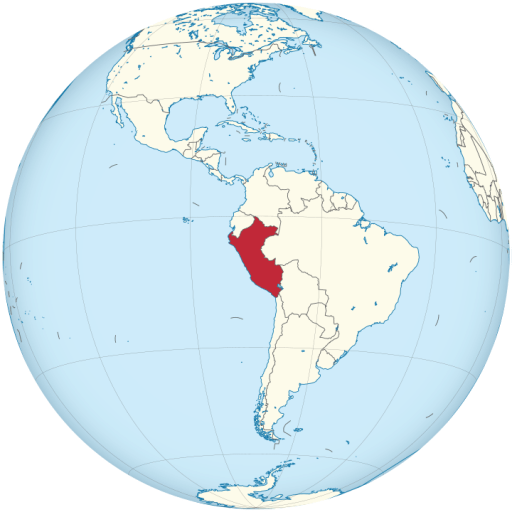
In June 2026, Peru held a presidential election. The final result was announced last week, and (right-wing) Keiko Fujimori won very narrowly (with a 0.28% difference). Roberto Sánchez, the left-wing candidate, alleges fraud.
Why this matters: Right-wing governments are now in power in 12 countries of the Americas. Most recently, Colombia joined the club, too.
Did you know that Keiko Fujimori is the first woman elected by popular vote to serve as President of Peru? Yes, Dina Boluarte was the first woman to hold the office, but she wasn't elected. Keiko was.
Tell me more:
She is a conservative politician and the daughter of Alberto Fujimori, who governed Peru in the 1990s, shut down Congress in a 1992 self-coup, and was later convicted of corruption and of human rights crimes tied to killings by state forces. His way of doing politics, known as "Fujimorismo," has shaped the country for three decades, and his rule is widely described as authoritarian. For a long time, the anti-Fujimorist movement managed to prevent his daughter from coming to power. "This time, it wasn't enough," writes Renzo Gómez Vega in El País. Interestingly, she only won with the vote of diaspora Peruvians (this is why Roberto Sánchez is rejecting the results right now). Keiko Fujimori's main campaign topic? Crime. Crime is actually one of the biggest problems in Peru right now. Many people feel unsafe in the country (because of gold).
What does her win actually mean?
To understand why she won and what this means for Peru, I spoke with Peruvian journalist Valeria Vicente (her Instagram) with five years of experience specializing in political dynamics, socio-environmental conflicts, extractive industries, and human rights. Her work has been published in both national and international media, including La República, El País América, Hildebrandt en sus trece, and El Foco.
Question: If someone has never followed Peruvian politics, what happened in June and why should they care? Does this election have implications beyond Peru?
Vincente: In June, Peru held its presidential election, once again in a climate of extreme polarization, but also widespread apathy and distrust toward the political class. According to a February survey by the polling company IPSOS, most Peruvians did not trust any of the presidential candidates. [...] [Keiko Fujimori's] victory should be understood within a much broader context: the rise of the far-right across Latin America.
Question: How would you explain "Fujimorismo" in simple words? Is it a political ideology, a family legacy, or something else?
Vincente: Fujimorismo is more than a family legacy. It has become a way of doing politics, based on populism and, increasingly, on a "tough-on-crime" approach. This political current follows the same kind of rhetoric used by Nayib Bukele in El Salvador, which has proven very successful there. During the presidential debate, Keiko Fujimori did not mention any proposals related to human rights. Instead, she focused on infrastructure projects, supporting the private sector, and imposing tougher punishments for crime.
Question: This was the fourth time Keiko Fujimori ran for president. What changed this time? Was it really a vote for her, or more a vote against her opponent?
Vincente: Keiko Fujimori's victory should also be understood as the result of the weakening and fragmentation of Peru's political system. In [late December 2023], Congress abolished the Open, Simultaneous and Mandatory Primary Elections (PASO), a reform that would have allowed all Peruvians to participate in choosing presidential candidates.
Over the past five years, the coalition of political parties that controls Congress has voted in a coordinated way to capture key state institutions, pass laws and reforms that guarantee impunity for themselves, remove senior public officials who stood in the way of their interests, and protect other officials implicated in cases ranging from corruption to human rights violations. I recommend this article by IDL-Reporteros to better understand what many call the "mafia pact" through which Congress has captured the state. Under these circumstances, combined with political polarization and the loss of credibility of left-wing alternatives, Keiko Fujimori came to be seen as the "lesser evil."
Question: If you ask an average Peruvian what worries them most today, what would they say?
Vincente: Definitely insecurity. It is a problem that affects people across all sectors of society. According to a 2024 IPSOS survey, 76% of Peruvians, nearly eight out of every ten people, feel unsafe when they leave their homes to go about their daily lives.
Question: How much power will Keiko Fujimori actually have as president? What changes can she realistically achieve during her first year in office?
Vincente: Keiko Fujimori will take office in a deeply polarized political environment, with protests already announced by left-wing groups. In this context, her party, Fuerza Popular, has strengthened its ties with the military through honors awarded to members of the armed forces and laws granting pardons to military personnel convicted of crimes against humanity.
In addition, the coalition of parties in Congress led by Fuerza Popular has placed allies in key institutions, including the Constitutional Court, the National Jury of Elections, and the Ombudsman's Office. This is essential for understanding the real power that both Keiko Fujimori and her party now hold.
*Question: Are Peruvians...
Please log in or subscribe for free to continue reading this issue.
We could use your help to make this issue better. Take a look at the requests below and consider contributing:
- Submit a piece of artwork for this issue
- Submit a news, academic or other type of link to offer additional context to this issue
- Suggest a related topic or source for future issues
- Fix a typo, grammatical mistake or inaccuracy
Below you'll find some of the sources used for this issue. Only sources that support "media embedding" are included.
-
OjoPúblico en vivo: Con el fujimorismo en Palacio ¿qué le espera al Perú en los próximos años? | Ojo PúblicoMás de 20 días después de la segunda vuelta, la ONPE culminó el conteo de votos. Keiko Fujimori superó a Roberto Sánchez por 49.641 votos con lo que se convertirá en la próxima presidenta del Perú.
-
A la cuarta fue la vencida: Keiko Fujimori será presidenta de Perú con las actas escrutadas al 100% | EL PAÍS AméricaLa autoridad electoral concluye el conteo de votos 22 días después de la segunda vuelta y confirma la victoria de la derechista por 49.641 votos sobre el izquierdista Roberto Sánchez, que denuncia fraude
-
Right-wing governments are now in power in 12 countries in their various forms, as hardline security policies, rollbacks of women’s and minority rights, and alliances in Trump’s orbit gain ground
-
Abelardo de la Espriella appears to have narrowly defeated his rival Iván Cepeda, who says the preliminary count is "not yet official or binding".
-
La abogada, que se convirtió en 2022 en la primera peruana en ocupar el cargo de mandataria, alcanzó niveles mínimos de aprobación hasta su destitución
-
Peru is grappling with a surge in extortion and violence, especially in areas like Trujillo. Gladys Saavedra, who works in a market there, says extortionists demand $300 monthly from vendors.
-
Una encuesta nacional de Ipsos revela que la mayoría de peruanos no confiaría sus llaves ni compartiría su mesa con ningún aspirante a Palacio de Gobierno.
-
Analysis L21 | 43 political parties were qualified to run in the election. In Peru, under every stone lies a political party.
-
La coalición de partidos políticos que controla el Congreso y que postula en las elecciones generales este domingo, ha votado
-
Este 23 de mayo, Jorge Nieto anunció que su partido viciará el voto en la segunda vuelta. Escribirán, por lo
-
Nota publicada en Perú 21 el 16 de septiembre del 2024.
-
Memory work is crucial as Keiko Fujimori rises to the presidency.
-
The United Nations human rights chief is sounding a “red alert” about possible atrocity crimes in and near a strategic city in central Sudan
-
Sudan is entering a fourth year of war between the military and paramilitary forces. The fighting has pushed many people to the brink of famine, fueled one of the world's largest displacement crises and left over 30 million people in need of humanitarian assistance.
-
Lighthouse Reports travelled to Eastern Libya to expose the UAE supported RSF network of military training camps that enabled them to continue their war in Sudan.
-
Journalists, lawyers, academics, students and members of various socialist groups are targeted in a "terror" investigation following a similar crackdown last week.
-
Este reportaje forma parte de la serie “Los niños del terremoto”, producida por La Vida de Nos, en alianza con Monitor de Víctimas y TalCual.
-
Parents can enjoy financial help and longer maternity leave. Read more at straitstimes.com.
-
Voters in Algeria are casting ballots in parliamentary elections overshadowed by cost-of-living concerns and bans on opposition candidates.
-
Les résultats des élections législatives n’ont pas encore été publiées, mais les estimations commencent à sortir et donnent le duo FLN-RND gagnant
-
President Maia Sandu plans to consult party leaders next week to name a new prime minister.
-
Jayapura, Jubi – Associated Mission Aviation (AMA) has denied allegations that its aircraft were used to transport Indonesian military or police personnel, or to carry ammunition during its operation in Papua. AMA Operations Manager Darma told Jubi that the airline’s flight are dedicated to serving remote communities across Papua, primarily through government-subsided air services. He […]
-
King Norodom Sihamoni, 73, had shared his prostate cancer diagnosis in April. Read more at straitstimes.com.
-
The encounter marks a new phase for Hayabusa2, which completed its primary mission in 2020 after returning samples from the asteroid Ryugu to Earth.
-
Outrage, identity politics, and money now shape transnational discourse
-
Prosecutors accuse the German-Rwandan national of ordering the killing of 25 Tutsis and inciting violence while serving as an aide to a mayor during the 1994 genocide.
-
Imagine watching a loved one gradually forget your name, lose cherished memories and become unable to carry out everyday tasks. For millions of families, this is the reality of dementia, a condition experts say is becoming an increasing public health concern across Africa. Stakeholders are now calling for greater investment in prevention, early diagnosis and […]
-
A contractor was hired by the scammer to redo the home’s driveway, but the company stopped working when the check provided to pay for the upgrades bounced
Each week, What Happened Last Week curates news and perspectives from Asia, Africa, and the Americas. The newsletter is written by Sham Jaff and focuses on stories that rarely receive sustained attention in Western media.
Read the free edition every week. VIP subscribers receive additional stories, recommendations on what to watch, read and listen, and more.