

Issue #390: This week, Gishty's Pia Monroy Rodriguez brings us a closer look at two presidential elections in South America that have moved on to head-to-head runoffs. When a country is about to choose its next president, a lot is on the line, from political stability to the direction of future laws and policies. In Peru, a very tight right-wing vs. left-wing race is wrapping up. But the election is about much more than just who wins. In Colombia's recent presidential election, it is very much about that. We're giving you the Who's Who so you're prepared, of course.
Also this week: An election delay in Zimbabwe may buy President Emmerson Mnangagwa some more time in office. Niger Delta communities' lawsuit against Shell sees a new development. A political bromance in Senegal comes to an end. Biological research sees some progress and a concern about border control? And: anti-blackness on Chinese social media, the story of a 9-year-old's migrant journey, what adulthood looks like for an orphan in India, World Cup hype, and 'smart' octopuses.
This newsletter has been edited by Jonathan Ramsay.
Peru's presidential election is incredibly close, but neither candidate scratches the itch
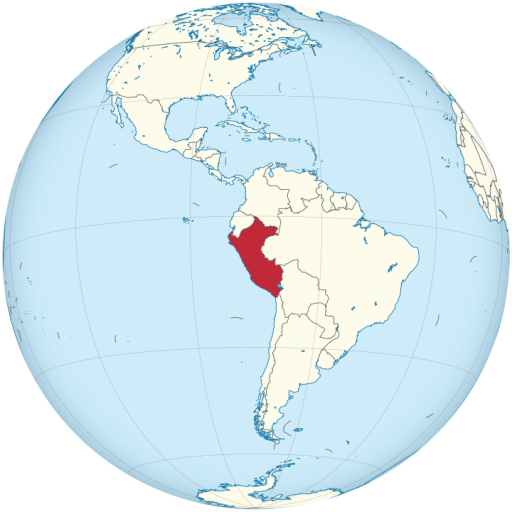
Refresher: Peru voted in April, but no presidential candidate came close to 50%. The had to go on to the second round. In the first round, Keiko Fujimori (a right-wing candidate and daughter of former authoritarian president Alberto Fujimori) came first with about 17%, Roberto Sánchez (a left-wing former minister) second with about 12%. That means over 70% of voters chose someone else. The second round happened yesterday on June 7.
Did you know? Peru has mandatory voting. People have to vote, or else they pay fines between €7 and €28 (approximately). You can even take time off work for this. Also, you're not allowed to sell/buy/drink alcohol between June 6 and June 8.
What happened:
On Sunday evening (19:13 Lima time), exit polls and flash counts gave a strong indication that Keiko Fujimori had won the second round. However, news organizations hadn't called it yet. The race was still very close, with La República reporting that Fujimori had received 54.55%, and Sánchez 45.45% of the vote, according to the official ONPE count. The final election result might take a few days, if not longer. The first round's results took almost a month. With the numbers being this close, it could also be that results are challenged by either candidate.
Why this matters: Peru is going down a very dangerous path right now. Since 2016, the country has had eight presidents. Who wins this election will be the difference between "it's very likely there'll be a tenth president very soon" or "this country is likely to become a lot more authoritarian."
Tell me more:
Popularity-wise, according to a recent poll, people in the capital really liked Fujimori, people in the rural parts of the country really liked Sánchez. Latinoamérica21: "Since 2001, Peruvians have repeatedly voted for what they perceive as the lesser evil"" So, who's the lesser evil this time?
Here are the two main candidates:
- Keiko Fujimori. She's got many fans and many haters. She's been one of the most powerful people in Peruvian politics for years and has tried to become president three times. She was only 19 when her father, President Alberto Fujimori, made her Peru's First Lady after a public falling-out with her mother (Susana Higuchi publicly condemned her husband and divorced). Her father ruled from 1990 to 2000. Some say he's the reason the country is so safe and the economy is so stable. Others see him as an authoritarian leader whose government was involved in corruption and serious human-rights abuses. During his presidency, around 300,000 women, many of them poor and Indigenous, were forcibly sterilized. After leaving office, he fled the country and later went to prison. He died in 2024. Many Peruvians still admire him, and they see her as a continuation of his legacy. Last week, La República found out that, apparently, Daddy Fujimori used secret government funds to pay for her studies in the U.S. Politically, Keiko Fujimori is (also) considered right-wing. Her top focus is security, and her solutions to fight crime are more surveillance and bigger prisons. She's switched up her tone though. Professor Julio Carrión (University of Delaware) tells CNN that her campaign this time is less aggressive. She's apparently even admitted to past political mistakes. If she wins, she could have enough votes (if she aligns with another right-wing party) in the Congress to block any attempts to impeach her. To some voters, this means "finally, stability"; to others: "She might be a little too protected by Congress. This is dangerous, given that she still hasn't fully condemned her father's authoritarian rule enough."
- Roberto Sánchez. His image is that of someone who comes from no money. Used to work as a shoeshine boy as a kid. He's considered left-wing. His topics are: fewer Peruvians who are poor, more support for the rural (Indigenous) communities. In the first round of the election, his campaign was more radical (for example, he was pushing to have the state take over natural resources or rewriting free trade deals). In the second round, that changed (now, he's focused on raising the minimum wage, investing more in education, guaranteeing basic healthcare for 95% of the population, and giving a boost to small businesses and local farmers). He still has one major goal, though: he wants to change the country's constitution, which was put in place back in 1993 by Alberto Fujimori after he shut down congress in a self-coup. When it comes to crime (a major topic for Peruvians), Sánchez wants to focus on the root causes of violence and get local communities involved in security, writes Elisa Villa Román for El País. But: His party won't have a majority in Congress, so even if he wins, he is going to have a really hard time actually passing any of these reforms. One of the most influential investigative journalists in the country, Gustavo Gorriti, in IDL-Reporteros came out in support of Sánchez, but only as a "lesser evil".
So, this is a classic left vs. right election then?
Not so fast, the country's in a bigger mess than that. To understand what's happening in Peru, you need to know: presidents there are surprisingly easy to remove from office. The outcome of this election will determine who is going to become Peru's ninth president in ten years. One resigned amid corruption allegations (something about expensive watches), one tried to dissolve Congress and was arrested, one was accused of rape, one was known for his support for child marriage, and others were impeached. Part of the reason is a very vague (and controversial) rule in the Constitution that allows a majority in Congress to remove a president for "permanent moral incapacity." Supporters argue it helps hold leaders accountable. Critics say it gives Congress too much power. The way lawmakers achieve that majority in Congress is through a loose alliance of a group of political parties that has formed over the past few years to remove presidents from office or pass laws that benefit their own interests. Historically, parliaments are supposed to exist to keep powerful presidents in check so they don't become dictators. But in Peru, the roles have completely flipped. As a result, critics have nicknamed this alliance the "mafia pact," while others describe Peru as a kind of "parliamentary dictatorship" as a result of this very effective alliance. Rodrigo Maruy writes in Verfassungsblog: "Nah, this is not a dictatorship. This is more structural. It is democratic erosion."
Who is part of this alliance in Congress?
At first glance, it looks like it's made up of mostly center-right to far-right parties. But political labels only get you so far in Peru. The country's politics are often driven less by ideology and more by political survival and shifting alliances (have the writers of Game of Thrones based the series on Peru? Very likely). Keiko Fujimori's party, Fuerza Popular, is one of the most influential players in this alliance. But it is far from the only one. Even Perú Libre, the party that brought Castillo to power and includes self-described Marxists, has at times voted alongside Fujimorist forces. Other parties have done the same. Many of these groups have been accused of protecting politicians facing investigations and changing laws in ways that benefit political and business interests rather than the public. Human Rights Watch is very, very worried about what Congress has done in or to Peru.
It gets worse. Starting with this election, the country is back...
Please log in or subscribe for free to continue reading this issue.
We could use your help to make this issue better. Take a look at the requests below and consider contributing:
- Submit a piece of artwork for this issue
- Submit a news, academic or other type of link to offer additional context to this issue
- Suggest a related topic or source for future issues
- Fix a typo, grammatical mistake or inaccuracy
Below you'll find some of the sources used for this issue. Only sources that support "media embedding" are included.
-
Encuesta Ipsos: Keiko Fujimori sube un 1% en intención de voto en Lima, pero se estanca en regiones para la segunda vuelta de Elecciones Presidenciales | Política | La RepúblicaKeiko Fujimori subió 1% en Lima según Ipsos, pero no logra crecer en regiones de cara a la segunda vuelta 2026. Revisa los resultados de la encuesta.
-
Analysis L21 | An election shaped by deep political fragmentation. Peru: an artificially polarized country.
-
This Sunday, at the age of 51, the eldest daughter of Peru’s late former president will make her fourth attempt at winning the presidency in a runoff election
-
Keiko Fujimori financió sus estudios en EE.UU con dinero robado por su padre | hnews | Política | La RepúblicaOperación encubierta. Las declaraciones de su madre Susana Higuchi ante la Fiscalía de la Nación desbarataron la versión de la candidata de que su abuelo Koshiro Higuchi Uemura financió su carrera en el exterior. Y Vladimiro Montesinos confirmó que se usaron fondos clandestinos del Servicio de Inteligencia Nacional (SIN) para dicha finalidad.
-
Con apenas el 29,9% de los votos válidos entre ambos finalistas, Fujimori y Sánchez llegan al 7 de junio sin mandato amplio y ante una legislatura fragmentada que puede blindar o destituir al próximo presidente
-
Roberto Sánchez, a left-wing congressman and former minister, campaigns wearing a hulking straw hat — one that is not his own. It once belonged to Pedro Castillo, the jailed former president of Perú, who won the 2021 election against Keiko Fujimori, the conservative daughter of former dictator Alberto Fujimori, whom Sánchez will also face in […]
-
Roberto Sánchez y su nuevo plan de gobierno: qué cambió en economía, salud, educación y seguridad respecto a la primera vuelta - InfobaeEl candidato presidencial de Juntos por el Perú llegó a la segunda vuelta con un plan distinto al que presentó en la primera: el nuevo programa, acordado con cuatro agrupaciones aliadas, modera el lenguaje ideológico, fija metas medibles en salud, educación y empleo
-
Este 23 de mayo, Jorge Nieto anunció que su partido viciará el voto en la segunda vuelta. Escribirán, por lo
-
Boluarte pide a la Justicia de Perú que se le denuncie o archive el caso 'Rolexgate'
-
The president of Peru was ousted by Congress and arrested on a charge of rebellion Wednesday after he sought to dissolve the legislative body and take unilateral control of the government, triggering a grave constitutional crisis.
-
José María Balcázar, who argued ban should be limited to under-14s, replaces José Jerí who was voted out after a scandal
-
-
Günther Maihold analiza en su columna las causas del deterioro democrático del Perú, que ha llevado al país andino a tener 8 presidentes en una década.
-
La primera vez que José Jerí ocupó un cargo de elección popular, quienes concurrieron a las urnas no votaron por él. De hecho, no salió elegido. Se trató de los comicios posteriores a la frustrada revocatoria a la entonces alcaldesa de Lima Susana Villarán, para reemplazar a los 22 integrantes que sí fueron vacados del concejo original. Fue una elección complementaria peculiar, de lista cerrada, donde importaba exclusivamente el símbolo partidario, pues no existe voto preferencial en el ámbito municipal. En aquella excepcional consulta, de noviembre del 2013, Somos Perú obtuvo el 26% de los votos válidos, y quedó segundo detrás del PPC. Con ese porcentaje, al partido del corazón le correspondían seis regidores. Un veinteañero Jerí, virgen en estas lides, ocupaba el puesto siete de la lista. “Casi”, se lamentó. Para su suerte, meses después, una regidora de sus filas renunció y él, como accesitario, se colgó el medallón característico de los concejales limeños. Paradojas del destino, pues terminaría ocupando un puesto liberado por la revocada Marisa Glave, por aquel entonces joven promesa de la izquierda caviar.
-
-
Keiko Fujimori, the daughter of 1990s leader Alberto, is vying with a congressman to become country’s ninth president in a decade
-
Extortion is rising and contract killings are up, but Peru’s lawmakers are making matters worse with new laws, says a new report.
-
After eight presidents in 10 years, many voters are looking for stability so the next president can focus on tackling crime and inequality.
-
“La periodista peruana Geraldine Santos tiene solo 30 años y ya está preparando su funeral acordó con su familia contactar
-
Peruvian journalist Gastón Medina a victim of violence he denounced - Committee to Protect JournalistsPeruvian journalist Gastón Medina Sotomayor did not hold back in his last TV news broadcast before he was shot dead this year. Addressing the viewers of Cadena Sur, his TV and radio station in the south-central city of Ica, Medina called local authorities “scoundrels” for buying defective garbage trucks. He criticized cost overruns for a...
-
Asesinato de Juan Fernando Núñez Guevara: RSF alerta sobre la escalada mortal contra la prensa en Perú | RSFReporteros Sin Fronteras (RSF) condena el asesinato del periodista peruano Juan Fernando Núñez Guevara, director del medio digital Kamila TV y representante local de la Asociación Nacional de Periodistas del Perú (ANP), ocurrido en la noche del 6 de diciembre de 2025, en la provincia de Pacasmayo, región de La Libertad, en el norte del país. Se trata del tercer periodista asesinado en Perú desde el inicio del año 2025, una cifra sin precedentes en la historia reciente del país.
-
São Paulo, December 22, 2025—The Committee to Protect Journalists urges Peruvian authorities to conduct a thorough and transparent investigation into the attacks against journalists Mitzar Castillejos Tenazoa, shot at gunpoint on December 12, and Anthony Rodríguez Rumiche, whose car was shot at least 20 times in front of his home on December 19. Tenazoa, host of Radio Latín Plus and director of...
-
Es hijo de un senador asesinado, defensor de los acuerdos de paz, adversario de Álvaro Uribe y abanderado del petrismo.
-
Estas son las promesas más importantes, atractivas y reiteradas en el programa del candidato presidencial del Pacto Histórico.
-
Based on the Gini coefficient (Gini index), South Africa has the highest income inequality in 2026 while Slovakia has the lowest income inequality.
-
The winner of the first round of the Colombian presidential election has used misogynistic and homophobic language, admires Milei and Bukele, promises to cut 40% of state bureaucracy, and wants to reopen debates over abortion and child adoption rights
-
The right-wing frontrunner in Colombia’s election tells AQ he’s an “odd fish, but not a dangerous one,” and addresses questions about his past.
-
Sin una hoja de ruta clara en política exterior, el país corre el riesgo de quedar aislado de distintas maneras tras el resultado electoral.
-
Gallup, one of the leading organizations in public opinion polling, has found that LGBTQ+ support among Americans is dropping.
-
The United States plans to sharply reduce the number of embassies and consulates in Africa that process visas for foreign applicants.
-
Le Chef de l’État se range derrière la déclaration de la HCC. L’institution d’Ambohidahy y appelle au respect de son indépendance ainsi que ...
-
The UK does not need to pay Rwanda after it pulled a deal between the two countries, a court has ruled.
-
2 scientists charged with bringing deactivated mpox virus into the US and lying to authorities | CNNTwo scientists at a U.S. government lab were charged with smuggling vials of deactivated mpox virus into the country from Africa and lying about it during interviews with investigators at a Michigan airport, authorities said Tuesday.
-
A cancer-killing virus has stopped pancreatic tumours from growing and spreading in three people in an initial safety trial, raising hopes that it may help to beat the deadly condition
-
Internal documents reveal Shell executives repeatedly raised concerns over the integrity of a major Nigerian pipeline years before widespread pollution incidents triggered lawsuits and international scrutiny.
-
Every year in India, thousands of teens age out of state-run childcare. Now, the ones who have left are helping their younger peers grow up.
-
A schoolgirl, an ambulance driver, a migrant worker and a journalist. These are just some of the stories of civilians killed during the Iran War.
-
Each week, What Happened Last Week curates news and perspectives from Asia, Africa, and the Americas. The newsletter is written by Sham Jaff and focuses on stories that rarely receive sustained attention in Western media.
Read the free edition every week. VIP subscribers receive additional stories, recommendations on what to watch, read and listen, and more.