

Issue #387: Sudan's hunger crisis is getting worse. Much worse. A new analysis shows that nearly 20 million people do not have enough food, and at least 835,000 children are dangerously thin. If it goes on like this, they're at risk of dying this year.
Also in this week's issue: Hunger in Somalia, an Ebola outbreak in eastern Congo, 133,000 missing people in Mexico, elections in Antigua and Barbuda, the Bahamas, and Uganda, a new species of dinosaur, and a new name for an island nation that is tired of colonizers mispronouncing their real name. Plus, handpicked recommendations on what to listen to, watch, and read. From a conversation between two Black women about what it's actually like to move to Africa, Sudanese women healing each other, to the actual data in your sh*t, literally.
This issue has been edited by Jonathan Ramsay.
Nearly 2 in 5 Sudanese people don't have reliable access to food right now, said the UN
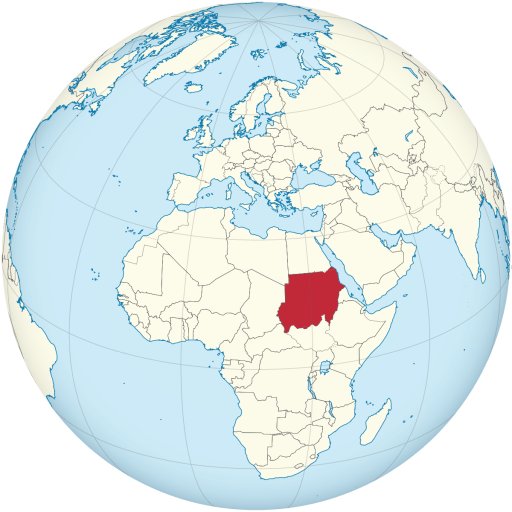
Refresher: The war started in April 2023. Remember: RSF (a paramilitary group) and SAF (the national army) are fighting each other. Lately, the war has been changing. There are more and more drone attacks, on civilians, on important infrastructure. As a result, Sudan's healthcare system has been severely damaged: so damaged that by January 2026, around 40% of health facilities were no longer working. Overall, more than 8.9 million people are displaced within Sudan (they had to leave their homes, but stayed within the country). The war in Iran is also affecting Sudan; everything, including farming, has become much more expensive.
What happened:
Last week, a new analysis from the global food insecurity monitor, IPC (they're the 'guys' who make sure we know about populational hunger levels, basically), said that 19.5 million Sudanese still did not have enough food and were facing serious hunger between February and May 2026. That's two in every five people in the country. The situation is really bad for people in North Darfur, South Darfur and South Kordofan.
Why this matters: Some 53 million people live in Sudan.
Tell me more:
The report goes into detail how many people are in which "Phase" (IPC uses "Phases" to describe the level of hunger). Here are the main findings:
- Around 14 million people are in "Crisis" (Phase 3). They're likely skipping meals on the regular. Perhaps they might have started selling things they own to buy food. Children are eating once a day. They're not starving yet, but people in "Crisis" are making difficult choices every day just to get through the week.
- More than 5 million people are in "Emergency" (Phase 4). At this point, people have already sold everything they had, going entire days without eating. Children are losing muscle and weight very fast.
- Around 135,000 people are in the worst levels of hunger. "Phase 5" is called "Catastrophe," meaning people might actually die. They're that hungry.
- (This doesn't fall into any of the "Phases", but)825,000 children under the age of five, the report writes, will suffer from Severe Acute Malnutrition (SAM) in 2026. SAM is the most dangerous form of malnutrition. Children become extremely thin and weak, and their lives are at high risk. The SAM rate is 7% higher than in 2025. Between January and March 2026 alone, more than 98,500 children were brought to treatment centers for SAM. Again, it's especially bad for children in North Darfur and South Kordofan.
Right now, no area is officially classified as being in a famine. However, if fighting becomes worse, more people are forced to flee, or access to food, healthcare, clean water, and sanitation gets worse, then 14 areas in North Darfur, South Darfur, and South Kordofan could fall into famine.
The report also says, 'hey, take this all with a grain of salt. There are some places we can't even reach because of all the fighting, so we don't know what life is like there at the moment.' These are likely conservative estimates.
Good to know: When do we call it a "Famine"?
Three official conditions must happen at the same time for an area to be declared in Famine (also Phase 5; this "Phase" can mean two related but different things. "Catastrophe" applies to households. "Famine" to an entire area): 1) At least 20% of households have almost no access to food. 2) At least 30% of children are dangerously thin. 3) Two adults or four children die every day per 10,000 people from hunger-related causes, disease, or malnutrition. But don't "wait" for this to be declared before you sound the alarm. Politically, famine declarations are often treated almost like a legal category. By the time all three thresholds are clearly measurable, people have usually already been dying for a long time.
Any good news?
Actually, yes. In some places that were previously classified as being in famine, like El Fasher and Kadugli, more people now have access to more food. This is not necessarily because a lot of aid has come through, but because many starving people left those areas and moved elsewhere (where there is more food available).
What now?
Experts expect that everything will get worse, especially because between June and September, there's even less food around (it's the time before the next harvest). And chances are high that we might not even find out in time how bad it is. Already, humanitarian aid groups are struggling to reach people across Sudan. Access changes constantly, is dangerous, and often depends on negotiations with armed groups. In some of the areas people are most worried about, there is little or no reliable data available. That...
Please log in or subscribe for free to continue reading this issue.
We could use your help to make this issue better. Take a look at the requests below and consider contributing:
- Submit a piece of artwork for this issue
- Submit a news, academic or other type of link to offer additional context to this issue
- Suggest a related topic or source for future issues
- Fix a typo, grammatical mistake or inaccuracy
Below you'll find some of the sources used for this issue. Only sources that support "media embedding" are included.
-
Most of the civilian deaths attributed to drone strikes in the first three months of the year were recorded in the Kordofan region and Darfur, although the strikes were also increasingly spreading beyond both regions.
-
At least six million people in Somalia are going days without enough food, UN aid teams warned on Friday, highlighting that nearly two million of this number are young children “at high risk of illness or death”.
-
The World Health Organization has declared the Ebola disease outbreak in Congo and Uganda a public health emergency of international concern.
-
teleSUR
-
Philip Brave Davis yesterday became the first Bahamian prime minister in nearly 30 years to lead his party to a second consecutive win at the polls, securing another five-year mandate,
-
Independencia del Paraguay: entre el orgullo hist�rico y las cr�ticas por la p�rdida del fervor patri�tico - El NacionalParaguay celebra este 14 y 15 de mayo los 215 a�os de su Independencia Nacional en medio de un clima marcado por cuestionamientos ciudadanos hacia la organizaci�n de las actividades oficiales. Mientras algunos sectores sostienen que se perdi� el entusiasmo patri�tico de a�os anteriores, otros afirman que el verdadero amor al pa�s va mucho m�s all� de los actos protocolares y las celebraciones tradicionales.
-
Termina la primera parte del juicio en contra de Lenín Moreno· se viene la prueba con Jorge Glas como testigoEn la Corte Nacional de Justicia (CNJ), el expresidente Lenín Moreno, su esposa, su hija, su hermano, su cuñada y 16 personas más son juzgados por presunto cohecho en el denominado caso Sinohydro. La Fiscalía los acusa de haber cobrado USD 76 millones en sobornos relacionados con Coca Codo Sinclair.
-
Uganda's president Yoweri Museveni was sworn in for a seventh five-year term on Tuesday, cheered by a crowd of thousands at the event outside Kampala. The 81-year-old won January's election with 72 percent of the vote, according to official results rejected by the opposition.
-
Cambodian Prime Minister Hun Manet earlier said that conscription would begin this year because it was "necessary to build up troops to protect the nation".
-
The president said he is only waiting for the Senate to approve the constitutional amendment already passed by the House of Representatives.
-
The attempted arrest of Philippine Senator Ronald “Bato” Dela Rosa, the Senate lockdown and gunshots on Wednesday night, and the transmission of impeachment articles against Vice President Sara Dutert...
-
Félix Moloua et Touadéra Le Premier ministre centrafricain Félix Moloua a remis mercredi la démission de son gouvernemen... - KOACI l'Info au Coeur de l'Afrique
-
The first sauropod dinosaur from the Lower Cretaceous Khok Kruat Formation of Thailand enriches the diversity of somphospondylan titanosauriforms in southeast Asia | Scientific ReportsSauropod dinosaur remains comprise the majority of the Mesozoic vertebrate fossil record in Thailand. However, they are rare and fragmentary in the Aptian–Albian (Lower Cretaceous) Khok Kruat Formation, the stratigraphically youngest fossil-bearing Mesozoic Thai stratigraphic unit. Based on a partial postcranial skeleton, we present the first diagnostic sauropod specimen from this formation, which represents a new somphospondylan titanosauriform, Nagatitan chaiyaphumensis n. gen. n. sp. Nagatitan is diagnosed by two autapomorphies and a unique character combination, including the presence of two distinct hyposphene-hypantrum morphologies within the middle–posterior dorsal vertebrae. Phylogenetic analyses under maximum parsimony, using a data matrix containing 153 taxa and 570 characters, produce well-resolved topologies that place Nagatitan within the somphospondylan clade Euhelopodidae. Nagatitan does not form an endemic subclade with the approximately contemporaneous Southeast Asian euhelopodids Phuwiangosaurus and Tangvayosaurus, with a suite of anatomical features distinguishing these taxa. We estimate a body mass of 25–28 tonnes for Nagatitan, and suggest it was part of a broader middle Cretaceous body size increase in Asian titanosauriforms, facilitated by rising temperatures and expanded suitable habitat. The discovery of Nagatitan expands the known diversity of Southeast Asian sauropods and improves our understanding of titanosauriform biogeography within the region.
-
SYDNEY, Australia — Pacific island Nauru said it will hold a referendum to change its official name, described as a colonial relic from a time when 'foreign tongues' mangled the native language.
-
The term "iPad Kid" is normally used to describe the screen-addicted Gen Alpha, a generation born between 2010-2024, who are glued to their oversized screens
-
"I hoarded a large database of something valuable, just not what you expect… 150k stools images."
Each week, What Happened Last Week curates news and perspectives from Asia, Africa, and the Americas. The newsletter is written by Sham Jaff and focuses on stories that rarely receive sustained attention in Western media.
Read the free edition every week. VIP subscribers receive additional stories, recommendations on what to watch, read and listen, and more.