

This week, I went down a bit of a rabbit hole and landed on an island that suddenly everyone has been talking about since the U.S.-Israel war on Iran started: Kharg Island. It's potentially the kind of place that could tip the balance, and yet, barely anyone talks about it beyond oil and military headlines. Which is a shame, because the island is... strange in the best way. It has its own language. It was once used to exile leftists and Marxists during the Shah era. Gazelles walk around freely near the oil pipelines. And somewhere between 8,000 and 20,000 civilians live there right now, in the middle of all of this, and almost no one is writing about them. I spent an unreasonable amount of time digging through corners of the internet to find everything about Kharg that isn't just tanks and pipelines. I hope it shows.
Also this week: I made a conscious decision this week to look for some good news because, honestly, we need it. Mountain bongos in Kenya are back. In Malawi, contraceptive use has more than doubled to 45%, and Sierra Leone now requires women to represent 30 percent of parliamentary candidates. Plus, a Japanese experimental album from the 70s, China's modern Nostradamus, heartbreak songs from Mexico, and one scientific fail that made me question everything.
This issue has been edited by Jonathan Ramsay.
There are civilians on Kharg Island, too. Not just oil facilities
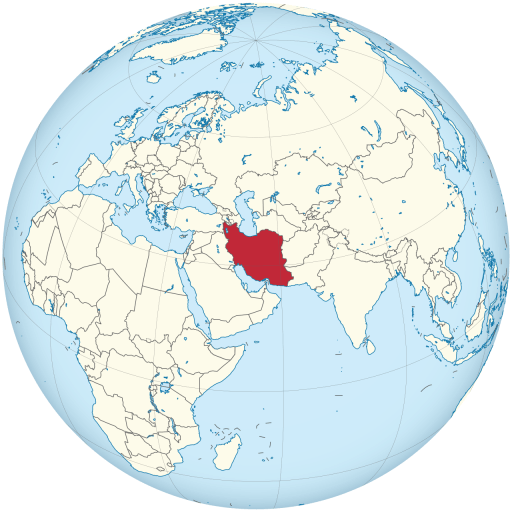 Refresher: The Strait of Hormuz is still closed, which means nearly one-fifth of the world's oil and natural gas supply is still stuck. In the meantime, the Iranian government said last week, 'we've exported even more oil since the war started.' How? Through one tiny island: Kharg Island. The tiny island off Iran's western coast measures only roughly 8 square miles (yes, I'm thinking of 8 Mile, too; that's about one-third the size of Manhattan) and is considered Iran's "economic lifeline". Some 90% of Iran's crude oil is handled here, and most of it destined for Asia, specifically China. U.S. President Trump, it's been reported, is looking to the island as a potential gotcha in this war (he's threatened to destroy it if there's no deal soon and Hormuz remains closed). That scenario is looking more and more possible, with Trump losing his temper on Truth Social over the weekend, posting "Open the F***in' Strait". It's not really clear how much of an option the Kharg Island option really is for the U.S. (or if it's simply war-time chest-bumping 'I'm strong, look at me' talk). The U.S. already struck it on March 13, "totally obliterating" every military target, in Trump's words, though the oil infrastructure was left standing. Residents also say, 'there's no military base here, I don't know what they hit'. Iran has since upped its defenses. Any further escalation would be a major turning point in the war, with consequences nobody can fully predict. And yet: the conversation about Kharg Island almost never includes the people who live on it.
What happened:
Not much has happened yet. Yesterday's address by Trump didn't mention the island specifically either (he threatened the entire country instead). If the U.S., however, does decide to struck the island, this would impact the war in a major way, the world, and Kharg Island's civilian population. Most news articles that discuss Kharg Island focus on military and oil angles, not on the island's civilian population nor its history. At least 8,000 civilians live on Kharg Island, other sources say 20,000, but there's very little attention paid to this fact.
Why this matters: The civilians of Kharg Island exist in a kind of double invisibility: first made inaccessible by the Iranian state's restrictions on the island, then again by Western media's dominant framing of the island as purely an oil asset. Who these people are, how long their families have been there, what they think about what's happening right now: almost none of that has made it into the record.
Tell me more:
So in true What Happened Last Week fashion, let's talk less about military angles and more about the island and its people themselves. Kharg Island is, by its geography, more than "just an oil terminal". Here's a quick history lesson:
-
It's quite unique nature-wise. Most islands in the Persian Gulf are dry, salty and barely habitable. Kharg has natural freshwater springs, groves of palm trees, and fertile ground. Gazelles walk around freely.
-
People have lived there since roughly 1000 BC, across the Elamite, Achaemenid and Sassanid eras. The island is layered with evidence of this: mass graves from the ancient city of Palmyra (today part of Syria, then the westernmost city of Iran during the Parthian era), a shrine locals say belongs to a descendant of the biblical prophet Noah, and a 2,400-year-old wall carving in Cuneiform. There are also ruins of one of the oldest Christian monasteries in the Persian Gulf, Zoroastrian burial sites, and a Dutch fort from 1747.
-
For most of its history, Kharg was a maritime community. Arab and Persian fishing families were part of trading networks that stretched from the West Asia to the Indian Ocean. The Portuguese came and occupied it. Then the Dutch. In 1766, someone named Mir Muhanna, the governor of a nearby port, expelled the Dutch for good.
-
In the 1950s, the Shah used it as a remote exile for around 120 political prisoners, mostly leftists and members of the Tudeh Party, an Iranian Marxist-Leninist communist party. Some of Iran's most prominent leftist intellectuals were banished there. One of them, Karim Keshavarz, wrote "Fourteen Months on Kharg", a documentary memoir of life in exile that became part of the Iranian political literary tradition.
-
The oil era arrived in the late 1950s and early 1960s. The island became Iran's main oil export hub for two very practical reasons. First, oil from the big fields in the southwest could be easily pumped there through pipelines, so everything was centralized in one place. Second, and more importantly, the island sits in deep water, which meant huge oil tankers could dock right next to it. Most of Iran's coastline is too shallow for these ships, but Kharg could handle them, which made transporting oil much cheaper and faster.
-
And the oil era didn't arrive gently. When the Iranian writer Jalal Al-e Ahmad visited the island in 1960, he watched homes and palm groves being demolished to make way for airfields, loading docks, dormitories and oil infrastructure. He wrote that Kharg was "being swept away by large bulldozers." In true writer-fashion, he called the derricks and smokestacks rising in their place "the coarse, unadorned minarets of the massive temple of the age of machines and oil." Al-e Ahmad named the island "the orphan pearl of the Persian Gulf", a place that is very important to Iran's economy...
Please log in or subscribe for free to continue reading this issue.
We could use your help to make this issue better. Take a look at the requests below and consider contributing:
- Submit a piece of artwork for this issue
- Submit a news, academic or other type of link to offer additional context to this issue
- Suggest a related topic or source for future issues
- Fix a typo, grammatical mistake or inaccuracy
Below you'll find some of the sources used for this issue. Only sources that support "media embedding" are included.
-
The small island in the Persian Gulf serves as Iran’s primary oil terminal, handling roughly 90 percent of the country’s crude exports. Recently, it has become a high-value target in the U.S.-Israeli war on Iran.
-
‘Praise be to Allah,’ Donald Trump posted, while threatening to blow up Iranian power plants and bridges if he doesn’t get his way.
-
The tiny island is home to one of the most critical pieces of Iran's energy infrastructure.
-
Live updates: Iran war; Trump says ‘entire country’ of Iran could be taken out if no deal is reached by tomorrow | CNNUS President Donald Trump called a 45-day ceasefire proposal a “significant step” but “not good enough.” Iran also rejected the proposal and called for a permanent end to the war, according to Iranian state-run media. Follow for live updates.
-
The U.S. could try to seize Iran's Kharg Island, an offshore terminal which 90% of its crude oil exports pass.
-
The destruction or loss of the island would deny the government a major revenue source, but it would also remove even more oil from world markets at a time of soaring prices.
-
On Iran’s ‘Forbidden Island’ of Kharg, ancient ruins sit beside the nerve centre of the nation’s oil empire.
-
If we set aside the long and tumultuous history that Kharg has endured, the island acquired a distinct status during the reign of the second Pahlavi—both because of the political authority asserted by the state and because of the dominance of oil, the “black gold” of the modern age. On one side, Kharg became a place of exile for political opponents of the regime, particularly between 1946 and 1958, serving primarily as a site of banishment for leftists and members of the Tudeh Party. On the other side, with the discovery and expansion of oil operations, Kharg was transformed into the Pahlavi state’s “treasure island,” capable of financing Mohammad Reza Shah’s dreams of building a “modern” Iran.
-
If we set aside the long and tumultuous history that Kharg has endured, the island acquired a distinct status during the reign of the second Pahlavi—both because of the political authority asserted by the state and because of the dominance of oil, the “black gold” of the modern age. On one side, Kharg became a place of exile for political opponents of the regime, particularly between 1946 and 1958, serving primarily as a site of banishment for leftists and members of the Tudeh Party. On the other side, with the discovery and expansion of oil operations, Kharg was transformed into the Pahlavi state’s “treasure island,” capable of financing Mohammad Reza Shah’s dreams of building a “modern” Iran.
-
Often called the ‘forbidden island’, Kharg is vital to Iran’s economic survival.
-
Images chart the transformation of a desolate coral island in the Persian Gulf into Tehran’s primary oil export hub. Kharg Island has become a key target in the US-Israeli war with Iran.
-
Amoco Corp. won $600 million in awards Friday from Iran for facilities seized there during the 1979 Islamic revolution.
-
The Language of the Kharg Island - Volume 29 Issue 4
-
Kharg still holds histories waiting to be uncovered—spectral traces that have shaped the island through mourning and devotion, where land and sea were not merely resources but sites of sacred belonging.
-
The Afghanistan Disaster Management Authority says widespread flooding, landslides and lightning strikes triggered by heavy rain and storms across the country have left 77 people dead and 137 injured over the past 10 days.
-
پنجاب، خیبرپختونخوا کے مختلف اضلاع میں 6.3 شدت کا زلزلہ
-
Haiti’s government says it is implementing new austerity measures as the war in Iran disrupts critical oil supplies and drives up prices worldwide.
-
Seven dismembered bodies were found dumped along a road in the southern Mexican state of Guerrero, according to local officials and media reports. The bodies were found at about 4:40 p.m. Tuesday on the Tlalpa-Olinalá road near the municipality of Cualác, according to Infobae and a statement from Guerrero state prosecutors. The remains were left […]
-
Myanmar's parliament has elected junta chief Min Aung Hlaing as president of the Southeast Asian country. He has effectively led Myanmar since the 2021 coup that ousted the democratic government led by Aung San Suu Kyi.
-
Mongolia’s parliament has confirmed Uchral Nyam-Osor as prime minister to break a political deadlock and try to calm economic fears.
-
MSF calls on Gilead for direct access to lenacapavir, as the current rollout falls far short of the needs.
-
The U.S. has lifted sanctions on Venezuela’s acting President Delcy Rodríguez. That's according to an Office of Foreign Assets Control entry on Wednesday on the Treasury Department website.
-
Bringing Taiwan to the World and the World to Taiwan
-
GUANABACOA, Cuba (AP) — Families embraced newly freed relatives outside Cuban prisons Friday, a day after the government announced it would release 2,010 inmates as what it called “humanitarian gestures” ahead of Holy Week.
-
Iraqi provinces witnessed massive demonstrations on Saturday, called for by the leader of the Shiite National Movement, Sayyid Muqtada al-Sadr, to condemn the aggression and demand an end to the war in the region.
-
Turkish President Recep Tayyip Erdoğan said his country is ready to host the next round of peace talks between Ukraine, the United States, and Russia
-
President Paul Biya is set to get a vice-president for the first time in his four-decade rule following controversial constitutional changes backed by parliament.
-
Brazilian banks are now required to verify satellite deforestation data before approving rural credit.
-
A group of critically endangered mountain bongos bred in European zoos are being prepared for transfer back to Kenya, as part of a long term effort to rebuild wild populations of one of Africa’s rarest large mammals.
-
Malawi breaking news publishing 24 hours a day news about Malawi, Malawi Business, Malawi Tourism, Malawi Politics, Malawi News
-
Key things to know about Rwanda’s first Kinyarwanda ICT dictionary
-
Women drivers' car ownership unlocked in new BPR-Volkswagen deal
-
Sierra Leone Passed a Law to Put Women in Power. Now Comes the Hard Part | News | liberianobserver.comAmid electoral challenges in Sierra Leone, Aminata Sesay's political journey reflects barriers facing women in African politics despite the Gender Equality and Women's Empowerment Act's efforts for representation.
-
A company in eastern China is using an artificial intelligence-powered machine to sort clothes and boost recycling.
-
Avoiding and reducing microplastic false positives from dry glove contact - Analytical Methods (RSC Publishing)To attenuate microplastics pollution, we first must quantify the number and types of microplastics found in the natural environment and identify their sources. Quantifying environmental microplastics requires distinguishing synthetic polymers from other naturally occurring species. Quality assurance and control mea
Each week, What Happened Last Week curates news and perspectives from Asia, Africa, and the Americas. The newsletter is written by Sham Jaff and focuses on stories that rarely receive sustained attention in Western media.
Read the free edition every week. VIP subscribers receive additional stories, recommendations on what to watch, read and listen, and more.