

This issue is focused on Syria's Kurds and Uganda's Yoweri Museveni. The Kurds feel betrayed again, and President Museveni has been re-elected again. Some things, I guess, just don't change.
Also in this issue: a documentary about foreign fighters in Russia, communication with humpback whales in Hawai'i, how to train yourself getting better at finding AI labor abuses, basbousa and chai, Indian female football players, and so much more.
It's a very important moment for Syria and its Kurds
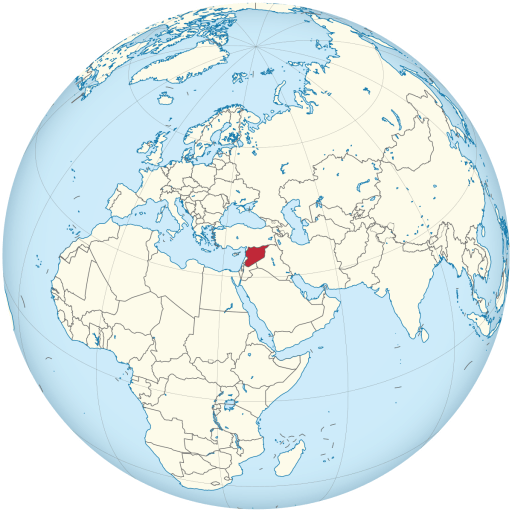
What happened:
Last weekend, the Syrian government has announced an immediate nationwide ceasefire with the Kurdish-led Syrian Democratic Forces (SDF), taking almost full control of the country, Syrian state media says. The ceasefire ends nearly two weeks of fighting and forms part of a broader 14-point agreement that will see the SDF integrated into Syria's military and state institutions.
On Sunday evening, the commander-in-chief of the SDF, Mazloum Abdi, released a statement, saying, "We wanted to stop this war through the Damascus and Erbil meetings. However, certain powers had already planned this war and it was imposed on us. In order to stop further deaths, we accepted withdrawal [...]. We are determined to protect the gains of our people. This is a long-term struggle."
Why this matters:
Many Arabs celebrate this. Many Kurds feel betrayed and abandoned by what's happening.
Tell me more:
To understand the Kurdish perspective better, I talked to Kamal Chomani (X/Twitter), who is a PhD candidate at Leipzig University and editor-in-chief of The Amargi. (Disclaimer: I sometimes publish videos on The Amargi's social media.)
You can read the entire interview here: https://gishty.com/interviews/interview-with-kamal-chomani
President Yoweri Museveni won, again
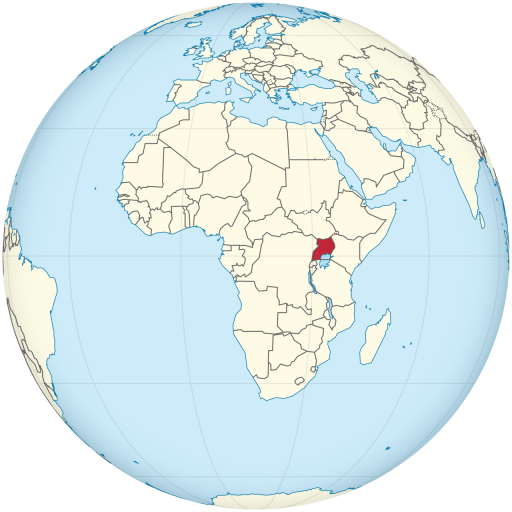
What happened:
Uganda's election commission called it: President Yoweri Museveni won, again.
Why this matters: Museveni is Africa's longest-serving leader, and this win sets him up for a seventh term. That's a lot of "same guy, same seat."
Tell me more:
First, the official numbers. Museveni took 71.65% of the vote. His main challenger, Bobi Wine (yes, the musician turned opposition leader; I've shared this documentary about him before in this newsletter), got 24.72%.
Was it a free and fair election?
Context matters here. The vote happened during an internet shutdown and with a heavy security presence. Observers and civil society groups are raising big red flags.
For example:
- Damaged public trust: Nigeria's former president Goodluck Jonathan was in Kampala with election observers from the African Union and regional groups. He said there were reports that security forces threatened, arrested, and kidnapped opposition people, journalists, and civil society.
- Possible cheating: Meanwhile, civil society groups from East Africa said they saw possible cheating. One representative, Mwanase Ahmed from Jumuiya ni Yetu, said many polling stations opened late, some did not have the voting materials, and some ballot boxes looked already full. They also said that where they could watch the vote count, the numbers later published did not match what they saw.
- Bobi Wine cries foul: There are also several big allegations by Bobby Wine: Wine says his party's polling agents were abducted. He also declared his "complete rejection of the fake results" and said he was on the run after a raid on his home on Friday night. "I want to confirm that I managed to escape from them," Wine posted on X on Saturday, but also shared that his wife and other family members were put under house arrest.
The police deny seeking to detain him.
Did you know that, in order to bypass the internet shutdown, Ugandans turned to Bitchat? Iranians do the same thing.
Good to know: Another major opposition figure, Kizza Besigye (who ran against Museveni four times), was abducted in Kenya in 2024 and taken back to Uganda. His treason case in a military court is still ongoing.
Any protests? Despite the internet shutdown and fraud allegations, most of the election passed without major incidents. The main exception was a clash between police and opposition supporters in central Uganda. Police said they fired in self-defence and that at least seven people were killed and three injured. This account is disputed by MP Muwanga Kivumbi, who said security forces killed 10 people at his home.
Who's Museveni, again?
He's 81 and has ruled Uganda for about 40 years. When Yoweri Museveni became president in 1986, he presented himself as a reformer, even criticizing African leaders who stayed in power too long (he wrote this book about it). But during his time in power, he removed presidential term limits and age limits. Elections still happen, but experts say they are manipulated (as alleged in this case). The army, police, courts, parliament, and the election commission are widely seen as controlled by Museveni and people close to him. Some political opponents have been jailed. He has never said when he plans to step down.
Dig deeper: Anthropologist Mahmood Mamdani (yes, Zohran's dad) wrote a very recent book on this, "Slow Poison: Idi Amin, Yoweri Museveni, and the Making of the Ugandan State". In the book, he explains the factors and characters (like those two in the title) that shaped post-independence Uganda.
what else happened
Global: For the first time ever, the planet was 1.5°C hotter than normal for three years straight (2023-2025). Remember the Paris Agreement? Countries promised to keep warming below 1.5°C, and we just blew past that line. (Copernicus Climate Change Service)
Benin:
In Benin's recent election, provisional results said that two parties won all 109 parliament seats. Plot twist: Both parties support the president. This means Benin's opposition was completely shut out of parliament. The country used to be seen as one of West Africa's most stable democracies. (Benin Web TV)
El Salvador: Since 2022, El Salvador's president has locked up 91,000 people for "suspected gang activity." Many were arrested just for having tattoos. The mass incarceration campaign, called the "State of Exception," has made El Salvador the country with the highest imprisonment rate in the world. (The Japan Times)
Hong Kong: Jimmy Lai, a 78-year-old newspaper owner, was convicted of "conspiring with foreign forces." His crime? Running a newspaper that criticized China. Lai founded Apple Daily, a pro-democracy paper, which Beijing forced to close in 2021. Now Lai faces life in prison. He's been in solitary confinement for over 1,800 days, and his health is not in very good shape. A sentencing date...
Please log in or subscribe for free to continue reading this issue.
We could use your help to make this issue better. Take a look at the requests below and consider contributing:
- Submit a piece of artwork for this issue
- Submit a news, academic or other type of link to offer additional context to this issue
- Suggest a related topic or source for future issues
- Fix a typo, grammatical mistake or inaccuracy
Below you'll find some of the sources used for this issue. Only sources that support "media embedding" are included.
-
President Ahmed al-Sharaa said the deal would allow the Syrian state to reassert control over most areas.
-
Amargi is a news and analysis website that covers the Middle East and North Africa. We provide in-depth analysis and commentary on the region's politics, economy, and culture.
-
Butambala, Uganda | URN | At least eight people are feared dead following clashes between voters and security forces in Butambala District last night. According to sources in the district, the clashes occurred near the home of Butambala County MP Muhammad Muwanga Kivumbi. Attempts to reach Katonga Regional Police Spokesperson Lydia Tumushabe and National Police …
-
Sowing the Mustard Seed is a story of unflinching bravery. It is the story of unwavering search for a open-access, revolutionary and development-oriented leadership. The Ugandan President takes the reader on a tell-all journey of the sacrifice that he and other young Ugandans decided to take in order to liberate their country from the jaws […]
-
Slow Poison is an authoritative and personal account of the tragic fate of Uganda and the unravelling of its struggle for decolonialization under the rule of Idi Amin and Yoweri Museveni. Mamdani casts a learned and wary eye on the two leaders and the global heavyweights that exploited and manipulated Uganda before and after its independence.
-
Copernicus data show that 2025 was the third warmest year on record, only marginally (0.01°C) cooler than 2023, and 0.13°C cooler than 2024 – the warmest year on record. The past 11 years have been the 11 warmest on record. Global temperatures from the past three years (2023-2025) averaged more than 1.5°C above the pre-industrial level (1850–1900). This marks the first time a three-year period has exceeded the 1.5°C limit. Air temperature over global land areas was second warmest, whilst the Antarctic saw its warmest annual temperature on record and the Arctic its 2nd warmest.
-
Around 91,000 people, mostly young men, have been thrown into prison since 2022 on suspicions that they are gang members, some simply because they had tattoos.
-
Apple Daily founder Jimmy Lai returned to court for a mitigation hearing - and, as in other high-profile national security cases, so did his supporters and the "queuing gangs."
-
Peace efforts in Sudan have resumed in Cairo, with Egypt and the United Nations urging warring parties to agree to a nationwide humanitarian truce.
-
An community leader says armed men have killed at least 15 people, including eight children, in northwestern Cameroon.
-
Army helicopters rescued people stranded on rooftops and hundreds of tourists and workers were evacuated from one of the world's biggest game reserves.
-
Clashes between protesters and police continued in side streets after the journalist’s detention.
-
Yemen’s presidential leadership body sacks its last UAE-backed member, consolidating Saudi Arabia’s control over the country’s decision-making authority.
-
Chadian President Mahamat Idriss Déby Itno has been named the winner of the 2026 African Peace Prize for his peaceful management of Chad’s political transition and the country’s humanitarian response to Sudanese refugees, the African Conference for Peace has announced.
-
The UAE and Singapore have the highest rates of AI adoption, and developed countries outpace developing countries in AI use.
-
On the eighth anniversary of the murder of Serb opposition politician Oliver Ivanovic, commemorations were held in both Kosovo and Serbia – but questions about who organised and carried out the crime remain unanswered.
-
Canadian Prime Minister Mark Carney hailed a new “strategic partnership” with China during a meeting with leader Xi Jinping Friday, as the US ally took steps to reset ties with Beijing in the face of historic friction with Donald Trump.
-
Japan and the Philippines have signed a defense pact that will allow the tax-free provision of ammunition, fuel, food and other necessities when their forces stage joint training to boost deterrence against China’s growing aggression in the region and to bolster their preparation for natural disaste
-
MANILA: The Philippines entered into its first free trade pact in the Middle East with the signing of a Comprehensive Economic Partnership Agreement (Cepa) with the United Arab Emirates (UAE) on Tuesday (Jan 13)
-
PM Wong removes Pritam Singh as Leader of the Opposition, invites Workers' Party to nominate another MP to fill the role - CNAThe Workers' Party nominee for the next Leader of the Opposition should not have been "implicated" in the earlier findings of the Committee of Privileges, says Prime Minister Lawrence Wong.
-
Gold Price charts today and the historical Gold Price in Pounds Sterling. Live Gold Price charts in GBP, USD, and EUR.
-
The decision annuls the UAE’s ownership of several ports and military base, and comes amid rising tensions over the country’s policies in Yemen and Somaliland.
-
Employees who have worked at rhe factory for over 20 years receive wages only slightly higher than the minimum wage, says the strike spokesperson.
-
The social network X is once again accessible in Venezuela, more than a year after users were blocked by deposed president Nicolas Maduro, who was captured by US forces last week.
-
Bosnia’s top court confirms indictment of four Bosnian Army ex-soldiers for war crimes against Serb and Croat civilians held in the basement of the Music School in Zenica in 1993.
-
India has been experiencing major growth in women's sports in recent years. This is being fuelled by investment from both the public and private sector – as well as many role models.
-
Yo-Yo Ma has wanted to use his cello to communicate with whales for half his life. And, in Hawai’i, he got a chance. With help from the Polyneisan Voyaging Society and hula master Sno...
-
Workers in East Africa and South Asia are now paid low wages to perform behind-the-scenes data tasks are used to power AI-driven facial recognition systems around the world.
-
If making homemade kourabiedes / kourambiethes (Christmas Greek butter cookies with almonds) takes lots of time and effort, try this super easy recipe
-
A new Congressional Budget Office analysis says renaming the Department of Defense the Department of War could cost taxpayers up to $125 million.
Each week, What Happened Last Week curates news and perspectives from Asia, Africa, and the Americas. The newsletter is written by Sham Jaff and focuses on stories that rarely receive sustained attention in Western media.
Read the free edition every week. VIP subscribers receive additional stories, recommendations on what to watch, read and listen, and more.