

Issue #404: Morocco voted. Well, about 22 percent of voting-age Moroccans did. And somehow, the election ended with the country getting its first-ever female prime minister. So, who is Fatima Ezzahra El Mansouri? And just how revolutionary is this "first" for women in Morocco?
I also wanted to understand the country beyond the election. What is life and politics like in a place where more than 70,000 people, many of them young, tried to leave for Spain in just two days this summer?
Also this week: Japan is giving people more control over the commercial use of their voices, the Girl Boss movement has (sort of) reached jihadist groups, U.S. companies don't quite know what to do with all that Venezuelan gold, there are anti-government protests in the Sahel, and, as always, much more.
This newsletter has been edited by Jonathan Ramsay.
Fatima Ezzahra El Mansouri was appointed the first woman prime minister of Morocco
Refresher:
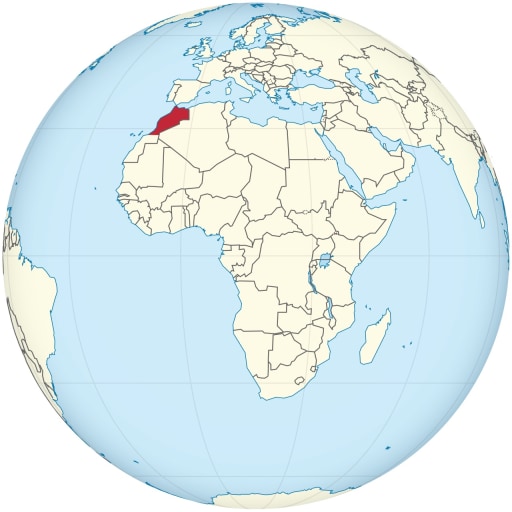
People voted in Morocco on September 23. 27 political parties were competing for 395 seats in the lower house of Parliament. The Authenticity and Modernity Party (PAM, the New York Times calls them "centrist") came first, with 97 of the 395 seats. Morocco is a constitutional monarchy, and the king appoints a prime minister from the party with the most seats (PAM in this case).
What happened:
On September 29, Morocco confirmed its first female prime minister. Her name is Fatima Ezzahra El Mansouri. She's 50 years old, and she's been a hotshot since 2009.
Why this matters: She is the first woman to hold the office in Morocco, and the third to lead a government in the Arab world. The other two examples are Najla Bouden's tenure in Tunisia from October 2021 to August 2023, and Tunisia's current Prime Minister Sara Zaafarani, who was appointed in March 2025.
Tell me more
- "This is a truly historic moment," El Mansouri told the media after her meeting with the king. "For the first time in the history of our country, a woman is taking responsibility for leading the government. It is a source of pride not only for me but for all Moroccan women."
- Lowest voter turnout: Measured against all voting-age Moroccans, only about 22 percent cast a ballot, roughly one in five, writes Le360.
- Voting irregularities: The interior ministry said voting 'was normal, nothing major happened,' but the Left Alliance (a small left-wing party) and the Moroccan Association for Human Rights say otherwise. There's an open investigation.
- Very few**youngpeople actually voted:* People aged 18 to 24 make up roughly 12 percent of Morocco's population, but just four percent of its 15.8 million registered voters, writes AP. There are many possible reasons for this: could be out of solidarity with Palestine (under the outgoing government, Morocco and Israel agreed to open embassies in their respective countries), could be because about one-third of young Moroccans are jobless, or could be the Gen Z protests from last year that were met with police violence. Perhaps 'all of the above' is the reason why, this summer, more than 70,000 (mostly young) Moroccans rushed into Ceuta. Moroccan analyst Mohamed Masbah interprets the crossings as a form of social protest: people physically* leaving a political system they feel offers them little hope.
Who will be part of the next government?
Good question. No single party won an outright majority (PAM would have needed more than double the number of seats). El Mansouri must now work to form a coalition (it'll probably be formed by October 9).
- No "getting the old gang together." According to Le Desk, El Mansouri has told party members she wants to form a government without the business-friendly RNI, which was part of the former government. That would make Istiqlal, a conservative-nationalist party that was also part of the previous government, an important potential partner.
- New friends needed. But even with PAM and Istiqlal together, the two would still need smaller parties to get a majority. Possibilities include the Popular Movement, which has strong roots in rural and Amazigh communities, the social-democratic USFP, the left-wing PPS or the market-oriented Constitutional Union. Meanwhile, the moderate Islamist PJD, which bounced back from 13 to 54 seats, has decided to stay in opposition. So has the Federation of the Democratic Left. That doesn't mean all left-wing parties are ruling themselves out: USFP and PPS could still join the coalition, writes Lakome2.
Who is El Mansouri?
Born 1976, El Mansouri is definitely not an outsider. She comes from an established political family. Her father, Abderrahmane El Mansouri, served as pasha (a senior local official) of Marrakech and as Morocco's ambassador to the UAE.
- She's a trained lawyer (specialized in land and real estate), studied in France and the U.S.
- She's a long-time conservative politician. She joined PAM (which was founded by a close adviser to King Mohammed VI) in 2008.
- She was mayor of Marrakech from 2009 until 2015. One of Morocco's first female mayors (the first was Asmaa Chaabi in Essaouira). She was 33 when taking office.
- She then got into parliament in 2011, and stayed there for ten years.
- She was mayor of Marrakesh again in 2021.
- She also became minister in the same year, of Spatial Planning, Urban Development, Housing and Urban Policy. Here, she was responsible for rehousing families affected by the Al-Haouz earthquake in 2023.
- She then became PAM leader in 2024.
Good to know: How many women are in Moroccan politics now? Women now hold 27 percent of the seats in the lower house of Parliament. It was 24 percent in 2021. Men still hold almost three-quarters of the seats.
Did you know?...
Please log in or subscribe for free to continue reading this issue.
We could use your help to make this issue better. Take a look at the requests below and consider contributing:
- Submit a piece of artwork for this issue
- Submit a news, academic or other type of link to offer additional context to this issue
- Suggest a related topic or source for future issues
- Fix a typo, grammatical mistake or inaccuracy
Below you'll find some of the sources used for this issue. Only sources that support "media embedding" are included.
-
Les législatives du 23 septembre ont rebattu les cartes sans pour autant livrer une lecture univoque du paysage politique marocain. Victoire du PAM, recul du RNI et de l’Istiqlal, retour en force du PJD, Parlement fragmenté et abstention massive: au-delà des rapports de force issus des urnes, ce scrutin révèle surtout la complexité croissante du comportement électoral et interroge le lien entre les citoyens, les partis et la démocratie représentative.
-
حاكم سبتة يدلي بشهادته أمام المحكمة الوطنية الإسبانية حول أزمة الهجرة الجماعية
-
What Fatima El-Mansouri’s historic rise means for Morocco
-
Situation du marché du travail au Maroc au deuxième trimestre de 2026 à partir de la nouvelle enquête sur la main-d’œuvre (EMO2026)Le Haut-Commissariat au Plan (HCP) présente la situation du marché du travail au deuxième trimestre 2026, issue de la nouvelle Enquête sur la Main-d’œuvre (EMO2026). Rappelons qu'il s'agit de l...
-
Kabul says the strikes killed 9 women and children in Kunar and Helmand provinces, as Pakistan says 22 fighters killed.
-
Closures driven by per-pupil funding that made smaller rural schools unviable far outpaced demographic decline. Since 2022, all remaining schools hold mandatory weekly classes on Russian "traditional values" and the Kremlin's version of events surrounding Russia's war in Ukraine.
-
Marie-Celestin Karondwa was attacked on Sunday after promoting measures to prevent spread of disease, his party says
-
Human rights groups say some 5,000 returnees could face violence, persecution and forced conscription.
-
The rise reflects greater awareness and confidence among healthcare workers to speak up, says the tripartite workgroup behind the findings.
-
The hikes are part of immigration policy changes introduced to manage Japan's growing foreign population.
-
Argentine President Javier Milei's government said Friday that the country would offer citizenship to foreigners who invest at least $350...
-
Roelf Meyer tells the BBC that being a white Afrikaner gives him legitimacy to challenge Trump's claim of a genocide.
-
Ao todo, quase 1 milhão de brasileiros estão aptos a votar no exterior. Resultados oficiais serão divulgados pelo TSE a partir das 17h deste domingo (4).
-
The limits of Lulismo, the sons of Bolsonaro and the new politics of disintegration
-
A surprise inspection at the prison revealed apartment-like units appearing to house inmates, equipped with televisions, a gym and fridges stocked with alcohol.
-
Double beds, aircon and big-screen TVs: Indonesia suspends officials over luxury prison cells | Indonesia | The GuardianThe discovery of the compound has renewed scrutiny of Indonesia’s prisons, which have long faced allegations that well-connected inmates can obtain preferential treatment through bribery
-
An initiative to support singles aged 21-35 in their dating journey, verified using Singpass.
-
Cambodia has set up a working task force to receive Afghan refugees from Qatar, following a request by the United States government, with analysts questioni ...
-
A young Duterte is racking up swooning comments and supporters online. Except he's synthetic.
-
TOKYO (Kyodo) -- A Japanese court ruled Wednesday that voices are protected as a publicity right, similar to portrait rights, in the first such ruling
-
LISA of BLACKPINK won the best pop award at the 2026 MTV VMAs.
-
More women are taking up training and recruiting positions in the Islamic State group and other militant organizations.
Each week, What Happened Last Week curates news and perspectives from Asia, Africa, and the Americas. The newsletter is written by Sham Jaff and focuses on stories that rarely receive sustained attention in Western media.
Read the free edition every week. VIP subscribers receive additional stories, recommendations on what to watch, read and listen, and more.