

Issue #400: Zimbabwean feminism. Women in Zimbabwe want their unpaid housework to be seen, and valued, as real work. Here's how that fight is going.
Also this week: Big week for justice in Syria, a better week for children on social media, Ebola vaccines starting in the DRC, a first-person account of the flood in Nepal, and a Dragon Ball Z theme park.
This newsletter has been edited by Jonathan Ramsay.
Zimbabwe's women want credit for the work they do at home
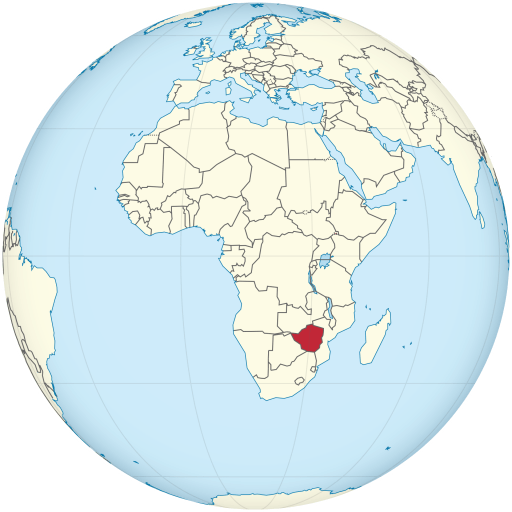
Refresher: Women in Zimbabwe (and almost everywhere else) for a long time have fought for their housework to be recognized, valued, redistributed, and supported through public policy. This work includes cooking, cleaning, and washing clothes, as well as caring for children, older people, and relatives with disabilities. It can also include collecting water and firewood or growing food. This is often called "unpaid care and domestic work" because it is important but usually unpaid. In 2024, several initiatives, women's rights groups, and female politicians in the country studied unpaid care labor in Zimbabwe, wrote a proposal for a new law, and sent it to Parliament for them to discuss further.
What happened:
The campaign is finally gaining political support. The Women's Academy for Leadership and Political Excellence (WALPE) is leading the push with the Ministry of Women's Affairs and other civil-society organizations.
A major step came on August 20, 2026, when Zimbabwe's National Assembly supported a motion to recognize unpaid care work. MPs called for a national policy, a new law, better public services, and a study to show how much this hidden labor adds to the economy. The motion is not yet a law, but it's definitely been placed on top of the government's agenda.
Why this matters: Zimbabwe's Constitution formally supports gender equality and women's rights. The country has women in Parliament (about 30.1%) and government, and its courts have made important equality rulings, including against child marriage. But everyday life tells a different story. Women still do most of the housework and family care while having less access to land, jobs, money, childcare, water, and electricity. For women in rural areas, the gap is even wider.
Tell me more:
There are some concrete numbers, too. According to a 2025 survey conducted by the state-owned Zimbabwe National Statistics Agency:
- Women spend about 5.9 hours a day on unpaid work, compared with 3.8 hours for men. This broad category includes housework, caregiving, volunteering, and producing goods for the household's own use.
- On housework and caregiving only, women spend about 3.9 hours a day, almost three times the 1.4 hours spent by men.
- Around 90% of women do unpaid domestic work, compared with 52% of men.
Compare: "Women do almost twice as much unpaid work as men per day," says a 2025 OECD report. However, the gap varies a lot. It is relatively small in Denmark, Norway and Sweden, and much larger in Italy, Portugal, Australia and Mexico. According to a 2026 survey in the U.S., women averaged about 2.8 hours, men 2.1 hours.
Good to know: In a wealthy Western household, domestic inequality may mean that the woman performs more cooking, cleaning, and childcare. In rural Zimbabwe, it can additionally mean walking kilometres for water, collecting firewood, and cooking without electricity or modern appliances. The same gender norm is amplified by, well, missing infrastructure. (This is where the Zimbabwean 5.9 hour figure comes in.)
What could make life better for women in Zimbabwe?
Senator Maybe Mbowa, chair of the Zimbabwe Women's Parliamentary Caucus (it was also her who formally presented the proposal to Parliament in December 2025 and asked the other members to discuss it), says those backing the motion want concrete steps to make chores safer and less time-consuming. "It is not that we want salaries. We simply want the government to intervene and reduce the burden of domestic work on women," she told RFI. Campaigners therefore propose measures like better water supplies, solar-powered wells (here's how you build one yourself, in case you're interested), safer cooking methods, and more financial support for families.
Did you know? According to a 2024 UN Women publication, climate disasters make women's unpaid workload much, much worse. Unpaid care work is not only a household or employment...
Please log in or subscribe for free to continue reading this issue.
We could use your help to make this issue better. Take a look at the requests below and consider contributing:
- Submit a piece of artwork for this issue
- Submit a news, academic or other type of link to offer additional context to this issue
- Suggest a related topic or source for future issues
- Fix a typo, grammatical mistake or inaccuracy
Below you'll find some of the sources used for this issue. Only sources that support "media embedding" are included.
-
Parliament has adopted a motion calling for unpaid care and domestic work to be recognised in national policy and economic planning, with MPs saying the bur ...
-
Official website of the Parliament of Rwanda. Access information about Members of Parliament, bills, committees, and legislative activities.
-
Venezuela’s twin earthquakes have caused over 6,500 deaths, devastating La Guaira with ongoing rescue efforts and housing support for victims. Read more at straitstimes.com.
-
The US has removed Syria from the state sponsor of terrorism list, easing sanctions to encourage investment and promote stability in the region. Read more at straitstimes.com.
-
Ratko Mladic, the notorious Bosnian Serb general, has died at age 84 while serving a life sentence for war crimes.
-
Polka dot queen Yayoi Kusama, global art icon, dies at 97 | The Asahi Shimbun: Breaking News, Japan News and AnalysisYayoi Kusama, the Japanese artist whose polka-dot creations, pumpkin sculptures and “Infinity Mirror Rooms” captivated audiences worldwide and inspired high-profile collaborations with Louis Vuitton, died on Aug. 14. She was 97.
-
KUALA LUMPUR — Malaysia has finalized the first phase of a voluntary repatriation program involving eligible Myanmar citizens, with almost 1,500 individuals expected to return home in late September, the government said on Thursday.
-
Khalid Sheikh Mohammed, who has been held at Guantánamo Bay since 2006, is scheduled to go on trial in June 2028.
-
Energy Minister Deogratius Ndenjembi becomes the 13th Vice President of Tanzania
-
South Korean automaker Hyundai Motor and the union representing its workers have reached a tentative deal on wages and bonuses, both sides said on Tuesday...
-
Malian singer and songwriter Salif Keita has cancelled his upcoming concerts in South Africa in response to anti-migrant protests in the country
-
Meta agreed to pay US states as much as $16.7 billion and to impose sweeping new limits on how teenagers use Facebook and Instagram, according to a court filing
-
-
A Syrian court has sentenced former grand mufti Ahmad Badreddine Hassoun to life in prison. Hassoun, a loyalist to former President Bashar Assad, was convicted of inciting violence and justifying murder.
-
The death toll from catastrophic flash floods and mudslides in Nepal rose to at least 734 on Saturday, as nearly 2,500 people remained missing in the country, including about 100 Americans.
-
In the devastating floods that severed an entire district from the rest of Nepal, one The Kathmandu Post journalist witnessed his childhood village disappear — through fragments of video, and phone calls that stopped connecting.
-
The new Netflix series, Umthetho, explores the ironic quest of a prison gang fighting for human rights, corrupt officials, and fractured families. An adaptation of the Brazilian series Brotherhood, Umthetho raises questions about how stories developed elsewhere can resonate with local audiences, yet delivers a tale of blood, bullets, and brotherhood reimagined through a South African lens.
-
Koffee Wins 2020 Grammy For Best Reggae Album - DancehallMag. Koffee has made history by winning the Grammy Award for Best Reggae Album with her EP Rapture.. DancehallMag is an independent news outlet that covers all things Dancehall and Reggae music, the artists, and culture.
-
PARIS (Reuters) -- France and Saudi Arabia have agreed to build a 6 billion euros ($7 billion) manga-themed amusement park near Paris, the Elysee Pala
Each week, What Happened Last Week curates news and perspectives from Asia, Africa, and the Americas. The newsletter is written by Sham Jaff and focuses on stories that rarely receive sustained attention in Western media.
Read the free edition every week. VIP subscribers receive additional stories, recommendations on what to watch, read and listen, and more.