

Issue #397: Colombia has swung back to the right after four years of Gustavo Petro's left-wing government. I introduce the man who's taking his place, and why I believe the next four years will be so unbearable.
Also this week: Moroccan perspectives on what happened in Ceuta, the concept of wasta/connections in different countries, my fear of becoming replaceable in the age of AI (as a journalist), a new statue of Netanyahu's older brother in Uganda, and so much more.
This newsletter features contributions by intern Pia Monroy Rodriguez and Jonathan Ramsay. As usual, the issue has been edited by Jonathan Ramsay.
Colombia no longer has a leftist president. Who's the new guy?
What happened:
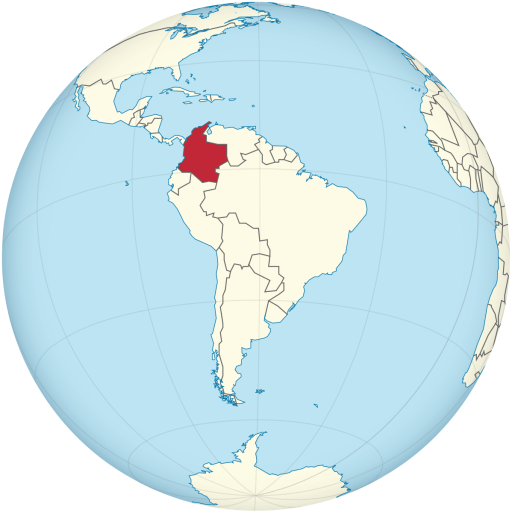
As of August 7, Colombia has a new president: Abelardo de la Espriella. He's 48 and a Leo sun, lawyer, and businessman. This is his first elected office.
Why this matters: Colombia's new president is a hard-right conservative. This is the country's clearest turn to the right in years, following similar right-wing wins in Peru, Chile, and Ecuador recently.
Tell me more:
De la Espriella built his public profile as a pretty loud criminal defense attorney, representing controversial figures like David Guzmán (the guy behind Colombia's most famous Ponzi scheme) and Álex Saab (extradited to the U.S. on money-laundering charges). For those into astrology, he's very much what people think a Leo sun is like: likes to argue, is really honest and direct, loves drama. (Sound like anyone? I'll let you draw that comparison yourself, though I do feel for my Colombian colleagues navigating a leader like this. Maybe borrow some notes from the U.S. press corps on survival tactics.)
He built a party from scratch, Defensores de la Patria, which launched in 2025, and he ran as the ultimate outsider. Even qualifying to run was a mess: his campaign submitted around five million signatures, and election officials threw out 61% of them as invalid. He still made it, winning the first round on May 31 before edging out Iván Cepeda (former leftist president's handpicked successor) in a very, very tight runoff on June 21: 49.7% to 48.7%, roughly 250,000-300,000 votes apart. The actual tipping point, though? Colombians living abroad. Around 400,000 expat votes broke decisively his way. In the U.S., home to the largest share of Colombian migrants, early counts show he cleared 80% of that vote. Per Der Spiegel, this is likely the narrowest margin any democratically elected Colombian president has ever won by.
His VP is José Manuel Restrepo.
What was the inauguration like?
If I called it 'chaotic', I would be underselling it. There were 47 days between the election and the swearing-in, and in all that time, De la Espriella and outgoing President Gustavo Petro never had a single official meeting. On July 7, De la Espriella pulled the plug on the transition process entirely, accusing Petro's outgoing team of sneaking through last-minute decisions. Petro's camp fired back that they had every legal right to govern until their final day in office.
Petro ultimately didn't show up to the inauguration. Instead, he spent the day publicly repeating his claim that the election was stolen (but more on that later).
The ceremony itself broke from more than a century of tradition by taking place outside Bogotá: in Cali, Colombia's third-largest city, where the 2021 mass anti-government protest movement happened and where leftists are very, very established. Congress cleared the change, despite 41 (more leftist) members walking out rather than voting on it. One Green representative said, "this will cost 14 billion pesos." A rep from the pro-Espriella side pushed back: "We need to move beyond Bogotá-centrism; not everything revolves around Chapinero." (Chapinero is the neighborhood in Bogotá, where the 'political elite' lives.)
Security was a full lockdown: 11,000 troops, drones banned, private cars barred from city streets. The guest list read like a right-wing reunion: Javier Milei (Argentina), Daniel Noboa (Ecuador), José Antonio Kast (Chile), King Felipe VI (Spain), FIFA's Gianni Infantino, plus the U.S. sent Acting Attorney General Todd Blanche (not Trump himself, but he likes him).
There were protests, too. Social and student groups gathered at the Monument to Resistance in Puerto Rellena, Cali on inauguration day itself.
What's his politics like?
His core positions:
-
Security: No more talking to any armed groups (unlike Petro). His plan: chase them, and build new mega-prisons. An estimated 27,000 people are active across Colombia's armed and criminal groups. Military pressure without any negotiating track is a very dangerous gamble.
-
Fiscal policy: No big spending. He's also announced closing 14 embassies across Europe, Africa, and the Caribbean.
-
Foreign policy: Yes to the U.S. and Israel, which also means, 'Goodbye, Cuba.'
Good to know: Colombia and the U.S. used to be besties before President Gustavo Petro took office. The U.S. poured billions into the fight against drug trafficking, but Petro wasn't a big fan of President Trump. He and Trump spent years insulting one another on social media, and Trump at one point even threatened military intervention. Relations only really calmed down after Petro visited the U.S. this past February. De la Espriella is now cashing in on the reset: Colombia is joining Trump's "Shield of the Americas" coalition, with a regional office planned for Medellín. Petro, of course, called it a loss of Colombian sovereignty and De la Espriella "a servant of the United States."
Zoom out: Colombian democracy used to be considered one of the most resilient on the continent. It has a deep legalist tradition, and its institutions genuinely function. But there's a huge gap between the cities and the countryside, and the extreme inequality that gap produces is exactly what gave armed groups room for influence in the first place. The FARC peace deal, ten years old now, didn't really close that gap. Put 'organized crime' on top of that: Colombia is the world's largest cocaine producer. And Petro didn't exactly steady the ship, Der Spiegel writes. He repeatedly made weird statements on the country's democratic institutions (floating a new constitution, staying vague on whether he'd accept a loss), and...
Please log in or subscribe for free to continue reading this issue.
We could use your help to make this issue better. Take a look at the requests below and consider contributing:
- Submit a piece of artwork for this issue
- Submit a news, academic or other type of link to offer additional context to this issue
- Suggest a related topic or source for future issues
- Fix a typo, grammatical mistake or inaccuracy
Below you'll find some of the sources used for this issue. Only sources that support "media embedding" are included.
-
A new political era for Colombia: a hard-right president promises order, growth and confrontation.
-
De las 5.079.000 firmas presentadas ante la Registraduría Nacional por el abogado Abelardo De La Espriella para aspirar a la Presidencia de la República, la autoridad electoral colombiana invalidó 3.100.892.
-
Der rechte Hardliner Abelardo de la Espriella verdankt seinen hauchdünnen Sieg bei der Präsidentschaftswahl nicht zuletzt Donald Trump. Baut er Kolumbien jetzt in eine Autokratie um?
-
La tensa transición de Petro a De la Espriella: contrataciones a último minuto, lluvia de denuncias y enfrentamientos entre ministros | EL PAÍS América ColombiaEl presidente saliente insiste en desconocer los resultados electorales, y el mandatario electo rechaza el llamado a la “desobediencia civil” de la oposición
-
El presidente Gustavo Petro aseguró que la victoria de Abelardo de la Espriella “no existió”, habló de un presunto fraude informático.
-
War Venezuela nur der Anfang? Welches Verhältnis Kuba, Nicaragua oder Panama zu den USA haben – und was diese Länder nun befürchten.
-
Abelardo de la Espriella confirma que Medellín albergará la sede del Escudo de las Américas, la alianza anticrimen de EE.UU. en Colombia.
-
Von einem »weißen Tsunami« sprechen Experten: Kokain ist in Deutschland so günstig wie selten zuvor – obwohl Dealer reinere Ware verkaufen. Wie gelingt das den Kartellen?
-
A 12-year-old girl has been confirmed dead following a school shooting north of the Thai capital Bangkok on Friday, which also claimed the lives of five teachers and marked one of the country's deadliest such incidents in recent years.
-
El viernes 17 de julio, Jesús Plácido Galindo trabajaba la tierra cuando una notificación en su teléfono interrumpió su labor. Del otro lado de la pantalla había un mensaje atribuido a Francisco Rodrí
-
Live Updates | Trump Says U.S. Is 'Semi-negotiating,' With Iran 'In Very Bad Economic Shape' - Israel SecurityLive updates | Israel closes West Bank village to Israelis amid settler violence. Houthis resume attacks on Yemen’s Mocha port, military says. Israel won’t withdraw from Gaza until militants are disarmed, Board of Peace envoy says
-
Artificial intelligence is now powering more than half of reported cybercrime across Africa, allowing criminals to launch faster, more convincing and larger-scale attacks, according to INTERPOL's African Cyberthreat Assessment Report 2026.
-
Nigeria's defence spending surged by 55% to $2.1 billion in 2025, driven by rising security threats, according to a new SIPRI report. Read the analysis.
-
Guinea says it’s opting out of the ECOWAS single currency. The 12 member West African economic bloc is set to launch the monetary union and eco currency in July 2027. Guinea is the first member state to say it's retaining its national currency.
-
Yonatan Netanyahu was the only Israeli soldier to die as he led a mission to free more than 100 hostages.
-
The party led by Peru’s president-elect Keiko Fujimori has won the Senate presidency in an alliance with another conservative party and is paving the way for the incoming government.
-
Global hunger declined for a third consecutive year in 2025, demonstrating that progress is possible. However, the improvements remain fragile, unevenly distributed and insufficient to achieve the Sustainable Development Goals by 2030, according to The State of Food Security and Nutrition in the World 2026 (SOFI 2026) report, released by five UN agencies including WFP.
-
When he heard that the border was breached, Abdulah Buji jumped on his motorbike and rode as fast as he could to join the tens of thousands of other Moroccans who swam en masse to reach Spanish territory.
Each week, What Happened Last Week curates news and perspectives from Asia, Africa, and the Americas. The newsletter is written by Sham Jaff and focuses on stories that rarely receive sustained attention in Western media.
Read the free edition every week. VIP subscribers receive additional stories, recommendations on what to watch, read and listen, and more.