

Issue #395: This week, I want to take you somewhere most international news outlets barely look: São Tomé and Príncipe. It's one of Africa's smallest countries, but its president just pulled off one of this year's wildest political comebacks: He broke with the party that made him president, fired its prime minister (a move later ruled unconstitutional), then ran again, and won anyway.
Also this week: Why Argentina has no Black footballers on its national team, Indigenous rap about one of the Amazon's darkest chapters, a call for slavery reparations in the Caribbean, China's surprising role in preventing an oil shock in the middle of the Iran war, and why Mexico is warning its citizens about lettuce in the US.
This newsletter features contributions by intern Pia Monroy Rodriguez and has been edited by Jonathan Ramsay.
São Tomé and Príncipe just got through a big political divorce
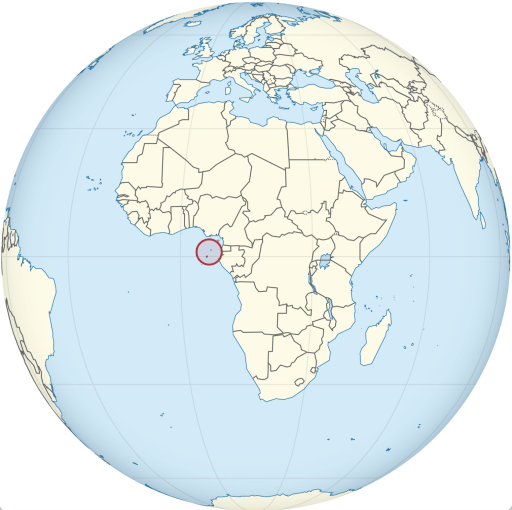
Refresher: São Tomé and Príncipe (STP) is one of Africa's smallest countries. It consists of two volcanic islands in the Gulf of Guinea, about 250 km (155 miles) off the coast of Gabon. Around 240,000 people live there. Portuguese is the official language, the currency is the dobra, and the capital is São Tomé.
What happened:
On Sunday, people voted in the first round of the presidential election, and on Monday, the preliminary results came in (this is also why I am sending this issue a day later). It's official: President Carlos Vila Nova has won a second five-year term. He received more than 55% of the vote, meaning he cleared the 50% threshold needed to avoid a runoff (the second round). His main challenger, Nito Viegas D'Abreu, won just over 41%.
Why this matters: STP is one of Africa's least populous countries and one of the continent's most stable democracies. But for a while there, the headlines seemed to suggest it was going in a different direction.
Good to know: STP's political system is similar to Portugal's (Portugal colonized STP for almost 500 years), which means there are two important political leaders: the president (who is the head of state, appoints the prime minister, can dissolve parliament under certain circumstances, but does not run everyday government) and the prime minister (who runs the government, manages ministries, and is responsible for day-to-day politics). So, for the sake of the country's political stability, it's very important these two get along...
Tell me more:
At first glance, it looked like a typical election: one candidate against another. But that would be a very incomplete news headline. In reality, this was about a president who won reelection after breaking with the very party that brought him to power, broke the constitution by firing the prime minister, and still, people voted for him anyway. The party, ADI, is also still the largest party in parliament today. Basically, if STP politics had an official soundtrack, Kanye West would be its main artist feature. (Please don't make me explain this joke. It's already quite risqué as it is.)
Did you know? One presidential candidate was barred from running. Domingos Monteiro ("Nino") was born on São Tomé. However, his parents came from Cape Verde and never became São Toméan citizens. The Constitutional Court ruled he therefore did not qualify. On a not-so-related note, he's been the president of the São Toméan Football Federation since 2015.
What the f happened in STP these past few years?
It's not a given that we all know what's happening there, so here's a quick rundown of STP politics for those of you who have no clue what's going on in this part of the world:
- In 2021, Carlos Vila Nova became president with the support of the ADI party, which was the country's largest and most powerful party. [ADI is a center to center-right party: all about private investment and Christian values; that said, São Tomé and Príncipe's politics don't map neatly onto European left-right politics. It's really more about personalities and alliance than deep ideological disagreements.]
- A few years later, he had a major disagreement with the party's leader, Prime Minister Patrice Trovoada. He said Trovoada was too often abroad and wasn't really working well with him.
- In 2025, Vila Nova fired Trovoada from office, which caused a political crisis because many people questioned whether the president had the constitutional power to do that.
- After that, the ADI and Vila Nova became enemies.
- So in this election, Vila Nova no longer represented the party that helped elect him. Instead, he ran without a party, as an independent.
- Meanwhile, ADI supported a different candidate, Nito D'Abreu. This is him speaking.
- In early 2026, the Constitutional Court ruled that the president's dismissal of the Prime Minister had indeed been unconstitutional.
- However, to avoid creating an even bigger chaos, the judges decided not to reverse everything that had happened. The ruling applied only going forward, so the new government stayed in office.
Quick history lesson: Unlike most African countries, these islands were uninhabited before Europeans arrived. In the late 1400s, the Portuguese discovered them and turned them into a colony. Portugal then brought enslaved Africans to work on sugar plantations, and later, cocoa and coffee plantations. For centuries, the islands were deeply connected to the Atlantic slave trade. The country gained independence from Portugal in 1975, after Portugal's dictatorship collapsed. In 2024, the STP government asked for reparations.
Like many newly independent African countries, São Tomé and Príncipe initially became a one-party socialist state. By the early 1990s, it peacefully introduced multi-party democracy. Unlike many countries in the region, it has generally avoided civil war, military coups (there was only one in 2022), and...
Please log in or subscribe for free to continue reading this issue.
We could use your help to make this issue better. Take a look at the requests below and consider contributing:
- Submit a piece of artwork for this issue
- Submit a news, academic or other type of link to offer additional context to this issue
- Suggest a related topic or source for future issues
- Fix a typo, grammatical mistake or inaccuracy
Below you'll find some of the sources used for this issue. Only sources that support "media embedding" are included.
-
Reeleito com 55,95% dos votos, Carlos Vila Nova agradeceu a confiança do povo. “Recebo essa confiança como um compromisso renovado para continuar a servir o país com honestidade, independência, equilíbrio e respeito pela Constituição da República”, afirmou. O presidente garantiu que dará mãos aos seus adversários para, juntos, construírem o futuro de São Tomé e […]
-
São Tomé and Príncipe's President has fired the country's Prime Minister and government. Explaining the reasoning behind the move, the statement cited 'prolonged absences of the Prime Minister' from the nation, among other reasons.
-
O Tribunal Constitucional (TC) são-tomense declarou inconstitucional o decreto do Presidente Carlos Vila Nova que demitiu o Governo do ex-primeiro-ministro Patrice Trovoada em janeiro de 2025, segundo o acórdão a que a Lusa teve hoje acesso.
-
By Catarina Demony LISBON (Reuters) – The government of the African island nation of Sao Tome and Principe will ask Portugal to repair the moral damages caused by colonialism, the country’s education and cultural minister said on Thursday. Speaking to Portugal’s Lusa news agency, minister Isabel Abreu said the Sao Tome and Principe government would…
-
After another apparent failed coup, the country’s ranking as a beacon of democracy in Africa is on shaky ground.
-
As entrevistas e debates televisivos em períodos eleitorais são ferramentas importantes que permitem aos eleitores se informarem sobre as ideias políticas e projetos eleitorais dos respetivos candidatos e ao mesmo tempo avaliar a capacidade de oratória, o domínio dos temas e a coerência dos candidatos. Nito Viegas de Abreu admitiu na entrevista que deu ao […]
-
Authorities in Guyana say a ferry carrying 133 passengers and crew has capsized. So far, 67 people, including 15 children, have been rescued.
-
Shafaq News- Damascus Clashes between Syria’s security authorities and the Kurdish-led Syrian Democratic Forces (SDF) have killed 530 people, including 76 civilians, the Syrian Observatory for
-
The death toll from two powerful earthquakes that shook Venezuela last month rose to 5,069 late on Friday, local authorities said.
-
CARICOM Reparations Commission Delegation Returns to UK to Strengthen Global Reparations Movement - CARICOMThe CARICOM Reparations Commission (CRC) will visit the United Kingdom from 13 to 16 July 2026 to advance its advocacy for reparatory justice. The delegation’s mission is to strengthen strategic partnerships to promote a programme of public education and civil society engagement on the reparations agenda. Meetings and events will be hosted by the Institute …
-
Barbados’ Prime Minister Mia Mottley is describing as “asinine” a suggestion that former colonies pay Britain back for its investment in them.
-
Yemeni group says the announcement is based on the principle of ‘an eye for an eye’.
-
Support grows for Sonam Wangchuk as protests erupt in multiple cities ahead of July 20 Parliament march - India News | The Financial ExpressProtests supporting activist Sonam Wangchuk and the Cockroach Janta Party spread across multiple cities ahead of the July 20 Delhi march, highlighting exam irregularities and calling for Education Minister Dharmendra Pradhan’s resignation.
-
MONTEVIDEO (Uypress) – Un proyecto de ley presentado en la Cámara de Representantes propone crear un subsidio destinado a cofinanciar el alquiler de familias jóvenes con bajos ingresos y de estudiantes del interior que deban trasladarse para cursar estudios terciarios o universitarios.
-
For the first time, call centre and business process outsourcing (BPO) workers in the Philippines have won a formal, dedicated seat at the table to shape their industry. The National Tripartite Industrial Peace Council, consisting of workers, employers and the government, has approved a new Ad Hoc BPO Subcommittee. UNITED BPO Workers of the Philippines,
-
Six young people in their 20s compose and rap in their native language and in Spanish about the history of their communities
-
Indigenous teachers pass on their native language at Michigan State University as a way to resist cultural displacement
-
Today we’d like to introduce you to Azure Gao. azure, we appreciate you taking the time to share your story with us today. Where does your story begin?I grew up in New York, NY. I went to a highly competitive Ivy League prep school and was a good student, up until my teenage years, that […]
-
Play AZURE and discover followers on SoundCloud | Stream tracks, albums, playlists on desktop and mobile.
-
Health officials issued a travel advisory following a spike of over 1,600 parasitic infections across 34 U.S. states.
Each week, What Happened Last Week curates news and perspectives from Asia, Africa, and the Americas. The newsletter is written by Sham Jaff and focuses on stories that rarely receive sustained attention in Western media.
Read the free edition every week. VIP subscribers receive additional stories, recommendations on what to watch, read and listen, and more.