

Issue 393: This week, the focus is on the miserable heatwave many of us experienced over the past few days in Europe. I was experiencing it in Oxford, UK, and, in a very painful way, I learned that this city was not at all well-prepared for extreme heat. So I reached out to Delhi, India, and asked: What are you learning about heatwaves that Europe needs to hear ASAP?
Also this week: Israel's recognized the genocide of Armenians, an alternative Pride march took place in Mexico City, South Africa's anti-migration protests are heating up, Mexico's unofficially poor ambassador is officially rich, the biggest movie in South Korea this year is about a king you've (likely) never heard of, and so much more.
This newsletter has been edited by Jonathan Ramsay.
What is India still learning about extreme heat? I talked to a climate policy expert in Delhi
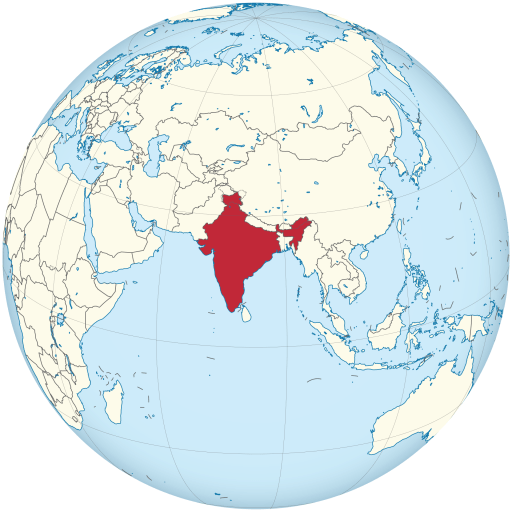
What happened:
Last week, Oxford felt strangely unprepared for the heatwave. Quick reminder: I'm here as one of the Journalist Fellows at the Reuters Institute for the Trinity Term. The first sign of how unprepared Oxford was, was an email from my accommodation after the UK issued a red (emergency response) heat warning: 'drink water, stay indoors during the hottest hours, and close your curtains.' It was sensible advice, but almost all of it put the responsibility on us as individuals.
What we did: Before the heatwave started, my co-fellows at the Reuters Institute and I moved our classes online. Our group chat became a hub for 'places with air conditioning' tips. While some people I knew escaped to rivers and shopping centers, they couldn't escape the nights; they were the hardest. At least, for me they were. I quickly discovered that British buildings are designed to keep heat in and that they have very little airflow. My room barely cooled down as the temperature dropped. More often than not, it felt like it was hotter inside than outside.
Across Europe, I kept seeing the same response online: people were asking for more air conditioners. As someone from Kurdistan, I am very much used to having air conditioning in private homes. However, I also know how hot it gets the moment you step out onto a balcony where the AC unit is running. I don't think that is the long-term answer. So, what then? The whole week made me wonder whether we were looking for answers in the wrong places. I decided to speak to someone whose country has been dealing with extreme heat for much longer than Europe has. I spoke to Rohit Magotra, Deputy Director at the Delhi-based think tank IRADe, where he leads research on climate change and cities.
For more than a decade, he has worked with Indian city governments to develop heat action plans, map urban heat islands, and identify which neighbourhoods are most vulnerable to extreme heat. I asked him a simple question: What have you learned?
Tell me more:
I edited our conversation for brevity and clarity.
Map vulnerability, not just temperature. One idea Rohit returned to repeatedly was that cities shouldn't only ask where it's hottest, but where people are most vulnerable. He described how his team combines urban heat maps with information on housing quality, drinking water, electricity, healthcare and social infrastructure. The goal is to understand why a neighbourhood is vulnerable, so governments can respond more precisely. He also stressed that vulnerability changes over time. Someone may develop a chronic illness, lose a partner, or begin living alone. Heat plans, he argued, should account for those changes.
Heat is actually an indoor problem. Heat wasn't only affecting outdoor workers. Rohit said his team's household surveys found that women spending much of the day indoors were often experiencing severe heat stress because of small homes, poor ventilation, and roofs exposed to the sun. Improving indoor thermal comfort through better ventilation and housing, he argued, deserves much more attention. Science says that most heat-related deaths happen indoors.
Every neighborhood needs a different solution. Rather than recommending one city-wide response, Rohit argued that interventions should depend on what is making each neighbourhood vulnerable. In some places, that meant improving water access. In others, it meant temporary health camps because hospitals were too far away. At busy transport hubs, it meant shaded waiting areas with drinking water and oral rehydration salts. "The idea," he told me, "is to identify the factor causing the vulnerability."
Don't solve heat only with air conditioning. Rohit believes air conditioning is an important short-term tool, but not a long-term strategy on its own. For example, this study in Lyon, France says air conditioners make cities hotter. Rohit says the same thing: air conditioners release waste heat back into the streets, contributing to higher urban temperatures. Instead, he argued that cities should invest more in passive cooling, including better ventilation, shade, trees, cooler buildings, and public cooling spaces.
Heat adaptation is really governance. When I asked which Indian city was doing this best, Rohit didn't name one. Instead, he argued that implementation often depends less on the plan itself than on whether local governments are willing to act. He pointed to Delhi as an example. According to him, discussions around heat adaptation had been happening for years, but implementation accelerated only after the city formally adopted a heat action plan and political attention increased.
Other things that stuck with me
- Evidence changed minds. Rohit said city officials initially treated heatwaves as a seasonal inconvenience. What changed was showing them decades of data: more heatwave days, hotter nights and rising mortality once temperatures crossed certain thresholds. In one city, officials lowered their heat warning threshold almost immediately after seeing the evidence.
- Cooling centres don't have to be complicated. Delhi has started opening public cooling zones with drinking water, fans, seating, first aid, and oral rehydration salts (ORS), particularly for people spending long hours outdoors.
- Schools are using "water bells." Some schools now ring a bell every 45 to 60 minutes reminding children to drink water, whether they feel thirsty or not. The idea is to build the habit before dehydration becomes a problem.
- Early warning systems are only useful if people know what to do. India has weather warnings up...
Please log in or subscribe for free to continue reading this issue.
We could use your help to make this issue better. Take a look at the requests below and consider contributing:
- Submit a piece of artwork for this issue
- Submit a news, academic or other type of link to offer additional context to this issue
- Suggest a related topic or source for future issues
- Fix a typo, grammatical mistake or inaccuracy
Below you'll find some of the sources used for this issue. Only sources that support "media embedding" are included.
-
Sham Jaff is a freelance journalist and founder of Gishty, a multi-newsletter platform on perspectives and news from Asia, Africa and the Americas. Her flagship newsletter, What Happened Last Week, has reached a loyal readership of more than 38,000 readers worldwide since 2014.
-
A Systematic Review of Heat Health Warning Systems: Enhancing the Framework Towards Effective Health Outcomes - PMCHeat Health Warning Systems (HHWS) reduce heat-related morbidity and mortality. We reviewed scientific studies on HHWS that use meteorological variables, local climate-epidemiological evidence, personalization, and built environment factors to ...
-
Evaluations of heat action plans for reducing the health impacts of extreme heat: methodological developments (2012–2021) and remaining challenges | International Journal of Biometeorology | Springer Nature LinkThe recent report of the Intergovernmental Panel on Climate Change is stark in its warnings about the changing climate, including future increases in the f
-
Climate change increases the frequency and intensity of hot spells and heatwaves, which pose significant risks to humans. Prolonged exposure to extreme heat can cause dehydration, heatstroke, and exacerbation of existing conditions. Vulnerable populations, such as the elderly, children, and those with heart, kidney, respiratory diseases or mental health concerns, are particularly at risk.
-
Experts warn that official heatwave death figures are grossly underestimated.
-
Sa'diyo Bajaaj was sentenced to three years in prison by a Banadir court in Mogadishu, Somalia, after more than 70 days in detention, a ruling critics describe as politically motivated.
-
A Pakistani anti-terrorism court sentenced prominent Baloch activist Mahrang Baloch and fellow BYC leader Sibghatullah Shahji to life imprisonment, triggering a provincial shutdown strike and international condemnation.
-
Senado decidirá AC contra Grau luego de aprobación en la Cámara; PDI confirma que ya localizaron a los 64 niños haitianos, y Kast anuncia reforma al Sistema de Admisión Escolar - CIPER ChileMedio de investigación periodística independiente en Chile, enfocado en reportajes de actualidad y brindar información de calidad a la ciudadanía.
-
High in the mountains of Lunana, more than 4,000 metres above sea level, some of Bhutan’s most dangerous glacial lakes are watched around the clock, not
-
Rappler's Dwight de Leon enumerates developments so far from laborious meetings that could dictate the pace of the trial of the decade
-
Israel’s Cabinet has approved a proposal to designate the violence against Armenians by the Ottoman Empire during World War I as genocide.
-
Syria opens trial of Wassim al-Assad, cousin of ousted president: What we know - AL-MONITOR: The Middle Eastʼs leading independent news source since 2012The trial follows another session in the case against Atef Najib, also a cousin of former President Bashar al-Assad, as Syrian authorities continue prosecuting figures linked to the former regime and its remnants.
-
GEORGETOWN, Guyana (CMC) – President Irfaan Ali has urged accountants across the Caribbean to embrace artificial intelligence (AI), adapt to changing economic conditions and take on broader roles in policy analysis, strategic planning and data-driven decision-making if the profession is to remain relevant. Addressing the opening of the 43rd Annual Conference of the Inter-American Accounting Association (ICAC) on Friday, Ali told more than 300 delegates that the profession is operating...
-
“¡Queremos trabajo, la FIFA al carajo!; la Contramarcha del Orgullo exige respeto a sus derechos | Grupo AnimalCientos de personas participaron este sábado en la Contramarcha LGBTQIA+ con el objetivo de exigir respeto a los derechos de la diversidad sexual y de género, así como reclamar justicia por las person
-
Pré-candidatos da bancada do Cocar são de 16 estados e do DF, nove partidos e buscam vagas no Congresso, assembleias e governo estadual
-
Extension II Magistrate’s court has ordered alleged serial rapist, Gomolemo Loeto to provide a DNA sample, ending a nearly two-year legal deadlock over his refusal to cooperate with investigators, and that reasonable force will be used against him.
-
As Laos prepares to graduate from the UN’s least developed country category, experts argue the country’s next challenge is building a cleaner, greener, and more sustainable future.
-
Through weekly conversations, 100 Climate Conversations profiles innovators leading Australia’s response to climate change. Presented by the Powerhouse Museum.
-
Part philosophy and part spiritual exercise, Alewya’s debut album ZERO embraces the unknown and finds endless possibility in nothingness.
Each week, What Happened Last Week curates news and perspectives from Asia, Africa, and the Americas. The newsletter is written by Sham Jaff and focuses on stories that rarely receive sustained attention in Western media.
Read the free edition every week. VIP subscribers receive additional stories, recommendations on what to watch, read and listen, and more.