

Issue #392: It's Pride Month, and this newsletter wouldn't be your favorite newsletter if it didn't try to make the world a little more complicated. This week, we're looking at South Korea. Outside the country, it's often seen through its biggest exports: K-pop, Netflix dramas, and smartphones. But there's another side to the story. South Korea remains relatively conservative when it comes to queer rights, and debates over Pride, schools, and anti-discrimination laws are still very much alive. Let's add a few more shades to the country's international reputation and, hopefully, become better allies in the process.
Also this week: Iran and Egypt play during Pride in Seattle, we are still discovering entirely new species on Earth, an Argentine sociologist on why FIFA is sht but football isn't, the beef between the U.S. and Somalia (it's about more than just the referee), Sudan's under-17 female football team is ready to compete, some good news from the Amazon, and so much more. What Happened Last Week intern Pia Monroy Rodriguez really made sure you have a lot of good news* to catch up on. Say 'thank you, Pia' when you smile today.
This newsletter has been edited by Jonathan Ramsay.
South Korea may have a big and very visible Pride event, but the country's organized Christians are the biggest opponents of LGBTQ rights
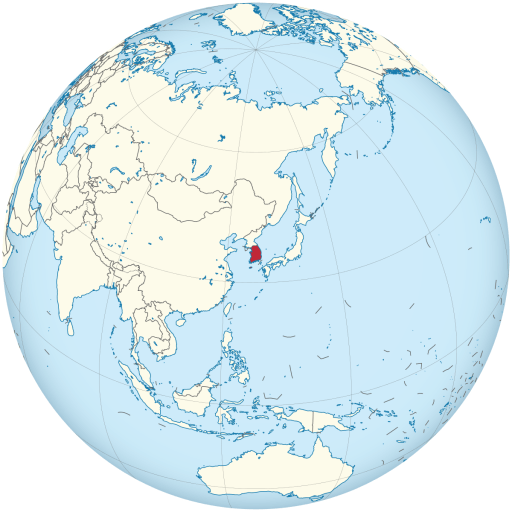
Refresher: What is life like for queer people in South Korea today? Not too good. Yes, there's a big Pride in their capital Seoul every year (since 2000). It's even one of Asia's biggest Pride events, complete with drag performances and free HIV testing. But the country itself is quite polarized when it comes to same-sex relationships and gender diversity.
What happened:
On June 13, 2026, the Seoul Queer Parade took place in central Seoul, around the Euljiro and Jonggak area (one of the city's busiest areas). Tens of thousands of people attended. A few hundred metres away from the parade, conservative Christian groups often hold their own rallies. They also attract thousands of people, sing hymns, and campaign for what they call a "healthy Korea." For many of them, homosexuality is a sin. At least, there have been no clashes between the two in previous years, writes The Korea Herald.
Good to know: In South Korea, people often say "Pride," but they're usually referring to the broader Seoul Queer Culture Festival (SQCF) rather than only the march itself. The parade is just one part of a month-long set of events. Other parts include a film festival, exhibitions, merchandise fairs, and more.
Why this matters: South Korea is one of the most Christian countries in East Asia, and conservative Protestant churches have become one of the strongest organized opponents of LGBTQ rights (they represent a fifth of the population, writes The Guardian). Multiple anti-discrimination bills haven't gone through partly because of their influence.
Tell me more:
Here are a few places where debates about queer rights are playing out in South Korea today:
- ... In public spaces. Despite its size, Seoul Pride again this year was denied access to Seoul Plaza, one of the city's most prominent public spaces. The festival had been held there for six consecutive years before losing permission four years ago. This is because of Seoul's very own mayor, Oh Se-hoon. He has publicly said he "cannot support homosexuality," and that holding Pride at the city's main square is "not desirable."
- ... In schools and universities. In Seoul's recent education superintendent election, some candidates campaigned on promises to remove what they called "queer education" from classrooms. At Soongsil University (private; first modern university of the country), an LGBTQ+ club reportedly cannot even register officially as a student organization.
- ... In film and culture. Yes,queer stories have become more visible in Korean film and television over the past two decades. South Korea now hosts two major queer film festivals: the Korea Queer Film Festival and the Seoul International Pride Film Festival). But even here, access to space remains contested. Last year, a cinema at Ewha Womans University (private; very well-known) told organizers it could no longer host the queer film festival because the screenings conflicted with the university's Christian principles. Students responded by organizing their own queer film festival.
What rights do LGBTQ people have in South Korea?
Here's an overview (but it's fewer than you'd expect):
Same-sex marriage is not legal, which means same-sex couples miss out on many of the rights automatically granted to married couples, including some protections related to inheritance, family status, medical decision-making and other legal benefits. However, same-sex couples can now register themselves as partners in government census records.
South Korea also still lacks a nationwide anti-discrimination law that explicitly protects people from discrimination on a range of grounds, including disability, religion, age, sex,and sexual orientation and gender identity. Opposition has often focused on the latter part. However, LGBTQ rights are very slowly advancing through individual court cases. For example, as of 2024, same-sex couples must be treated equally when it comes to a particular health insurance benefit.
The reason this nationwide anti-discrimination law hasn't passed for the past two decades is, well, some politicians oppose it outright, while others have been reluctant to push it forward for fear of backlash from conservative Christian groups. One of the most controversial figures in the debate is the head of South Korea's Human Rights Commission, who has previously described homosexuality as a tool for a "communist revolution" and opposes anti-discrimination legislation. His commission is now overseeing a study examining how anti-discrimination laws work in other countries as South Korea (still) considers whether to introduce its own. Critics argue that raises an obvious question: How independent can the review be when the person overseeing it has already made his position so clear?
Dig deeper: Korea Herald shows what happens when people cannot choose their families legally.
Zoom out: South Korea's far-right online culture is growing, and this, of course, mostly affects people with disabilities, migrants, and LGBTQ+ people, writes Hankyoreh.
what else happened
Bad
Israel / Lebanon: Israeli Prime Minister Netanyahu said the country's military is going to stay in southern Lebanon "to protect Israel's northern border as long as necessary." (Al Jazeera) In the same week, on Saturday, Israeli airstrikes on southern Lebanon killed at least 28 people, including a family of four. (RTÉ News) On Sunday, at least 47 people were killed, and 97 more injured. (NBC News) Meanwhile, the U.S. announced that Israel and Hezbollah agreed to a ceasefire. (NBC News)
Palestine / Israel: The Gaza Health Ministry said that over 1,000 Palestinians have been killed in the Gaza Strip since the ceasefire was announced last year. (AP)
Sudan: Sudanese human rights organization Emergency Lawyers reported that the RSF killed nine civilians in North Darfur. (Middle East Monitor) In the same week, in Kordofan (western Sudan),...
Please log in or subscribe for free to continue reading this issue.
We could use your help to make this issue better. Take a look at the requests below and consider contributing:
- Submit a piece of artwork for this issue
- Submit a news, academic or other type of link to offer additional context to this issue
- Suggest a related topic or source for future issues
- Fix a typo, grammatical mistake or inaccuracy
Below you'll find some of the sources used for this issue. Only sources that support "media embedding" are included.
-
Thousands of people gathered in central Seoul on Saturday for an annual LGBTQ pride parade, while a conservative Christian group held a nearby counter-rally,
-
Walking through Seoul, it is not hard to spot large election banners calling for "homosexuality education" to be expelled from schools, part of conservative Seo
-
Organizers and attendees highlight the important role that queer film festivals play in recording and nurturing community and solidarity in Korea, even as they have to fight for a physical space every year.
-
On July 18, South Korea’s Supreme Court issued a landmark ruling affirming that the country’s National Health Insurance Service (NHIS) must extend dependent benefits to same-sex partners.
-
정부, 혐오 표현·차별 방지 법제화 시동 이재명 정부 1년 성과집 발간 해외사례 실태조사... 종교계 반대 감사원법 개정안 상반기 제출 노근리 사건 희생자 명예회복 지원도 정부가 해외의 차별 금지법 시행 사례를 조사하고, 이를 토대로 혐오 표현과 차별을 금지하는 내용
-
국가인권위원회가 차별금지법 관련 연구용역을 맡긴 기관의 연구 책임자가 평소 성소수자 혐오 발언을 공개적으로 해온 인물로 확인되면서 인권단체들이 강하게 반발하고 나섰다.국가인권위원회 바로잡기 공동행동(37개 단체)이 9일 서울 중구 국가인권위원회 앞에서 기자회견을 열고...
-
In South Korea, recognition as "family" can determine who is allowed to visit a hospital room, take care leave, remain in a shared home or make decisions in an
-
A culture of hateful mockery in far-right circles has become a form of entertainment that permeates our everyday lives
-
Iran has announced it has once again closed the Strait of Hormuz over Israel's attacks on southern Lebanon.
-
Israel and militant group Hezbollah agreed to a ceasefire Friday, after a deadly escalation between the two in Lebanon looked set to derail Washington-Tehran peace talks in Switzerland
-
Israeli operations in the Gaza Strip have killed 1,005 Palestinians since a ceasefire was reached between Israel and the militant group Hamas last October.
-
TASIS health ministry declares cholera outbreak in Kordofan
-
ADDIS ABABA, Ethiopia (AFP) — The Ebola epidemic has claimed more than 200 lives in the Democratic Republic of Congo (DRC), a little over one month after it was declared, the African Union's health agency said Thursday. The Africa CDC said 202 people had died from the virus, from 875 confirmed cases, giving a mortality rate of 23 per cent. "What is worrisome for us is the contact tracing status,"...
-
El abogado de 47 años obtuvo 12,9 millones de votos en la segunda vuelta presidencial. Varios sectores políticos lo felicitaron.
-
Government workers in different parts of Afghanistan have started switching off their smartphones, following an order imposed Wednesday that they told AFP came from Supreme Leader Hibatullah Akhundzada.
-
The proposal would extend Emmerson Mnangagwa's term by two years and scrap direct presidential elections.
-
Свежие Новости Кыргызстана и Бишкека на нашем сайте 24.KG. Ошские события, Выборы, Политика, Парламент, Экономика, Общество, Люди и судьбы, Бишкек-24, Великая Победа, Репортажи, Криминал, Происшествия, Бизнес, Спорт, Кадры, Культура, Про кино, Центральная Азия, СНГ, Здоровье, В мире, Техноблог, Финансы, ЕАЭС, Власть, Агент 024, Спецпроекты: Курс валют и Прогноз Погоды на июнь 2026...
-
President of Kyrgyzstan Sadyr Japarov signed an order dismissing Abdupaty Matkalikov from his post as Mayor of Manas city in Jalal-Abad region.
-
-
Un hombre de apellido Ordoñez es sospechoso de amenazar de muerte a la presidenta Laura Fernández. El sujeto permanece en fuga.
-
KOTA KINABALU: A team of researchers from Universiti Malaysia Sabah (UMS) has discovered a new horn‑like fungus species in the Danum Valley Conservation Area in Lahad Datu.
-
Sudan's women's national soccer team has made its first international appearance since civil war erupted in the country.
-
Primeira Turma definiu punição em regime inicialmente semiaberto, e ex-deputado fica inelegível
-
O gov.br reúne, em um só lugar, serviços para o cidadão e informações sobre a atuação de todas as áreas do governo.
-
Estado reconoce la gobernanza comunitaria ejercida por autoridades ancestrales y cofradías del pueblo Ch’orti’ en Quezaltepeque - Prensa ComunitariaEl 14 de junio las autoridades indígenas y el Comité de cofradías y mayordomos de San Francisco Quezaltepeque recibieron los títulos y reconocimientos de la Gobernación Departamental en donde se reconoce como los encargados de velar por las costumbres, tradiciones y normas de la comunidad. Amílcar Morales El domingo 14 de junio de 2026, la ... Read more
-
About a hundred Colombian guerrilla dissidents have surrendered their weapons as part of a peace process with President Gustavo Petro's government.
-
Parece cada vez más divorciado del mundo. Pero el Mundial también revela algo profundo sobre quiénes somos y qué compartimos en América Latina.
-
Today, the United States Secretary of Homeland Security Kristi Noem announced the termination of Somalia’s designation for Temporary Protected Status (TPS). The termination will be effective on March 17, 2026.
-
-
The World Cup was meant to be the culmination of Omar Artan’s remarkable rise. His exclusion from it revealed something equally striking: the magnitude of the admiration he had earned at home and globally.
-
Both countries have asked for the city’s annual celebrations to be cancelled for the June 26 game
Each week, What Happened Last Week curates news and perspectives from Asia, Africa, and the Americas. The newsletter is written by Sham Jaff and focuses on stories that rarely receive sustained attention in Western media.
Read the free edition every week. VIP subscribers receive additional stories, recommendations on what to watch, read and listen, and more.