

Issue #391: The military junta in Myanmar just appointed its first female spokesperson. Is it progress? Let's dig a little.
Also this week: the real reason Ebola research for the current strain in the DRC lags behind, why Thailand had a prime minister of Chinese descent (it has something to do with Bangkok's Chinatown), an earthquake in the Philippines so powerful it physically lifted the seabed, a court built specifically to put Putin on trial (he won't show up, but that's not really the point), it is a crime to even witness a same-sex marriage in Niger now, what the "tax the billionaires" debate sounds like when Africa is having it, and a Colombian town that took on Coca-Cola over water rights, and won. Plus, so much more.
This newsletter has been edited by Jonathan Ramsay.
Myanmar's new spokesperson is female. Yay, feminism?
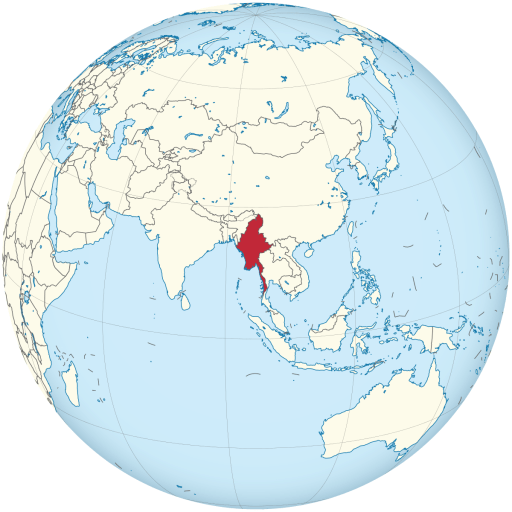
Refresher: In 2021, the military in Myanmar took full control of the country, arrested and jailed its leaders (who were elected by the people), and "all hell has broken loose" (just a figure of speech; the country is not literal hell) in the country since. The military government has been trying to rebrand itself around "look at us, we're actually listening to civilians and we are progressive, too." Myanmar's current leader, Senior General Min Aung Hlaing, recently stopped calling himself military chief and began presenting himself as "president." There were "elections" in April (caution: the link goes to "Global New Light of Myanmar", the junta's state-run English newspaper). He's also appointed a female vice president. And now...
What happened:
Min Aung Hlaing has appointed a new spokesperson for the government. For the first time, the role will be held by a woman: Dr. Khaing Khaing Soe.
Why this matters: It doesn't.
Tell me more:
Dr. Soe is not a no-name; she's spent years working in Myanmar's immigration system. In this new role as a spokesperson, she replaced Major General Zaw Min Tun, who had been in this position for nearly five years. Dr. Soe is highly educated (a demographer; has a PhD from Mahidol University, a well-known university in Thailand) and has put those skills to use in service of the military government. She's also deeply embedded into the government. She married an army colonel last year, received a state medal from Min Aung Hlaing, and worked closely with officials connected to the military leadership. She also contributed to the regime's census survey in 2024. (A census survey sounds neutral but it is not. Its outcome, like who gets counted or how ethnicity is organized, has real consequences for resource allocation, political representation, and in Myanmar's case, for communities already facing ethnic persecution).
Isn't female representation in politics inherently good?
The problem is that very little else has changed. The junta can appoint a woman as spokesperson, but she does not make policy. Her job is to communicate and defend decisions made by Min Aung Hlaing. Plus, Myanmar is still in a civil war, opposition groups control large parts (some say 60%) of the country and some have even formed an alliance, and thousands of political prisoners are still in prison. The military to this day holds power through sheer force rather than democratic elections. Critics argue that all of this is mostly political theater.
Good to know: "Myanmar's military regime has conducted another nine massacres in just two months, killing at least 100 civilians and injuring 26 others," reports The Irrawaddy. Three were documented in Chin State, two each in Karen, Sagaing, and Magwe, and one in Mandalay. For context, those states are mostly held by armed resistance groups. All this fighting has also led to a very dangerous food situation. People can't grow food because there's active fighting around the fields, and in some areas, landmines. If you can't farm, you can't eat and you can't earn. In northern Rakhine state (where the fighting is very intense), the World Food Programme estimates that more than half of families there can't afford enough food to eat, and that number jumped from 1 in 3 to more than 1 in 2 in just a few months. According to the UN, conflict and disasters have also displaced an estimated 3.6 million people.
Did you know that the Chinese New Year became a public holiday in Myanmar this year? China is very, very important to the military government in Myanmar (China is one of the main suppliers of the military, according to The Irrawaddy. Now the main arms supplier is Russia, writes researcher Andrea Passeri in a new book). This is surprising because Myanmar's military for decades built its entire identity around Burman nationalist ideology. That nationalism was explicitly suspicious of Chinese influence. The military saw itself as the guardian of Burmese sovereignty, culture, and Buddhist identity against outside interference. That identity was also deeply anti-Chinese at the popular level. There's a long history of anti-Chinese sentiment in Myanmar. Ethnic Chinese communities (about 3% of the population) have faced riots, discrimination, and violence periodically throughout modern history. So, this wasn't a small administrative decision. However, Myanmar has not entirely become a puppet of China. "They're simply performing closeness, but they're still deeply skeptical of each other," writes Passeri.
Zoom out: How do other countries in the region deal with Myanmar? ASEAN (the Asian EU, basically) essentially lost a lot of credibility after what happened in Myanmar (others say, 'nah, the Cambodia-Thailand conflict will define ASEAN's future much more'). Essentially, after the military took over in 2021, the bloc split into two camps. Some are "frustrated," like Malaysia, Singapore, and Indonesia, who wanted a tougher response. The bloc even came up with a peace plan that Myanmar literally ignored. Cambodia and Thailand follow the "none of our business" strategy; India and Japan did not impose any serious sanctions because, well, money. Tl;dr: A military that staged a coup and lost enormous amounts of territory to resistance forces is still, somehow, not fully isolated internationally. Oh yeah, some Western countries sanctioned it, but that helped as much as in Russia, write Sergey Sosnovskikh, Anton Klarin and Htwe Htwe Thein in The Conversation. Sanctions are, according to research, effective less than 10% of the time.
what else happened
Bad
The Philippines: A 7.8 magnitude earthquake hit the southern Philippines last week, killing at least 61 people with 40 still missing. The quake was so powerful that it physically lifted the seabed by up to 2 meters, a geological phenomenon called "coastal uplift." (The Guardian)
Mali: Mali's al-Qaeda affiliate, JNIM, has put a €2 million bounty on the head of Mali's president, and €1 million each on two senior military figures. They're offering the money to anyone who reveals their location or takes "concrete action to neutralise them." The current president, Assimi Goita, came to power through two coups...
Please log in or subscribe for free to continue reading this issue.
We could use your help to make this issue better. Take a look at the requests below and consider contributing:
- Submit a piece of artwork for this issue
- Submit a news, academic or other type of link to offer additional context to this issue
- Suggest a related topic or source for future issues
- Fix a typo, grammatical mistake or inaccuracy
Below you'll find some of the sources used for this issue. Only sources that support "media embedding" are included.
-
The group of military representatives from both houses will elect a third vice president. After that, all members of the parliament will vote to elect the president from among the vice presidents.
-
Passeri unpacks the highly polarized and dysfunctional reaction of the international community vis‑a‑vis Myanmar’s 2021 military coup, as well as the strategy
-
Sanctions drive nations towards building domestic industries to replace imported goods and strengthening alliances with supportive countries.
-
According to her findings, 77 per cent of all deportations carried out since 2018 occurred after 2022, making recent years the most active period for the removal of Gambian nationals from Germany.
-
Manufacturers in Jamaica say the key chilli peppers they need are in limited supply.
-
Seoul court sentences former leader for sending military drones into North Korea.
-
The journalists stood trial due to dozens of articles they produced. One of them was given a deferred prison sentence.
-
The Chinese leader’s visit came from a rare position of strength for Kim Jong Un, who has revived his economy and benefited from his support for Russia.
-
BOGOTÁ (Uypress)- Una comisión del Congreso colombiano suspendió temporalmente al presidente Gustavo Petro de su cargo hasta el 21 de junio, fecha de la segunda vuelta presidencial, para evitar su participación en política durante la etapa final de la campaña, orden que dio la Comisión de Acusación de la Cámara de Representantes, mientras investiga a Petro por su presunta participación en la campaña electoral, según informan agencias internacionales.
-
En el marco de la reorganización administrativa al interior del Gobierno anunciada formalmente el jueves 4 de junio de 2026, el presidente Daniel Noboa redujo
-
The tribunal on the crime of aggression against Ukraine marks "the point of no return" in the search for justice, the country's foreign minister said on Friday. But the court will face limitations in bringing Putin to justice.
-
A widening property-fraud investigation into a $4 billion luxury resort linked to Jared Kushner has led Albanian authorities to freeze developer assets, compounding pressure from public protests and international critics.
-
Oklahoma became the 17th state to end child marriage by enacting a law that raises the minimum age for marriage to 18.
-
Organizaciones afines a La Habana reúnen paneles solares, alimentos y material sanitario mediante fondos públicos y donaciones
-
A esto se suma el aviso del Ministerio de Minas y Energía de retomar las exportaciones de energía hacia el vecino país.
-
In the dead of night, behind a screen, the president’s name was purged from the facade of the Washington building
Each week, What Happened Last Week curates news and perspectives from Asia, Africa, and the Americas. The newsletter is written by Sham Jaff and focuses on stories that rarely receive sustained attention in Western media.
Read the free edition every week. VIP subscribers receive additional stories, recommendations on what to watch, read and listen, and more.