

Issue #389: This week focuses on Namibia. I am not German; I only hold a German passport. But living in Germany and doing what I do, I've always noticed that Germany doesn't particularly talk much about Namibia. I didn't learn much about the genocide that happened there between 1904 and 1908, so I've been doing my own reading for years.
Last week was Genocide Remembrance Day in Namibia, and I went through different Namibian news outlets to understand where the country stands politically, culturally, and socially right now. I hope it makes you more curious about what justice looks like more than 120 years later.
Also this week: Pia has been busy. She brought us a new worm in Costa Rica, food security projects in St. Vincent and the Grenadines, and (unfortunately) the news that the Yagua Indigenous group in Peru have dangerously high levels of lead in their blood. She has also been working on a Colombian election explainer (there's going to be a runoff in June), and we are getting Colombian journalists involved. I can't wait to show you! Plus, I've included a Dominican female rapper for your playlists, why Kazakh children love Turkish gum, and "three Chinese people".
This newsletter has been edited by Jonathan Ramsay.
More than 120 years later, Namibia remembers the genocide Germany committed. There's still no justice.
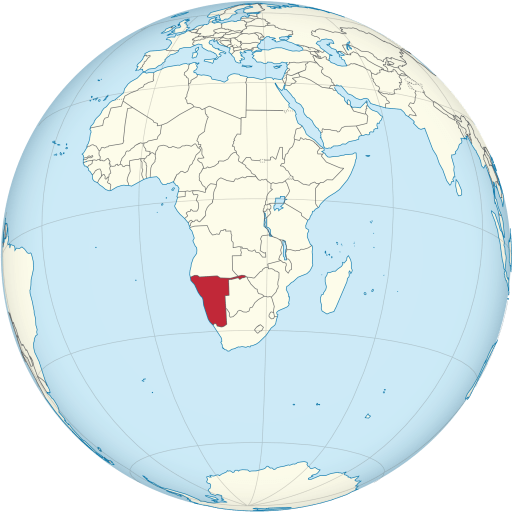
Refresher: Between 1904 and 1908, German colonialism killed tens of thousands of Ovaherero and Nama people in a campaign of massacres, forced displacement, and deliberate starvation that historians now recognize as one of the first genocides of the 20th century. Germany only formally acknowledged this in 2021, offering €1.1 billion over 30 years in a Joint Declaration. Many descendants and opposition lawmakers rejected it, saying they weren't consulted during negotiations. Plus, the money comes framed as "development aid" rather than reparations, which matters legally and symbolically. The country remembers all of this on May 28, which is officially known as Genocide Remembrance Day in Namibia.
What happened:
Last week, Namibia held its official Genocide Remembrance Day. All over the country, there were commemoration events held.
Why this matters: Namibia is the world's second-most unequal country (after South Africa). A lot of that inequality has something to do with colonialism under Germany (and the genocide Germany committed) and apartheid under South Africa. Some 3 million people live in Namibia.
Did you know that the reason there is an official Genocide Remembrance Day in Namibia is because the descendants of the people who were killed made sure there is one? It didn't come from the government itself. The two names of interest are Kuaima Riruako (who formally raised the issue in 2006) and Usutuaije Maamberua (he raised it again in 2016; and that's also when it was officially established). If you're interested in why this is the case, you need to follow some Namibian politics. The short version: the SWAPO (the country's ruling party for many, many years, dominated by the Ovambo ethnic group) would like a different official founding story: "We liberated Namibia from apartheid South Africa," so they haven't been pushing too hard on genocide recognition.
Tell me more:
I want to give an overview of the national debates as reflected in The Namibian (the country's main independent news outlet), New Era, and NAMPA (the country's national wire service):
- "Document, document, document": Prime Minister Elijah Ngurare called for the continued documentation of the genocide through books, archives, universities, museums, and films.
- "Hello?! We're still here, and we still don't approve": Kae Matundu-Tjiparuro, journalist and descendant of the survivors of the Ovaherero, Ovambanderu, and Nama genocide reminds the Namibian government and public that the Joint Declaration between the German and the Namibian government is bullsh*t, because literally nobody has been elected specifically as representatives of genocide descendants in a reparations negotiation. So, who's negotiating with whom on whose behalf?
- "We want a law that makes it illegal to deny what happened": Maamberua, one of the descendants who initiated Genocide Remembrance Day, agrees with Matundu-Tjiparuro. He also wants a lot of other things: a law criminalizing genocide denial (because many German-Namibians, as the New York Times reported in 2017, still openly minimize or deny the genocide. I don't know if that's still very much the case today), mandatory genocide history in schools, that human remains still in German universities are returned, that there are reparations not only from the German state, but also from those private German companies that profited from camp labour, and that the missionary church (which he says handed survivors over to the military and became one of the biggest landowners in Namibia) returns the stolen land.
- "This is not only about what happened between 1904 and 1908. This is about why people in Namibia today are landless and poor": Nama politician William Minnie (who is from southern Namibia, historically where the Nama live), from the Landless People's Movement (one of the country's newer opposition parties founded in 2018; talks a lot about land redistribution), writes in New Era that "remembrance without justice is meaningless".
- Some demand different commemoration events for different affected communities, writes Uakutura Kambaekua in NAMPA.
- "We are part of this fight too": The Forum of German-speaking Namibians, representing the descendant community of the colonial settlers, formally stated that they consider the events of 1904--1908 to be genocide, not merely "atrocities," and reaffirmed their support for reparations and restorative justice. "Germany is ready to issue a formal and unconditional apology upon conclusion of the Joint Declaration," said former chairperson Harald Hecht in New Era.
- "A step forward, but not enough": National Assembly Speaker Saara Kuugongelwa-Amadhila (the most senior parliamentary voice to speak on the day) said the 2021 Joint Declaration between Namibia and Germany was a step forward, but that concerns raised during negotiations still need to be fully addressed.
How much of Germany's colonial era is still visible in Namibia today?
A lot. Here are a few examples:
- Buildings: For example, there's a huge church in the center of Namibia's capital, Windhoek. It is called the Christuskirche (Christ Church in German), and was built between 1907 and 1910 (Remember: the genocide happened between 1904 and 1908). The Germans called it a symbol of "peace and reconciliation". Next to it used to stand a bronze statue of a German soldier on horseback (they put that up in 1912) to honor the German soldiers and civilians who died during the genocide. The statue was removed in 2013 and was replaced with the Independence Memorial Museum. The church is still standing, writes Andreas Thomas in The Namibian. It is now one of Namibia's most visited tourist attractions. There are also other colonial era buildings, like the Alte Feste fortress (this is being turned into a National Genocide Museum; the German government is contributing €160,000), the railway station, and the entire capital's...
Please log in or subscribe for free to continue reading this issue.
We could use your help to make this issue better. Take a look at the requests below and consider contributing:
- Submit a piece of artwork for this issue
- Submit a news, academic or other type of link to offer additional context to this issue
- Suggest a related topic or source for future issues
- Fix a typo, grammatical mistake or inaccuracy
Below you'll find some of the sources used for this issue. Only sources that support "media embedding" are included.
-
Based on the Gini coefficient (Gini index), South Africa has the highest income inequality in 2026 while Slovakia has the lowest income inequality.
-
The continued academic research, documentation, and publication of the 1904-1908 genocide is being encouraged. This is to preserve the memory of the atrocities committed during Namibia’s […]
-
%%title%% %%sep%% %%primary_category%% %%sep%% %%sitename%% %%sep%% As Genocide Remembrance Day approaches, any bona fide Namibian genocide descendant cannot but reflect on what happened as well as visualise the day.
-
We stand together to confront a historical truth that, for over a century, was met with calculated silence, and to advance an unyielding demand for reparatory justice.
-
Joe-Chinthia Garises MARIENTAL – Landless People’s Movement (LPM) Mariental councillor, William Minnie says the annual Genocide Remembrance Walk taking
-
By Uakutura Kambaekua (NAMPA FEATURES SERVICE) WINDHOEK, 26 MAY (NAMPA) – Despite the nationwide commemorations of Genocide Remembrance Day on 28 May, some local groups continue to call for separate dates to honour the specific historical experiences of affected communities. Debate over how best to honour the victims of the 1904–1908 genocide remains ongoing among certain traditional authorities, notably the Landless People’s Movement (LPM), the...
-
The Forum of German-speaking Namibians has reaffirmed its full and unwavering commitment and support towards Namibia’s ongoing fight for restorative justice,
-
%%title%% %%sep%% %%primary_category%% %%sep%% %%sitename%% %%sep%% Namibia’s Genocide Remembrance Day is not only about remembering the atrocities committed between 1904 and 1908, but also about pursuing justice, recognition and healing for affected communities.
-
%%title%% %%sep%% %%primary_category%% %%sep%% %%sitename%% %%sep%% As Namibia commemorates the second Genocide Remembrance Day, the solemn occasion once again casts a spotlight on one of the darkest chapters in the country’s history – the genocide committed against the Ovaherero and Nama communities during German colonial rule between 1904 and 1908.
-
The German Embassy Windhoek is pleased to announce that, after an initial contribution in 2020, it will support the extensive repair and rehabilitation work on the Alte Feste building in Windhoek as…
-
-
Namibian land ownership data was misrepresented recently in an AFP article that appears to have been widely published.
-
Cambodian non-profit organization LICADHO protects and promote civil, political, economic, cultural & social rights to support human rights defenders and people.
-
Sin fondos estatales, centros de cuidado alternativo sostienen la protección de la niñez hondureña en un contexto de extrema violencia - Contra CorrienteEntre precariedad y abandono estatal operan las casas hogar que atienden a niñas, niños y adolescentes en situación de vulnerabilidad, tras permanecer desde enero de 2026 sin convenios ni desembolsos por parte de la Senaf. La crisis ocurre en Honduras que registró al menos 190 muertes violentas de menores y jóvenes en el primer trimestre de 2026.
-
Parliament of Ghana has passed the Human Sexual Rights and Family Values Bill, 2025, widely known as the anti-LGBTQ+ bill. The bill was passed after it was read for the third time on the floor of Parliament. The legislation seeks to criminalise activities related to LGBTQ practices in Ghana. However, lawmakers introduced amendments to exempt …
-
Casi todos los miembros de una comunidad del pueblo indígena Yagua, en Loreto, presentan niveles de plomo en la sangre que duplican el umbral de referencia internacional establecido para definir niveles elevados de este metal tóxico por decilitro de sangre. Esto se debería al consumo de agua del río Yavarí Mirim y al uso de munición de plomo en la caza para autoconsumo, según un estudio elaborado por investigadores de la Universidad Científica del Sur.
-
Aprueban el proyecto PS310 que impone un 10% a las querellas contra proyectos de construcción - ClaridadCLARIDAD [email protected] Como una ley inconstitucional, irrazonable y perniciosa, organizaciones ambientales, comunitarias y sectores profesionales han expresado su rechazo a la firma por la gobernadora Jenniffer González, del proyecto PS 310, ahora Ley 82 del 2026. La ley impone una fianza del 10 % del valor total de cualquier proyecto de construcción o permiso a […]
-
On the same day riot police shut down the Kaia Sealy protest outside the Office of the Director of Public Prosecutions (DPP), the Police Commissioner Allister Guevarro brought into force a list of 15 no-protest zones, which included the DPP’s office.
-
Opposition leader in Trinidad wants Police Complaints Authority reforms modelled after Jamaica’s INDECOM | World News | Jamaica GleanerPORT OF SPAIN, Trinidad, CMC – Leader of the main opposition People’s National Movement (PNM) in Trinidad and Tobago, Pennelope Beckles, on Tuesday called for the government to “immediately” amend legislation to improve the powers and investigatory procedures of the Police Complaints Authority (PCA).
-
Report by Ashraf Abdelaziz for Radio Dabanga Recent moves by the UN Special Envoy to...
-
Colombian private military contractors apparently hired by a United Arab Emirates (UAE)-based company transited through UAE military bases before being deployed to Sudan to support the abusive Rapid Support Forces (RSF).
-
A commissioner noted structural problems in the Turkish Penal Code, Anti-Terror Law, internet legislation, NGO oversight, and the justice system.
-
The Constitutional Court ruled that digital searches are legitimate but can violate privacy when authorities gain access to data unrelated to the investigation.
-
Agriculture Minister urges Vincies to focus on ‘food sovereignty’
-
The Trump campaign has reportedly been forced to delete a TikTok video after misspelling Chinese President Xi Jinping's name during Trump's state visit to China, reports suggest
-
Neglected tropical diseases (NTDs) are a diverse group of 20 conditions that are mainly prevalent in tropical areas, where they mostly affect impoverished communities and disproportionately affect women and children. These diseases cause devastating health, social and economic consequences to more than one billion people. The epidemiology of NTDs is complex and often related to environmental conditions. Many of them are vector-borne, have animal reservoirs and are associated with complex life cycles. All these factors make their public-health control challenging.
-
The TY Danjuma Foundation brings something equally important: Nigerian ownership, national respect, and real experience in NTD work.
-
For a child, buying imported gum was both pleasure and investment in the early 1990s.
Each week, What Happened Last Week curates news and perspectives from Asia, Africa, and the Americas. The newsletter is written by Sham Jaff and focuses on stories that rarely receive sustained attention in Western media.
Read the free edition every week. VIP subscribers receive additional stories, recommendations on what to watch, read and listen, and more.