

Issue #386: This week's issue has two women at the center of it. Neither story is simple.
We spend a lot of time talking about political violence through the lens of male leaders. Strongmen, generals, presidents for life. But this week's news is a reminder that women can also become powerful actors inside systems accused of repression, mass violence, and democratic collapse. The women in these stories did not act alone. Neither story exists without political parties, security forces, propaganda machines, colonial histories, economic grievances, and networks of power much larger than one individual. But names still matter. Accountability still matters.
Also in this week's issue: Modi's party wins big in West Bengal (this is a huge win for Hindu nationalism), anti-immigrant protests spread across South Africa, Mastercard returns to Syria for the first time in 15 years, Cambodia and Thailand restart talks, there are cautious signs of movement in both the U.S.-Iran and Russia-Ukraine negotiations while the war in Sudan is counting more deaths, Salvadorans abroad are getting representation in government, and yes, there are giant Met Gala-level events happening outside the West that probably never touched your timeline.
This issue has been edited by Jonathan Ramsay.
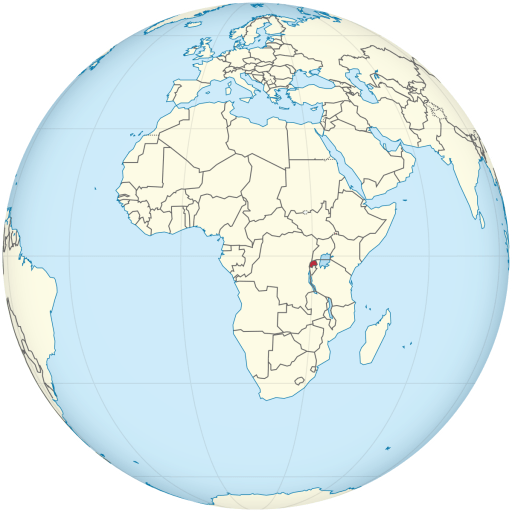
France is back to investigating Rwanda's former First Lady for her role in the 1994 genocide against the Tutsi
What happened:
A French appellate court in Paris is reopening an investigation into the wife of Rwanda's former President Habyarimana, Agathe Kanziga-Habyarimana. The main question is: What role did she play in the 1994 genocide against the Tutsi?
Why this matters: Survivors and human rights groups have been hoping for this investigation for a long time now. They view this case as one of the most significant genocide-related cases in France. More than one million Tutsi died in 1994 by the hands of a Hutu extremist government, of which she was a part of. The case is also a reminder that genocides do not appear out of nowhere. They are built slowly through propaganda, political networks, dehumanization, and systems that teach ordinary people who deserves protection and who does not.
Tell me more
The court is "reopening" the investigation. A prior investigation took place (for almost 20 years), but in August 2025, another court decided that the case be closed. Not enough evidence,' it said. "What this means is that the file has not been closed. Investigations must continue," said Richard Gisagara, a Rwandan lawyer based in France.
They investigated her for 20 years, and found nothing?
The case against Agathe Kanziga-Habyarimana started in 2007 when French rights group Collectif des Parties Civiles pour le Rwanda, or CPCR for short, filed a complaint accusing her of complicity in genocide and crimes against humanity. For 18 years, the case was stuck in the 'do we have enough evidence to send her to trial?' phase. In August 2025, the answer seemed to have been, 'no, we don't, so let's close the case'; the judge even went so far as to say, 'she might also be regarded as a victim'. But then, France's National Anti-Terrorism Prosecutor's Office appealed, arguing that key investigative steps had not been carried out. The court then said, 'fine, we'll reopen again.'
What's new?
'Did Agathe Kanziga-Habyarimana help with planning the genocide?', the Prosecutor's Office now asks. Also, 'widen the scope. Investigate what happened in March, too.' So far, the investigations had focused on the period between the April 6, 1994 plane crash that killed her husband and the end of the genocide in mid-July. This is important because there have been longstanding allegations that the former First Lady was part of the inner circle around the former regime (they call it Akazu). That circle, for sure, helped orchestrate the genocide.
Fun fact: Why is this all taking place in Paris? A French military plane evacuated Kanziga and her children to Paris, where she has lived since. France also rejected Rwanda's extradition request for Kanziga in 2011.
What now?
This is far from over. Kanziga's lawyers have the option of filing an appeal before France's Court of Cassation, the country's highest court for reviewing legal procedure. If they don't file an appeal, we're back in the 'do we have enough evidence to send her to trial?' phase. For many survivors and rights groups, this is still good news, even though Kanziga is now 83 years old.
Good to know: The 1994 Genocide against the Tutsi in Rwanda did not happen suddenly or "out of nowhere." It was built slowly over decades through propaganda, racism, and organized planning. Before colonialism, Hutu and Tutsi identities in Rwanda were more flexible and connected to class, cattle ownership, and social roles. Belgian colonial rulers changed that. They began treating Hutus and Tutsis as completely separate "races." They gave Tutsis privileges for a while and put ethnicity on identity cards. Later, political movements used those divisions to gain power. Journalism also helped feed the propaganda. In the early 1990s, newspapers like Kangura spread hateful messages about Tutsis. Here's a more detailed account of what had to happen before 1994 happened.
Zoom out: After the genocide, many of those committing the killings fled into what is now eastern Democratic Republic of the Congo. Some later formed the FDLR, an armed group Rwanda considers genocidal. Anti-Tutsi ideology still exists in parts of eastern Congo. Kanziga's son Jean-Luc also has links to the government of the DRC, writes Dominic Johnson for the German taz.
Tanzania's government finally admitted hundreds died after last year's election violence. The real fight now is over who's responsible
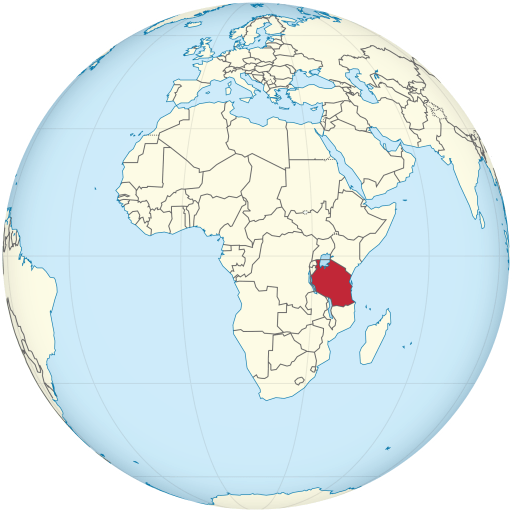
Refresher: Last year's October election in Tanzania was already controversial before a single protest even began. President Samia Suluhu Hassan officially won with 98% of the vote after her main challengers were either disqualified, detained, or blocked from running. Opposition groups called the election a sham, while observers from the African Union and Southern African Development Community said it failed to meet democratic standards. Then came the protests.
What happened:
Now, months later, a government-appointed (the government part is a very important detail) commission investigating the violence says at least 518 people died...
Please log in or subscribe for free to continue reading this issue.
We could use your help to make this issue better. Take a look at the requests below and consider contributing:
- Submit a piece of artwork for this issue
- Submit a news, academic or other type of link to offer additional context to this issue
- Suggest a related topic or source for future issues
- Fix a typo, grammatical mistake or inaccuracy
Below you'll find some of the sources used for this issue. Only sources that support "media embedding" are included.
-
What French court ruling means for Agathe Habyarimana's Genocide case
-
Agathe Habyarimana: France’s useful “victim” of Genocide?
-
French court orders fresh probe into Agathe Habyarimana's genocide case
-
How genocide ideology was built, spread and executed
-
Commemoration period is here, and genocide deniers ratchet up the noise
-
Opposition parties accused security forces but the official report does not say who was responsible.
-
Presenting the report, the commission’s chairperson Judge Chande Othman said the inquiry drew on extensive evidence from both primary and secondary sources, inc
-
Tanzania’s main political parties—Chama Cha Mapinduzi (CCM), Chadema and ACT-Wazalendo—have taken sharply divergent positions on the Chande Commission report into the October 2025...
-
From ballots to bullets: Tanzania's deadly post-election crackdown - Centre for Information ResilienceDespite nationwide internet shutdowns, a trail of digital evidence reveals how Tanzania’s October 2025 elections were followed by deadly violence, brutal crackdowns on protesters, and possible mass graves - offering a stark picture of alleged human rights abuses that unfolded largely out of public view.
-
BUNIA: A militia attack killed at least 69 people in Ituri province in the troubled northeast of the Democratic Republic of Congo, local and security sources told AFP Saturday. Armed men affiliated with the Codeco militia carried out the attack at the end of April, said the sources. The lack of security in the zone delayed the recovery of the bodies for several days. Security
-
Niger's ruling junta suspends 10 French media bodies, including AFP and France 24, citing threats to public order amid growing anti-French sentiment.
-
The announcement follows recent ousting of several top officials in China's military.
-
China has long been the country's main economic backer, though Pyongyang has drawn closer to Moscow since it launched its full-scale invasion of Ukraine in 2022.
-
Chad jails eight opposition leaders for eight years as Supreme Court dissolves anti-Deby coalition
-
Reports emerged in April that the US government was considering resetting diplomatic ties with Eritrea. Doing so could include lifting sanctions the United States imposed on the country’s ruling party and military in 2021 for committing serious abuses during the armed conflict in neighboring Ethiopia’s Tigray region.
-
Business leaders and officials from Somaliland and Israel held what Somaliland government described as a historic meeting
-
Result in key Indian state is set to have significant implications for the country’s political landscape
-
President Vladimir Putin on Saturday said the war in Ukraine was winding down, slamming Western support for Kyiv, as the first day of a U.S.-brokered ceasefire was marked by mutual accusations of violations.
-
Among the detainees are some of the country’s leading Shia clerics, who authorities have accused of having links to Iran’s Revolutionary Guards.
-
Damascus, May.7 ( SANA) Mastercard announced the completion of the necessary technical procedures to process international bank card transactions within
-
The parliament will sit on Thursday to consider a motion of no confidence in Jeremiah Manele.
-
Prevén crecimiento de los envíos.
-
Lluvias de abril favorecieron a campesinos en el sur de Petén para prevenir incendios - Prensa ComunitariaDurante abril y especialmente en Semana Santa estuvo lloviendo en el sur de Petén. Debido a ello, la comunidad Valle de la Esmeralda, en Dolores, Petén, se benefició del clima, ya que no se reportaron incendios en ese lugar. Por Rubén Darío Melgar Choc El clima en el sur de Petén ha favorecido las áreas ... Read more
Each week, What Happened Last Week curates news and perspectives from Asia, Africa, and the Americas. The newsletter is written by Sham Jaff and focuses on stories that rarely receive sustained attention in Western media.
Read the free edition every week. VIP subscribers receive additional stories, recommendations on what to watch, read and listen, and more.