

Issue #385: What are workers and unions talking about on May Day in India, the world's most populous country? Turns out, a lot.
Plus: Yesterday, May 3, was Press Freedom Day, and it's looking bleak, guys. Reporters Without Borders published their annual report, which is basically journalism's annual health checkup. Did you know that less than 1% of people live in countries the organization deems as having "good" conditions for journalism? Everybody else is sort of f*cked.
Also this week: Musicians in Algeria building recording studios so Tuareg women can finally come back to singing, Afghan female journalists who lost everything after 2021 telling their stories on Press Freedom Day, Tanzania shutting down a refugee camp with thousands of people in it, Israel's continued military actions in Lebanon, the U.S. sending Afghan nationals to the Democratic Republic of Congo, three extremely rare zebras, Venezuela talking about raising minimum income, important legal wins in Syria and the Philippines, and a really good reason to go to New Jersey. And so much more.
This issue has been edited by Jonathan Ramsay.
On May Day in India, workers and unions are fighting to change the country's new labor laws
Refresher: May Day (International Workers' Day) originated in the 1880s in the United States (workers in Chicago were striking for the eight-hour workday) and was adopted globally as a day when workers around the world hold rallies and marches to say: we have rights, and we will fight to keep them.
What happened:
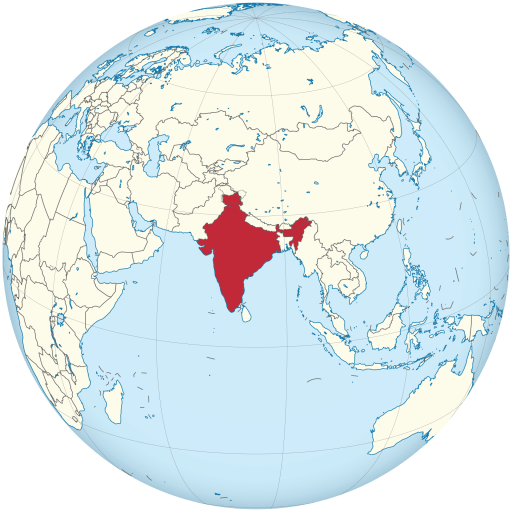
On May Day this year, workers and unions in many cities in India used the day to again raise awareness, among other things, for the country's biggest labour reform in decades. In December 2025, the government "switched on" its very controversial four 'labour codes' (already passed in 2020), replacing the country's previous 29 labour laws. The codes now govern how employers are allowed to treat workers (the government says 'we wanted to make our labour laws easier and we want the economy to grow faster'), and most trade unions in the country have been very angry since.
Why this matters: India is the world's most populous country and one of its fastest-growing major economies. What happens here affects many people worldwide, too. Plus, India's May Day protests are a reminder that fights for more labour rights are never permanently won anywhere. Rights that workers in Western countries take for granted (the eight-hour day, the right to strike, the weekend) were also once described by governments as obstacles to business. They exist because people fought for them, often on May Day specifically.
Tell me more:
A lot of the reporting on this labor reform in India is written from the perspective of either the government or big business. I thought it would be interesting to include a less often cited perspective, which is that of the trade unions. One specific trade union, the Centre for Indian Trade Unions (CITU), gave an interview to People's Dispatch in December of last year. It is a national trade union in India associated with the Communist Party of India, with an estimated membership of more than six million members (as of 2023).
Here's what's inside the new labour codes, commented on by Aniyan P V, Delhi state secretary of CITU:
- Wages: The government says: we're introducing a national minimum wage floor so every worker in India gets at least something. CITU says: the floor they've set is Rs. 178 per day (less than US$2). Most state governments already have higher minimum wages than that. So this "national floor" is lower than what already exists in most places, which means it's essentially useless. On top of that, the new definition of "wages" no longer includes overtime pay, unused holiday pay, or other benefits. This means that if your employer doesn't pay those things, you have no legal right to complain under this law. There's also no punishment for employers who pay late or don't pay at all.
- Layoffs: Previously, companies needed government permission before firing large numbers of workers. Under the new code, companies with fewer than 300 employees (which is roughly 90% of all workplaces in India) can now lay off whoever they want, whenever they want, without asking anyone.
- Strikes: Workers still technically have the right to strike. But now they must give 14 days' notice before doing so. The catch: strikes are also illegal while "conciliation proceedings" are ongoing (meaning while the government is trying to mediate between workers and employers). And the government can stretch those proceedings out indefinitely. So in practice, the legal window to go on strike is nearly impossible to reach.
- Social security:The government says: gig workers (like delivery drivers and app-based workers) are finally getting recognized.
CITU says: not really. Gig workers are explicitly excluded from the definition of "employee", which means they still don't get minimum wage, overtime, or basic rights. What they do get is a welfare fund that platforms contribute 1--2% of their revenue to (shared across over 12 million workers). That works out to almost nothing per person, with no government budget backing it up. - Workplace safety: The existing law said factories above a certain size had to meet safety standards. The new code raises that threshold, meaning more factories now fall below the line where safety rules apply. In Delhi alone, CITU says, this would affect 95% of factories. They point to recent factory fires that killed over a hundred workers as evidence of what happens when safety rules don't apply. Also: a contractor employing fewer than 50 workers no longer needs to register. This matters because large companies can now deliberately split their workforce across many small contractors to avoid compliance with labor law entirely.
There is another perspective that I thought was quite underreported, which is the legal perspective. Speaking to the Oxford Human Rights Hub, Indian lawyer Ayushi Swaroop says that the exclusion of gig workers, specifically, is inconsistent with India's own constitution, its international treaty obligations, and Supreme Court precedent.
Dive deeper: Comedian Kunal Kamra did a 90-min documentary last year on the state of the gig worker in India. It's so well done. Thank you, Hindol, for the recommendation!
It's not looking so good for press freedom worldwide
Refresher: Every year, Reporters Without Borders (RSF), an international organization dedicated to protecting journalists, publishes what's called the World Press Freedom Index. It ranks 180 countries based on how freely journalists can do their jobs.
What happened:
Last week, their latest report came out. "For the first time in the [RSF] Index's 25-year history, more than half the world's countries now fall into the 'difficult' or 'very serious' categories for press freedom," it warned. "The average score for all countries and territories worldwide has never been so low."
Why this matters: Press freedom is the ability of journalists to report, investigate, and publish information...
Please log in or subscribe for free to continue reading this issue.
We could use your help to make this issue better. Take a look at the requests below and consider contributing:
- Submit a piece of artwork for this issue
- Submit a news, academic or other type of link to offer additional context to this issue
- Suggest a related topic or source for future issues
- Fix a typo, grammatical mistake or inaccuracy
Below you'll find some of the sources used for this issue. Only sources that support "media embedding" are included.
-
The National Portal of India provides single-window access to information and services offered by the government at all levels. It focuses on unifying information collated from platforms and portals, packaged and served based on user segments such as farmers, students, women, youth, etc., as well as sectoral views. The portal is built using the latest technology, featuring a user-friendly, multilingual, accessible, and contemporary interface with intuitive navigation and information architecture.
-
India’s labour laws are being simplified with 29 labour laws being replaced by four new labour codes. Read all about it here.
-
India's four sweeping Labour Codes significantly dilute workers’ rights since Independence.
-
India’s New Labor Codes Extend Social Security Coverage to Gig Workers: Key Employer Takeaways | Fisher Phillips LLPEmployers operating in India should prepare for four new labor codes the government announced on November 21. Together, the new codes streamline India’s labor framework by consolidating 29 separate statutes. The Social Security Code, for the first time, formally defines gig and platform workers and lays the groundwork for extending statutory social security benefits to these emerging categories. Employers should be prepared as implementation unfolds and state governments begin issuing the rules needed to operationalize the code. We’ll unpack the new definitions and outline what you can expect in terms of obligations, coverage, and the changes still to come.
-
For the first time in the history of the Reporters Without Borders (RSF) World Press Freedom Index, over half of the world’s countries now fall into the “difficult” or “very serious” categories for press freedom. In 25 years, the average score of all 180 countries and territories surveyed in the Index has never been so low. Since 2001, the expansion of increasingly restrictive legal arsenals — particularly those linked to national security policies — has been steadily eroding the right to information, even in democratic countries. The Index’s legal indicator has declined the most over the past year, a clear sign that journalism is increasingly criminalised worldwide. In the Americas, the situation has evolved significantly, with the United States dropping seven places and several Latin American countries sliding deeper into a spiral of violence and repression.
-
It now heads to President Trump's desk to be signed into law. "THIS IS BIG!!!", he said after it passed.
-
Tanzania : Nduta camp forcibly emptyed, Burundian refugees expelled amid violence and silence - SOS Médias BurundiSOS Médias Burundi Kigoma, April 27, 2026 — In the Nduta camp, located in the Kigoma region of northwestern Tanzania, thousands of Burundian refugees are denouncing forced expulsions carried out under brutal conditions. Beatings, threats, shoving, and a lack of humanitarian assistance : according to several testimonies, everything is contributing…
-
Guayaquil.- Nine provinces and four other municipalities in Ecuador will be under a new nighttime curfew from this Sunday, and for fifteen days, during which
-
‘I can’t even say my own name’: How women journalists in Afghanistan have been silenced - Rukhshana MediaBefore the Taliban returned to power in 2021, women were a key part of the Afghan media landscape. They presented the nightly television news, went around the country to report, and their voices could be heard on the radio.
-
Managing Natural Hazards and Climate Risks in Elections (Link to new publication, 22 April 2026)
-
Foreign ministry calls remarks of rightwing podcast host shared by Trump ‘uninformed, inappropriate and in poor taste’
-
China’s zero-tariff policy now covers 53 of Africa’s 54 countries, excluding one in Southern Africa | Business Insider AfricaAll but one of Africa’s 54 countries are now covered under China’s zero-tariff policy, following the addition of 20 more nations on May 1. The move leaves a single Southern African country, Eswatini as the only exception to Beijing’s sweeping duty-free access across the continent. | Business Insider Africa
-
Amjad Youssef is one of most-wanted fugitives in relation to slaughter of estimated 288 civilians under Assad
-
For the first time, Audubon Zoo in New Orleans welcomed three Hartmann’s mountain zebras last week. This species is rarely seen in human care as there are just 80 of these zebras across 20 facilities accredited by the Association of Zoos and Aquariums.
-
Fossil Free Wider Caribbean We are united by solidarity, commitment and fraternity in pursuit of our shared goals. Mutual support
-
Will the Caribbean be just a photo? Cielo Azul celebrates our identity and warns of the climate crisis. Join for a fossil-free future.
-
The conflict in Colombia has established itself as the longest and one of the most complex armed conflicts in the world. Learn more about Colombia's history and political struggles in this conflict portrait.
-
Luis Carlos Ayala es un fotógrafo colombiano cuyo trabajo ha sido reconocido por su capacidad para capturar la esencia y crudeza de la realidad colombiana y bogotana.
-
The seats for the game on 19 July were listed on the world football body's Resale/Exchange Marketplace website.
Each week, What Happened Last Week curates news and perspectives from Asia, Africa, and the Americas. The newsletter is written by Sham Jaff and focuses on stories that rarely receive sustained attention in Western media.
Read the free edition every week. VIP subscribers receive additional stories, recommendations on what to watch, read and listen, and more.