

This issue: I think I'm the definition of a party pooper this week because I took two news stories that, at first glance, read like good news, but they're actually not if you look a little bit closer.
Myanmar's new president has released more than 4,000 prisoners
It sounds like a breakthrough. It isn't. I'll explain why.
Japan's greenhouse emissions are going down
The fifth-largest CO₂ emitter in the world is trending in the right direction. You can celebrate. Just not too much.
Also this week: Sudan's war turns four and shows no sign of stopping. Surprising election results in Benin and Peru. The first time in 12 years the Modi government lost something that actually mattered. A lone wolf in South Korea that had the whole country holding its breath. Why March 10, 2016, still haunts China's Go players. A British-Nigerian film with the most extraordinary child actors I've ever seen. An ancient West Asian tattoo tradition. Another Puerto Rican music legend (but one you probably don't know as well as Bad Bunny). And so much more.
This issue has been edited by Jonathan Ramsay.
Myanmar pardoned over 4,000 prisoners, including its former president. How 'good' is this news story really?
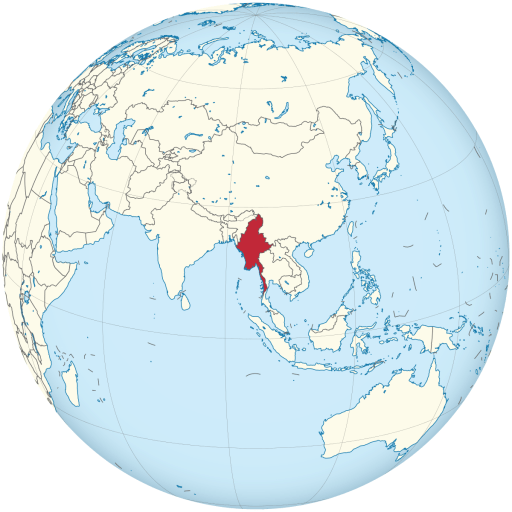
Refresher: Myanmar had a democratically elected government led by a woman named Aung San Suu Kyi (very famous, won the Nobel Peace Prize in 1991 for her work fighting for democracy in Myanmar; also not the "saint" the West thinks she is). In February 2021, the military took over the country by force. The leader of the military, a general named Min Aung Hlaing, arrested Aung San Suu Kyi, as well as the president Win Myint, and put them in prison. He then ran the country himself.
What happened:
Min Aung Hlaing recently made himself the official president of Myanmar (many say it was a 'sham' election). One of his first acts as president was to pardon 4,335 prisoners, including Win Myint, the former president he had imprisoned. Min Aung Hlaing is doing this right after making himself president, and declared that "Myanmar has returned to the path of democracy."
Why this matters: Human rights groups and the UN strongly disagree with that claim. Under Hlaing's leadership in the last five years, nearly four million people have been internally displaced, more than 1.6 million have fled to neighbouring countries, and approximately one third of the population needs humanitarian assistance. Min Aung Hlaing was also the architect of the so-called "clearance operations" against the Rohingya people in 2017, that forcibly displaced at least 730,000 people. Many Rohingya call what happened a genocide. A UN Human Rights Council-mandated fact-finding mission from 2018 agreed and found sufficient grounds to prosecute Hlaing personally for genocide.
Since the coup, at least 8,000 people, including pro-democracy activists and civilians, have been killed by the junta and pro-military groups during the so-called Spring Revolution (Myanmar's pro-democracy resistance activists coined that term), and more than 30,000 people have been arrested for political reasons. These are 'only' the numbers verified by the Assistance Association for Political Prisoners (AAPP). They say, the actual numbers are likely much higher.
Tell me more:
The military junta appears to be very concerned with its international image; so much so that in addition to the release of all the other prisoners, the sentence of the former 'West's favorite democratic leader' Aung San Suu Kyi (now 80; in prison since 2021) was also reduced by at least four years. Many remain unimpressed. Human rights groups say the charges against her were politically motivated and completely made up in the first place, so reducing the sentence is not justice; the sentence should not exist at all. The UN is (still) calling for her unconditional and immediate release.
According to the Institute for Strategy and Policy Myanmar, fewer than 14% of those released since the coup have been political prisoners. It's not clear how many of those released last week were people imprisoned for opposing the military. The human rights advocacy group Burma Campaign UK said on Friday that the slow, staged release of political prisoners is designed to gain positive publicity while making no real reforms. "If the Burmese military regime were genuine about reform, they could release all 14,000 political prisoners today," said the group's advocacy and communications officer Minn Tent Bo.
Did you know? Myanmar's military reportedly hired a U.S. lobbying firm called DCI Group and paid them US$3 million to improve their image in the United States. DCI Group has close ties to the Trump administration.
Good to know: Did you also know that Norway might have something to do with anti-coup activists being imprisoned and disappeared in Myanmar? Apparently, the military had asked Telenor to share the data of activists. They complied with 93% of those requests. Now, a lawsuit has been filed in Norway arguing that the company failed to protect the victims or inform them of the requests made. There is going to be a parliamentary inquiry later this year that will look at the role of the Norwegian government a little bit closer.
(My personal) Side note / Historical context: I've observed a tendency in coverage surrounding Myanmar to either romanticize or vilify whoever is in charge in the country. Back then it was Aung San Suu Kyi, and now it is Min Aung Hlaing. However, many smart people argue that Myanmar's current situation did not start with the 2021 coup; rather, it began in 1948, the year Myanmar gained independence from Britain. Here is why: When the British left, they drew borders (surprise) around a collection of very different ethnic groups, including the Karen, Kachin, Shan, Chin, Rakhine, and others. They lumped them together into one country dominated by a single ethnic group: the Bamar. Many of those other groups never accepted that arrangement and immediately began fighting for autonomy or independence. The argument, then, is that while the 2021 coup certainly happened, it didn't start a new war; it simply escalated, in a dramatic way, a conflict that was already 73 years old at that point. This perspective places the responsibility on the military institution itself, rather than just on Min Aung Hlaing. I think it's a valid argument to pay attention to.
What about the Rohingya?
Thousands of Rohingya are still fleeing the country every year. It is a very dangerous migration journey. Oftentimes they travel by sea on makeshift boats. Last week, about 250 people went missing after a boat carrying Rohingya people and Bangladeshi nationals capsized in the Andaman Sea, according to the UN's refugee and migration agencies.
Last week, Newcastle upon Tyne became the first city in the UK and the world to install a permanent memorial dedicated to the Rohingya people. "Today we honour the lives lost, the resilience of survivors, and send a clear message that genocide must never be ignored or forgotten," said the city's first former Muslim and Black Lord Mayor, Independent Cllr Habib Rahman.
Any international calls for accountability?
Yes. There are several legal cases open.
- In November 2024, the International Criminal Court prosecutor requested an arrest warrant for President Min Aung Hlaing for crimes against humanity against the Rohingya.
- In February 2025, an Argentine court issued arrest warrants for 25 individuals from Myanmar under the principle of universal jurisdiction.
- Fittingly, as Hlaing took office, fresh charges of genocide and crimes against humanity were brought against him, this time in Indonesia. Under the country's new penal code, universal jurisdiction for genocide and crimes against humanity is expressly permitted. Yasmin Ullah, the co-founder of the...
Please log in or subscribe for free to continue reading this issue.
We could use your help to make this issue better. Take a look at the requests below and consider contributing:
- Submit a piece of artwork for this issue
- Submit a news, academic or other type of link to offer additional context to this issue
- Suggest a related topic or source for future issues
- Fix a typo, grammatical mistake or inaccuracy
Below you'll find some of the sources used for this issue. Only sources that support "media embedding" are included.
-
Three years after she took power, Myanmar remains as repressive as ever. Were the warning signs there all along?
-
Myanmar’s military rulers are holding the first elections since the 2021 coup, and life in the country’s biggest city is fraught with anxiety
-
On April 10, a 69 year old man wanted by international prosecutors for crimes against humanity was sworn in as president of Myanmar. AMC's Graeme Acton has the details
-
Assistance Association for Political Prisoners » Blog Archive » Daily Briefing in Relation to the Military CoupDate - 10 April 2026 Since the 1 February 2021 coup, a total of (7,972) people, including pro-democracy activists and civilians, have been killed by the junta and pro-military groups during the Spring Revolution. A total of (30,870) people have been arrested by the junta in connection with opposition to the arbitrary seizure of power. Of those arrested, (14,283) are confirmed to still be in detention, while (7,887) remain to be verified. These are the numbers verified by the Assistance Association for Political Prisoners (AAPP). The actual numbers are likely much higher. We will continue to update accordingly. According to
-
Aung San Suu Kyi to be freed earlier as Myanmar releases ex-president Win Myint from jail - ABC NewsMyanmar's ex-leader Aung San Suu Kyi has her prison sentence cut as thousands of prisoners are freed. Meanwhile, the UN reveals 2025 marked the deadliest year on record for Rohingya refugees fleeing Myanmar.
-
Myanmar pardons former leader Win Myint, while lawyer for Aung San Suu Kyi says her jail sentence has been reduced.
-
The Burmese military have today continued with the slow staged release of political prisoners in a process designed to gain maximum positive publicity while at the same time making no fundamental changes or reforms whatsoever. The release of any political prisoner is wonderful for the prisoners themselves and their family and friends, but should not …
-
Newcastle Unveils World’s First Permanent Rohingya Memorial - Burmese Rohingya Organisation UK (BROUK)Newcastle upon Tyne, UK - History was made today as Newcastle upon Tyne became the first city in the UK and the world to unveil a permanent memorial dedicated to the victims of the Rohingya genocide. The landmark memorial, located in Newcastle City Council’s Peace Garden, was officially unveiled following a civic ceremony at the Council Chamber and a procession led by the Lord Mayor. The initiative, led by Independent Newcastle Councillor and human rights advocate Cllr Habib Rahman, represents a powerful commitment to remembrance, justice, and global awareness.
-
The Prosecutor of the International Criminal Court (ICC) has filed an application for an arrest warrant against Senior General Min Aung Hlaing, Commander-in-Chief of Myanmar’s armed forces and Acting President, alleging his involvement in crimes against humanity targeting the Rohingya population.
-
-
Genocide General Min Aung Hlaing’s Presidency Demands New International Approach to Rohingya Crisis - Burmese Rohingya Organisation UK (BROUK)The Burmese military and Min Aung Hlaing face multiple international legal actions for genocide and crimes against humanity, including the Rohingya genocide case at the International Court of Justice (ICJ), with a ruling expected by the end of the year. The International Criminal Court (ICC) Prosecutor has sought arrest warrants against senior military officials, and courts in Argentina have issued arrest warrants under universal jurisdiction, including against Min Aung Hlaing himself.
-
As I watch Gaza, I can't help but think about what's been inflicted on the Rohingya in Myanmar and the role Israel has played in it, writes Burmese activist Maung Zarni.
-
Tokyo, April 14 (Jiji Press)--Japan's greenhouse gas emissions in fiscal 2024 fell 1.9 pct from the previous y…
-
Japan's net greenhouse gas emissions in the fiscal year ending in March 2025 fell 1.9% to a record low, partly due to a slight uptick in nuclear and...
-
The decrease came as the proportion of renewable and nuclear energy exceeded 30% of overall power sources and manufacturing activities slowed.
-
Japan's net greenhouse gas emissions fell 1.9 percent in 2025 to hit their lowest levels in more than a decade, partly due to a slight uptick in nuclear and
-
The Strait of Hormuz has remained almost completely closed as the U.S. and Iran have disputed the terms of their ceasefire agreement.
-
US President Donald Trump announced the 10-day ceasefire between the two countries.
-
On her 83rd birthday Asha Bhosle reflects on Bollywood, why Pakistani lyricists are the best and tiffs with Atif Aslam
-
UN chief calls for end to ‘nightmare’ war as Khartoum rejects international conference as ‘colonial tutelage approach’.
-
Authorities in Turkey said the toll from the country’s second school shooting in two days rose to 10 deaths on Thursday when another victim died while being treated.
-
Peru's next president will be chosen from a pool of 35 candidates that includes a former minister, a comedian and a political dynasty heiress.
-
Israel appoints 1st ambassador to Somalia's breakaway region in controversial move
-
Colombian officials have authorized a controversial plan to cull dozens of wild hippos that are descendants of animals brought to the country in the 1980s by notorious drug lord Pablo Escobar.
-
Analysis shows whales’ coda vocalizations are ‘highly complex’ and remarkably similar to our own
-
-
Centro de Periodismo Investigativo | Proposed Luxury Megaproject Could Remake Cabo Rojo and Price Locals Out | Centro de Periodismo InvestigativoThe proposed construction of Esencia comes as home prices and sales in the western municipality of Puerto Rico rise, even as residents struggle to secure a place of their own at an affordable cost.
-
An annoyed Philippine President Ferdinand Marcos Jr. did a few rounds of jumping jacks and jogged briefly outside his office in front of journalists Monday to disprove rumors of his failing health.
Each week, What Happened Last Week curates news and perspectives from Asia, Africa, and the Americas. The newsletter is written by Sham Jaff and focuses on stories that rarely receive sustained attention in Western media.
Read the free edition every week. VIP subscribers receive additional stories, recommendations on what to watch, read and listen, and more.