

This issue: Hello from Berlin, where I have had electricity all week. This is not a given. In South Sudan right now, the power goes off every day at 4pm and doesn't come back until 4am. In Laos, schools are open three days a week. In Zimbabwe, health workers are out in the streets because of higher cost of living prices. In South Korea, people are being asked to take shorter showers. The Iran war coverage misses most of these headlines.
This week, I'm looking at what the U.S.-Israel war on Iran is actually doing to the rest of the world in terms of daily life consequences in places that have nothing to do with the conflict and no power to stop it. I am not trying to give you a panic attack. But I thought you should know.
I'm also going to Nepal, where a 35-year-old rapper just became Prime Minister, arrested his predecessor the next day, and may or may not be the country's first native head of government.
Also this week: 200 people dead from flooding in East Africa, 70,000 displaced in Sudan, Mongolia's government collapsed, antimatter was transported for the first time in history, new science on dogs, a UN resolution that isn't actually controversial, South Asian cinema and propaganda, and the alternative music scene in Kenya. And so much more.
The U.S.-Israel war on Iran has global consequences
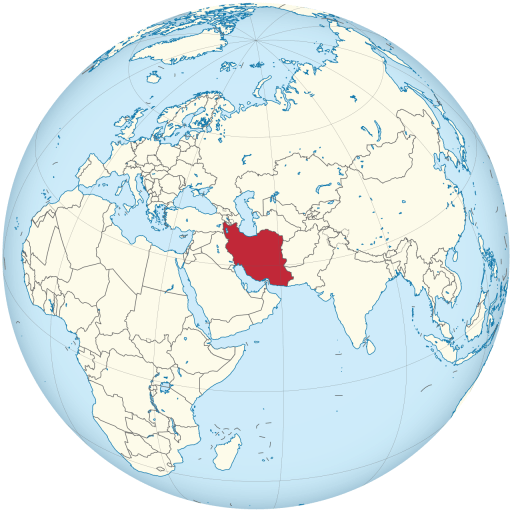
What happened:
The U.S.-Israel war on Iran is disrupting the global oil supply, particularly through the Strait of Hormuz, a very tight passage of water between Iran and the Arabian Peninsula, where about 20% of all the world's oil passes through every day. Some ships won't go through it because it's simply dangerous, others can't, and now a fifth of the world's oil supply is either stuck or being rerouted on much longer journeys around the bottom of Africa.
Why this matters: "Everything is linked to everything," as Finland's President Alexander Stubb said last week. Almost everything in the world runs on oil. From transport, electricity, manufacturing to food distribution, most of it depends on fuel made from oil. Most of that oil comes from West Asia ("the Middle East"). The International Energy Agency (normally the most undramatic institution out there) calls this moment the "largest supply disruption in the history of the global oil market."
Tell me more:
I was digging into a few stories outside the mainstream, more military-and-oil-dimension of the war. Here's some very concrete examples of how the rest of the world is impacted by it:
- South Sudan: Because the country burns oil to make electricity, power cuts from 4pm to 4am daily in the capital to "manage its available energy reserves".
- Mauritius: The country is so dependent on oil for electricity, that when one (!) oil shipment didn't arrive, Mauritius had only 21 days of stock left. (They found an alternative supply from Singapore, though. At a much higher cost.)
- Zimbabwe: The country is stretching its petrol with ethanol. Health workers are protesting because the cost of living is rising.
- Ethiopia: The government has made a list of who gets fuel first: military and police, big government projects, major industries and food production. Everyone else, to the back of the queue.
- Kenya: Flower farms are throwing away half their flowers every day because the ships that carry them to market are taking longer routes and buyers in West Asia (their main market) aren't buying right now. One farm lost US$4 million in three weeks. All of Kenya's fuel comes from West Asia. The country is that vulnerable.
- Qatar: Iran hit Qatar's Ras Laffan natural gas terminal, which produces 20% of the world's liquefied natural gas. The March 18 strike wiped out 17% of Qatar's LNG export capacity and repairs will take up to five years, state-owned QatarEnergy said. Qatar also makes helium there and supplies a third of the world's helium (you need this for medical imaging or chipmaking, for example).
- The Philippines: More than 80% of the oil and LNG that passes through the Strait of Hormuz is headed to Asia. That's why government offices are now only open for four days a week and employees are not allowed to use the air conditioner cooler than 75°F (24°C). As of March 20, the government said that it had 45 days of oil supply left.
- India: Some restaurants have closed temporarily or dropped dishes like curries and deep-fried snacks.
- South Korea: Public workers are told to use the car less. People were told to please take shorter showers.
- Australia: Farmers are planting less wheat.
- Laos: School is only three days a week.
- Sri Lanka: Wednesdays are a public holiday now (so people don't use fuel much).
- Thailand: Public workers here have been told to take the stairs instead of elevators. The premier (so people don't use the AC much) wore short-sleeved shirts to work and told people to do the same.
- Brazil: Up to 40% of world exports of nitrogen fertilizer (the thing that makes modern farming possible and helps feed the planet) also pass through the Strait of Hormuz. Urea prices are up 50% since the war began. Ammonia up 20%. When fertilizer becomes unaffordable, farmers plant less, harvests shrink, and food prices rise. Brazil, one of the world's largest food producers, imports 85% of its fertilizer. If Brazilian food production costs rise, global food prices follow. Months from now, experts warn of the impending hunger crisis.
The African continent in general is very dependent on non-African countries. For example, according to a new report by the UN, more than half of the continent's imports and exports are with five non-African countries only. But: "No country will be immune to the effects of this crisis if it continues to go in this direction," International Energy Agency head Fatih Birol said on March 23.
Any winners?
- Venezuela: Farmers get to export fertilizer again (the U.S. loosened some sanctions).
- Russia: The country is getting a little richer.
Good to know: A new poll found 59% of people in the U.S. say U.S. military action against Iran has gone too far, while 45% are "extremely" or "very" worried about affording gasoline in the coming months. In Israel, however, 93% of Jewish Israelis earlier this month expressed support for this war.
Nepal's new prime minister has been sworn in. He's 35, rapper and the first Madheshi PM
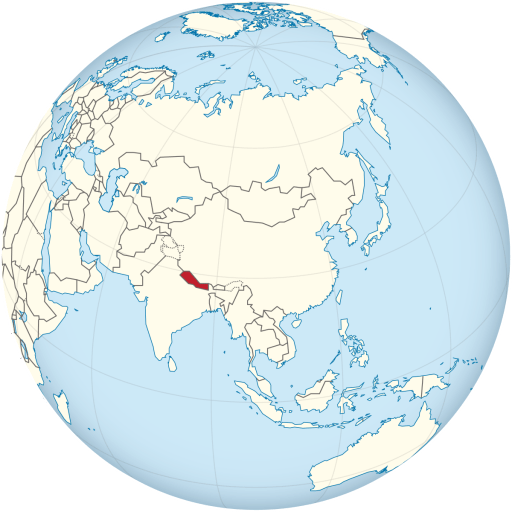
Refresher: September 2025 was a really historic month for Nepal. That's the month people organized mass protests (the government wanted to ban social media, but then the protests turned into something much greater; think corruption and just everyday life affordability stuff) that toppled the government and resulted in new elections earlier this month. 76 people died during the protests, many of them shot by police. More than 2,300 people were injured. Accountability is lagging.
What happened:
Last Friday, Nepal's new Prime Minister took office, Balendra Shah (he's 35 years old). One day later, police in Nepal arrested former Prime Minister Khadga Prasad Oli and former Home Minister Ramesh Lekhak over the deaths of protestors during the September protests.
Why this matters: Some 30 million people live in Nepal. I think a small history lesson is needed here to fully understand this moment: So, the country used to be a monarchy for a very, very long time (240 years), then in 1990 the king had to accept multiparty democracy. However, the same elites stayed in charge. This is what fuelled the Maoist insurgency that began in 1996. For ten years Nepal fought...
Please log in or subscribe for free to continue reading this issue.
We could use your help to make this issue better. Take a look at the requests below and consider contributing:
- Submit a piece of artwork for this issue
- Submit a news, academic or other type of link to offer additional context to this issue
- Suggest a related topic or source for future issues
- Fix a typo, grammatical mistake or inaccuracy
Below you'll find some of the sources used for this issue. Only sources that support "media embedding" are included.
-
The U.S. president’s European golf buddy calls for extra efforts to stop regional conflicts from spiraling toward World War III.
-
U.S. and Israeli attacks on Iran have darkened the outlook for the world economy. The conflict has driven up oil, natural gas and fertilizer prices and sent global stock markets reeling.
-
The disruption in oil supplies has caused shortages and concerns in several African countries.
-
Africa is hurting again from a global crisis it had no part in starting. The world’s fastest-growing continent is reeling from the economic impacts of the war in Iran.
-
The Iran war is tightening global tech supply chains by cutting off helium from Qatar, a key source of the gas used in advanced industries like chipmaking.
-
Farmers around the world are facing fertilizer shortages and rising costs after the war in Iran disrupted shipments through the Strait of Hormuz, which handles a third of global fertilizer trade.
-
The head of the International Energy Agency says the global economy faces a “major, major threat” because of the Iran war.
-
A new AP-NORC poll finds most Americans believe recent military action against Iran has gone too far and many are worried about affording gasoline.
-
Police in Nepal have arrested former Prime Minister Khadga Prasad Oli over the deaths of dozens of people during violent protests in September that toppled the government and resulted in new elections.
-
History Of Nepal Records mention the Gopalas and Mahishapalas believed to have been the earliest rulers with their capital
-
Nepal is set to vote on Thursday in pivotal election that comes months after historic protests toppled the government.
-
Balen Shah's RSP has achieved a feat many thought impossible in Nepal: a sweeping majority.
-
-
More than 70 people were killed during an uprising last year which ousted Oli's government.
-
Shah should be the new prime minister and allowed to rule for the full five years.
-
Parties are found to have undermined constitutional spirit of representing marginalised communities so as to award their relatives and favourites.
-
Most parties with regional and identity agendas have been decimated in Thursday’s election.
-
Heavy rains and strong winds have triggered deadly landslides and floods across East Africa, with southern Tanzania reporting at least 20 deaths.
-
Zimbabwe says it is engaging the Russian government to repatriate bodies and bring home those still alive.
-
Mongolia’s Prime Minister Zandanshatar Gombojav resigned Friday after rising tensions within the ruling party and a parliamentary boycott by the opposition.
-
Indonesia has begun implementing a new government regulation approved earlier this month that bans children younger than 16 from access to digital platforms that could expose them to pornography, cyberbullying, online scams and addiction.
-
Physicists have succeeded for the first time in transporting the most expensive and most volatile substance on Earth: antimatter.
-
Ida Huddleston and her children own 1,200 acres of rich farmland just outside of Maysville, Kentucky.
-
The LMU is one of the most prestigious and traditional universities in Europe. It combines outstanding research with a challenging range of courses.
-
Also known as the trans-Saharan trade is billed as the longest, having happened for more than 1300 years while taking millions of Africans away from their land.
-
Applause erupted in the UN General Assembly Hall on Wednesday as Member States adopted a resolution declaring the transatlantic slave trade the gravest crime against humanity.
Each week, What Happened Last Week curates news and perspectives from Asia, Africa, and the Americas. The newsletter is written by Sham Jaff and focuses on stories that rarely receive sustained attention in Western media.
Read the free edition every week. VIP subscribers receive additional stories, recommendations on what to watch, read and listen, and more.