

This issue: Pakistani airstrikes on Afghanistan took over my feed (thanks to my Afghan and Pakistani friends), but if you weren't on social media, you probably missed what may have been one of the deadliest days in Afghanistan in recent years. I don't want that to slip past you, so I'm breaking down why these two countries are fighting and where things stand right now.
To bring in some (much-needed) lightness: the governor of Nairobi just introduced two days of menstrual leave per month for female government employees, no questions asked. It sounds great and honestly, it probably is, but we still lack solid data on how these policies actually play out in the long run.
Also inside: a Pakistani rapper on how dance saved her, Ethiopian coffee houses, Indian-"inspired" fashion at The Oscars, rhinos are back in Uganda, Chile's 44-hour-workweek is coming to an end, Cuba's ongoing energy crisis, an update on the war in Sudan, and so much more.
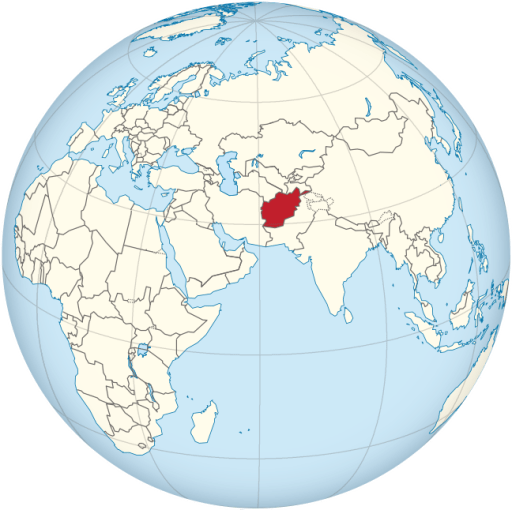
Pakistan and Afghanistan have been at war for three weeks. More than 1,000 people have been killed and over 100,000 displaced
What happened:
On March 16, Pakistan launched a series of airstrikes in Kabul and Nangarhar in Afghanistan. Pakistan said it was targeting what it called "terrorist and military infrastructure." It looks like it went "catastrophically wrong," as The Guardian reports. A drug rehabilitation center was hit, killing at least 143 people according to the United Nations (UN). The Taliban authorities say the number is much higher, over 400 dead.
Why this matters: More than 1,000 people are estimated to have been killed in the past three weeks of fighting between the two countries, and over 100,000 people have been displaced, writes The Financial Times. Last week's incident was the single bloodiest one. Even by the most conservative estimates, the March 16 strike is one of the biggest mass-casualty incidents in Afghanistan's history. On top of that, according to UN agencies, Afghanistan is expected to remain one of the world's biggest humanitarian crises in 2026, with around 21.9 million people, nearly two-thirds of the population, needing aid.
Tell me more:
Pakistan denies that it targeted civilians. At the same time, the Taliban deny that they are sheltering the militant groups that Pakistan says are behind attacks inside its territory. They also claimed, without providing any evidence, that the facility was used to train drug addicts as suicide bombers. The Taliban, on the other hand, call the attack "a crime against humanity". The next day, March 17, the Taliban responded by launching a drone attack on Rawalpindi, where Pakistan's army headquarters is located. Both sides have been carrying out so-called "tit-for-tat" strikes throughout the month. On March 18, both countries agreed to pause military operations for five days during Eid al-Fitr, with mediation from Qatar, Turkey, and Saudi Arabia. Even with this pause, the tension is still high. Pakistan has made it clear it would start attacking again if cross-border strikes continued. To be continued.
How big was the March 16 strike?
Khan Nael from the Afghan Red Crescent Society said, after the bombing, a fire broke out that was so large it could be seen from miles away. When rescue workers arrived the next morning, they were still digging through the rubble, he continueD. Instead of finding whole bodies, they were recovering scattered body parts. The smell of burned flesh was literally still in the air. Georgette Gagnon, a senior UN official, said the number of people killed and injured could reach several hundred.
Why are those two countries fighting each other?
This tension goes a long way back, with some breaks here and there. Basically, Afghanistan and Pakistan are fighting mainly because Pakistan says a militant group (the TTP) is attacking from Afghan territory, while the Afghan Taliban deny responsibility and say it's Pakistan's internal problem. Pakistan claims the TTP has killed 4,000 people in the country in the last four years. Additionally, both sides suspect outside involvement in this war. Pakistan thinks India is backing anti-Pakistan militancy through Afghan territory (specifically through suspected Indian-made drones; since the Taliban took over, India has slowly reset relations with them), while the Taliban accuse parts of Pakistan's military of working with bigger powers like the U.S. against Afghanistan.
There's another bigger issue: The two never agreed on where their border actually is (mainly because Afghanistan has never officially accepted the Durand Line). There's been deep mistrust for a long time, even since Pakistan's independence in 1947. But this is a much longer issue. Rabia Akhtar from the University of Lahore in this piece for The Conversation explains it better than I ever will.
Good to know: Drones have changed "the game" in this "open war". Because the Afghan Taliban lacks a traditional air force, they rely more and more on drones to fight Pakistan's dominance of Afghan airspace. Drones have allowed the Taliban to hit targets deep within Pakistan (not just at the border), specifically big cities like Islamabad and Rawalpindi, which were previously beyond their reach. This is all fairly new. Afghanistan and Pakistan were once allies in the early 1990s, the Council on Foreign Relations writes.
Nairobi gave menstrual leave to government workers
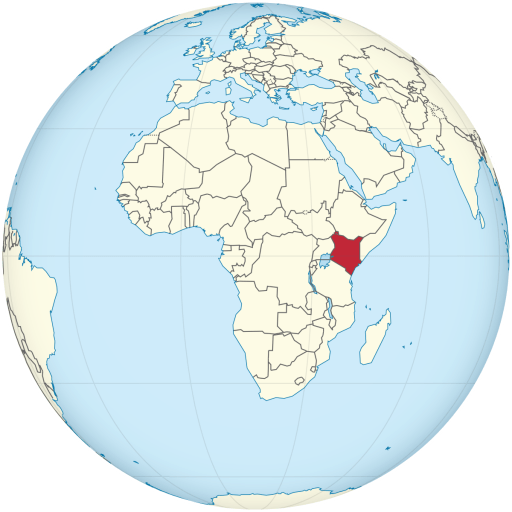
Refresher: Back in December, Nairobi County introduced something unusual in the country: two days of paid menstrual leave per month for female employees. No forms, no medical proof, no bureaucracy. You just tell your supervisor and take the days.
What happened:
Today, it is being closely watched by other counties and even the national government, reports Africanews. Johnson Sakaja, Governor of Nairobi, told AP that Kenya's national government has expressed interest in how it goes, and other county...
Please log in or subscribe for free to continue reading this issue.
We could use your help to make this issue better. Take a look at the requests below and consider contributing:
- Submit a piece of artwork for this issue
- Submit a news, academic or other type of link to offer additional context to this issue
- Suggest a related topic or source for future issues
- Fix a typo, grammatical mistake or inaccuracy
Below you'll find some of the sources used for this issue. Only sources that support "media embedding" are included.
-
The battle between the neighbouring countries is taking place as much online as it is on the ground.
-
ISPR reveals Indian drones used by Afghan Taliban against Pakistan as military operations intensify along the border under Operation Ghazab lil-Haq.
-
As the conflict intensifies, Taliban drones challenge Pakistan’s security and response strategy, say experts.
-
Tensions between nuclear-armed Pakistan and Afghanistan’s Taliban regime have sharply escalated since late February, heightening regional instability and raising concerns about the risk of a prolonged conflict. Here’s what to know.
-
Nairobi County has introduced Kenya’s first menstrual leave policy for female government staff, aiming to boost health and productivity. Gov.
-
While debate continues, Nairobi’s policy marks a rare step in Africa toward recognizing menstruation as a workplace health issue — one that could reshape how employers support women across the continent.
-
Period Poverty – why millions of girls and women cannot afford their periods | UN Women – HeadquartersMillions of women and girls worldwide still cannot afford menstrual products or access water and sanitation facilities to manage their menstrual health and hygiene. Periods make them miss school, work, and negatively impact their health, but it does not have to be that way. Explore this explainer to find out what needs to be done to ensure dignity for all women and girls.
-
A la espera de conocer el texto definitivo, CCOO considera que se trata de un avance legislativo que responde a las necesidades de aquellas mujeres que padecen reglas muy dolorosas e incapacitantes.
-
Women in Spain have the right to time off work with period pain, but limits in the legislation and lack of awareness mean few have taken it
-
Less than 10% of women take menstrual leave in Japan, many citing lack of understanding and support in the workplace.
-
In Zambia and a handful of other countries, time off during menstruation shows how workplaces can be made more inclusive for women. Zarina Geloo — Zambiahttps://static.wixstatic.com/media/653556_d42bd850fb64467c9c6bf797e0f905ff~mv2.jpg/v1/fill/w_1000,h_667,al_c,q_85,usm_0.66_1.00_0.01/653556_d42bd850fb64467c9c6bf797e0f905ff~mv2.jpg
-
A growing number of countries and companies around the world are adopting menstrual leave as a workplace right, but it’s unlikely to gain traction in Australia in the short term.
-
The World Health Organization says a strike hit a hospital last week in Sudan’s western Darfur region and killed at least 64 people.
-
Cuba has begun restarting its power grid after another nationwide blackout left millions without electricity.
-
A senior vice president of Super Micro Computer Inc. and two others affiliated with the company have been charged with conspiring to smuggle billions of dollars of computer servers containing advanced Nvidia chips to China.
-
Brazil now enforces a sweeping new law that aims to make the internet safer for children and teens. On Tuesday, the digital statute takes effect after Congress backs it and President Lula signs it in September.
-
Crowds of Syrians have rallied to protest authorities’ efforts to limit the sale and consumption of alcohol in Damascus.
-
En la capital, la Alameda se llenó de consignas contra el retiro de 43 decretos ambientales, en una movilización que apuntó directamente al Ejecutivo por un eventual debilitamiento de la regulación y sus efectos en territorios y ecosistemas.
-
Ugandan wildlife authorities have reintroduced rhinos into a remote protected area where they were once poached into extinction, an event seen by conservationists as a milestone in efforts to support the recovery of a species threatened by poaching.
-
【NHK】サッカー女子のアジアカップの決勝で日本代表「なでしこジャパン」がオーストラリアに1対0で勝って2大会ぶりに優勝しました。 オーストラリアで開催されているアジアカップは21日、シドニーで決勝が行われ
-
Take a deep dive into North Africa's most prominent genre
-
In their latest joint appearance, North Korean leader Kim Jong Un and his teenage daughter rode a tank together, state media video showed Friday, days after they watched rocket launches and fired pistols.
Each week, What Happened Last Week curates news and perspectives from Asia, Africa, and the Americas. The newsletter is written by Sham Jaff and focuses on stories that rarely receive sustained attention in Western media.
Read the free edition every week. VIP subscribers receive additional stories, recommendations on what to watch, read and listen, and more.