

This issue: Article 301 in Turkey has struck again. It's effectively "don't say Armenian Genocide" season once more, and this time the target is someone who simply screened an animated documentary, which Armenia submitted for the Oscars in 2023.
The United States (U.S.) wants to pressure everyone again with trade policies that function more like political tools than actual conversations about trade imbalances. This time, it targets 60 countries, including rivals like China as well as allies such as the European Union, with investigations into a humanitarian issue (forced labour; which is, of course, a very good thing but... yeah). This is hitting some countries harder than everyone else. For example, Bangladesh. Around 80 percent of what the country earns comes from clothing, and that's a huge problem. (Again, fighting forced labour is very important, but this is not really about that for the U.S.)
Also inside: why children in Bhutan have so much lead in their blood, how much African governments are spending on mass surveillance systems (guess which country has 10,000 cameras watching its citizens), the ongoing crisis in Cuba, what Dubai could learn from Hong Kong, Afghan women still protesting for their rights, the world's first AI system built specifically for the Bangla language, how climate change will make malaria even more dangerous, why Iran might not actually be falling, and a Pakistani typo that has nothing to do with condoms. And so much more.
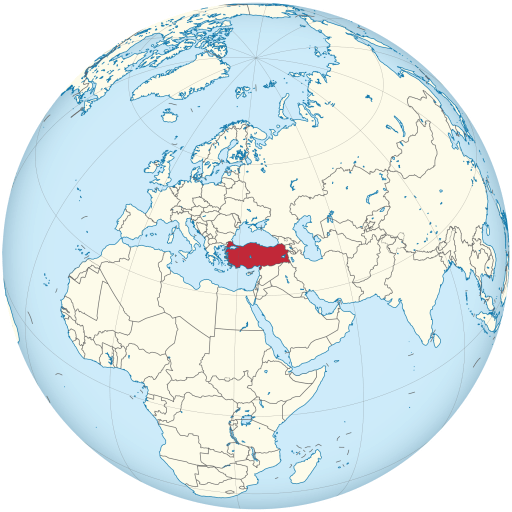
In Turkey, you can go on trial for screening a documentary about the Armenian Genocide in 1915
Refresher:
In 1915, during World War I, the Ottoman Empire (modern Turkey's "ancestor") systematically killed large numbers of its own Christian minority populations. The main victims were Armenians, but also Syriac Christians (Arameans, Assyrians and Chaldeans) and Greeks. People were massacred, marched into the desert to die, drowned in rivers, forced to convert to Islam or change their names, and had their children taken away.
The overwhelming majority of historians who have studied this call it a genocide, meaning it was not random wartime violence but a deliberate state policy to destroy these communities. Syriac Christians call the genocide they experienced in 1915 "Sayfo" (simply means "sword" in Aramaic). The Armenians call it the "Medz Yeghern". Estimates suggest between 250,000 and 750,000 Syriac Christians were killed alongside roughly 600,000 to 1.5 million Armenians. Turkey has never accepted this. Its official position is that yes, many people died, but it was random wartime violence, nothing deliberate.
What happened:
Rojhilat Aksoy, a female Kurdish filmmaker, is on trial in Turkey for screening an animated documentary about the Armenian Genocide of 1915. The charge: "publicly insulting the Turkish nation and state institutions" under Article 301 of the Turkish Penal Code. Aksoy rejected the accusations in court and says that showing the film is protected under freedom of expression.
Why this matters: This is another reminder that in Turkey, interpretations of history are not only debated in public but can also still end up in court.
Tell me more:
According to the indictment from the Chief Public Prosecutor's Office in Diyarbakır (Kurds call the city Amed, Syriacs Omid), the film shows "the events of 1915 as a genocide" and portrays Armenian resistance as a "legitimate struggle of freedom fighters." Prosecutors say the film also includes scenes of Armenians being forced to change their names and religion and being treated inhumanely, which they claim insults the Turkish nation and its institutions. The indictment further mentions scenes showing Armenian men being conscripted into the Ottoman army and never returning, as well as images of bodies in rivers and soldiers separating children from their mothers. Prosecutors argue these scenes contradict historical facts and wrongly blame Turkish soldiers.
However, forced conversion, mass drownings and family separations are among the most extensively documented aspects of what happened in 1915. It was recorded by Ottoman officials themselves, by German military observers who were allied with the Ottomans at the time, and by Western missionaries and diplomats.
Good to know: What makes this particular case unusual is that the person on trial simply screened the documentary at the Sezai Karakoç Cultural Center (a legitimate cultural institution) through official channels and with paperwork (that she signed while she was the vice president of the Middle East Cinema Academy Association). She is now facing criminal charges for it. SyriacPress writes that Turkish courts have previously ruled that using the term "Armenian Genocide" is protected speech. However, Article 301 has also often been used over the years against writers, journalists, and academics, basically anyone who publicly describes 1915 as genocide or depicts it in ways that contradict the official Turkish narrative. One of the most famous cases involved the famous writer Orhan Pamuk. In 2005, the Nobel laureate was charged after telling a Swiss newspaper that one million Armenians (and 30,000 Kurds in the fight against the PKK) had been killed in Turkey. Prosecutors accused him of insulting the Turkish nation under Article 301 of the Turkish Penal Code. The case was eventually dropped in 2006. Pamuk went on to win the Nobel Prize in Literature in the same year.
What is the film actually about?
"Aurora's Sunrise" (trailer) is an animated documentary directed by Armenian filmmaker Inna Sahakyan. The film tells the story of Aurora (Arshaluys) Mardiganyan, who witnessed the massacres of Armenians in 1915 as a teenager before later moving to the U.S. The film mixes animation with historical footage from the 1919 movie "Auction of Souls," in which Mardiganyan played herself just four years after she had experienced genocide. It also uses archival materials from the early 1900s and interviews recorded with her in the 1980s. The film is not obscure or controversial in the wider world. It premiered in London, was Armenia's official Oscar submission, and has won festival awards across Europe and the U.S.
What's next?
The next hearing is on April 6.
The U.S. wants to reshape global trade again. This time, it's come with a moral argument: "Stop forced labor"
What happened:
Last week, the U.S. government opened trade investigations into 60 different countries, including big guns like China, the European Union, India, Mexico, plus dozens of other economies. They want to know if these countries are allowing products made with forced labor to enter global markets. And if yes, well, hell will break loose.
Definition 'forced labor': Forced labor is when people are forced to work against their will, often under threat of punishment and without freedom to leave.
Why this matters: Forced labor is a real issue worldwide. According to the International Labour Organization, approximately 28 million people globally are in forced labor as of 2021, an increase of 2.7 million since 2016, driven entirely by forced labor in the private economy. However, this is more like a geopolitical power play dressed in "we want to make sure everyone is taking this very real issue seriously." The 60 trading partners subject to these investigations collectively cover more than 99% of US imports in 2024.
Tell me more:
CNBC quotes the U.S. trade representative (Jamieson Greer) saying that basically the U.S. government doesn't believe that these governments have done enough to stop goods made with forced labor from entering their markets. If the investigation concludes with, "yes, that is correct, they didn't do enough" (they call it 'weak enforcement'), the U.S. could respond with things like import bans, higher tariffs, trade penalties.
So, this is about human rights?
Mhm, yes and no? The New York Times writes that the U.S. has long banned forced-labor goods (for almost 100 years). Under Joe Biden, the U.S. passed a much stronger law: the Uyghur Forced Labor Prevention Act (that one focused on the Chinese region Xinjiang, because the U.S. government and several human rights groups said that forced labor was used there, especially involving Uyghur Muslims). Before this law, the U.S. had to prove that forced labor was used. Now, they simply need to assume and companies must prove the opposite. But...
But?
This is also about the U.S. wanting to put pressure on countries regarding trade. The country controls access to one of the largest consumer markets in the world, and they've been doing this ('this' being using trade policy for political wins) for a long time. The day before this announcement, the U.S. had already started another investigation into 16 trading partners (huge economies...
Please log in or subscribe for free to continue reading this issue.
We could use your help to make this issue better. Take a look at the requests below and consider contributing:
- Submit a piece of artwork for this issue
- Submit a news, academic or other type of link to offer additional context to this issue
- Suggest a related topic or source for future issues
- Fix a typo, grammatical mistake or inaccuracy
Below you'll find some of the sources used for this issue. Only sources that support "media embedding" are included.
-
Kurdish filmmaker Rojhilat Aksoy has gone on trial on charges of “publicly insulting the Turkish nation and state institutions” for screening an animated film about the Armenian genocide in Diyarbakır province, Turkish media reported. The Diyarbakır Chief Public Prosecutor’s Office drafted the indictment, citing scenes and dialogue from the film “Aurora’s Sunrise,” which was screened […]
-
The Armenian genocide (1915–1916) is sometimes called the first genocide of the twentieth century.
-
-
Diyarbakır’da “Aurora’nın Doğuşu” filminin gösterimi için Rojhilat Aksoy’a, TCK 301 kapsamında “Türk milletini aşağılama” suçlamasıyla dava açıldı.
-
The Nobel Prize in Literature 2006 was awarded to Orhan Pamuk "who in the quest for the melancholic soul of his native city has discovered new symbols for the clash and interlacing of cultures"
-
The US said it would examine whether countries are effectively blocking goods made with "forced labour".
-
-
Fact Sheet: USTR Initiates 60 Section 301 Investigations Relating to Failures to Take Action on Forced Labor | United States Trade RepresentativeCOMBATING FORCED LABOR IN THE GLOBAL ECONOMY: Today, the United States Trade Representative, Ambassador Jamieson Greer, launched Section 301 investigations into acts, policies, and practices of 60 economies relating to the failure to impose and effectively enforce a prohibition on the importation of goods produced with forced labor.
-
The forced-labor probes follow Section 301 investigations launched on Wednesday, targeting excess industrial capacity across more than a dozen economies.
-
Trump, as recently as Thursday, has talked up the consequences of the Supreme Court striking down his tariffs prior to the seismic ruling.
-
China's Foreign Ministry criticized the Trump administration's trade investigation as a "pretext" for tariffs. Meanwhile, China is moving ahead with a five-year plan that may rankle trade partners.
-
The United States has now launched a second round of Section 301 investigations against Bangladesh and 59 other trading partners over the alleged use of forced labour to produce goods imported by Washington.
-
US Trade Probe Bangladesh: The United States’ recent decision to launch two separate investigations under Section 301 of the Trade Act of 1974—one concerning global industrial overcapacity and another focusing on forced labour—signals a sharper turn in Washington’s trade policy.
-
Preliminary figures are 1,444 dead in Iran, at least 15 in Israel, 13 US soldiers and 19 killed in Gulf states.
-
Negotiations aimed to ‘find solutions to the bilateral differences’ between the countries, Miguel Díaz-Canel said
-
Yunia Figueredo, periodista independiente, fue arrestada en La Habana tras protestar por apagones. Su paradero es desconocido, generando preocupación. Las detenciones aumentan en medio de la crisis energética.
-
Cubanos denuncian detenciones tras protestas nocturnas en Morón; autoridades reportan cinco arrestadosEntre los posibles detenidos a Catherine Gutiérrez Sánchez (una mujer madre de dos niños), Kevin Samuel Echeverría, un menor de 15 años, y Bryan PM. Otras publicaciones también señalaron la presunta detención del joven Vladimir Ortiz Ortiz.
-
Ga-Hyun Chung, herdeiro do grupo de navegação sul-coreano Sinokor, comprou centenas de navios que transportam petróleo semanas antes do conflito e viu sua frota virar armazém flutuante a US$ 500 mil por dia
-
غزال محمدی در آستانهی هشتم مارچ، سالروز همبستگی زنان در جهان، گروهی از زنان و دختران معترض با وجود سرکوب گسترده و حضور سنگین محتسبان امر به معروف، به خیابان آمدند و علیه طالبان شعار دادند. این حرکت اعتراضی، حوالی ساعت هفت صبح روز چهارشنبه (۱ مارچ) توسط گروهی از زنان و دختران معترض در […]
-
The first artificial intelligence technology-based platform for the Bangla language, ‘Kagoj.ai’, has been launched.
-
After ‘I condom the attack’ typo, Pakistan govt does it again, ‘unites states’ misspell sparks online mockery - The TribuneThe govt release detailed PM Sharif’s upcoming visit to United States at invitation of US President Donald Trump to attend the inaugural session of the Board of Peace on February 19, 2026.
Each week, What Happened Last Week curates news and perspectives from Asia, Africa, and the Americas. The newsletter is written by Sham Jaff and focuses on stories that rarely receive sustained attention in Western media.
Read the free edition every week. VIP subscribers receive additional stories, recommendations on what to watch, read and listen, and more.