

Issue #377: I'm starting you off gently this week, because you'll need it. First, giant tortoises are back on Ecuador's Floreana Island for the first time since 1835! Yay. Rewilding stories like these are so mesmerizing to me, because it really shows we can say "sorry" to nature and actually repair what we've broken.
And then there's Libya. A new report by the UN's human rights office and its mission in Libya documented what migrants went through in 2024 and 2025. Nearly 49,000 people were intercepted at sea and sent back to Libya in just two years. Over 3,000 died or disappeared in the Mediterranean in that same period. The report is based on interviews with 95 migrants. I'm focusing on their testimonies this week. They are hard to read, but we can't keep talking about migration in abstract policy language.
The rest of this issue: Senegal is considering prison sentences of up to 10 years for being gay. In Afghanistan, a young woman was forced to marry her cousin after Taliban police stopped them walking home together on Valentine's Day. In Sudan, a new UN report says atrocities in El Fasher show signs of genocide. And yes, Russia just fined Google €1.2 quintillion, a number so absurd it sounds like it was made up by a bored supervillain in a Marvel script.
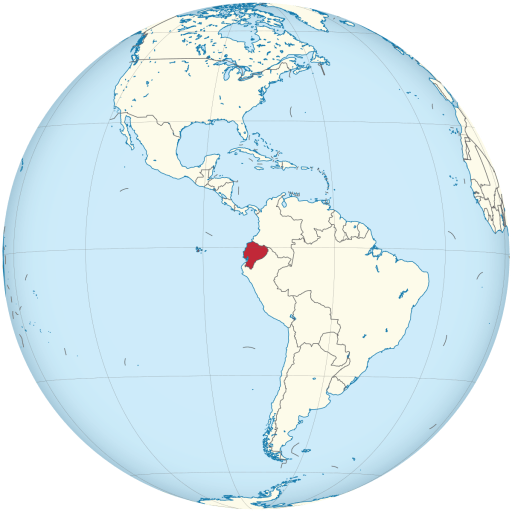
Giant tortoises returned to Ecuador's Galápagos Island
What happened
Ecuador released 158 young giant tortoises (this is what they look like) on Floreana Island in the Galápagos. The last time anyone has ever seen giant tortoises was in 1835 by Charles Darwin himself. This is the first step of a bigger plan to bring back 700 tortoises total.
Why this matters: The Galápagos Islands are already famous worldwide for unique wildlife, so keeping them healthy is important for science and biodiversity globally. Giant tortoises, in particular, are what scientists call "ecosystem engineers", meaning they help shape the natural environment around them. They spread seeds, control plants, and help nature grow back in a healthy way. Without them, the island's ecosystem was incomplete. This also matters because it shows that humans can repair damage they caused in the past.
Tell me more
An article in Primicias (news outlet in Ecuador) reveals the juicy details. Turns out, it was a 20-year-long team effort. Different institutions were involved, like the Ecuadorian government, Galapagos Conservancy, Fundación Jocotoco, Charles Darwin Foundation and Island Conservation. It was a highly complex project involving genetic analysis, captive breeding, habitat management, invasive species eradication and international scientific collaboration.
Some concrete details:
-
The "new" tortoises are genetically "distant relatives" from a different island in the Galápagos. So, scientists took those relatives, bred them carefully over several years, and raised 158 young tortoises until they were big enough to survive in the wild. On February 20, 2026, they released them back onto Floreana.
-
Each one has a GPS tracker so scientists can follow their movements.
-
The plan is to release around 25 to 100 more every year until there are roughly 700 on the island total.
-
The scientists involved are also trying to bring back a couple of other species to the island, but that's another story for another time.
Did you know that NASA played a role in bringing these tortoises back?
Why did the tortoises disappear in the first place?
Humans. The tortoises disappeared mostly because of either humans eating or hunting them, and invasive animals (animals whose natural homes are elsewhere, but were "introduced" to another "home" by mostly humans through travel, trade, colonialism or even carelessness).
"Fun" fact: When sailors and whalers visited the Galápagos in the 18th and 19th centuries they brought rats, pigs, goats and cats, either accidentally or intentionally for food. These animals had never existed on the islands before. Everything affects everything, so as a result, rats ate tortoise eggs, pigs destroyed nesting sites, and goats ate the vegetation tortoises depended on for food. None of these animals had natural predators on the island to "control their populations", so they multiplied very quickly and caused a lot of damage. The invasive animals problem is still a problem today. However, they're being dealt with (as part of the conservation efforts), and the goal is to have them fully removed before they start reproducing in about 15 to 20 years.
Where does the responsibility of conservation concretely lie?
There's no simple answer. Different groups carry responsibility for what's happened to the tortoises. Yes, the situation on the Galápagos Islands is a result of European colonialism, but we've got to get a bit more concrete and contemporary than that, don't we?
Typically, governments are usually the most powerful actors because they control land, make laws, and fund conservation programs. The Ecuadorian government led and organized the tortoise project through the Ministry of Environment and the National Park Directorate (their rangers literally carried tortoises seven kilometres across volcanic terrain to release them). But governments often prioritize economic growth (aka: $$$) over conservation, so political will is really important (repopulating tortoises is not exactly a moneymaker move). International conservation organizations matter just as much, though.
There's also the local support question. If the people living near a rewilding project don't support it (sometimes they don't, for example with wolves), it often fails. The Floreana residents actually welcomed the tortoises, which is a big reason this release could happen at all.
Corporations carry responsibility too, since industries like agriculture, logging, and fishing cause much of the habitat destruction that makes rewilding necessary in the first place. And then comes the question of individual responsibility, which is, yes, real but easy to overstate. Personal choices matter, but systemic change driven by policy, and corporate behavior has far, far greater impact.
Zoom out: Rewilding efforts like this have been happening around the world. For example, in North America, wolves were intentionally reintroduced to Yellowstone in 1995. In Rwanda and parts of East Africa, there've also been very successful mountain gorilla conservation efforts. The general trend towards rewilding is growing. Scientists today increasingly understand that restoring lost species can heal entire ecosystems, not just save one animal.
A new report (again) says that migrants in Libya are still living in very, very dangerous conditions
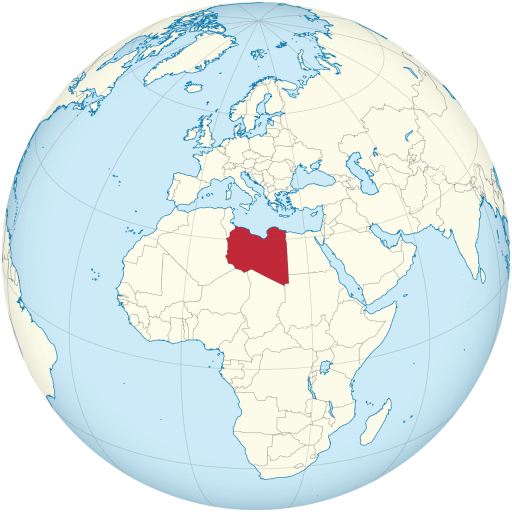
Refresher: Many people from Africa, West and South Asia try to reach Europe for a better life. Libya is often the last country they pass through before trying to cross the Mediterranean Sea. This new United Nations (UN) report is about what happens to them in Libya. They either get abducted or kidnapped at gunpoint by traffickers and/or end up in (official or unofficial and illegal) prisons.
What happened
On February 18, the Office of the United Nations High Commissioner for Human Rights (OHCHR) and the United Nations Support Mission in Libya (UNSMIL) published a report documenting that migrants, refugees, and asylum-seekers in...
Please log in or subscribe for free to continue reading this issue.
We could use your help to make this issue better. Take a look at the requests below and consider contributing:
- Submit a piece of artwork for this issue
- Submit a news, academic or other type of link to offer additional context to this issue
- Suggest a related topic or source for future issues
- Fix a typo, grammatical mistake or inaccuracy
Below you'll find some of the sources used for this issue. Only sources that support "media embedding" are included.
-
Giant tortoises have returned to Floreana Island in Ecuador's Galapagos archipelago as conservationists release 158 juvenile hybrids to restore the ecosystem.
-
Las 158 tortugas gigantes liberadas en la isla Floreana, en Galápagos, pertenecen a una línea genética considerada extinta y marca un hito histórico para Ecuador en sus acciones de conservación.
-
For the First Time in 180 Years, Giant Tortoises Return to Floreana Driven to extinction in the mid-1800s, the island lost its keystone species — an ecosystem engineer that once shaped forests, dispersed seeds, and sustained ecological balance. On February 20, 2026, 158 Floreana-lineage giant tortoises walked on their ancestral island once again. A species […]
-
Cómo la NASA ayudó a que las tortugas gigantes volvieran a su hábitat natural en las Islas Galápagos - InfobaeEl monitoreo satelital permitió identificar las mejores zonas para la liberación de ejemplares criados en cautiverio, asegurando acceso a recursos clave y condiciones adecuadas para su supervivencia a largo plazo
-
Nearly 40 members of the European Parliament from four political groups are urging an end to funding for all Libyan security forces, as violence at sea has dramatically increased in recent years.
-
Frontex has shared locations of migrant boats with Libya's coast guard more than 2,000 times in three years – despite watching them whip, beat and shoot at passengers
-
Italy should revoke its damaging migrant cooperation agreement with Libya, Human Rights Watch said today. The Italy-Libya Memorandum of Understanding on migration cooperation will renew automatically for three years on November 2, 2025, if neither party revokes it or makes any revisions by that date.
-
In Kabul, Marsal is planning her first Valentine’s Day as a 21-year-old engaged woman. But under Taliban rule, romance requires careful planning and fallback strategies. “I’ll take my seven-year-old niece with me,” she says, explaining how she will celebrate with her love. “If I wear proper hijab and she’s with us, maybe the vice and […]
-
Uludağ was detained at his home for in an investigation for "spreading disinformation" and "insulting the president."
-
Report by Hawa Rahma of Al-Alaq Centre for Press Services for Sudan Media Forum In...
-
A report by the UN fact-finding mission released today says that ethnically targeted killings, widespread sexual...
-
The report includes legal proposals for the integration of former militants and the expansion of political freedoms.
-
Egypt discovers 4,300-year-old body wrapped in pure gold inside limestone coffin | Business Insider AfricaArchaeologists in Egypt have uncovered a 4,300-year-old mummy wrapped in gold inside a sealed limestone coffin at the Saqqara necropolis, south of Cairo, in a discovery that highlights the enduring link between gold, power and belief in one of Africa’s most historically influential civilisations. | Business Insider Africa
-
Designations cite executions, siege-induced starvation, and post-capture civilian killings
-
Cambodia’s concrete ‘reefs’ thwart trawling and create new homes for marine life - The World from PRXAs countries commit to bans on bottom trawling, an island community in Cambodia is implementing its own method: dropping large cement blocks in near-shore waters. These not only snag trawling boats’ fishing nets, they can also create artificial reefs to promote biodiversity.
-
Democracy has returned, but Bangladesh is more conservative than ever
Each week, What Happened Last Week curates news and perspectives from Asia, Africa, and the Americas. The newsletter is written by Sham Jaff and focuses on stories that rarely receive sustained attention in Western media.
Read the free edition every week. VIP subscribers receive additional stories, recommendations on what to watch, read and listen, and more.