

Issue #376: The largest Gen Z electorate in the world just voted. And one of the strongest cyclones in decades recorded hit one of the countries least responsible for climate change.
There's Bangladesh, home to around 171 million people, that just held its most consequential election in decades. The likely new prime minister returned from 17 years of exile in London on Christmas Day and his mum and dad both ran the country before him.
At the same time, Cyclone Gezani just destroyed much of Madagascar's second-largest city, including the port that handles most of the country's trade (including roughly 80 percent of the world's vanilla supply).
Also in this issue: Japan now has its first female prime minister, Barbados' (female) leader won every single seat in parliament, and Ethiopia expelled Reuters journalists after some very critical reporting. There were also signs of progress: Fewer trees are disappearing in Colombia, a Pakistani festival that was banned for 19 years is back on again, and a court in the Philippines gave property rights for same-sex couples.
This issue has been edited by Jonathan Ramsay.
Bangladesh just held its most meaningful election in decades
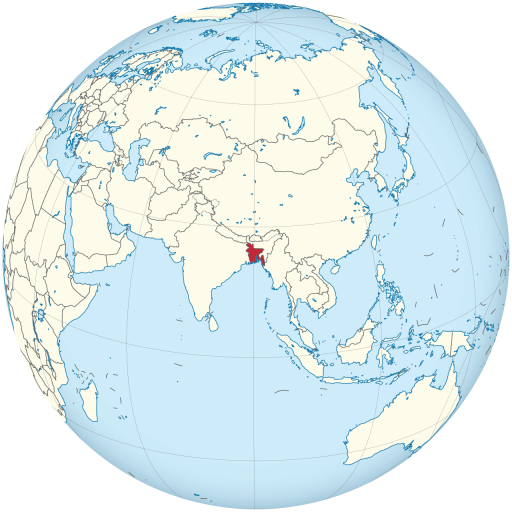
Refresher: In 2024, students (first, others followed later) led an uprising against autocratic Prime Minister Sheikh Hasina after more than 20 years in power. An estimated 1,400 people died during this uprising. Nobel laureate Muhammad Yunus took over the government.
What happened:
In 2026, elections finally took place. The results: Bangladesh Nationalist Party (BNP), a former opposition party, is now in full control, and a referendum full of new democratic reforms also passed. The question now: will any of it stick?
Why this matters: Some 171 million people live in Bangladesh (more people than Germany and France combined). According to The Daily Star, around 55.6 million voters are aged between 18 and 37, accounting for more than 43 percent of the electorate. This is the largest youth electorate the country has ever had. When the 2024 uprising happened, CNN cited experts who called it "the world's first successful Gen Z revolution."
Tell me more:
In total, 2,028 candidates contested for the 299 seats and 50 registered political parties competed. The BNP's on a high: it won enough seats (209) in parliament to control the government by themselves, meaning they do not need other parties to help them pass any laws and are now the dominant political force in the country. In second place came Jamaat-e-Islami (68 seats; they believe in the introduction of sharia law). As for the likely new Prime Minister: Tarique Rahman is, in Gen Z terms, the ultimate nepo baby. His mother was prime minister. His father was president and founded the party Rahman now leads. Political power in Bangladesh tends to stay within the same families (and this election did nothing to break that pattern). Rahman has lived outside the country for 17 years in London and only came back in December (on Christmas Day, FYI).
BTW: Sheihk Hasina's party, The Awami League, was not allowed to run in this election. The Awami League was the country's historically largest party.
Did you know? About 127 million people were allowed to vote in this election. To make sure everything stayed calm and safe, the government sent over 900,000 security officers (the largest-ever), including police and soldiers, to watch over the voting. For the first time, overseas Bangladeshis could also vote.
What do young Bangladeshis want?
Many young people in Bangladesh wanted big political change after the protests in 2024.
In this interview with Deutsche Welle, the biggest topics seem to be 'no more corrupt politicians', better schools and health care, and leaders who understand their generation. In Dhaka, young voters spoke of their thrill at experiencing democracy first hand. A young woman in Dhaka told The Guardian: "I am excited, this is the first time I am freely taking part in an election." One 27-year-old first-time voter in Dhaka told the The Daily Star that "it feels like Eid." One more critical piece in the paper says, however, that when it was time to vote, many young people still chose the old, familiar political parties, not because they really believed in them, but because they did not trust the alternatives. The National Citizen Party (born directly from the July 2024 uprising) won only six seats in the parliament (perhaps because they allied with the Islamist party, Jamaat-e-Islami). This means: Yes, the protests changed the system, but did not yet create new political leaders people trust.
Is Tariq Rahman a good pick for a prime minister?
Hmm. Many Bangladeshis remember that when the BNP was last in power (2001--2006), the country was ranked among the most corrupt in the world. Rahman didn't hold an official government job, but many believed he wielded enormous hidden influence. He was arrested in 2007 on corruption charges (he still denies these). A year later, he was released and went to London being so badly tortured in jail that he was taken to the plane in a wheelchair. Years after, the courts removed those convictions, which allowed him to return and run for leader. Rahman says this proves he did nothing wrong. Plus, he also said the BNP has expelled or disciplined more than 7,000 members for corruption, extortion, and misconduct. But many people are still skeptical.
And what was the referendum about?
About 6 out of 10 people voted for a list of new political rules for the country. The referendum's outcome is binding for any party winning the election, meaning these new rules are now BNP's political homework for the upcoming years (or however long they will stay in power). Bangladeshi media refers to this as the July Charter, created by the temporary leader Muhammad Yunus.
The new rules include:
- Prime ministers can only serve two terms, so they cannot stay in power forever
- A second parliament chamber will be created, so more people can review laws
- The president and courts will have more power, so the prime minister has less control over everything
- More women must be included in parliament
- Some important parliament positions must go to the opposition, not just the ruling party
Whether or not...
Please log in or subscribe for free to continue reading this issue.
We could use your help to make this issue better. Take a look at the requests below and consider contributing:
- Submit a piece of artwork for this issue
- Submit a news, academic or other type of link to offer additional context to this issue
- Suggest a related topic or source for future issues
- Fix a typo, grammatical mistake or inaccuracy
Below you'll find some of the sources used for this issue. Only sources that support "media embedding" are included.
-
Voters are hoping for a return to democracy after 15 years of authoritarian rule under Sheikh Hasina.
-
Bangladesh’s ‘Gen Z revolution’ toppled PM Sheikh Hasina. Why did they hit the streets and what happens now? | CNNInside Bangladesh it’s being dubbed a Gen Z revolution – a protest movement that pitted mostly young student demonstrators against a 76-year-old leader who had dominated her nation for decades and turned increasingly authoritarian in recent years.
-
Tarique Rahman, in pole position to become the next prime minister of Bangladesh, is back in the capital, Dhaka. Bangladesh goes to the polls on February 12.
-
Millions of expatriates, including those in Gulf, can vote via postal ballot for the first time - but registration remain low
-
Youth Turnout in Bangladesh 13th Parliamentary Election | ‘This time it feels like Eid’: First-time voter shares experience | The Daily StarYouth Turnout in Bangladesh 13th Parliamentary Election: As voting in the 13th Parliamentary Election and a nationwide referendum began this morning, first-time and young voters turned out in significant numbers across the country, many describing the experience as both emotional and historic.
-
Youth-driven National Citizen Party wins only six seats
-
Powerful storm batters Mozambique’s Inhambane a day after killing at least 41 people in Madagascar.
-
Joint Statement by Germany, France, The Netherlands, Sweden and the United Kingdom on the death of Alexei Navalny - Federal Foreign OfficeThe UK, Sweden, France, Germany and The Netherlands are confident that Alexei Navalny was poisoned with a lethal toxin. This is the conclusion of our Governments based on analyses of samples from…
-
It includes the possibility of imposing a “naval blockade” on ships carrying migrants for a period of up to six months.
-
The ruling reveals the previously undisclosed medical records of the HK pro-democracy media tycoon. It also sheds light on why the court considers foreign collusion to be the most serious crime under the nat. sec law.
-
Israel launched fresh airstrikes across the Gaza Strip on Sunday, with Palestinian officials reporting at least 11 deaths, as Israel said the action was in response to ceasefire violations by Hamas amid a fragile truce.
-
Ghanaians celebrated the country's traditional colourful woven clothing, known as fugu, smock or batakari, after the government declared a weekly "Fugu Day" on Wednesdays.
-
Libya granted several foreign companies new oil exploration and production licences for the first time in 17 years on Wednesday, after more than a decade of political instability.
-
The government of Cuba published the notices to airlines and pilots on Sunday night, warning that jet fuel would be available at nine airports across the island, starting Tuesday and continuing until 11 March.
-
Mandera (HOL) — Kenyan President William Ruto has announced that Kenya will reopen its border with Somalia in April, nearly 15 years after it was shut over security concerns linked to al-Shabab attacks.
-
After inheriting a party in crisis, Japanese Prime Minister Sanae Takaichi led her LDP to a thumping snap-election win — but where she will go next is still unclear
-
After interim leader Rodriguez announced an amnesty law last month, some political prisoners have been freed. But one has already been rearrested, and analysts say reforms must accompany the new law.
-
Discover the characteristics of people born in the Year of the Horse and why the coming Year of the Fire Horse is so revered in Chinese culture. Find out your Chinese zodiac animal sign, learn about the ancient river race that decided the zodiac order, and uncover the real historical roots of the zodiac system
-
Amal El Fallah Seghrouchni discusses Morocco’s push for sovereign AI, its partnership with Mistral AI for local languages, and why Africa needs its own ethical framework for technology.
-
The event, which dates back centuries, was banned after injuries and fatalities caused by sharp strings and celebratory gunfire.
-
The landmark decision said "legitimate intimate relationships" must not be "legally invisible".
-
A girl in a cotton field, a bungalow set alight, a nation in exile that still insists on seeing itself. In Cotton Queen, Suzannah Mirghani turns Sudan’s most
-
International Feature Film Competition In a cotton-farming village in Sudan, teenage Nafisa finds herself torn between tradition and change. When a businessman arrives with genetically modified cotton and a marriage proposal, she becomes the centre of a struggle for her village’s future. As her grandmother, Al-Sit, clings to old hierarchies, Nafisa begins to awaken to her own power. 'Cotton Queen' is a tender and politically charged coming-of-age tale about women’s resilience, self-determination, and the fight to shape their destiny.
-
How Bad Bunny became the global voice of a generation in crisis — and what it means when resistance becomes profitable.Guests:Carina Del Valle Schorske, writer, translator and wannabe backup dancer. She wrote a New York Times Magazine profile about Bad Bunny you can read here. Vanessa Díaz, professor of Chicano/a and Latino/a Studies at Loyola Marymount University. She’s been teaching a Bad Bunny college course 2023 and is the co-creator of the Bad Bunny Syllabus Project. She is also the co-author of P FKN R: How Bad Bunny Became the Voice of Puerto Rican Resistance. Jorell Meléndez-Badillo, professor of Puerto Rican, Caribbean and Latin American History at University of Wisconsin, Madison. He’s the author of Puerto Rico: A National History. He is also the author of the history visualizers for Bad Bunny’s DTMF album.To access bonus episodes and listen to Throughline sponsor-free, subscribe to Throughline+ via Apple Podcasts or at plus.npr.org/throughline.
-
Romance in Zimbabwe is taking strikingly inventive forms, reflecting life in an economy where cash reigns supreme and sustainability gains new social value.
Each week, What Happened Last Week curates news and perspectives from Asia, Africa, and the Americas. The newsletter is written by Sham Jaff and focuses on stories that rarely receive sustained attention in Western media.
Read the free edition every week. VIP subscribers receive additional stories, recommendations on what to watch, read and listen, and more.