

Issue #375: I'm looking at Costa Rica and Libya. Costa Rica, because the country just elected a woman as president and she's campaigning on tough-on-crime politics that include doubling prison sentences for women who have abortions. Libya, because the son of former dictator Muammar Gaddafi and likely-was-the-next-president-of-Libya was killed in his home last week.
Also in this issue: A record number of African athletes are competing at the Winter Olympics this year, South Africa just developed a rare livestock vaccine after 20 years of research. And in Malawi, small traders hit the streets and actually forced the government to pause new tax rules. Plus: music that shaped Afrobeat before it had a name, a rare photo archive of childhood in 1980s Colombia, and a Malayalam thriller where animals also hold real power.
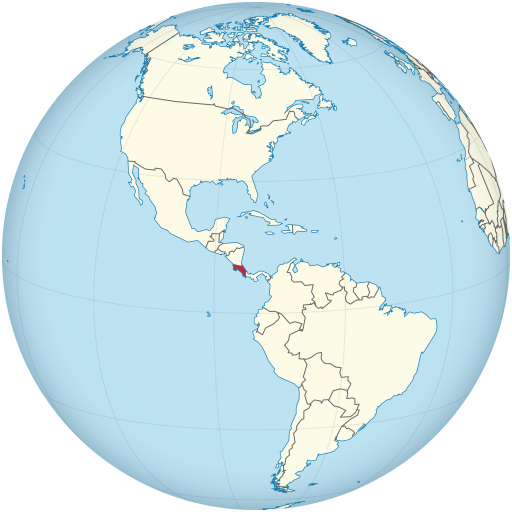
Costa Rica's new president-elect is young, a political scientist, and a very, very conservative woman
What happened:
On February 1, Costa Rica elected Laura Fernández as president, with 48.3 percent of the vote. At the same time, voters picked the 57 members of parliament, which heavily influences how much power she'll actually have.
Why this matters:
Fernández is only the second woman to ever lead Costa Rica, after Laura Chinchilla. But the bigger story is political direction. The Tico Times calls this election result a "rightward move". The Guardian goes further and calls Fernández a "rightwing populist". This news affects the daily lives of about 5.2 million people living in Costa Rica.
Zoom out: This news fits a wider trend across the Americas, writes The Guardian. Conservative leaders have been winning lately in places like Chile, Bolivia, Argentina, and Honduras. The winning message is almost always the same: crime is out of control, corruption is everywhere, and strong leadership is needed.
Tell me more:
Fernández' campaign apparently proved pretty effective: she also won in the first round. No one has won the presidency outright in the first round since 2010 (which shows how fractured politics have been in Costa Rica). This time, Fernández also got lucky on the parliamentary side. Her party won 31 out of 57 seats. That gives her a simple majority. The National Liberation Party has 17 seats, the Broad Front has seven, and the rest are split up. Bottom line: she has more day-to-day power than most recent presidents.
Good to know:
Before the election, a poll from January found that nearly 80 percent of respondents felt little or no enthusiasm for the campaigns. Still, most people voted anyway. More than half said they felt motivated to participate, even if they didn't love the options.
Who is she, and how did she get here?
Fernández is 39, a political scientist, and ran for the Sovereign People Party. She was personally chosen by outgoing president Rodrigo Chaves. She worked closely with him before, both as minister for national planning and as his chief of staff. Her pitch was basically continuity. She has openly said she wants Chaves in her cabinet, and reports suggest he could land one of the most powerful roles.
As for her personally, Fernández presents herself as socially conservative, strongly Catholic, and very focused on "family values." That played well with Costa Rica's growing evangelical voters. Her platform includes doubling prison sentences for women who have abortions. So much for the argument of "female leadership is good for women."
How's Costa Rica been lately?
Not so well. Costa Rica has been having a rough few years. It used to be known as one of the safest countries in Central America. However, the country has turned into a logistics hub for Mexican and Colombian drug cartels in recent years. Turf wars followed. As a result, the murder rate has jumped about 50 percent in six years, now sitting around 17 per 100,000 people. Since 2023, Costa Rica has been recording nearly 900 homicides every year. Even parts of San José are seeing regular shootouts.
Fernández leaned hard into this. She talked almost nonstop about security. She openly admires El Salvador's president Nayib Bukele and wants to copy parts of his playbook. That includes finishing a massive maximum-security prison for more than 5,000 inmates, tougher sentences, mandatory prison labor, and states of emergency in high-crime areas that would suspend some constitutional protections. Of course, Bukele was the first foreign leader to congratulate her.
Fernández takes office May 8.
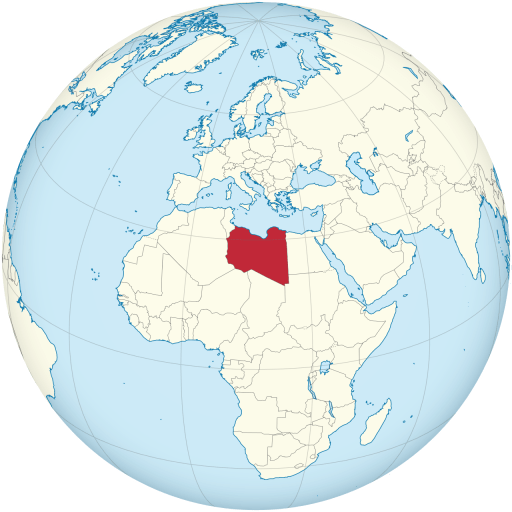
Saif al-Islam was assassinated. Is this the end of the Gaddafi family's grip on Libyan politics?
What happened:
On February 3, 2026, Saif al-Islam Gaddafi, the most well-known son of Muammar Gaddafi, was shot dead at his home in Zintan. According to reports, four masked gunmen cut the security cameras and then confronted him directly. Saif al-Islam, who was 53, and his bodyguards were killed by gunfire.
Why this matters:
This news is like the Superbowl for Libya's politics: a major event. However, for many victims of the 2011 violence, this is simply bad news: there will be no accountability. For years, Saif al-Islam lived freely in Libya despite being wanted by the International Criminal Court (ICC) for crimes against humanity, and that already made the court look pretty powerless. Libya Crimes Watch also worries about a bigger pattern: high-profile suspects getting killed before they can testify or be held accountable. They point to the earlier killing of Mahmoud al-Werfalli, who was also wanted by the ICC, as a warning sign. The ICC charges against al-Islam have effectively now come to an end.
Tell me more:
As of February 9, no one knows who killed Saif al-Islam Gaddafi. No group has claimed responsibility. However, a lot of people had reasons to want him gone.
Here's an overview:
-
The two main power centers? Both the Tripoli-based government and the eastern camp led by the Haftar family benefited from his death. Saif al-Islam was a problem for both (yes, the country is factually split between west and east). The timing of his death, especially, raised eyebrows. He was killed just days after high-level talks in Paris involving Saddam Haftar and people close to Tripoli's prime minister. The idea floating around is simple: Saif al-Islam was a wildcard neither side could fully control.
-
Islamist factions and militias? Groups that rose to power after 2011 saw him as an existential threat. To them, he represented the return of the old regime. They had already blocked court hearings and used force in the past to keep him out of politics.
-
Someone random, or even from his own city? The killing happened in Zintan, a city with its own power struggles. Some locals may have hated how much influence Saif al-Islam still carried there. On top of that, many Libyans never forgave him for 2011. Him saying "rivers of blood" would flow back in 2011, and calling protesters "rats" left deep wounds.
Who was he?
Al-Islam was...
Please log in or subscribe for free to continue reading this issue.
We could use your help to make this issue better. Take a look at the requests below and consider contributing:
- Submit a piece of artwork for this issue
- Submit a news, academic or other type of link to offer additional context to this issue
- Suggest a related topic or source for future issues
- Fix a typo, grammatical mistake or inaccuracy
Below you'll find some of the sources used for this issue. Only sources that support "media embedding" are included.
-
On February 3 Saif al Islam Gaddafi was murdered in Libya. His continued freedom in Libya epitomised the powerlessness of the International Criminal Court. And his death burries the last hopes that it would bring justice for the crimes of 2011.
-
Thousands attend burial of slain son of Libya's Gaddafi - AL-Monitor: The Middle Eastʼs leading independent news source since 2012Thousands turned out on Friday for the burial of the slain son of former Libyan ruler Muammar Gaddafi in a town that still holds allegiance to the late longtime leader.Seif al-Islam Gaddafi, once seen by some as Libya's heir apparent, was shot dead in his home in the northwestern city of Zintan on Tuesday.His burial in the town of Bani Walid, some 175 kilometres (110 miles) south of Tripoli, brought together thousands of Gaddafi loyalists, nearly 15 years after the ruler was toppled and killed in a 2011 NATO-backed uprising.Some came from other parts of the country.
-
The 53-year-old, once widely seen as the second most powerful person in Libya, was killed by "our unknown gunmen".
-
Authorities investigating killing of Saif al-Islam Gaddafi, once seen as de-facto PM under father’s iron-fisted rule.
-
Gaddafi’s political team says masked men killed him at his home in Zintan in a ‘cowardly and treacherous assassination’.
-
Rescue teams continue at Meghalaya’s illegal coal mine after explosion kills 25; police arrest two as investigation into rat-hole mining tragedy unfolds| India News
-
Health officials in Gaza say Israeli strikes have killed at least 24 Palestinians, including two babies.
-
Sudan: Committee for Justice Documents Attack on Health Center in Kadugli, Resulting in the Killing of Eight Civilians, and Calls for Protection of Medical Facilities - Committee for JusticeSudan: Committee for Justice Documents Attack on Health Center in Kadugli, Resulting in the Killing of Eight Civilians, and Calls for Protection of Medical Facilities
-
Amnesty International has revealed the brutal punishments meted out to North Koreans who consume foreign media, after 25 interviews with escapees.
-
Rebel authorities say at least 200 people were killed in a landslide at coltan mines in eastern Congo
-
Narges Mohammadi, awarded the 2023 Nobel Peace Prize while in prison, has received additional prison sentences for "gathering and collusion" among other charges.
-
Japan retrieves rare earth-rich mud from seabed to lower reliance on China | The Asahi Shimbun: Breaking News, Japan News and AnalysisJapan said Monday it has successfully drilled and retrieved deep-sea sediment containing rare earth minerals from the seabed near a remote island, as the country seeks to reduce its reliance on China.
-
YANGON: Myanmar and Russia have signed a five-year military cooperation pact, Moscow said on Tuesday (Feb 3), sealing an alliance analysts say has been crucial to the junta's grip on power.Myanmar's military snatched power in a 2021 coup, triggering a civil war, and has relied on backing from Russia as well a
-
The New Start treaty has limited the number of deployed strategic nuclear warheads for both countries.
-
The U.S. and Russia have agreed to reestablish high-level, military-to-military dialogue for the first time in more than four years.
-
The Democratic Republic of Congo, Namibia and Angola have said they will cooperate on migrant returns.
-
Bolivia began to implement a ban on cellphones in classrooms Monday, as the school year starts in the landlocked South American nation.
-
The pop-out door handle ban starts in 2027 for new cars, 2029 for existing models.
-
Early projections have Thailand's prime minister winning by a clear margin, with the opposition conceding defeat in Thailand's parliamentary elections. The snap election was called in December.
-
The Agricultural Research Council (ARC) has announced the release of the first batch of a locally produced foot-and-mouth disease (FMD) vaccine, calling it a historic milestone in strengthening South Africa’s animal health system and livestock biosecurity.
-
The iconic musician passed away in Ghana on February 7th.
-
Jamaica is a kaleidoscope of religious expressions highly influenced by our immigrant heritage. Whatever your belief, it is accepted in Jamaica.
-
Jamaica is a small island nation in the Caribbean of around 2.8 million people. Where once 98% of the population ascribed to a Christian denomination, this figure has now reduced to 60% of the population is Christian. There are significant populations of religious minorities, most notably Rastafarians.1 Those who identify […]
Each week, What Happened Last Week curates news and perspectives from Asia, Africa, and the Americas. The newsletter is written by Sham Jaff and focuses on stories that rarely receive sustained attention in Western media.
Read the free edition every week. VIP subscribers receive additional stories, recommendations on what to watch, read and listen, and more.