

This issue was filled with news from Aleppo and Iran. Some of you know this, some don't: I've worked part-time for a news outlet called The Amargi for a few months now, and their focus is on West Asia primarily. Naturally, last week, all hell broke loose. In this week's issue, I'm going to zoom in on Syria (and why I believe the EU Commission is giving the country €620 million right now) and the election result in the Central African Republic (I also talked about this in my weekly column at the German politics podcast Die Wochendämmerung last week).
Also in this issue: a famous Egyptian writer talks about the moment Hosni Mobarak fell, a Call for Participation for your favourite podcasts from the Global Majority, a report on a perfectly preventable disease that Black babies in Brazil get, and another Russian "funny" story; this time there's some sci-fi involved.
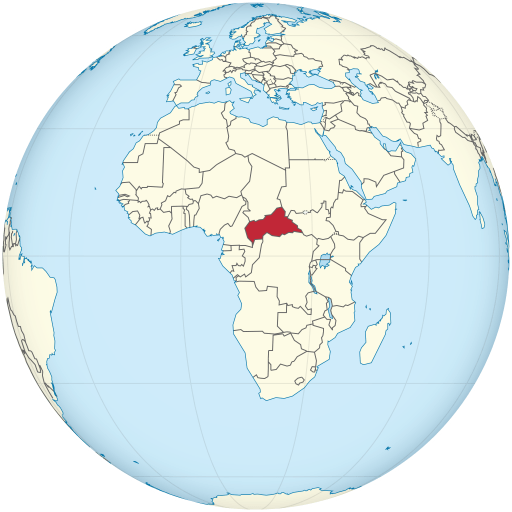
The Central African Republic is voting. Russia helps with that
What happened:
On December 28, 2025, the Central African Republic (CAR) held general elections (president plus parliament). Last week, the election authority released (provisional) results, and they point to one thing: the president is not going anywhere. Psst: Russia has a lot to do with this election result.
Why this matters:
The Central African Republic is no longer in all-out war, but it is still living with an unresolved civil conflict (it's not really a civil war anymore, but it used to be) that began in 2012. Russia is building influence there without elections, aid, or long-term institutions. Instead, it's backing the government with armed force. Coincidentally, the country has diamonds, gold, and timber, too.
Tell me more:
The election commission said President Touadéra won the presidency again with 76.15%, with 52.42% turnout. This would be his third term, made possible after a 2023 referendum removed term limits. Opposition figures, including runner-up Anicet-Georges Dologuélé, rejected the provisional results and cried, "Fraud!". Final validation is expected from the Constitutional Court by January 20, 2026. Touadéra came out first in parliament, too. His party, the MCU, came out well ahead in the first round, with dozens of seats already won and many constituencies heading to runoffs.
Is Touadéra popular in the country?
Short answer: yes, but not in a feel-good, landslide way. 76% can mean real support, but it can also be overstated. There were boycotts, the competition is quite weak, and the state has quite the advantage in general. In CAR, the main opposition coalition boycotted, which usually makes the winner's percentage jump. The more useful number to watch here is the turnout (52%), and what credible observers and local media report about how the election went down. Radio Ndeke Luka already said that there were some concerns about irregularities around the publication of results.
Who supports him? Who doesn't?
Touadéra has real support, especially in Bangui (the capital) and other (state-controlled) areas. After years of chaos, Reuters reports that some people credit him with bringing a bit of order back: salaries get paid more regularly, the government functions, and the capital feels calmer than it used to. For voters who lived through the worst years of war, that counts, writes Daniel Makokera for allAfrica. But outside the capital, it's much thinner. In many rural areas, the state still barely exists, armed groups are part of daily life, and people don't feel their lives have improved much. There's also resentment about how much the government leans on foreign security forces (Russia and Rwanda are here; the UN also has a mission here) and about corruption and shrinking political space.
Russia?
Yes, Russian fighters are in CAR. The "Africa Corps" first arrived in the Central African Republic around 2018 (the country was the first in West and Central Africa to bring Russian soldiers in, says Reuters), officially as "military instructors," but in practice they act as combat troops, bodyguards, and law enforcers. They do three main things in CAR: protect Touadéra personally, fight rebel groups, and get paid through resources (in return for their "support," companies linked to Wagner have received gold and diamond concessions). Depending on who you ask, they're either popular or very unpopular. Last year, Deutschlandfunk reported that thousands had protested against Russian Wagner mercenaries. Their presence comes with serious costs, as there are documented abuses against civilians, including torture and killings. However, they answer to no local court, and there's no accountability.
Good to know: Daniel Makokera, who is a veteran African journalist and media executive, writes that the issue goes beyond the mere presence of foreign troops. His concern is that the Central African state itself has not rebuilt its own capacity, and that security has effectively been outsourced rather than rooted in national institutions. In another article, Ori Swed and Alessandro Arduino in The Conversation argue that this is exactly the point. Russian mercenaries may have a terrible reputation, but some African governments still hire them because they work for one specific goal: keeping regimes in power fast, with no political strings attached.
What next?
January 20, 2026, is the key date for the final presidential results. If no candidate gets more than 50% of the vote, a presidential runoff will take place on February 15, while legislative runoffs will take place on April 5.
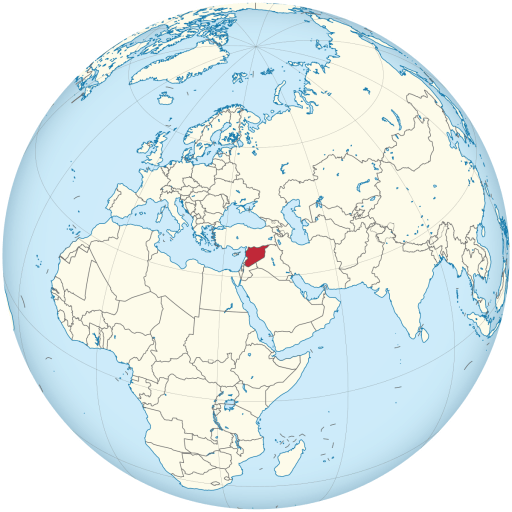
The EU just formally restarted political relations with Syria. At the same time, the Syrian army forcibly displaced 150,000 Kurdish civilians from Aleppo
What happened:
The European Union has officially restarted political relations with Syria. EU leaders Ursula von der Leyen and António Costa visited Damascus and met Syria's interim president, Ahmed al-Sharaa.
After the visit, the EU announced a €620 million support package for 2026--2027.
Why this matters: This is a big political shift, not just aid money. The EU is now openly supporting Syria's transitional government, even as the Syrian army uses force against parts of its own population, including in Aleppo, one of the country's biggest and most symbolic cities. Two other minorities, Alawites and the Druze, have been targeted within the year since al-Sharaa has...
Please log in or subscribe for free to continue reading this issue.
We could use your help to make this issue better. Take a look at the requests below and consider contributing:
- Submit a piece of artwork for this issue
- Submit a news, academic or other type of link to offer additional context to this issue
- Suggest a related topic or source for future issues
- Fix a typo, grammatical mistake or inaccuracy
Below you'll find some of the sources used for this issue. Only sources that support "media embedding" are included.
-
Amargi is a news and analysis website that covers the Middle East and North Africa. We provide in-depth analysis and commentary on the region's politics, economy, and culture.
-
The main opposition coalition boycotted the vote after a referendum allowed the removal of term limits.
-
Centrafrique : la MOE-RAC déplore des irrégularités dans la proclamation des résultats provisoires de la présidentielle - Radio Ndeke LukaFr Sa Après la publication des résultats globaux provisoires de l’élection présidentielle, la mission d’observation électorale du réseau Arc-en-ciel (MOE-RAC), indique avoir relevé plusieurs irrégularités. Elle souligne notamment des failles dans le processus ayant conduit à la proclamation du président sortant comme vainqueur dès le premier tour. Joseph Bindoumi, président de la mission d’observation répond […]
-
Guest Column - The Central African Republic’s latest presidential election has delivered a familiar outcome.
-
In der Zentralafrikanischen Republik haben Tausende gegen die russischen Wagner-Söldner protestiert.
-
European Commission President Ursula von der Leyen and President of the European Council Antonio Costa visited Damascus today to discuss the renewed bilateral relations with Syria. They met with Syrian President Ahmed al-Shaara to discuss this new chapter in bilateral relations, focused around three pillars.
-
The ongoing conflict is between the Syrian Transitional Government’s forces and the Kurdish-led Syrian Democratic Forces (SDF). While a deal was reached last year to integrate the SDF into a unified national army, negotiations have stalled over the Kurds’ demands for regional autonomy. This political deadlock turned into active combat this week, with government forces […]
-
The deal was announced in the early hours of Sunday morning after a week of violent clashes.
-
The Syrian immigrant, who had previously been convicted of criminal offences in Germany, was flown to Damascus and handed over to Syrian authorities on Tuesday.
-
A large Saudi business delegation traveled to Syria on July 23-25, 2025, and participated in an inaugural Syrian-Saudi Investment…
-
Situation Report in English on Burundi and 1 other country about Education, Food and Nutrition and more; published on 5 Jan 2026 by UNICEF
-
Kyiv's energy situation remains challenging and is expected to remain so in the coming days, Mayor Vitali Klitschko said on Jan. 11.
-
The Straits Times - Get latest breaking news, business, sports, lifestyle, tech & multimedia and more news in Singapore, Asia & rest of the world at straitstimes.com.
-
Los presos políticos más antiguos: expolicías metropolitanos tienen 23 años tras las rejas - Runrun.es: En defensa de tus derechos humanosLos efectivos de la extinta Policía Metropolitana Héctor Rovaín, Erasmo Bolívar y Luis Molina ya tienen 23 años en prisión. Son los presos políticos más antiguos de Venezuela
-
The security minister accuses neighbouring Ivory Coast of funding the plan to kill Capt Traoré.
-
After announcing the decision in October, MTV has officially shut down all remaining music-only channels globally.
-
A court in the Siberian city of Chita has fined Russian bookstore chain Chitai-Gorod 800,000 rubles (€8,700) for disseminating “LGBT propaganda”, independent news outlet Mediazona reported on Saturday.
Each week, What Happened Last Week curates news and perspectives from Asia, Africa, and the Americas. The newsletter is written by Sham Jaff and focuses on stories that rarely receive sustained attention in Western media.
Read the free edition every week. VIP subscribers receive additional stories, recommendations on what to watch, read and listen, and more.