
The U.S. bombed Venezuela and kidnapped President Maduro and his wife. Who's in charge now?
What happened:
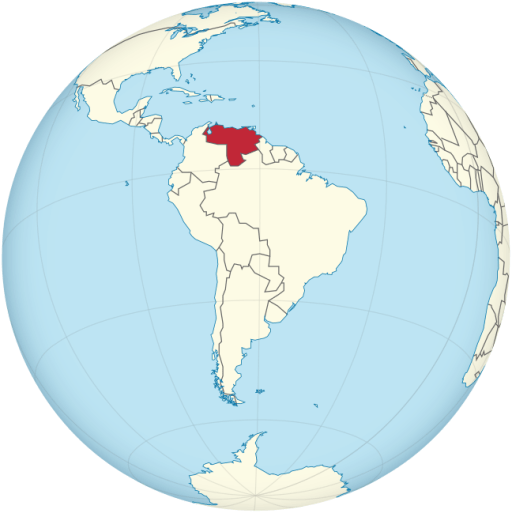
On Saturday (January 3), the U.S. launched strikes in Caracas and other Venezuelan cities and said it captured President Nicolás Maduro and his wife, Cilia Flores, during the operation. Maduro and Flores were reportedly flown to the U.S., where officials say they will face charges tied to "narco-terrorism" and drug trafficking. The scale of damage and the civilian death toll remain unclear in early reporting.
International reaction was fast and harsh. Brazil's President Luiz Inacio Lula Da Silva wrote on X that the actions "cross an unacceptable line", adding that "attacking countries in flagrant violation of international law is the first step toward a world of violence, chaos, and instability", and Mexico's President Claudia Sheinbaum also condemned the intervention.
A joint statement from Brazil, Chile, Colombia, Mexico, Spain, and Uruguay also denounced the strikes. One of the outliers is Argentina as President Javier Milei -- who Trump has described as his "favourite president" -- wrote "freedom moves forward" and "long live freedom" on social media.
Experts The Guardian spoke to all agreed that the US is likely to have violated the terms of the UN charter, which was signed in October 1945 and designed to prevent another conflict on the scale of the Second World War. A central provision of this agreement -- known as article 2(4) -- rules that states must refrain from using military force against other countries and must respect their sovereignty.
Inside Venezuela, the political picture is messy. Maduro's government insists he remains president, while the U.S. is framing this as the start of a "transition." Trump said the U.S. would "run" the country "for now," though Secretary of State Marco Rubio later tried to walk that back, saying the U.S. does not plan to govern Venezuela directly, and instead emphasized pressure through oil measures. Venezuelan Vice President Delcy Rodríguez has positioned herself as the acting authority.
This is the moment where hot takes are cheap. So I asked Gabriela Mesones Rojo (Instagram), a Venezuelan journalist in Caracas who's specialized in human rights and state persecution (the OG readers remember Gaby; she used to write for this newsletter), to walk me through what people are actually feeling on the ground right now: relief for some, fear for many, and deep uncertainty about what comes next, including the risk of violence, fragmentation, and a foreign-controlled oil agenda.
Here's the interview, edited lightly for clarity and flow. I've posted the interview at the link below: https://gishty.com/interviews/inteview-with-gabriela-mesones-rojo
what else happened
Iran:
At least 17 people have died in protests in Iran, say human rights organizations. The unrest reportedly began as protests by shopkeepers in Tehran against strict economic and price policies, then spread into a broader anti-government movement. Alongside anti-regime anger, there are also calls for the return of the monarchy (overthrown in 1979). (Spiegel)
**Turkey / ...
Please log in or subscribe for free to continue reading this issue.
We could use your help to make this issue better. Take a look at the requests below and consider contributing:
- Submit a piece of artwork for this issue
- Submit a news, academic or other type of link to offer additional context to this issue
- Suggest a related topic or source for future issues
- Fix a typo, grammatical mistake or inaccuracy
Below you'll find some of the sources used for this issue. Only sources that support "media embedding" are included.
-
The indictment was unsealed hours after U.S. forces launched an attack on Venezuela and captured its president Nicolas Maduro and his wife, Cilia Flores.
-
Donald Trump says the US has carried out a ‘large-scale strike’ against Venezuela and captured its president.
-
Ahead of Milei's visit to the White House - amid protests and anger on the streets back at home - Ione Wells unravels the paradox that Argentina's president has created
-
International law experts expect Washington to claim self-defence and face little serious pushback
-
The Nobel Peace Prize 2025 was awarded to Maria Corina Machado "for her tireless work promoting democratic rights for the people of Venezuela and for her struggle to achieve a just and peaceful transition from dictatorship to democracy"
-
The home of Venezuela news and analysis since 2002.
-
Bei den landesweiten Protesten in Iran kommt es vermehrt zu gewaltsamen, immer öfter auch tödlichen Zusammenstößen zwischen Polizei und Demonstrierenden. Befeuert werden die Unruhen durch die Ereignisse in Venezuela.
-
Following Ahmet Türk's acquittal in October, there had been expectations he would be reinstated.
-
Craig was one of the last remaining elephants identified as super tuskers in Africa, but also became a symbol for conservation.
-
Bringing Taiwan to the World and the World to Taiwan
-
With ties between the Koreas at rock bottom, South Korea's Lee Jae Myung is advancing several initiatives aimed to build bridges with the Kim Jong Un regime — including one focusing on the martial art of taekwondo.
-
A 47-year-long Swedish study at Karolinska Institutet reveals how fitness, strength, and muscle endurance change during adulthood. The results show that physical ability starts to deteriorate as early as age 35, but it is never too late to start exercising.
-
Bangladesh's first female prime minister, Khaleda Zia — once praised for restoring democracy and empowering millions of women — has died at the age of 80.
-
Libya posts decade-high crude output in 2025, solidifying top African producer status | Business Insider AfricaLibya produced its highest volume of crude oil in more than a decade in 2025, marking a major milestone in the recovery of a sector long disrupted by conflict, political divisions, and repeated shutdowns. | Business Insider Africa
-
Angola’s prosecutors allege a Russian-backed plot to overthrow the government. What the indictment offers instead is a case study in how dissent can be rebra
-
Peru’s Amazonian municipalities grant native stingless bees unprecedented legal rights — the first insect protections in history — boosting conservation for critical pollinators under threat from deforestation, pesticides, and climate change.
-
Listen to Higher Ground's Fela Kuti: Fear No Man podcast with Jad Abumrad on Apple Podcasts.
-
Venezuela is Russia’s most important ally in South America. Read more at straitstimes.com.
Each week, What Happened Last Week curates news and perspectives from Asia, Africa, and the Americas. The newsletter is written by Sham Jaff and focuses on stories that rarely receive sustained attention in Western media.
Read the free edition every week. VIP subscribers receive additional stories, recommendations on what to watch, read and listen, and more.