

This issue looks closely at what exactly Israel's recognition of Somaliland as an independent state means (for the region, and for Israel, too), and how Malaysia' s courts are trying to create "justice" and "accountability" after the world's biggest financial scandal to date (they sentenced their former prime minister to 15 years in prison, again; this is quite rare in Southeast Asia).
Also in this issue:
While Egypt is deporting Sudanese refugees, Uganda is no longer giving refugee status to new arrivals from Somalia, Ethiopia, and Eritrea. Both Guinea and Côte d'Ivoire are busy with elections. A closer look at Senegal's football economy, South Sudanese refugees' lawsuit against the Trump administration, a basketball tournament in Benin that also donates to orphanages, AFCON's soundtrack, and so much more.
Israel officially recognized Somaliland as an independent state, becoming the first country to do so
What happened last week:
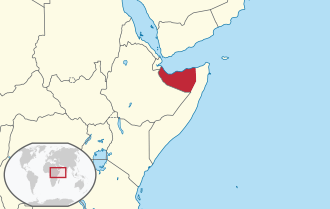
Last week, Israel formally recognized Somaliland as a state. That makes Israel the first country to do so.
Why this matters:
Somaliland has functioned like an independent country since 1991. It has its own government, elections, currency, army. But internationally, it is still treated as part of Somalia. Recognition has been the missing piece, and Israel just broke the wall.
Tell me more:
This was not charity on Israel's part. There are three potential main drivers:
- It's geopolitics, baby: Somaliland sits on the Gulf of Aden, near the Bab el-Mandeb strait. One of the world's most sensitive shipping routes. Israel cares deeply about Red Sea and Suez canal access.
- Security: The Horn of Africa is crowded with influence from Iran (through proxies), Turkey (via Somalia), China (with Djibouti), and Gulf states. Recognizing Somaliland gives Israel a foothold in a strategic region where its rivals are active.
- "Tit-for-tat": Somaliland has signaled it is open to closer ties with Israel. Quiet cooperation existed before, and as of last week, Somaliland also officially recognized Israel.
What does Somaliland get out of this?
One recognition does not equal UN membership. But it gives Somaliland diplomatic legitimacy, encourages other states to reconsider their stance perhaps, and helps give it a stronger hand against Somalia politically. For Somaliland, this is the biggest foreign policy win in years.
Has there been any backlash?
Lots. There are several moving parts:
- Somalia immediately condemned the move, calling it a violation of its sovereignty. The country has always been claiming that Somaliland is "just a region", not that argument is weaker.
- Djibouti has been sort of the region's favorite kid; the country lives off being a logistics and base hub. Now, with Israel's involvement, Djibouti worries about competition. Together with Somalia, Egypt, and Turkey, it issued a joint statement rejecting the move as interference in Somali domestic affairs.
- The African Union publicly condemned Israel's recognition of Somaliland and doubled down on its core principle that Somaliland remains legally part of Somalia. The AU warned that actions like this could undermine continental stability by encouraging unilateral secessionist moves.
There are some quiet winners, though. Ethiopia belongs to that group. The country is landlocked, and has wanted a piece of Somaliland's access to the Red Sea and Suez Canal as well (here's something that goes even deeper). However, most countries are still watching, not following (yet). If no one follows, Israel still gained a strategic partner.
A different take:
Karima (@letshaveathink on TikTok) argues that the focus on whether Israel formally recognized Somaliland misses the real issue: how recognition works today. They say recognition is no longer a clear legal act but a flexible, strategic process made up of symbols, language, and selective cooperation (and even video calls).
Zoom out:
If one big player recognizes Somaliland, others must explain why they don't. That also forces governments to confront Kurdistan, Catalonia, Biafra, Western Sahara, or Taiwan logic.
Meanwhile, Somalia held direct elections last week. For the very first time since 1969.
Malaysia's highest court just sentenced former prime minister Najib Razak to 15 years in prison
What happened:
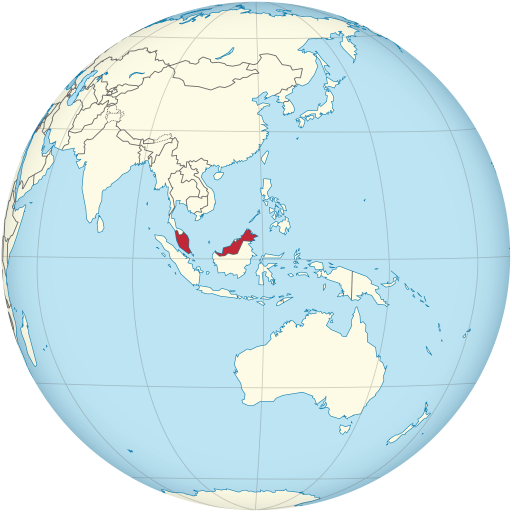
Malaysia's highest court, the Malaysian Federal Court, sentenced former prime minister Najib Razak to 15 years in prison and fined him RM11.38 billion (about US$3 billion). He was already in jail from earlier 1MDB-related convictions, and this new sentence stacks on top of that.
Refresher: What's 1MDB?
1MDB was supposed to be an investment vehicle to boost Malaysia's economy. Instead, investigations by Malaysian, U.S., and other authorities say billions of U.S. dollars were misappropriated and ended up in private accounts and luxury assets. That makes this one of the most consequential financial corruption scandals in the world, not just in Southeast Asia. There's a Netflix documentary on this, of course.
Why this matters:
The fact that Najib got that many years and that big a fine is a pretty and a rare example of accountability. Former heads of government almost never face consequences this severe in Southeast Asia.
Tell me more:
The court basically said that Najib knew everything all along. He was not "misled" or "out of the loop", and the court rejected the idea that he was a passive figurehead. The judge found that Najib knew what was happening, used his position to approve and facilitate transactions, and was not acting in the public interest, but in his own. More importantly, the court said that Najib held multiple roles at once that gave him unchecked authority, which he used to override safeguards, and directly benefited from the abuse of power. Najib recently requested to serve his current sentence under house arrest, but it was rejected by the Malaysian courts.
Who is Najib Razak?
Najib Razak is not just somebody. He led Malaysia for nearly a decade and still has loyal supporters. Najib, in fact, was so big a figure that his downfall in 2018 reshaped Malaysia's politics. His party, UMNO, had ruled uninterrupted for over 60 years (note: don't mistake this for "one-party state"; there were regular elections), and when Najib fell, that opened Malaysian politics to serious reform debates. Even today, his conviction still divides political factions and influences current governance and coalitions because he still has a faction of loyal supporters. For many Malaysians, Najib represents stability, subsidies, and a predictable state. Corruption becomes sort of an abstract thing, when daily life felt better under him.
There is also pro-Najib-tok, with comments under this video saying stuff like, "aku percaya pegawai² polis penjara melayan dato sri najib seperti ayah kandung (translated via Google Translate: I believe the police and prison officers treat Datuk Seri Najib like their own father.)", or "dia curi bilion" pun ekonomi stabil. pmx skrg xda bunyi curi tp ekonomi tunggang langgang (Even when he stole billions, the economy was stable. Now under PMX there's no talk of stealing, but the economy is in chaos.)" "PMX" is shorthand for Malaysia's current prime minister, Anwar Ibrahim.
Why was the sentence so "harsh"?
Malaysia has spent years trying to claw back credibility after 1MDB damaged its global reputation, specifically its standing with investors, regulators, and foreign governments. This ruling is part of that cleanup. It does not erase the damage, but supporters...
Please log in or subscribe for free to continue reading this issue.
We could use your help to make this issue better. Take a look at the requests below and consider contributing:
- Submit a piece of artwork for this issue
- Submit a news, academic or other type of link to offer additional context to this issue
- Suggest a related topic or source for future issues
- Fix a typo, grammatical mistake or inaccuracy
Below you'll find some of the sources used for this issue. Only sources that support "media embedding" are included.
-
-
AI and visual propaganda are being used to stoke tensions as Ethiopia eyes Eritrea’s Red Sea Port · Global VoicesAs AI makes it significantly cheaper and easier to produce and disseminate content, the use of AI for political propaganda is emerging as a major concern in contemporary democratic societies.
-
-
8-hour ruling on Friday convicted Najib of all four power abuse, 21 money laundering charges.
-
KUALA LUMPUR, Malaysia (AP) — An alliance of Malaysian opposition parties led by the country's 92-year-old former authoritarian leader Mahathir Mohamad won a fiercely contested general election, ending the 60-year rule of the Malay-dominated National Front.
-
Low’s whereabouts have remained a mystery since he disappeared in 2016. Read more at straitstimes.com.
-
Ex-PM was granted DNAA in another SRC case as key documents were held in 1MDB trial.
-
Most of the content removals were related to corruption allegations and public officials.
-
The scandal around Ezra Olubi has exposed the contradictions of Nigeria’s middle-class, online feminism.
-
In Kenya and South Africa, private security firms offer security at a price, protecting those who can afford it, while those who can't have to cope with police and emergency services that are barely functioning.
-
Lord Fakafanua has been declared as the new Prime Minister of Tonga after taking 16 votes (out of 26 cast by elected members) in the Tonga Legislative Assembly today. He defeated one other nominee the caretaker Prime Minister Hon. Dr 'Alsake Eke, who has served one year as PM.
-
A polícia do Paraguai identificou Silvinei Vasques após mandar uma foto dele para policiais brasileiros. O ex-diretor-geral da Polícia Rodoviária Federal (P...
-
Ex-diretor da PRF rompeu tornozeleira, descumpriu cautelares e foi detido no Paraguai ao tentar sair do país. Leia no Poder360.
-
Nigeria’s government has confirmed the precise locations of US airstrikes carried out in the country’s northwest on Christmas evening, marking a rare instance of foreign military action on Nigerian soil.
-
How Senegal rose to become one of the most fertile grounds in African football, and why this success still struggles to transform the local football economy.
-
Civil war-torn Myanmar went to the polls on Sunday in a three-phased election. Critics say the political exercise is a ploy to keep the military's grip on power.
-
A new judicial package has entered into force following parliamentary approval, initiating the release of thousands of prisoners while excluding those convicted of "terrorism" and some other crimes.
-
Thailand and Cambodia have signed a ceasefire agreement to end weeks of fighting over border disputes.
-
The lawsuit argues the agency's action... was motivated by discrimination against migrants who are not white.
-
The third edition of The Last Last, a regional basketball event organized by the association The Future, has brought together teams from Benin, Togo, Nigeria and Ghana in the economic capital of Cotonou, celebrating sport as a powerful tool for unity across West Africa.
-
Afghanistan's female footballers have been fighting in exile to get back to playing internationally for years. Earlier this year, their moment arrived, but their mission is far from complete.
-
UNAL Manizales patented a device to speed up breast and cervical cancer checks. Learn how this handheld bioimpedance tool supports early diagnosis.
-
Quindío students won a global robotics award in Singapore with Avitron, a smart poultry feeder. Learn how their invention helps small farmers.
-
Letters: Bryony Worthington says the media should not be pushing a western attitude to climate strategies to the detriment of African nations. Plus letters from Prof Hugh Hunt, Dr Portia Adade Williams and Angela Churie Kallhauge
-
Dance Centre Kenya, one of the leading performing arts schools in east Africa, has staged The Nutcracker for its 10th-anniversary annual ballet production
-
Yasuyoshi Chiba has been chosen by the picture desk as its agency photographer of the year. We hear from the AFP photojournalist
-
What it sounds like on the ground in Morocco at the 2025 edition of Africa Cup of Nations.
-
We spoke to Snow Tha Product about her new LP "Before I Crashout" & how she doesn't have the luxury to be apolitical, unlike other artists.
-
China’s largest comic convention, COMICUP, has effectively banned Japanese anime and manga from its upcoming event after organizers announced a sudden shift
-
The fallout from Sanae Takaichi's comment about Taiwan continues as several Japanese concerts are canceled in China.
Each week, What Happened Last Week curates news and perspectives from Asia, Africa, and the Americas. The newsletter is written by Sham Jaff and focuses on stories that rarely receive sustained attention in Western media.
Read the free edition every week. VIP subscribers receive additional stories, recommendations on what to watch, read and listen, and more.