

Last week, I joined one of Germany's biggest podcasts to talk about Sudan (it was their first time doing so). Smart questions, intentional conversation, and I still walked away frustrated. Not at them, but I sense a bigger problem: I get the impression that Sudan overwhelms many here in the West. The scale, the long history, all of it seems very demanding. If you understand German, listen to the conversation and tell me where it failed or worked. I actually want your critique.
This issue:
Yes, there's a lot going on in the Western world at the moment, but this doesn't mean that the rest of the world stops moving. Something very serious is going on the border between Burundi and eastern DRC right now, and Rwanda has got everything to do with it (allegedly). At a bird's-eye view, it's got a lot to do with the 1994 genocide in Rwanda. History has a long memory in the Great Lakes region, and it is shaping today's violence more than most articles make it seem.
I'm also revisiting AI in Africa, but from a different angle. This time, it's Chinese tech companies. Fewer press releases, fewer ethics pledges, more informal hiring. Young Kenyans doing demanding data work with little protection, and a government that looks the other way at the moment.
Also in this issue: A documentary about Eritrean and Ethiopian communities in Italy, Gorillaz and Syria, the sad story of chocolate, and more stories that deserve attention even when the algorithm says otherwise.
Trump's 'historic' peace deal between Rwanda and the DRC is basically done
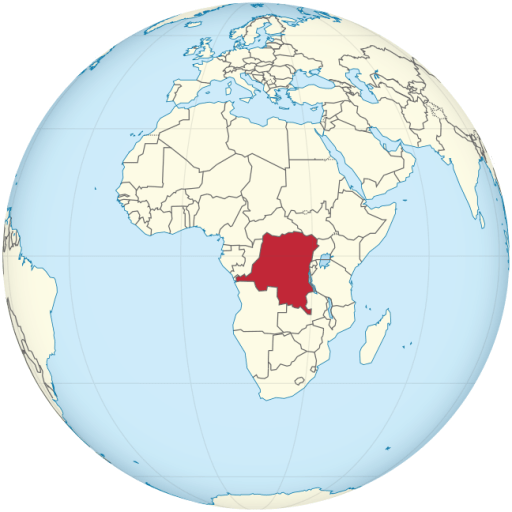
Refresher:
U.S. President Trump wanted the DRC and Rwanda to get along so bad (so that, "everybody will make a lot of money"). The U.S. recently brokered a peace deal between the two, and both signed in Washington, D.C. The whole thing was framed as "historic". The main promises included that the DRC deals with the FDLR militia (more on this in a bit), and that Rwanda pulls back militarily. It also included shiny extras, such as future cooperation on minerals, energy, infrastructure, and more US investment. Days later, said peace deal poof disappeared.
What happened last week
The armed group M23 said it "fully liberated" Uvira, a strategically very important city in the South Kivu province in eastern DRC.
Why this matters:
The civilian toll is huge. More than 400 people were killed, and around 200,000 civilians were forced to flee their homes across South Kivu. Nothing has returned to normal in the city. According to AP, streets in Uvira are reportedly empty and tense, with banks closed and M23 fighters patrolling key areas, making everyday life unsafe and unpredictable.
Tell me more:
The DRC, the U.S., and European countries believe Rwanda is behind this military offensive. Rwanda has denied the allegations, but some say the fact that Rwanda even showing up for the peace deal signing is a subtle acknowledgement that it does have influence over the M23. The group is estimated to have thousands of fighters, but it seems that they've received some help from the up to 4,000 Rwandan troops in the area for this recent Uvira enterprise. Officially, the M23 was not part of this particular peace deal in Washington, D.C., but it's been taking part in another one led by Qatar (but that one's sort of on hold right now).
Why did the M23 take the city now?
Uvira, home to around 700,000 people, is the gateway from eastern DRC into Burundi and a key economic bottleneck for trade with Tanzania and access to the Indian Ocean. More concretely, whoever controls Uvira controls a border crossing, a lake route, and a supply line. That means that all supply routes for the Congolese army and the roughly 10,000 Burundian troops stationed in the country are now effectively cut off. As for 'why now?', Farouk Chothia for the BBC talked to Professor Jason Stearns, and he says, "this is power politics." The M23 wants leverage because Rwanda (who allegedly supports the M23) does not trust the DRC to follow through with the peace deal, and taking Uvira gives the M23 more negotiating power (the offensive apparently started a few days before the two presidents flew to the U.S.). The group might even want to establish a parallel administration in the city.
What is this conflict about?
A lot of what happened back then with the genocide in Rwanda in 1994 is the basis of what's happening in the region today. Rwanda believes the DRC is working with genocidaires, and says, "the real threat is the FDLR for us". The FDLR is a (Hutu) militia that is linked to the 1994 genocide; the DRC integrated FDLR fighters into its army in 2022, and that definitely crossed a line for (Tutsi-led) Rwanda. Burundi (whose ruling party is a former Hutu movement) is allegedly hosting previous heads of the same militia that committed the genocide in Rwanda (the infamous General Omega is allegedly coordinating with parts of the Burundian army there).
Zoom out:
It's getting more and more difficult for Burundi to justify why it's got so many troops engaged in this war. The violence in the DRC is definitely spilling over into the country. Burundi is already economically stretched to its limits, without enough fuel, making transport and food prices very expensive. This directly affects an already poor population. Around 160,000 refugees from the DRC are living in border camps there, with minimal supplies and aid organizations struggling to keep up. More people continue to cross over. Aid agencies...
Please log in or subscribe for free to continue reading this issue.
We could use your help to make this issue better. Take a look at the requests below and consider contributing:
- Submit a piece of artwork for this issue
- Submit a news, academic or other type of link to offer additional context to this issue
- Suggest a related topic or source for future issues
- Fix a typo, grammatical mistake or inaccuracy
Below you'll find some of the sources used for this issue. Only sources that support "media embedding" are included.
-
Wir müssen über Sudan reden - Apokalypse & Filterkaffee - Presseklub mit Markus Feldenkirchen - PodcastWährend um einen Frieden in der Ukraine heftig gerungen wird, kümmert sich kaum jemand um den Sudan. Dabei ist der dortige Bürgerkrieg die aktuell größte humanitäre Krise der Welt. In den vergangenen zweieinhalb Jahren wurden geschätzt rund 400.000 Sudanesen getötet, 14 Millionen vertrieben, die Hälfte davon Kinder. Die Bilder, die uns aus dem Sudan erreichen, sind grauenvoll. Hinrichtungen vor laufender Kamera, hunderte Tote allein in einer Geburtsklinik, verbrannte Leichenberge. Als die Stadt El Fascher im Oktober fiel, war das Blut auf den Straßen selbst aus dem All zu sehen. Trotzdem: So richtig ist diese Menschlichkeits- und Menschheitskrise noch nicht in der deutschen Öffentlichkeit angekommen. Weil es so weit weg ist? Weil wir denken, dass es uns kaum betrifft? Schließlich kämpft im Sudan das Militär gegen eine Miliz, die sich vom Militär abgespalten hat. Ein vermeintlich lokaler Konflikt also. Doch ganz so ist es nicht. Auch europäische Waffen feuern im Sudan die Kämpfe an. Und die Folgen des Grauens kommen uns auch auf andere Weise näher. Anfang November sank wieder ein Flüchtlingsboot vor der libyschen Küste. An Bord: Dutzende Menschen aus dem Sudan. Wie kam es zu diesem Bürgerkrieg? Welche Rolle spielt dabei Europa? Und was kann, was muss die Welt jetzt tun, um das Massensterben zu beenden? Der Apofika-Presseklub mit Muriel Kalisch (Spiegel), Sham Jaff (What happened last week?), Ramin Sina (ARD) und natürlich unserem Host, Markus Feldenkirchen (Spiegel)
-
The recent Washington Accord was hailed as "historic" by the US president but the fighting continues.
-
Joint Statement by the International Contact Group for the Great Lakes (ICG) on the Escalation in South Kivu - United States Department of StateThe Governments of the United States of America, Belgium, Denmark, the European Union, France, Germany, the Netherlands, Sweden, Switzerland, and the United Kingdom, as members of the International Contact Group for the Great Lakes (ICG), chaired by Germany, issued the following statement on the alarming escalation in South Kivu: Begin text. The ICG expresses its […]
-
Played millions of times, everywhere in the world. Are you ready to be embarrassed? Try it and challenge your friends.
-
Unemployed young people are hired over WhatsApp for low-wage data labeling jobs.
-
China’s generative AI boom relies on underpaid students in big data and artificial intelligence programs. They have the lowest-paid jobs in China’s AI industry.
-
Nathan Nkunzimana claims Meta and Sama fired content moderators for protesting working conditions and demanding the right to unionize.
-
Google, Microsoft, and Meta are rolling out AI tools in Africa for health and climate issues, but experts warn of growing foreign control over data.
-
A similar ban for girls under 10 was struck down by the Constitutional Court for specifically targeting Muslims.
-
Media reports and a rescue worker say Myanmar's military carried out an airstrike on a hospital in an area controlled by a leading rebel force, killing 34 patients and medical staff
-
Iran has arrested Nobel Peace Prize laureate Narges Mohammadi, according to her supporters. A foundation in her name said she was detained at a memorial for a human rights lawyer recently found dead under unclear circumstances.
-
Bolivia’s new right-wing government says it restored diplomatic relations with Israel, the latest sign of the dramatic geopolitical realignment underway in the South American country.
-
Apart from plunder, Duterte also faces a complaint for alleged graft, malversation, and bribery
-
Former Nepali ministers, officials and a Chinese company have been charged with corruption in a case alleging financial irregularities inflated an airport's construction costs by more than $74 million.
-
A Beijing court has ruled Malaysia Airlines must pay $410,000 each to the families of eight passengers who went missing in the disappearance of Flight 370 more than a decade ago.
-
What's better than holiday hot chocolate? If just thinking about it makes you feel all warm and fuzzy, well – that’s by design. Chocolate's big history sweeps a
-
Dakota Johnson has praised the film industry in Saudi Arabia, sharing that it has "renewed" her faith in cinema in comparison to the "grim" reality in the US.
Each week, What Happened Last Week curates news and perspectives from Asia, Africa, and the Americas. The newsletter is written by Sham Jaff and focuses on stories that rarely receive sustained attention in Western media.
Read the free edition every week. VIP subscribers receive additional stories, recommendations on what to watch, read and listen, and more.