

This past week felt like a "F*ck you" to accountability.
A UK whistleblower claimed that the Foreign Office removed warnings about a potential genocide in Sudan from an internal risk report because it didn't want to upset the UAE. And in the U.S., the former president of Honduras was pardoned after serving time for drug trafficking because Donald Trump needs the right guy to win the elections in the Central American country.
Also in this issue: A controversial peace deal between the DRC and Rwanda, the Indian state of Kerala, says it eradicated extreme poverty, Venezuela's diaspora is back on the streets (this time to celebrate a Nobel Peace Prize), a photography book project about Afghan women under Taliban rule without "victim imagery", and so much more.
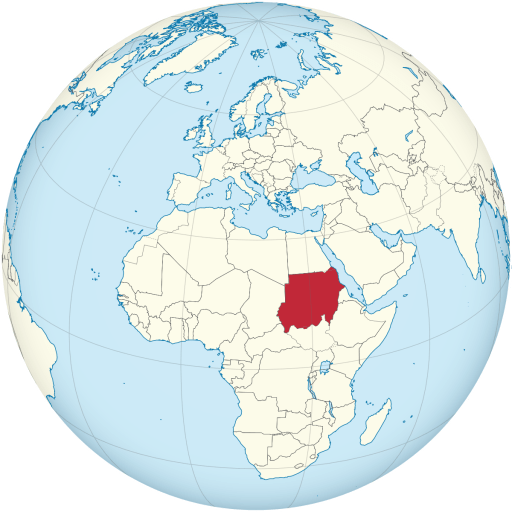
A whistleblower tells British media: 'Our government hasn't warned of genocide in Darfur, even though it knows better'
Refresher:
Fighting broke out between Hemeti's Rapid Support Forces (RSF) and Gen. Burhan's Sudanese Armed Forces (SAF) on April 15, 2023. Since then, the SAF and the RSF have been fighting each other over control of Sudan. Over 60,000 civilians have been killed in the civil war, 1.5 million Sudanese have fled the country, and over 6.1 million have been internally displaced.
What happened last week:
An employee/whistleblower from UK's Foreign Office (their version of foreign ministry) says the word "genocide" was removed on purpose from an internal risk report about Sudan. The claim is that officials softened the language to avoid upsetting the United Arab Emirates (UAE), who are suspected of backing the RSF militia that has carried out killings and forced removals in Darfur. The UAE are doing heavy business with the UK (more than one billion pounds in arms exports since 2019). The whistleblower says this was clearly not about careful wording, but about censorship.
Why this matters:
The risk of genocide in Darfur is, and has been, real since the war broke out in Sudan. To give a few examples: Amnesty International has again and again warned that the violence there shows signs of ethnically-motivated killings, Human Rights Watch has also documented ethnic-targeted attacks, Yale Humanitarian Research Lab found evidence of that as well. Some governments, like the U.S. for example, have officially determined that the RSF and allied militias have committed genocide in Darfur.
Tell me more:
The whistleblower says the UK Foreign Office staff were told to use soft language like "a return to previous conflicts". The allegation is especially noteworthy because the UK is usually one of the main voices at the UN Security Council when it comes to Sudan, drafting resolutions and pushing debates. However, critics say, if you refuse to use accurate language, the people doing the killing think no one will hold them accountable. Critics also argue that this lack of clear naming has made the situation worse in different places in Darfur, like El Geneina, the Zamzam camp, and El Fasher, where violence has only continued to grow since 2023.
- Dig deeper: Quite concretely, last month, The Guardian reported that British officials were given very early intelligence that the city of El Fasher was at serious risk of falling to the RSF militia, with potential for mass killings, ethnic cleansing, and even genocide. They were presented with four possible plans to prevent atrocities and protect civilians. The UK chose the weakest, least ambitious option. The city was captured last month.
Is this isolated to Sudan?
Apparently not. Another (former) Foreign Office staffer told the Guardian that warnings about mass killings sometimes got ignored when they clashed with political interests (in this case, it was to maintain a close relationship with Rwanda). They point to similar behavior in the Democratic Republic of the Congo (DRC), where serious human rights concerns were also pushed aside.
What's the government's reaction?
The government denies all this. Their position is that using the word "genocide" is not a political decision, and that the UK only uses that label after a court confirms it with evidence. And so far, no court has issued a "genocide" ruling for what's happening in Darfur, Sudan right now. 'Plus, we're supporting UN investigations, cooperating with the International Criminal Court and funding documentation projects,' they say.
Sounds reasonable, though.
Not really, as per Gregory Stanton from Genocide Watch, a nonprofit that monitors where genocide or ethnic cleansing might be happening around the world. In April, Stanton wrote that the UK is failing to meet its obligations under the Genocide Convention, which states that governments, not courts, should regularly assess the risk of genocide and use "all means reasonably available" to prevent it.
Plus, the timeline tells a different story. When the said report was written in April 2023 (this is when the war broke out), Darfur was already a global concern. Analysts sent early warnings about the situation on the ground to the UK government (even before the war), so they could use it for UN warning systems and minister meetings. Two months later, news of the first mass killings spread, first in El Geneina, then El Fasher (experts now compare the violence there to the early days of Rwanda in 1994). Even after the massacres, the whistleblower states that the reports still did not use the term "genocide".
In the meantime, last week, the RSF attacked a pre-school and other sites in the Kalogi locality of the state of South Kordofan, killing at least 116 people, according to a local official. The executive director of the Kalogi locality told Al Jazeera on Saturday that the victims of the attack included 46 children who were attending the pre-school.
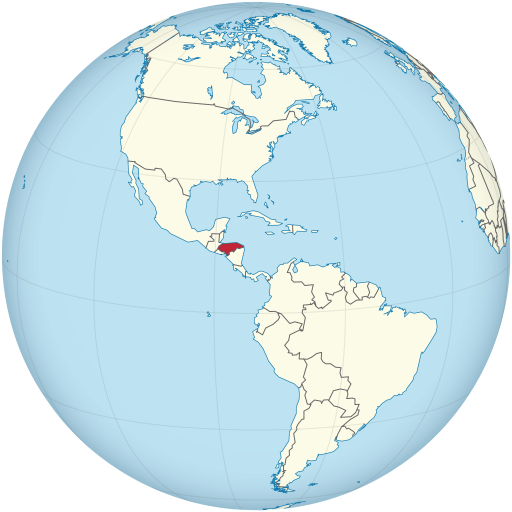
Trump pardoned former Honduran president Juan Orlando Hernández
Refresher:
Former president of Honduras, Juan Orlando Hernández, was convicted in a U.S. court in 2024 of drug trafficking, money laundering, and illegal weapons deals. He was accused of helping move a lot of cocaine (400 tons, or about 4.5 billion individual doses) to the United...
Please log in or subscribe for free to continue reading this issue.
We could use your help to make this issue better. Take a look at the requests below and consider contributing:
- Submit a piece of artwork for this issue
- Submit a news, academic or other type of link to offer additional context to this issue
- Suggest a related topic or source for future issues
- Fix a typo, grammatical mistake or inaccuracy
Below you'll find some of the sources used for this issue. Only sources that support "media embedding" are included.
-
Learn about UNHCR’s emergency response in Sudan and affected countries, including key data on displaced populations and financial needs.
-
Weapons exported from Britain are allegedly enabling the brutal war to continue
-
“The Massalit Will Not Come Home”: Ethnic Cleansing and Crimes Against Humanity in El Geneina, West Darfur, Sudan | HRWThe 218-page report, “‘The Massalit Will Not Come Home’: Ethnic Cleansing and Crimes Against Humanity in El Geneina, West Darfur, Sudan,” documents that the Rapid Support Forces, an independent military force in armed conflict with the Sudan military, and their allied mainly Arab militias, including the Third-Front Tamazuj, an armed group, targeted the predominantly Massalit neighborhoods of El Geneina in relentless waves of attacks from April to June. Abuses escalated again in early November. The attackers committed other serious abuses such as torture, rape, and looting. More than half a million refugees from West Darfur have fled to Chad since April 2023. As of late October 2023, 75 percent were from El Geneina.
-
Yale’s Humanitarian Research Lab says satellite images seem to show mass killings in Sudan’s western city of el-Fasher.
-
The United States government said on January 7, 2025 that it had determined that Rapid Support Forces (RSF) forces committed genocide in Darfur during the current conflict in Sudan. The US government also sanctioned the RSF commander, Mohammed Hamdan Dagalo, for atrocities committed by his forces in Sudan, along with seven RSF-linked companies.
-
Children executed and women raped in front of their families as M23 militia unleashes fresh terror on DRC | Global development | The GuardianFirst-hand accounts from victims of unthinkable violence paint a gruesome picture of the brutality sweeping the central African country. How long is the West prepared to look away?
-
The U.K.’s Failure to Recognize the Genocide in SudanBy Dr. Gregory StantonFounding PresidentGenocide WatchConflicts between the Arab dominated Sudanese government and non-Arab ethnic groups have resulted in many genocides targeting non-Arab people in Sudan.Genocide became Sudanese state policy when the Arab supremacist Arab Gathering seized power in Khartoum in 1983. The Arab Gathering aimed to drive black African ethnic groups out of all fertile agricultural land and oil and gold producing reg
-
Sudan Doctors Network says ‘deliberate suicide-drone attacks’ targeted a kindergarten and several civilian facilities.
-
Juan Orlando Hernández, once called the key figure in a drug trafficking scheme that flooded America with cocaine, walked free after the pardon.
-
President Donald Trump has pardoned Juan Orlando Hernández, a former president of Honduras who was serving a 45-year sentence for drug trafficking and weapons o
-
Honduran President Juan Orlando Hernandez appears likely to win a second term in office despite what once looked like an iron-clad ban on re-election.
-
The main opposition contender accuses electoral authorities of tampering with the results.
-
<div class='Quickread' id='DTElementID-3455538'> <p class='NormalParagraphStyle'>Diputado de Unificación Democrática y miembro de la comisión que investigó la conducta de los magistrados, Marvin Ponce, revela que tras el golpe técnico está el interés político del presidente del CN, Juan Orlando Hernández. <a href='http://www.elheraldo.hn/Media/Fotogalerias/Pais/Default/Militarizado-el-Congreso-Nacional/Militares' target='_blank'><b>+ Ver fotogalería</b></a> </div>
-
Por: Redacción CRITERIO [email protected] Tegucigalpa. El periodista David Romero Ellner destapó aún más la corrupción que se ha venido denunciando en el…
-
President Talon says situation under control after soldiers went on state TV saying he had been removed from power.
-
The daughter of Venezuelan opposition leader María Corina Machado would love her to come out of hiding — just to see her for the first time in two years
-
Otobong Nkanga receives 2026 Finkenwerder Art Prize
-
The state government claims Kerala is the first state in India to eradicate extreme poverty. | India News
-
Syria announces Recovery of 1,400 Tablets and Artifacts for Idleb Museum
-
17 Ancient Egyptian Artifacts return to Egypt from Australia
-
Kiana Hayeri and Mélissa Cornet present "No Woman’s Land," challenging Western narratives by documenting the intimate resistance and safeguarded joy of Afghan women living under Taliban rule.
Each week, What Happened Last Week curates news and perspectives from Asia, Africa, and the Americas. The newsletter is written by Sham Jaff and focuses on stories that rarely receive sustained attention in Western media.
Read the free edition every week. VIP subscribers receive additional stories, recommendations on what to watch, read and listen, and more.