

This week is one of those weeks, when the world feels like it's operating on ten tabs at once. This issue is looking at a volcano in Ethiopia that picked the year 2025 to wake up after twelve thousand years of silence. At the same time, new data shows more and more women are being jailed worldwide, and not because crime suddenly changed.
Also in this issue: In West Africa, there's a "coup" in Guinea-Bissau that everyone is side-eyeing. Nicaragua and Myanmar both released political prisoners, although the definition of "release" is doing a lot of heavy lifting. The Philippines saw massive anti-corruption protests, again. Pakistan turned a very real issue (rape) into a very real drama (Case No. 9). And in Namibia, a politician is navigating the weight of a name with a very, very, very, very odd-for-Namibia-and-for-everyone-really history.
An Ethiopian volcano erupted for the first time in 12,000 years. Nobody saw it coming
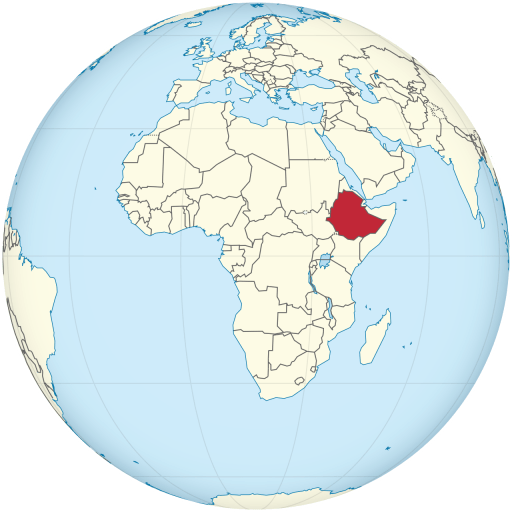
What happened:
A volcano in the north-east of Ethiopia last week erupted for the first time in nearly 12,000 years. The smoke was 14km high (or 9 miles, if you're counting weird), and reached across the Red Sea toward Yemen and Oman even.
Did you know?
Ethiopia has around 50 active volcanoes. "Active" here means they still have magma inside and could erupt at some point, even if their last eruption was centuries ago.
Why this matters:
Most active African volcanoes aren't monitored at all. So, this news story is not "a local issue."
Tell me more:
The volcano is called Hayli Gubbi, and it's located in the country's Afar region, very close to the Eritrean border. The eruption lasted for a couple of hours, and luckily, they were no casualties, according to local official Mohammed Seid. That part of Ethiopia is prone to earthquakes, because it sits on an active rift (called the East African Rift System) where tectonic plates are pulling apart. A resident, Ahmed Abdela, said he heard a loud sound, like "a shock wave." "It felt like a sudden bomb had been thrown with smoke and ash," he said.
Good to know:
Scientifically, it's actually really rare what happened, too. Hayli Gubbi is what scientists call a "shield volcano", meaning a wide, huge volcano with gentle sides because its lava is thin and runny. The lava doesn't explode upward, it spreads out slowly like syrup. When it piles up over thousands of years, it creates a shape that looks like a flat warrior's shield, hence the name, writes Smithsonian magazine. These are the biggest volcanoes on Earth. They almost never blast out big clouds of ash, so when one does, it's unusual.
So, why is this relevant, Sham?
Well, for different reasons.
- This has real consequences for people living close-by. The people particularly living in the village of Afdera, this is a huge deal. Their villages have been covered in ash, and as a result, their animals have little to eat now. It likely has significant money-related consequences for livestock herders living in that region.
- This news highlights that we don't know much about that region, even though we should. The north-east of Ethiopia is a very rural region, so it hasn't been studied very well yet, and the surrounding area is only somewhat populated.
- Africa's capacity to better "predict" events like these. Speaking of "studied": this episode of BBC's "Focus on Africa" podcast talks to Professor Atalay Ayele of University of Addis Ababa on why the country didn't know this was going to happen. "In Africa, most of the active volcanos are not monitored. We lack logistics, capacity. Many active volcanos in the rest of the world are monitored."
What now?
The central and regional government in Afar are monitoring the ground closely using satellites and seismic stations. Officials are relocating around sixty thousand people in Afar and Oromia as a precaution because more earthquakes are expected. The bigger picture is the usual disaster-management work: better early warning systems, clearer communication, maps that show which areas are most exposed, and regular community preparedness. Ethiopia already has structures for this, but experts suggest they could learn from places like Japan, where disaster drills and public education are part of everyday life.
Hint (because I know that a lot of journalists are reading this newsletter): It might be worth your time to research why this part of the world is particularly under-monitored, and whose responsibility it is/was. Name and Shame is our favorite game after all, is it not?
57% more women have been locked up worldwide since 2000, says report

What happened:
According to the World Female Imprisonment List, the number of women in prison worldwide has exploded. Since 2000, the women's prison population has grown by 57%, while the men's has grown by 22%. Right now, at least 733,000 women and girls are behind bars, but researchers say the real number is likely closer to one million.
Why this matters:
Most of the women being jailed are not violent. They're poor, single mothers, many are survivors of abuse, and they're being imprisoned for things like stealing food, begging, carrying small amounts of drugs, or doing informal jobs to survive. Basically, this is what happens when poverty and...
Please log in or subscribe for free to continue reading this issue.
We could use your help to make this issue better. Take a look at the requests below and consider contributing:
- Submit a piece of artwork for this issue
- Submit a news, academic or other type of link to offer additional context to this issue
- Suggest a related topic or source for future issues
- Fix a typo, grammatical mistake or inaccuracy
Below you'll find some of the sources used for this issue. Only sources that support "media embedding" are included.
-
Ash clouds from Hayli Gubbi volcano sent drifting across the Red Sea toward Yemen and Oman
-
In northern countries, suicide rates among prisoners are at least three times higher for men and nine times higher for women than in the general population
-
For months, hawkers and the county's leadership have been at loggerheads.
-
‘People think prison is for rehabilitation. It is all lies’: could community service work better than jail? | Global development | The GuardianColombia has seen a surge in the number of female inmates – many poor, from rural areas and convicted of drug offences. Now a radical scheme could release thousands to support their families
-
Bodies discovered in flats, on staircases and in corridors, police say, warning of ‘more to come’.
-
PKK’nin Kandil’deki üst düzey komutanlarından Amed Malazgirt, Türkiye ile yürütülen süreçte örgütün üzerine düşen adımları attığını belirterek, Abdullah Öcalan serbest bırakılmadan ve Ankara somut adımlar atmadan yeni bir hamle yapmayacaklarını söyledi
-
The second part of the massive anti-corruption protests kicks off today, November 30, with two major rallies set in Metro Manila: the “Baha sa Luneta 2.0” at Rizal Park in Manila and the “Trillion Peso March” at the People Power Monument in Quezon City.
-
El Mecanismo confirmó la excarcelación de ocho presos políticos, pero advierte que siguen bajo “municipio por cárcel” y otras formas de control del régimen...
-
La destitution d’Umaro Sissoco Embaló, renversé à la veille de la proclamation des résultats de la présidentielle et des législatives, replonge la Guinée-Bissau dans une crise où s’entremêlent rivalités politiques et accusations de complot.
-
Senegal's prime minister and Nigeria's former leader say they do not believe the military takeover was genuine.
-
Pedro Castillo: Poder Judicial condena a más de 11 años de prisión por el delito de conspiración para la rebelión | Política | La RepúblicaPedro Castillo y el caso golpe de Estado. Tras dar como finalizado los alegatos finales el último 21 de noviembre, la Sala Penal Especial de la Corte Suprema emitirá la sentencia contra el expresidente este jueves 27 a las 9 de la mañana. Fiscalía pide 34 años de prisión contra expresidente.
-
Tunisia frees prominent lawyer Sonia Dahmani, a critic of the president - AL-Monitor: The Middle Eastʼs leading independent news source since 2012TUNIS (Reuters) -Tunisia released on Thursday prominent lawyer and human-rights advocate Sonia Dahmani, a vocal critic of President Kais Saied, after she spent a year-and-a-half in prison over comments in which she criticized Saied’s policies.Dahmani is widely seen as one of the leading voices defending freedom in Tunisia, and her arrest brought a wave of solidarity from lawyers and civil-society activists, who said the case carried a political dimension.
-
The Best for News, Sport, Showbiz, Celebrities
-
%%title%% %%sep%% %%primary_category%% %%sep%% %%sitename%% %%sep%% Adolf Hitler Uunona, a Ompundja constituency councillor in the Oshana region, has removed the name ‘Hitler’ from his identity (ID) document.
Each week, What Happened Last Week curates news and perspectives from Asia, Africa, and the Americas. The newsletter is written by Sham Jaff and focuses on stories that rarely receive sustained attention in Western media.
Read the free edition every week. VIP subscribers receive additional stories, recommendations on what to watch, read and listen, and more.