

I wrote this issue fully assuming you had zero bandwidth to follow world news last week. The Epstein emails, the memes, the "hopescrolling", it was a lot.
But you're here, and good. Because the world actually delivered a few rare wins. Justice went global last week, as someone who is alleged to have done something very, very bad in the Democratic Republic of Congo is being tried in France, and an Australian company was found liable for a huge environmental disaster in Brazil by a court in the U.K.
Also in this issue: a genuinely independent fact-finding mission for North Darfur, real consequences for people who helped former South Korean president Yoon Suk Yeol push martial law, and a handful of recommendations to watch, listen to and read, so you can start your week right.
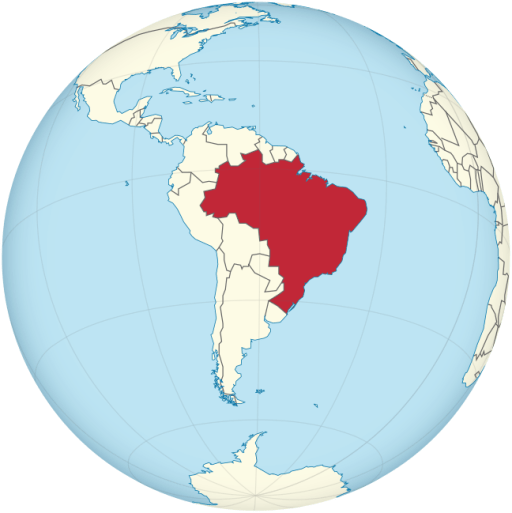
A U.K. judge ruled that an Australian company is responsible for the 2015 Brazil dam collapse that killed 19 people
What happened:
An Australian multinational mining company is in deep sh*t. BHP has been found liable by a U.K. judge for a 2015 dam collapse in Mariana, Minas Gerais in southeastern Brazil. The incident killed 19 people and spilled about 40 million cubic meters (1.4 billion cubic feet) of toxic mine residue onto downstream towns and waterways for 675 kilometers (419 miles).
Why this matters:
This dam collapse is considered to be Brazil's worst environmental disaster. A recent study found that there were still a lot of arsenic, manganese, cadmium and other metals in the wildlife there.
Tell me more:
The ruling (222 pages long) was announced on November 14. U.K. High Court judge Finola O'Farrell found that it was indeed negligence, carelessness or lack of skill that led to the collapse of the dam. Basically, I rephrase, "BHP was a polluter and ignored evidence that the dam was unstable. The collapse was foreseeable, and could have been prevented. We recognize that BHP has already compensated many victims, and those victims, they do not need to repay them again. But everyone else, yeah, they do."
Why is the case in the U.K.?
Well, BHP is headquartered in the UK and Australia, and is listed on the London Stock Exchange. A UK law firm filed a class action in the English High Court with more than 600,000 Brazilian claimants, along with 32 Brazilian municipalities and around 1,400 businesses. This is actually the largest environmental class action lawsuit in U.K. history.
Good to know:
BHP is not the only liable company here. BHP is a co-owner of Samarco, the company running the mining site. Vale owns the other half of Samarco. The UK ruling is only about BHP's liability. That jurisdiction link doesn't automatically pull in Vale or Samarco.
What did the lawyers for the victims say?
They see the ruling as justice and vindication, that BHP was not only liable but made a lot of mistakes, too. The lawyers are asking for US$47 billion. That number hasn't been approved, and the judge will decide a number later, and it could be far lower or split across categories. Many victims want accountability, not money; simply someone they can identify as responsible. "The judge's decision shows what we have been saying for the last 10 years: It was not an accident, and BHP must take responsibility for its actions," said Gelvana Rodrigues, a local resident whose 7-year-old son, Thiago, was killed in the mudslide.
What does BHP say?
They will for sure appeal. I rephrase, "We have offered extensive remediation and compensation in Brazil for almost a decade now. We have paid more than 610,000 people already." Of those, 240,000 are part of this class action. Basically, the legal fight is far from finished. Appealing delays the process, sometimes for years.
In (in a way) related news, about 50 Indigenous Munduruku protesters blocked the main entrance to the Cop30 venue in Belém, demanding to speak to Brazil's president. "We are never listened to," they say.
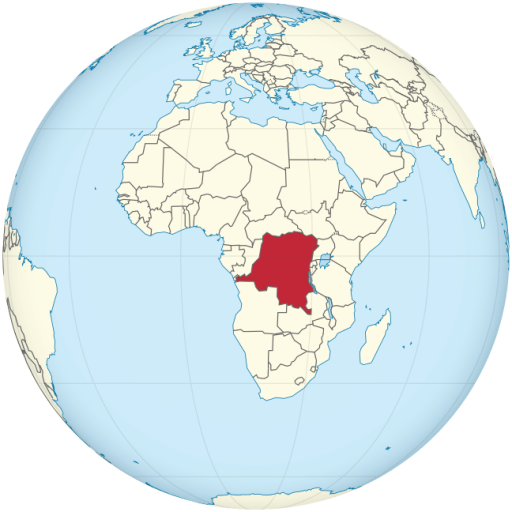
Congolese survivors of the Second Congo War are seeking justice for the very first time
What happened:
The trial against the former minister in the Democratic Republic of the Congo (DRC) began last Wednesday in Paris, RFI reported. More than two decades ago, this man, so the court alleges, played a role in crimes against humanity that were committed during the Second Congo War, specifically in the North Kivu and Ituri provinces in the DRC between 2002 and 2003.
Refresher: What was the Second Congo War?
The Second Congo War lasted from 1998 to 2003 and became one of Africa's and the world's deadliest wars. No one knows the exact death toll, but the credible range is between one million and 5.4 million deaths. Many more millions were forced to flee. The fighting began as a challenge to the government, but quickly turned regional, pulling in nine African states and more than 25 armed groups. Much of the violence centered on power struggles and control of mineral-rich areas in the east. A peace deal in 2003 ended the main battles, but many former leaders of those armed groups later entered politics, and the impact of the war still shapes eastern Congo today. Some call this war, "Africa's World War", but I hate that term. It was a global World War.
Why this matters:
So far, the crimes committed during the Second Congo War have not been prosecuted in the DRC or in other countries. Survivors still have no real way to seek justice at home. Roger Lumbala will be the first Congolese national to be tried before a national court for crimes against humanity allegedly committed during the Second Congo War (1998-2003), and he is among the few former government officials to face such prosecution.
Tell me more:
Before he served as minister for foreign trade and senator (he even ran for president in 2006), Roger Lumbala, 67, founded and led the non-state armed group, the Congolese Rally for National Democracy (RCD-N). The court in Paris alleges that, during that time, the group committed summary executions, torture, rape, pillage, enslavement and sexual slavery under a military operation called "Effacer le tableau" (translated, "Erase the Board"). The operation got its name "because the modus operandi of the troops was to attack the civilian population and destroy everything of value to them," according to TRIAL International (who, next to others, is also a civil party to the case).
Most affected were women from the Nande and Bambuti communities,...
Please log in or subscribe for free to continue reading this issue.
We could use your help to make this issue better. Take a look at the requests below and consider contributing:
- Submit a piece of artwork for this issue
- Submit a news, academic or other type of link to offer additional context to this issue
- Suggest a related topic or source for future issues
- Fix a typo, grammatical mistake or inaccuracy
Below you'll find some of the sources used for this issue. Only sources that support "media embedding" are included.
-
Munduruku people demand to speak to Brazil’s president, saying they are never listened to
-
Questions and Answers on the trial of Roger Lumbala.
-
The trial of the former RCD-N leader, who was active during the Second Congo War, opens on 12 November before the Paris Assize Court. Under universal jurisdiction, he is being trailed for complicity in crimes against humanity committed during Operation “Erase the Board” in Ituri and North Kivu in late 2002. The verdict is expected on 19 December. In 2002, Victoire (name changed) suffered a double punishment after being raped, she was repudiated by her husband. Twenty-three years later, (…)
-
Letter dated 25 June 2003 from the Secretary-General addressed to the President of the Security CouncilTransmits 2 reports, one from the UN Organization Mission in the Democratic Republic of the Congo and the other from the UN High Commissioner for Human Rights, regarding the events which occurred in the Democratic Republic of the Congo in Dec. 2002 and Jan. 2003 in Mambasa, and on 3 Apr. 2003 in Drodro, respectively.
-
The trial of the former RCD-N leader, who was active during the Second Congo War, opens on 12 November before the Paris Assize Court. Under universal jurisdiction, he is being trailed for complicity in crimes against humanity committed during Operation “Erase the Board” in Ituri and North Kivu in late 2002. The verdict is expected on 19 December. In 2002, Victoire (name changed) suffered a double punishment after being raped, she was repudiated by her husband. Twenty-three years later, (…)
-
Ex-Congolese rebel leader Roger Lumbala has begun a hunger strike to protest his trial in France. The trial began this week over atrocities committed during the Second Congo War.
-
DRC: Conviction for forced pregnancy and other crimes against humanity for warlord Ndarumanga - TRIAL InternationalOn May 15th 2023, the Military Tribunal of Uvira sentenced Munyololo Mbao, alias Ndarumanga, former leader of a faction of the Raia Mutomboki armed group in the Democratic Republic of Congo (DRC), to life imprisonment for crimes against humanity. Among the charges confirmed by the court is the crime of forced pregnancy, a world first […]
-
DRC: Seven years after the crimes, Lieutenant-Colonel Safari Kateatea Amos finally condemned - TRIAL InternationalIt will have taken seven years for this Colonel of the Armed Forces of the DRC (FARDC) to be brought before the judges. Safari Kateatea Amos, who is accused of crimes against humanity on dozens of civilians, finally appeared before the courts in November 2019. The result of a long-standing struggle that illustrates the impunity […]
-
At least six people lost their lives in a tragic crowd crush during a military recruitment exercise at Accra's El-Wak Sports Stadium in Ghana.
-
Russia has launched a major missile and drone attack on Kyiv, killing six people and wounding at least 35, including a pregnant woman.
-
Les tensions entre le président et le Premier ministre sénégalais ont atteint un nouveau palier, au lendemain du « terameeting » censé démontrer l’unité de la majorité. Au cœur de la crise qui s’annonce : l’organisation de la « Coalition Diomaye président ».
-
The 27th amendment to the Constitution of Pakistan, passed today by Pakistan’s Parliament, is a flagrant attack on the independence of the judi
-
They were not in court and have described the charges against them as “a legal farce”.
-
Iraq’s electoral commission announced on Sunday it has finished counting votes from last week’s federal parliamentary elections and begun allocating seats, including women’s and minority quota seats, with final results expected within 24 hours.
-
An Islamic State-backed rebel group killed at least 17 people in an attack on a hospital in eastern Congo, authorities said Saturday.
-
Using Solar Drying Innovation to Tackle Food Insecurity in Sudan: The Solar Foods Story with Dr Alaa Salih HamadtoEpisode 196 with Dr Alaa Salih Hamadto, Founder and CEO of Solar Foods, a pioneering Sudanese enterprise transforming food preservation, agriculture, and sustainability across Africa and the Middle East.Dr Hamadto is an award-winning scientist and social entrepreneur whose company merges traditio...
-
The Continent is a free weekly newspaper, designed to be read and shared on WhatsApp. It showcases the best reporting from journalists across Africa.
Each week, What Happened Last Week curates news and perspectives from Asia, Africa, and the Americas. The newsletter is written by Sham Jaff and focuses on stories that rarely receive sustained attention in Western media.
Read the free edition every week. VIP subscribers receive additional stories, recommendations on what to watch, read and listen, and more.