

This week's stories are about small places carrying other people's power.
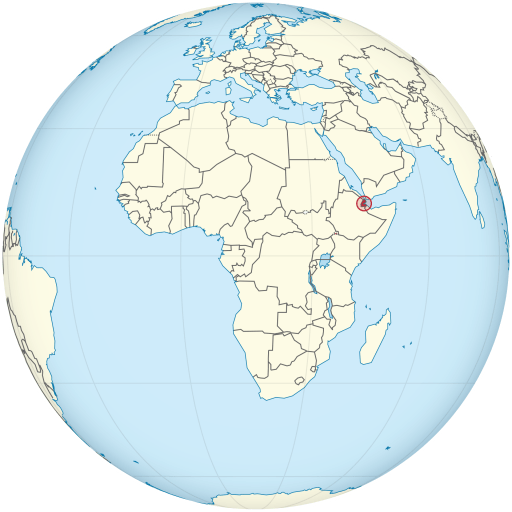
In Djibouti, a country the size of New Jersey, President Ismaïl Omar Guelleh has ruled since 1999, and just made sure he can keep going. Western allies call him a "stabilizing force," but that stability mostly keeps the world's trade routes (and military bases) safe, not Djiboutians.
Meanwhile, Australia is paying billions to Nauru, a speck in the Pacific, to take in people it doesn't want. The deal is secret, the conditions unclear, and human rights groups say it's exile disguised as policy. Different continents, same logic: big powers outsourcing responsibility to small ones.
Also in this issue: another genocide warning in Sudan, a deadly typhoon in Vietnam and the Philippines, Tanzania's mass treason charges, Bolivia and the U.S. making up after 17 years, and Peru kicking out Mexico's president. Plus, Daddy Yankee's comeback, some legal wins in Kenya, Morocco, Malaysia, and Uganda, and a South Africa an river project worth stealing ideas from.
Djibouti's 77-year-old president is probably running again, for the sixth time
What happened:
Djibouti's next presidential election is in 2026. Isamil Omar Guelleh, who's been in power since 1999, is expected to run again (even though he once promised to step down). To make that possible, the parliament just removed the age limit (77) for presidential candidates. Former close advisor to President Guelleh, Alexis Mohamed, describes this as a constitutional coup (a legal way to stay in power forever).
Why this matters:
For years, Djibouti has been sold to the world as a model of "stability." But inside the country, politics has looked more like a one-man show for more than two decades. Many Western powers are (probably) happy about this, because Guelleh is the man who keeps the Red Sea corridor open. His government has guaranteed them access to the Bab el-Mandeb strait, which is a very critical (I cannot overstate this enough) route for oil, cargo, and undersea internet cables. But what about its 1.1 million inhabitants? What's the politics on this little piece of land that's almost as big as Tuscany or New Jersey?
Tell me more:
Guelleh, or IOG, as he's known, has been running Djibouti since 1999, taking over from the country's first president (his uncle). Before taking office, Guelleh ran the country's secret police and was head of the president's cabinet, meaning he's been part of the ruling system from the start. In 2010, he changed the constitution: he himself got rid of term limits so he could keep running for office, but shortened each term from six to five years. If there was any doubt he plans to stay, his Jeune Afrique interview earlier this year cleared that up. When asked if he'd step down, he said he "loves his country too much" to risk instability, which, in plain terms, means he's not going anywhere.
Zoom out:
Leaders like Museveni (Uganda), Déby (Chad), and Biya (Cameroon) have all rewritten constitutions to extend their rule under the banner of "stability."
What's the reaction been?
Mixed.
- "This is about stability" The speaker of parliament, Dileita Mohamed Dileita, claims it's about "stability," saying the country needs continuity because the region (Ethiopia, Somalia, Sudan, Yemen) is unstable. But that argument, "we need stability, so the same man must stay in charge", sounds very similar to the classic playbook of authoritarian leaders who rule for decades. He also said public support exceeded 80 percent for the measure (Al Jazeera could not verify this claim).
- "Make Djibouti for Djiboutians again" Daher Ahmed Farah leads the Movement for Democratic Renewal and Development (MRD), one of Djibouti's main opposition parties. He's saying that Djibouti's strategic value benefits President Guelleh, not ordinary Djiboutians. Farah also says that this is why foreign powers protect Guelleh (for the sake of "stability").
- "President for life? No, thanks" Activists say the new rule clears the path for President Guelleh to stay in power indefinitely. Omar Ali Ewado, head of the Djiboutian League for Human Rights, called it a move toward a presidency for life. He's pushing instead for a peaceful, democratic handover of power.
- "Disaster" Former close advisor to President Guelleh, Alexis Mohamed, says that Djibouti's political system is a "disaster"; think fake institutions, no real elections, and no free speech. Mohamed resigned in September, saying that democracy was in decline and nepo babies are a thing (to get any job, contract, or opportunity, people must belong to Guelleh's ruling party, RPP).
How has President Guelleh stayed in power?
Well, he's won every election since 1999 by large margins (often over 80%; the opposition boycotted the last election in 2021). Here might be some reasons as to why:
- "Unfree and unfair elections" However, opposition parties and international observers describe those votes as neither free nor fair.
- Weak opposition. Several opposition leaders have faced harassment or exile, like Moustapha Ahmed Ali, coordinator for the opposition party MRD in 2023.
- Very strict with dissent. According to Freedom House and other human rights organizations, the government cracks down on dissent, jails journalists, and restricts media coverage. It ranks 168th of 180 in the Reporters Without Borders (RSF) World Press Freedom Index for 2025, with the NGO saying "the media landscape is completely controlled and limited almost exclusively to state media."
What now?
Presidential elections will be held in Djibouti by April 2026. To be continued.
Australia is potentially deporting hundreds of people to an island five hours away
What happened:
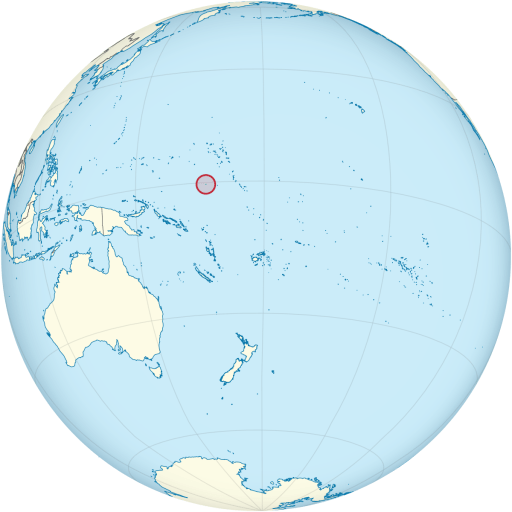
Australia has started deporting people it calls "non-citizens" to Nauru, a tiny Pacific island nation. These are mostly long-term residents who lost their Australian visas after criminal convictions but couldn't be sent back to their home countries because it wasn't safe. The move follows a new US$1.62 billion deal between Australia and Nauru, lasting 30 years, that allows Australia to "relocate" hundreds of people there. At least three men have already been flown out, and several others are being held for removal.
BTW:
Nauru is about 4,000 kilometers (2,500 miles) northeast of Sydney, about a five-hour flight from Australia's east coast.
Why this matters:
How far will a wealthy "democracy" go to outsource its human-rights problems? This news continues a long pattern in Australia's immigration policy. Since the early 2000s, successive governments (doesn't matter if Labor or Liberal) have used Pacific island nations to manage or hide asylum seekers. For Nauru, which is only 21 square kilometers and home to around 12,000 people, these deals have become a steady source of income. But they've also brought protests and a lot of (international) criticism.
Tell me more:
The group being targeted, about 350 people, is known as the NZYQ cohort, named after a 2023 High Court decision that banned indefinite detention. Under the new system, once Nauru agrees to take someone, it issues them a visa. That triggers Australia to cancel their local visa, re-detain them (often during night raids), and fly them out within days.
What do we know about the recent deportees?
The Guardian reported that they include a Sudanese man and another unnamed detainee, who were both flown out on charter flights. The two joined one earlier deportee, reportedly a Vietnamese man, who's already in Nauru. All three of them previously lived in Australia, often working, raising...
Please log in or subscribe for free to continue reading this issue.
We could use your help to make this issue better. Take a look at the requests below and consider contributing:
- Submit a piece of artwork for this issue
- Submit a news, academic or other type of link to offer additional context to this issue
- Suggest a related topic or source for future issues
- Fix a typo, grammatical mistake or inaccuracy
Below you'll find some of the sources used for this issue. Only sources that support "media embedding" are included.
-
A key spokesman for Djibouti's long-ruling president has resigned, denouncing the country's democratic regression and "nepotistic practices", according to a statement seen by AFP on Monday.
-
Paris, Nairobi, Djibouti, April 18, 2023. Moustapha Ahmed Ali, coordinator for the Djiboutian political party, Mouvement pour le Renouveau (…)
-
See the Freedom in the World 2025 score and learn about democracy and freedom in Djibouti.
-
Ismail Omar Guelleh, 77, has been in power since 1999.
-
Hunger and malnutrition deepen as conflict and access constraints persist in South Sudan | World Food ProgrammeJUBA, South Sudan – The United Nations today warned that South Sudan continues to face a severe food and nutrition crisis, which is threatening to deteriorate further unless urgent humanitarian action is mounted.
-
Overnight, 25 locations including Kyiv were hit, leaving many areas without electricity and heating.
-
Cerca de 80% do município de Rio Bonito do Iguaçu foi abaixo, diz prefeito
-
One of the year's deadliest storms has headed west to Cambodia and Laos after barreling through Vietnam.
-
Tanzanian authorities have charged hundreds of people with treason over demonstrations around disputed polls last month.
-
President Donald Trump says no U.S. government officials will be attending the Group of 20 summit this year in South Africa, citing the country’s treatment of white farmers.
-
LA PAZ: Bolivia and the United States will restore diplomatic relations at the ambassadorial level after a 17-year break, Bolivian President Rodrigo Paz and US Deputy Secretary of State Christopher Landau announced Saturday.
-
Rodrigo Paz faces Bolivia’s worst economic crisis in 40 years, with high inflation and a shortage of fuel and dollars.
-
A political scandal has erupted over allegations of severe abuses of Palestinians. A military official, who had leaked a video, disappeared briefly on Sunday. She was found later and is now being held in prison.
-
Kazakhstan will join the Abraham Accords between Israel and Arab and Muslim majority countries in a move aimed at boosting the initiative that was a hallmark of President Donald Trump’s first administration.
-
Elena Rybakina upsets world number one Aryna Sabalenka to win record-breaking £4m prize with WTA Finals victory.
-
The UK’s National Crime Agency says suspect was a former soldier who was arrested on Thursday by specialist officers.
-
The wives of a missing Malaysian Christian pastor and a Muslim activist have won a landmark lawsuit after a court ruled that the government and police were responsible for the men's enforced disappearance years ago.
-
A Moroccan court has sentenced a man to five years in prison in the country’s first ruling against someone accused of luring people to work in a scam compound in Asia.
-
A huge gas find reignites old debates over Bolivia’s energy and environmental future
-
Waste cleared from a Johannesburg river is being transformed into art as part of a new river rejuvenation project. About 150 kilometres of the South African city's rivers are being rehabilitated, and along one three kilometre stretch, waste is being up-cycled in unique ways.
-
The US Army Garrison Bavaria removed references to German food banks and other discounted food provision services from its "shutdown guidance" web page.
-
Immer mehr Menschen in Sachsen-Anhalt sind auf die Tafeln angewiesen. In Quedlinburg, Halberstadt und Wernigerode kommen rund 2.000 Bedürftige regelmäßig.
Each week, What Happened Last Week curates news and perspectives from Asia, Africa, and the Americas. The newsletter is written by Sham Jaff and focuses on stories that rarely receive sustained attention in Western media.
Read the free edition every week. VIP subscribers receive additional stories, recommendations on what to watch, read and listen, and more.