

What happened:
Last Wednesday, Tanzanians went to the polls. By Saturday, the election commission announced that President Samia Suluhu Hassan had won another term. Opposition leaders were like, "lol, you're kidding, right?" Protests have erupted since last week, and at least ten people have died; likely more, but that's unclear.
Why this matters:
These are the biggest protests Tanzania has seen in decades. The country's ruling party, Chama Cha Mapinduzi (CCM), has been in power since forever, basically since independence in 1961. That's more than 60 years of one-party dominance in a country of about 68 million people. Many Tanzanians are now calling this the country's worst constitutional crisis since independence.
Good to know:
Here's how Tanzania's election works: The country runs on a first-past-the-post system, meaning whoever gets the most votes, wins. The president and vice president run together on one ticket and serve five years.
Tell me more:
Sounds fair, right? Except... not really. There were 17 names on the ballot, but the two main opposition parties, CHADEMA and ACT-Wazalendo, have been barred from running. President Samia Suluhu Hassan was once seen as a democratic reformer, activists, however, have long been saying that this is no longer the fact. As researcher Nicodemus Minde put it in Al Jazeera's recent episode of Inside Story: this is "the culmination of many years of electoral injustices." For over 60 years, the CCM has captured every key institution -- the courts, the election commission, and the media (hence the designation of "constitutional crisis" aka the collapse of checks and balances that the constitution is supposed to guarantee). Opposition politicians have been jailed, disappeared, or killed. Tanzanian activist and human rights lawyer Tito Magoti, who was once jailed himself, said people have "been burning inside" after years of abductions and torture. President Suluhu Hassan was supposed to change all of this.
Who's Samia Suluhu Hassan?
The 65-year-old became president in 2021 after her predecessor, John Magufuli, died in office. She was praised at first, think "yay, the country's first female president", and was seen as a reformer who might open up politics again after Magufuli's authoritarian streak. However, many young people feel "tired", according to one young Tanzanian analyst, Lovelet Sheme. Talking to BBC, she says that the youth, which make up the majority of Tanzania's population, don't see themselves in the political class. The candidates' promises in this election, Sheme continues, were "the same old stories", vague, recycled, and out of touch. No mention of jobs or education. And over time, activists say President Suluhu Hassan has gotten more and more repressive. Minde on Inside Story described her government as having continued, even intensified, "democratic backsliding" as the constitution gives enormous power to the president (it's been called an "imperial presidency," he says).
How repressive?
Well, where do I start?
-Hostile to opposition In the run-up to the election last week, opposition leader Tundu Lissu from CHADEMA was thrown in jail for "treason" (a charge he denies). Others were beaten, detained, or disappeared. -Enforced disappearances Human rights groups say disappearances, arbitrary arrests, and media restrictions have become routine. A UN report in June called it "a pattern of repression." They note more than 200 cases of enforced disappearance since 2019. -Bad for freedom of expression The International Crisis Group said in its most recent analysis on the country that the Tanzanian government has curbed freedom of expression, ranging from a ban on X and restrictions on the Tanzanian digital platform JamiiForums "to silencing critical voices through intimidation or arrest."
How did the election go last week?
Tumultuous, to say the least. Thousands of angry protesters, mostly young people, took to the streets across the country, in cities like Dar es Salaam and Arusha. The protests quickly turned violent. Demonstrators tore down campaign posters and burned government buildings, police fired tear gas and bullets. CHADEMA claims hundreds were killed. The UN says at least ten. The government called those numbers exaggerated (while they had shut down the internet and imposed a curfew). Plus, life in Tanzania has come to a bit of a standstill as flights have been cancelled and ports disrupted. Still, protests have kept going anyway (though fewer people dared to come out on the weekend).
BTW:
Tanzania's unrest isn't happening in isolation. Researcher Nicodemus Minde called it part of a broader East African trend he described as "authoritarian solidarity." On the Inside Story panel, he pointed out that Kenyan and Ugandan activists have been arrested and tortured inside Tanzania, and there are allegations that Ugandan military personnel or mercenaries crossed the border to help suppress protests. "These oppressive governments of East Africa are coordinating in some form," he added, citing "authoritarian grip, democratic backsliding and increased repression" in Kenya, Uganda, and Tanzania alike.
What now?
Dio Gracias Monishi, a spokesman for CHADEMA, told DW the result showed the election last week was a "total fraud." According to the panelists on Inside Story, the opposition and protesters are demanding the release of political prisoners, a new constitution, a rerun of the election, and for some, Suluhu Hassan to resign. Experts expect more unrest as long as the government refuses to engage.
Zoom out:
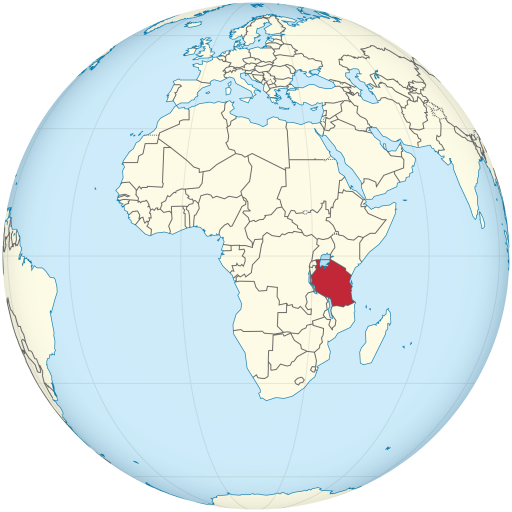
Tanzania is a strategic gateway for East and Southern Africa; it's connected to Rwanda, Burundi, the DRC, Zambia, and Malawi. The country is the region's second-largest economy and could double its population by 2050, making it one of the 15 largest countries in the world. So, its stability matters for the entire region's trade and security.
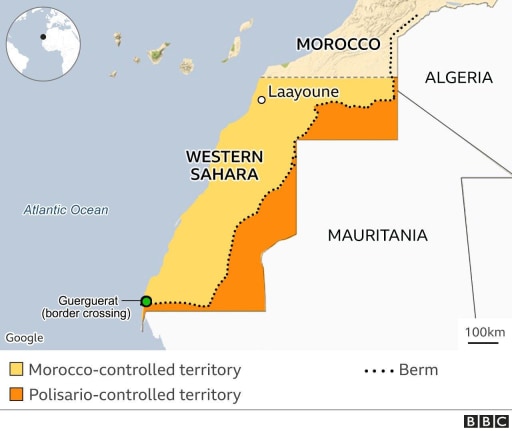
For decades, the UN Security Council insisted on a referendum for the Sahrawis. Now, it's leaning toward Morocco's plan.
(Long) Refresher:
Fifty years ago, on November 6, Morocco (after Spain) marched into Western Sahara, and it's still there. On November 6, 1975, King Hassan II...
Please log in or subscribe for free to continue reading this issue.
We could use your help to make this issue better. Take a look at the requests below and consider contributing:
- Submit a piece of artwork for this issue
- Submit a news, academic or other type of link to offer additional context to this issue
- Suggest a related topic or source for future issues
- Fix a typo, grammatical mistake or inaccuracy
Below you'll find some of the sources used for this issue. Only sources that support "media embedding" are included.
-
President Samia Suluhu Hassan has been re-elected in a landslide, as the government denies that hundreds were killed.
-
The main opposition candidates have been barred from next week's poll, with one facing a treason trial.
-
Tanzanian President Samia Suluhu Hassan has been reelected, amid protests against the vote, as two major opposition parties were banned.
-
The UN said it has "credible reports" that at least 10 protesters have been killed. The Chadema opposition party says hundreds have died in election-related violence, countrywide.
-
Immer mehr europäische Staaten geben ihre neutrale Haltung auf und unterstützen Marokkos Besatzung der Westsahara. Gleichzeitig wächst die Solidaritätsbewegung in Deutschland. Ein Überblick zum Jahrestag der marokkanischen Besatzung.
-
The Security Council on Friday approved Rabat’s plan to keep sovereignty over the territory, despite fierce opposition from Algeria.
-
Inhofe had asked Trump over the last two years not to recognize Moroccan sovereignty in the Western Sahara.
-
“I wish to congratulate His Majesty King Mohammed VI for the endorsement by the UN Security Council of a resolution which supports Morocco’s autonomy plan," Netanyahu said.
-
Join hands with the Government of Jamaica. Support national disaster relief, locate shelters, and stay informed on Hurricane Melissa updates.
-
A humanitarian relief charity that works in the US and internationally to improve the health and lives of people affected by disasters and poverty.
-
They came in droves to watch us drown
-
Rescue operations continued on Sunday to find missing people in the hilly area of Chesongoch in Elgeyo-Marakwet County.
-
42 men from Gallari, a community in North East Nigeria, were arbitrarily detained by the military 12 years ago. Three of them have finally regained freedom. Two returned with severe health problems, while the third is completely blind. This is the story of what happened to the rest.
-
The declaration of Nigeria as " country of particular concern", by President Donald Trump administration on Friday has continued to elicit...
-
China has sent three new astronauts to its space station Tiangong as part of long-term space plans that include a moon landing.
-
“If I were in Azerbaijan right now, I would probably be in prison” Exiled journalist Parvana Gurbanli about how the regime is punishing independent journalism - European Centre for Press and Media FreedomAzerbaijan has long been considered an authoritarian regime. For many years, the press has been restricted. But the 2022 “On Media” Law finally bans independent journalism.
-
Given more freedom, the models escalated their bets until they lost everything, mimicking the behavior of human problem gamblers.
Each week, What Happened Last Week curates news and perspectives from Asia, Africa, and the Americas. The newsletter is written by Sham Jaff and focuses on stories that rarely receive sustained attention in Western media.
Read the free edition every week. VIP subscribers receive additional stories, recommendations on what to watch, read and listen, and more.