

Mongolia might be next in the Gen Z protest parade. The government there just collapsed, again, after only four months in power. The prime minister and parliament speaker are both out, and people are asking: if we're so rich in coal, why isn't anyone feeling it?
Meanwhile, Hannibal Gadhafi (yes, Muammar's son, and yes, Hannibal's really his name) might finally walk free after a decade in a Lebanese prison without ever being charged. His case is caught up in one of Lebanon's oldest political mysteries, but Libya's turning up the pressure for his release.
Also in this issue: Taiwan's female reformist, Peru's 38-year-old president, how Madagascar's Gen Z uprising ended with a general, some rare good news from Balochistan, rugby on horseback in Kazakhstan, one year of Claudia Sheinbaum, inside El Salvador's prisons, Egypt's Gen Z answer to Amr Diab, and the surprising link between loving your partner's pet and staying married.
Mongolia's government just imploded. Again.
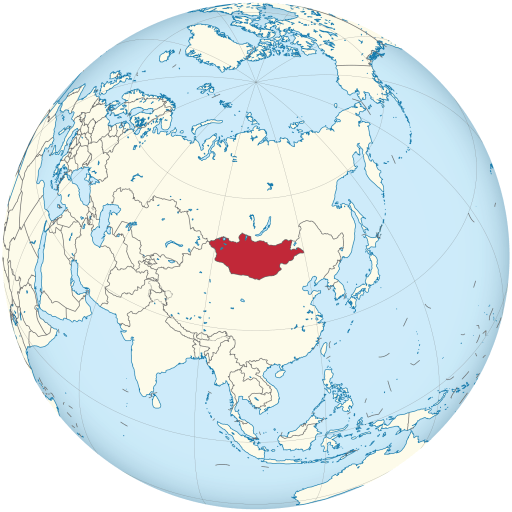
What happened:
Mongolia's parliament just voted out Prime Minister Gombojavyn Zandanshatar, only four months after he took office.
Why this matters:
It's another shake-up inside the country's ruling party, which has been struggling to keep things stable. Mongolia is one of the few democracies in that part of the world. It's sandwiched between Russia and China, two authoritarian neighbors. This new development is deepening a political crisis in one of Asia's most resource-rich but chronically unstable democracies.
Tell me more:
Out of 126 lawmakers, 71 voted to remove him, meaning the majority had lost confidence in his leadership. His removal sent shockwaves through Mongolia's economy. Bonds fell (even though a day earlier Moody's had upgraded Mongolia's credit rating to its best level since 2018), and to make matters worse, just one day before Zandanshatar was ousted, Dashzegviin Amarbayasgalan, the parliament speaker and a rival within the same party, resigned following an ethics probe pushed by fellow members of the ruling Mongolian People's Party (MPP). Yes, it's that messy within the ruling party.
Who was Zandanshatar?
Zandanshatar isn't new to politics. He used to be a banker and later served as foreign minister and parliamentary speaker. In June, he became prime minister after his predecessor, Luvsannamsrain Oyun-Erdene, was forced to resign amid corruption questions involving his son's wealth and reports that he'd given expensive gifts to a woman he'd proposed to (look at those two love birds). Once in office, Zandanshatar tried to show he was serious about reform. He cut 2.3 trillion tugrik (about US$640 million) from the 2025 budget to shrink the deficit, especially as coal prices (Mongolia's biggest export to China) started dropping.
But?
But those cuts and his decision-making style didn't sit well with everyone. Lawmakers accused him of trying to bypass parliament when appointing a new justice minister, and they claimed one of his recent policy changes might have cost the state money by reducing the royalties companies pay for coal and iron ore.
What's at stake here?
Well, not to be dramatic, but sort of everything. Mongolia is rich in natural resources, especially coal, copper, and rare earth minerals, but it's struggling economically. Prices for its main exports have dropped, inflation is high, wages are flat, and people are really tired of corruption. Plus, all these prime ministers and ministers come from the Mongolian People's Party (MPP), which has been in charge for most of the past 15 years. It's supposed to be center-left, but over time it's become what people now call "the establishment." Mongolians are losing patience with it, and feel they haven't seen the benefits of the country's resource wealth (which should have come, in their opinion, from the coal mining boom).
What happens now?
The country's president, Ukhnaagiin Khürelsükh, gets to nominate a new prime minister, who will then need approval from parliament. But since the MPP still controls most seats, they'll likely pick another insider; meaning not much will actually change. Meanwhile, investors and businesses are nervous. Mongolia's economy depends heavily on foreign mining and trade with China and Russia, and political instability scares investors away. Plus, the "ghost of Gen Z protests" is roaming around in the region. Is Mongolia next? Tbd.
Gadhafi's son is still in prison in Lebanon -- he's never been charged
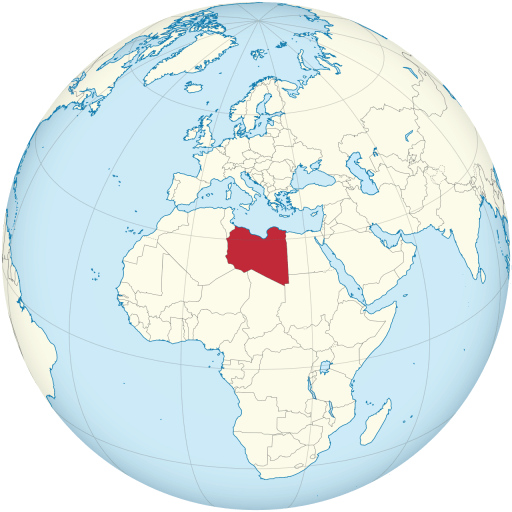
What happened:
After ten years in a Lebanese prison without ever being charged, Hannibal Gadhafi, one of the sons of the late Libyan leader Muammar Gadhafi, has finally been told he can go free, but only if he pays US$11 million in bail.
Why this matters:
This case shows how courts in Lebanon are deeply connected to the country's politics. Hannibal's detention has nothing to do with law and everything to do with appeasing certain factions, especially the Shiite Amal movement, one of Lebanon's oldest and most influential political groups.
Tell me more:
A Lebanese judge made that decision on Friday. Hannibal's lawyers say he doesn't have the money and plan to appeal the bail amount, calling it absurd after a decade in detention.
How did he end up in prison?
He was abducted, plain and simple. Back in 2015, Hannibal was living in exile in Syria with his Lebanese wife and children. Then he was abducted by armed men in Lebanon, who wanted information about Moussa al-Sadr, a well-known Shiite cleric who went missing during a visit to Libya in 1978. After the abduction, Lebanese police said they "rescued" Hannibal from his captors, and then immediately locked him up themselves. Since then, he's been detained in Beirut, mostly at a police headquarters cell, without any formal charges.
What's he got to do with Lebanon?
The thing is, the al-Sadr case is one of Lebanon's oldest political wounds. Moussa al-Sadr was a charismatic Shiite cleric from Iran who became one of the most important religious and political leaders in Lebanon during the 1960s and 70s. When he arrived, Lebanon's Shiites were the country's poorest and least represented community. Al-Sadr changed that.
He founded the Movement of the Deprived and later the Amal Movement, which gave Shiites political visibility and social programs like schools, hospitals and food networks at a time when Lebanon's Christian and Sunni elites dominated power. He also preached unity across sects, which made him widely respected. By the mid-1970s, he was a national figure and many saw him as the voice that could keep Lebanon from sliding into civil war. Then in August 1978, al-Sadr flew to Tripoli (Libya)...
Please log in or subscribe for free to continue reading this issue.
We could use your help to make this issue better. Take a look at the requests below and consider contributing:
- Submit a piece of artwork for this issue
- Submit a news, academic or other type of link to offer additional context to this issue
- Suggest a related topic or source for future issues
- Fix a typo, grammatical mistake or inaccuracy
Below you'll find some of the sources used for this issue. Only sources that support "media embedding" are included.
-
After 10 years in prison without charge, a Lebanese judge has ordered the release of Hannibal Gadhafi, son of the late Libyan leader, Moammar Gadhafi. But it’s on condition that he pays $11 million bail, something his lawyers say they will contest.
-
Doctors Without Borders said Wednesday that ongoing violence in the capital of Haiti has forced it to permanently close its Port-au-Prince emergency care center, a city now 90% controlled by gangs.
-
Former Prime Minister and Orange Democratic Movement (ODM) party leader Raila Odinga has died at the age of 80.
-
Despite repeatedly running for president and never winning, Raila Odinga will be remembered as a figure who profoundly shaped Kenyan politics as much as any president.
-
Ecuador faces intense unrest as striking bus drivers and farmers protest the government's diesel price hike.
-
People were gathering for the festival and an anti-junta demonstration when bombs killed at least 20 people and injured dozens more.
-
Singapore has executed a Malaysian drug trafficker, marking the second execution in two weeks in the city-state.
-
Experts say the deal seeks to counter Beijing's growing influence, but PNG says it is not about China.
-
Taiwan's main opposition Nationalist Party has chosen Cheng Li-wun as its new chairperson. Cheng, the only female candidate, defeated former Taipei Mayor Hau Lung-bin and four others on Saturday.
-
India said it was reopening its embassy in Kabul after four years for "closer cooperation" with Afghanistan. Afghanistan's foreign minister was in New Delhi on Friday as part of a six-day trip to India.
-
Mass demonstrations in recent weeks over power and water shortages have killed more than 20 people.
-
La justicia argentina condena a 10 años de cárcel a Sabag Montiel por el intento de asesinato de Cristina Kirchner | EL PAÍS ArgentinaEl autor material del ataque deberá cumplir un total de 14 años al acumular también otra condena por venta de pornografía infantil. Su exnovia, Brenda Uliarte, fue sentenciada a ocho años de cárcel
-
Kech cultural festival celebrates Balochistan’s resilient spirit in Turbat, Pakistan · Global VoicesFor decades, Balochistan’s news coverage has centered on security concerns. Showcasing events like the Kech Cultural Festival, celebrating unity and peace, helps counter misconceptions and presents a more accurate perspective.
-
Google’s Flood Hub gives warnings five days ahead, letting non-profits like GiveDirectly send early cash to farmers in Bangladesh before floods hit.
-
Turkey is moving to end a two-year ban on the use of its airspace for flights to and from Sulaimaniyah in Iraqi Kurdistan. The restriction was originally imposed after Ankara accused the Patriotic Union of Kurdistan (PUK) of providing the Kurdistan Workers’ Party (PKK) with a safe haven. The current shift comes after a personal intervention by Kurdistan Region President Nechirvan Barzani, which may give his Kurdistan Democratic Party (KDP) a boost in campaigning for the Iraqi parliamentary elections in November...
-
Qatar says Afghanistan and Pakistan have agreed to an immediate ceasefire. It follows more than a week of fighting that killed dozens of people and injured hundreds, making it the deadliest crisis between them in several years.
-
Since independence, kokpar has made a comeback as part of a broader revival of nomadic traditions. The World Nomad Games, launched in 2014, showcase sports such as archery, wrestling, and kokpar.
-
More than 125,000 people have gone missing in the country. President Sheinbaum has called the problem "a national priority."
-
After a year of balancing Trump, AMLO, and public expectations, Mexico’s Claudia Sheinbaum is quite popular, but uncertainties lie ahead.
-
Couple who bonded over love for animals is separating nine months after wedding
Each week, What Happened Last Week curates news and perspectives from Asia, Africa, and the Americas. The newsletter is written by Sham Jaff and focuses on stories that rarely receive sustained attention in Western media.
Read the free edition every week. VIP subscribers receive additional stories, recommendations on what to watch, read and listen, and more.