

This week, I've been watching how coverage framed the protests in Morocco and Madagascar. Many outlets bundled them together under "Gen Z protest," which isn't entirely wrong, as both movements are led by young people angry about inequality. But the scale and stakes aren't the same.
In Morocco, the protests are loud, and three people have died. In Madagascar, at least 22 people have been killed since September. And yet, guess which story got more airtime? So, this week we're starting where the spotlight isn't: Madagascar, a country where people are risking their lives for things as basic as water, power, and dignity. You'll also hear from one of the most surprising voices in the movement: Mister Malagasy 2024, who says neutrality isn't an option anymore.
Beyond that: Haiti's government is using drones on civilians, Japan might get its first far-right female prime minister, and somehow Lula and Trump are now on speaking terms.
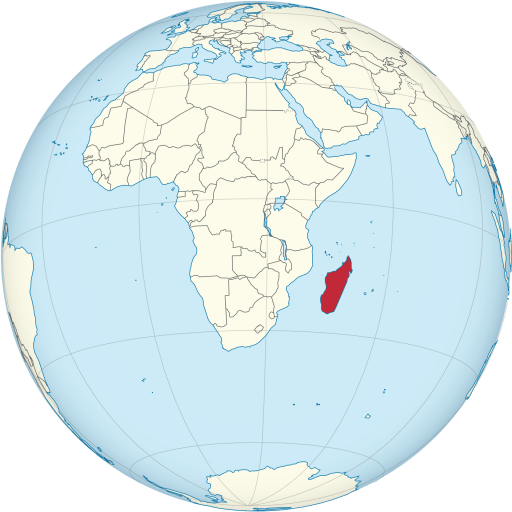
Mostly young people are protesting the government in Madagascar because of the big wealth gap and overall living conditions
What happened:
Everything's moving fast. Yesterday, Madagascar got a new prime minister: Ruphin Fortunat Zafisambo, an army general. President Andry Rajoelina appointed him after firing his entire government last week, a last-resort-type-of-move to quiet the mass protests calling for him to step down.
Didn't work. The Gen Z movement behind the protests gave him a 48-hour ultimatum to resign. Unions are now joining in, the calls for a general strike are getting louder, and opposition parties say they won't take part in any new government as long as Rajoelina's still running the show.
Here's where things stand --- for now.
Why this matters:
Madagascar is one of the poorest countries in the world. In 2022, the World Bank said three out of four Malagasy people lived below the poverty line. Out of a population of 30 million, that's most of the country.
Tell me more:
This started on September 18, when opposition politicians Clémence Raharinirina and Baba Faniry Rakotoarisoa called for protests over constant blackouts, water shortages, and corruption. They got arrested. A few days later, a Facebook page called "Gen Z Madagascar" appeared. It gained 100,000 followers in under a week. Their logo? The "One Piece" pirate hat. What began as anger over power cuts quickly turned into something bigger, more like a full-on protest against corruption, nepotism, and inequality. Protesters point to the Rajoelina family's wealth as the clearest symbol of the divide: his daughter in designer clothes, his son at an elite Swiss school that costs more than most Malagasy people make in a lifetime. Meanwhile, residents go days without water and spend up to 12 hours without power.
Police responded with tear gas and live bullets. AFP journalists saw people wounded in the streets of Antananarivo. The UN says at least 22 people have been killed and more than 100 injured, though authorities deny it.
Good to know:
Madagascar's Gen Z isn't alone. Their movement has taken notes from similar youth protests in Bangladesh, Nepal, and Indonesia. They also all used the "One Piece" hat. A local journalist tells BBC's Focus on Africa: "What happened in Madagascar happened because of Nepal."
Just like I did with the Gen Z protests in Nepal, I too wanted to speak with a young person on the ground. Usually, pageant winners stay far away from politics. Their job is to smile, wave, and keep things positive. But in Madagascar, that rule is starting to fall apart. Earlier this month, Midi Madagasikara ran a piece titled "Neutrality Is Impossible." In it, Andy Rasolo, Mister Malagasy 2024, publicly called on artists, influencers, and public figures to pick a side. He criticized how peaceful protests over water and power shortages were being met with violence, saying "silence is a form of complicity."
I wanted to hear more from him. So I reached out.
Here's our full exchange:
whlw: Have you personally taken part in the recent demonstrations? If so, was it your first time joining a protest?
AR: For my part, my schedule didn't allow me to physically take part in the demonstrations organized by Gen Z. However, thanks to the many live streams and posts shared on social media, I participated in my own way. Even though I wasn't present on the ground, I made sure to share as much information as possible to mobilize as many people as I could.
whlw: What motivated you to do so --- anger, hope, or a sense of duty?
AR: What drove me to join these protests, I believe, is the same feeling that motivates most Malagasy people. Our country has everything it needs to succeed: an engaged youth, unique skills, exceptional natural resources, and unmatched beauty. Yet we remain among the poorest nations in the world. Access to water and electricity --- two basic necessities --- is still difficult.
So yes, we're speaking out because we're angry about poor governance. But we also hold on to the hope that things will change. And I sincerely believe it's a duty: when you're aware of what's happening in your country, and a movement rises to denounce injustice and defend our rights, you have a responsibility to stand with the people.
whlw: As Mister Malagasy, you represent the country on the public stage. What responsibility does that title impose on you in a moment like this?
AR: As Mister Malagasy 2024, I've had the opportunity throughout my journey to speak out about the challenges faced by Malagasy youth. That's what truly drives me: supporting and encouraging young people to believe in their potential. Taking part in this movement is therefore a natural extension of my commitment.
whlw: Why did you declare that "neutrality is impossible"?
AR: Neutrality means not taking sides in a conflict. But I believe it's unthinkable to remain neutral when citizens are demanding not luxury, but basic living conditions --- water, electricity --- and the government's response is to send security forces not to protect the protesters, but to suppress their right to speak out. A person of sound mind cannot remain indifferent to that. And anyone who calls themselves Malagasy has a moral duty to support their people, because it's the people who make the country.
whlw: In your opinion, what are the main demands of Malagasy youth today?
AR: Madagascar isn't asking for the impossible: simply a fairer distribution of wealth, equal access to water, electricity, and education, and above all, an end to corruption. In short, the Malagasy people are asking for living conditions that are simply decent and humane.
whlw: Are these demonstrations driven only by the youth, or do they reflect a broader discontent within society?
AR: These demonstrations are often attributed to young people, since the movement was born on university campuses. But today it has taken on a whole new dimension: it brings together the entire country, across all social classes. That said, it's true that we owe this collective awakening to the Malagasy youth.
whlw: What concrete change do you hope will come out of these mobilizations?
AR: On a national level, we hope to achieve the changes mentioned earlier. But personally, I also hope for a global awakening of all young people in countries that, like Madagascar, face similar challenges. The youth must rise up and take their future into their own hands....
Please log in or subscribe for free to continue reading this issue.
We could use your help to make this issue better. Take a look at the requests below and consider contributing:
- Submit a piece of artwork for this issue
- Submit a news, academic or other type of link to offer additional context to this issue
- Suggest a related topic or source for future issues
- Fix a typo, grammatical mistake or inaccuracy
Below you'll find some of the sources used for this issue. Only sources that support "media embedding" are included.
-
Madagascar has been rocked by nearly two weeks of youth-led protests over crippling power cuts and economic hardship, posing the biggest challenge yet to President Andry Rajoelina's rule.
-
President Rajoelina's move fails to quell the protest movement that is now threatening his own position.
-
Madagascar is being rocked by widespread protests in response to electricity and drinking water shortages. This social explosion reflects a much deeper malaise, and could bring down the government.
-
The World Bank is helping the Madagascar government to fight poverty and improve the living standards.
-
Madagascar imposes a curfew after protests over power and water cuts turn violent
-
The Straw Hat Pirates, also known as the Mugiwara Pirates, Straw Hat Crew or simply the Straw Hats, are an extremely infamous and powerful pirate crew under the captaincy of Monkey D. Luffy that originated from the East Blue. First referred to with this moniker by Smoker in Arabasta,[13] the...
-
Two killed and hundreds arrested in Morocco's nationwide youth protests
-
Andy Rasolo, Mister Malagasy 2024, a récemment appelé les artistes, les influenceurs et les personnalités publiques malgaches...
-
The collapse of the Al-Khoziny Islamic boarding school teaches the importance of building safety, from planning and inspection to technical compliance.
-
Disaster officials report at least 47 people killed as landslides and floods wreak havoc.
-
Israel and Hamas Negotiators Start Mediated Talks in Egypt on Trump's Gaza Cease-fire Plan - Israel NewsA Hamas Official Said the Group Will Take a 'Tough Stance' on Releasing Senior Fatah Official Marwan Barghouti and Is Willing to Distance Itself From Gaza's Governing Body; an Israeli Source Said a Key Sticking Point Remains Which Palestinian Security Prisoners Are Released and Israel's Demand for Veto Power Over the List
-
For Black Americans, the motion — backed by a coalition of world leaders — intensifies calls to confront slavery’s enduring costs.
-
The prize-winning discovery explains how the immune system attacks hostile infections, but not the body's own cells.
-
Sixteen Thai citizens lured into scamming compounds in Myawaddy have been repatriated and are undergoing assessment as human trafficking victims
-
Join Jennifer Welch and Angie “Pumps” Sullivan and their special guests on “I’ve Had It” and let this comedic, feel-good podcast expose you to all the things you didn’t know you’ve had it with! Don’t ask them to bring a casserole to your event or to celebrate international snow cone day with you because they’ve HAD IT.
Each week, What Happened Last Week curates news and perspectives from Asia, Africa, and the Americas. The newsletter is written by Sham Jaff and focuses on stories that rarely receive sustained attention in Western media.
Read the free edition every week. VIP subscribers receive additional stories, recommendations on what to watch, read and listen, and more.