

This week is about the things that get swept under the rug. Japan sells a Hello-Kitty version of itself to the world, but at home, politics are forming that are anything but "kawaii". And in Argentina, a brutal crime has shocked the country, and feminists are saying it didn't come out of nowhere, but out of the structures nobody wants to face.
Plus, life under siege in El Fasher, a wildfire tearing through one of Africa's biggest reserves, Mali's messy split with France, a badly timed MILF joke in Turkey, new clues about China's origins, and why environmental battles in Kurdistan are always political. And so much more.
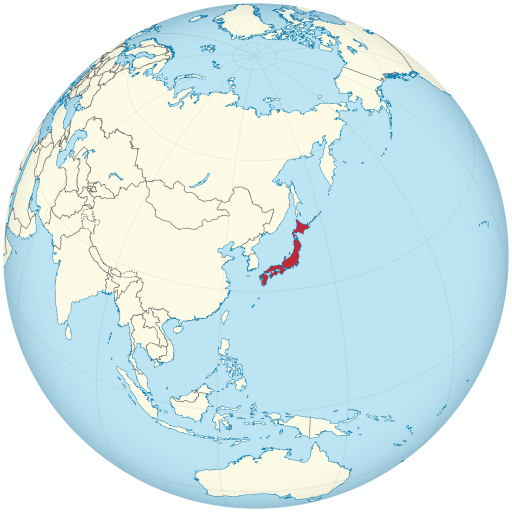
In Japan, the far-right has a loud megaphone, and now, there's a louder mainstream conversation on who is "really Japanese"
What happened:
Japan's right-wing and far-right parties are testing how far anti-foreigner politics can go.
Tell me more:
Nippon Ishin no Kai (Japan Innovation Party), on September 17, pushed the Ministry of Justice to make it more difficult for foreigners to immigrate to Japan and even explore ways to strip naturalized citizens of their Japanese nationality. The party is not in government, but they're a major opposition force. The far-right Sanseitō pushed it even further, saying they shouldn't even be allowed to run for office under their party. They frame naturalized Japanese as outsiders and claim the government is betraying "real" (ethnic) Japanese by protecting these outsiders.
Did you know:
When people become a Japanese citizen, i.e. become naturalized, they don't call them "Japanese"? They call them Kikajin (帰化人). For the most part, it's been considered a neutral description, but it's getting more and more of a bad rep now.
Why this matters:
Legally, once you naturalize in Japan, you're supposed to be exactly the same as a native-born citizen. Same political rights, same protections. The country also makes naturalized citizens give up their other nationality. So they don't get to protect themselves with dual citizenship the way some countries allow. If these parties succeed in creating rules to strip kikajin of citizenship, you'd have people with no passport anywhere, i.e. they would be legally stateless. That's a massive human rights issue and would put Japan in violation of international norms.
I haven't been following domestic politics in Japan. Give me an overview
Japan is a parliamentary constitutional monarchy, but in practice it operates like one party ruled the entire country. The Liberal Democratic Party (LDP) has been in power for decades. Those two parties I mentioned above are not part of the government right now, but recently, the LDP's grip is weakening. They lost their majority in the lower house after the 2024 general election, and last year, in the July 2025 upper house (House of Councillors) elections, the LDP/Komeito coalition lost seats and couldn't hold a majority. That creates room for smaller parties to participate, especially in times when people feel poor, the population keeps shrinking, and more foreigners arrive to fill jobs.
Who's gaining ground now?
Far right populists like Sanseitō. The far-right party jumped from 1 to 15 seats in 2025. They're anti-immigration, nationalist, and love stirring the pot. They can't pass laws alone, but their rhetoric gets airtime and pressures bigger parties like the LDP and Ishin to lean more exclusionary. The other parties are a bit more fragmented, so coalition-wise, no bueno. But just to give you a quick overview of who else is on the playground: The CDP is the main liberal opposition. The DPFP sits in the middle between the ruling LDP and the extremes. Reiwa Shinsengumi is small but progressive and anti-establishment. The Communist Party still carries moral weight. And Ishin no Kai (more of a regional force right now) mixes reformist and neoliberal ideas (and they're a bit more influenced by the far-right).
What do "normal people" think?
Public opinion seems to lean very nationalist. A survey found 95% of young Japanese said, "you cannot become Japanese by citizenship." That reflects the deep idea that "Japaneseness" is about bloodline, not law. This has opened the door to hate speech, conspiracy theories, and pressure for kikajin to "prove" their loyalty. There are some naturalized citizens in politics, but oh my, they get hammered with hate speech about their origins. Even mainstream Japanese TV has given airtime to the questions if naturalized citizens are truly loyal, since there's no pledge of allegiance.
BTW, the conspiracy talk has gone quite far. Ultra-right groups in Japan pushed a fake story that 600 of Japan's 720 lawmakers are naturalized citizens. It spread online as proof that "real" Japanese have lost control of their own parliament. So, like QAnon or "Great Replacement" theories elsewhere, it's less about facts and more about creating paranoia that outsiders are secretly running the country.
What is the government doing?
No protection, no pushing back against the discrimination. Instead, in July, it set up an office with a friendly name, but its main job is to monitor "crimes" by foreigners. Oh, and they also do not call them Kikajin officially, but "people who acquired Japanese citizenship". As it stands now, to escape hostility, naturalized citizens are expected to blend in more completely, i.e. names, manners, accent.
Good to know:
About 80% of kikajin come from Chinese or Korean backgrounds.
Three young women were tortured and killed, likely by drug...
Please log in or subscribe for free to continue reading this issue.
We could use your help to make this issue better. Take a look at the requests below and consider contributing:
- Submit a piece of artwork for this issue
- Submit a news, academic or other type of link to offer additional context to this issue
- Suggest a related topic or source for future issues
- Fix a typo, grammatical mistake or inaccuracy
Below you'll find some of the sources used for this issue. Only sources that support "media embedding" are included.
-
日本維新の会は17日、外国人政策に関する提言をまとめた。日本の人口全体に占める外国人の割合に上限を設け、受け入れを制限する「総量規制」を提起。国籍取得審査の厳格化や、帰化取り消しの制度創設も訴えた。19日に鈴木馨祐法相に提出する。
-
「事実上の政権選択」とも言われる今回の参議院選挙。争点に急浮上したのが、外国人政策です。外国人の排斥につながりかねない主張が勢いを増していることに、不安を訴える声も高まっています。今回の参院選で、急… (5ページ)
-
国会議員720人中600人では日本人、国民の総意だろうが意見等聞く筈もなく国民総決もしないしまして一番の元凶が大多数が選挙にも行かず帰化人、在日、売国奴選んで…
-
Japan has worked hard to attract foreigners to boost its sluggish economy but now the perception there are too many has prompted the creation of a new task force, as competition for votes heats up ahead of Sunday’s national election.
-
「帰化人」とは、国籍を外国から日本に移した人を指す。正式な法律用語として国籍法には「帰化」の項目があり、行政手… 続きを読む →
-
A girl and two young women were tortured and murdered in a crime that has shocked Argentina.
-
La principal hipótesis de la fiscalía apunta a un grupo de narcotraficantes
-
IDF launches 140 airstrikes in last 24 hours as tanks advance in Gaza City and death toll for same period is put at 77
-
Crush at actor-politician Vijay’s rally in Tamil Nadu kills 39 people, including eight children; 40 others injured.
-
Moscow targets Kyiv and other regions with about 600 drones and 40 missiles, killing at least four people
-
‘A donkey cart out of El Fasher costs more than a new car’: how 500 days under siege is tearing the city apart | Global development | The GuardianNorth Darfur’s capital has been under siege for 500 days, its people facing starvation, blockade and bombardment, with scant hope of relief, says Sudanese political scientist Sarra Majdoub
-
The two men are facing charges of “inciting the public into hatred and enmity.”
-
Peter Mutharika defeated the incumbent, Lazarus Chakwera, the election commission announces.
-
Mali's ruling junta has ended cooperation with France in fighting terrorism and expelled five French embassy employees.
-
(1st UPDATE) Led mostly by young people and braving rains in key cities across the Philippines, protesters demand that the government send those implicated to jail — or test the limits of an already outraged public
-
Archaeologists have found China's hitherto earliest prehistoric city site in the lower reaches of the Yangtze River in eastern Jiangsu province.
-
From the left: Chiako Yousefi-Nejad, Hamid Moradi, Babak Hedayi Three environmental activists recently perished in Iranian Kurdistan’s Abidar mountains while fighting wildfires with bare hands. Their funerals drew thousands of protesters, transforming grief into protest. To many Kurds, their deaths are not accidental. Instead, they symbolize the cost of resistance in a securitized, neglected homeland. […]
-
“The Sun Rises On Us All demonstrates an intimacy with women’s experiences around healthcare and fertility, with certain moments feeling plucked from my own life.”
-
Chinese neo-noir master Cai Shangjun returns to the Festival with an exploration of sacrifice, guilt, and the unresolved feelings between two still-entangled former lovers. Starring Xin Zhilei, Zhang Songwen, and Feng Shaofeng.
-
A U.S. film distributor has criticized a Chinese studio for reportedly using artificial intelligence to turn a gay couple straight when distributing the body horror movie “Together” in China.
Each week, What Happened Last Week curates news and perspectives from Asia, Africa, and the Americas. The newsletter is written by Sham Jaff and focuses on stories that rarely receive sustained attention in Western media.
Read the free edition every week. VIP subscribers receive additional stories, recommendations on what to watch, read and listen, and more.