
U.S. far-right commentator Charlie Kirk is dead, and that made front-page news, while Brazil's former president getting 27 years in prison and South Sudan's vice president facing murder charges got shoved onto page four. This issue pushes back: we'll look at South Sudan, because growing authoritarianism isn't only a U.S. story. And I spoke with a Nepali Gen Z protester about one of the country's biggest youth-led uprisings and their hopes for the future. Because it feels very 2025 because it's a generational moment that is shaped by the internet, global patterns of disillusionment, and governments that don't know how to deal with either. And, because younger voices deserve space in political news, too.
Also in this issue: Ali Velshi on how Brazil actually did what parts of the U.S. only wish they had. Koalas finally get a chlamydia vaccine. A big week for rights in South Africa. Why the U.S. is oddly obsessed with Vanuatu (and why Vanuatu isn't exactly flattered). A historian tearing apart the myth of "free speech." An unproblematic old white guy enjoying Nepali food. Brazil's own take on country music. And, to close it out, a funny note that is actually brilliant Albanian government PR.
South Sudan is experiencing the most serious crack in its 2018 peace deal right now
What happened:
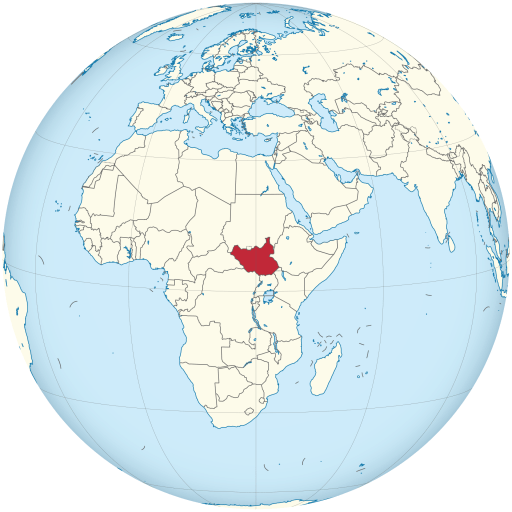
South Sudan's First Vice-President Riek Machar has been charged with murder, treason, and crimes against humanity.
Why this matters:
South Sudan has a very, very fragile peace, and this is the most serious crack in South Sudan's peace deal since 2018. The country only became independent in 2011 (it broke away from Sudan after decades of war). Just two years later, in 2013, a civil war erupted. It was mainly between Machar and President Salva Kiir (the guy in the cowboy hat you'll often see in photos). That war lasted five years, killed about 400,000 people, and only ended in 2018 with a shaky peace deal. So, charging Machar now could reopen old wounds and possibly restart the conflict. And, as The East African writes: "With more than four million people already displaced, and food insecurity at critical levels, the stakes for ordinary South Sudanese could not be higher."
Tell me more:
The government says he's linked to a militia attack in March that killed 250 soldiers, a general, and even a UN helicopter pilot. Some in Kiir's administration argue that prosecuting Machar and his allies is about justice, not politics; their line is: "If we let people get away with killings just because they're powerful, there will never be real peace." Machar has been under house arrest since March, and now things are escalating because he's officially facing charges in court. If cases are proven against him, Machar could actually face a death sentence, as treason is one of the "extremely serious offences" cited in law and whose maximum penalty is capital punishment.
Wait, what happened in March?
In March, heavy fighting broke out in Nasir, a town in northeast South Sudan, when the White Army (a militia mostly made up of Nuer youth, historically tied to Vice-President Riek Machar) overran an army base, trapping soldiers and their commander inside. On March 7, the UN sent helicopters to evacuate the soldiers after repeated guarantees of safe passage, but the aircraft and troops came under fire: a Ukrainian UN crew member was killed, two others injured, and a general plus dozens of South Sudanese soldiers died; the UN called the attack "abhorrent" and said it may amount to a war crime.
Government figures later claimed that between 250 and 400 soldiers were killed, though those numbers remain unofficial. Around the same time, Machar's ally, another general, and others were arrested, while Machar was placed under house arrest.
The government basically argues that the White Army's actions prove that Machar masterminded the attack, making it the basis of his murder, treason, and crimes-against-humanity charges, but his camp says the case is a political witch-hunt directed at abolishing the 2018 peace deal. (He's supposedly done this quite often: violate the peace deal by replacing officials who were appointed by Machar without consultation.)
What do regional mediators say?
The UN, African Union (AU) and neighboring countries are all calling for calm. The AU and IGAD (the Intergovernmental Authority on Development) have already urged the South Sudanese government to release all detainees in the interest of dialogue.
Good to know:
South Sudan also has a huge dependency-on-others problem. The government doesn't fund itself through taxes in the way other countries do. International donors (like the US, EU, and UN agencies) cover a huge part of South Sudan's budget, especially for things like peacekeeping, humanitarian aid, and reforms. Without this outside money, the state can't really function. The US and EU have said clearly: if South Sudan's leaders keep fighting and delaying peace reforms, they could cut or freeze funding.
What now?
Short answer: nobody knows for sure. If the courts push ahead, Machar could be convicted or formally removed from politics. Machar's allies still command loyalty among armed groups. If his people continue to feel the charges are a "witch-hunt," they may return to violence at some point. The most immediate signs to watch are probably: Is Machar actually brought to court, or will he be kept under indefinite house arrest? How will the White Army respond?
South Sudan hasn't had a general election since it became independent in 2011 (the country is still in a "transitional period"), and people were expecting the first one in December 2026. Civil society activists keep saying: "Stop the power games and talk to each other before you wreck the country again." But the current political crisis is putting that at risk. Instead of preparing for fair elections, President Kiir seems to be using the judiciary and executive power to weaken the opposition and keep himself dominant, according to The East African.
I talked to a Nepali Gen Z who participated in the recent mass protest in their country. Here's what they want you to know
What happened:
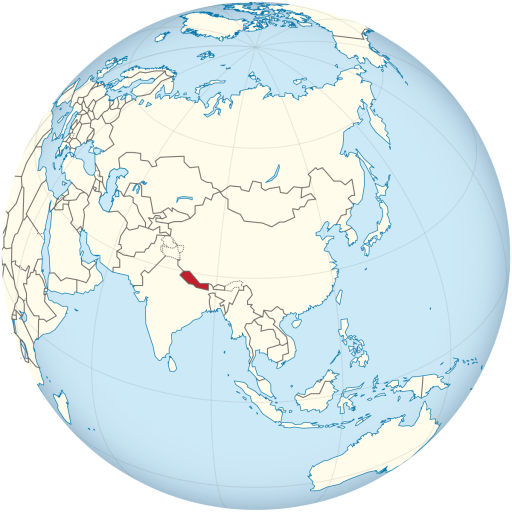
Nepal just went through its biggest youth-led protests in decades. It started when a government ban came into effect on September 4 that would block (or order to block) about 26 social media platforms. The official explanation was that the platforms hadn't followed new registration rules. But for young Nepalis, the timing was too obvious. Online spaces had been filling with posts about corruption, nepotism, and the unchecked privilege of political elites. While the sons and daughters of politicians flaunted luxury lifestyles, ordinary people were left with shrinking opportunities. The ban looked less like regulation and more like an attempt to silence criticism.
The anger spilled into the streets. Tens of thousands, mostly Gen Z, took over Kathmandu and then cities across the country. The Kathmandu Post called it a "Gen Z uprising." The state met the protests with force. Tear gas and water cannons at first, then rubber bullets, and eventually live rounds. Curfews were imposed, internet cutoffs rolled through neighborhoods, and clashes left government buildings in flames: Parliament, the Supreme Court, administrative offices, even private homes of ministers. By the government's own count, at least 72 people were killed and more than 1,300 injured. Civil society groups suspect the toll is higher. Thousands were arrested, though no official figures exist.
The political fallout was immediate. Prime Minister K. P. Sharma Oli resigned, parliament was dissolved, and an interim government was sworn in, led by Sushila Karki, who is also Nepal's first-ever female prime minister and a former chief justice. Her administration promised cash relief for victims' families, free medical care for the injured, and declared the dead as "Gen Z martyrs." A national day of mourning was set for September 17. Plans were announced for a judicial commission to investigate the violence and even for a "Gen Z Awakening Memorial Park."
But the big questions remain: Can a commission handpicked by the state deliver accountability? Will promises of relief actually reach families outside Kathmandu, where hospitals are underfunded and far away? And can/will a memorial park heal the anger of a generation that is demanding structural change,...
Please log in or subscribe for free to continue reading this issue.
We could use your help to make this issue better. Take a look at the requests below and consider contributing:
- Submit a piece of artwork for this issue
- Submit a news, academic or other type of link to offer additional context to this issue
- Suggest a related topic or source for future issues
- Fix a typo, grammatical mistake or inaccuracy
Below you'll find some of the sources used for this issue. Only sources that support "media embedding" are included.
-
South Sudanese authorities have arrested at least 22 political and military personnel in the wake of violent clashes that started in mid-February 2025 between government and armed groups in Upper Nile.
-
The roads leading to Riek Machar's house are blocked by tanks and soldiers, amid fears of renewed fighting.
-
Families of deceased will receive Rs1.5 million each. A national day of mourning on September 17.
-
Grid failure follows string of nationwide blackouts that plunged antiquated power system into near-total disarray
-
Africa’s top public health agency said Thursday that suspected Ebola cases in Congo’s southern Kasai province have more than doubled since last week.
-
A government official in Haiti says dozens of people have been killed in a fishing village north of the capital in the latest massacre carried out by powerful gangs in the troubled Caribbean country.
-
The UAE, Saudi Arabia and Qatar are making geoeconomic inroads into sub-Saharan Africa, particularly in energy and climate. This could affect Europe’s African…
-
ARISE IIP completes one of the largest private infrastructure transactions in Africa and welcomes Vision Invest as a new shareholderARISE IIP is pleased to announce the successful completion of a landmark USD 700 million capital raise, welcoming Vision Invest, a leading Saudi Arabian infrastructure investor and developer, into its shareholder base.
-
Saudi Arabia says it will supply Syria with 1.65 million barrels of crude to help the country rebuild its economy and infrastructure after a nearly 14-year civil war.
-
Turkish Interior Minister Ali Yerlikaya says police have arrested 161 suspected members of the Islamic State group over the last week.
-
The Supreme Court ruling is yet another blow to the influential Shinawatra political dynasty.
-
A court in Johannesburg has sentenced seven Chinese nationals to terms of 20 years in prison each for trafficking people from Malawi and forcing them to work at a factory in South Africa.
-
Sri Lanka's lawmakers have voted to abolish perks for former presidents. The decision follows public protests demanding the change.
-
Wind and solar power generated more than a third of Brazil’s electricity in August. This marks the first time these renewable sources have crossed that threshold, according to government data analyzed by energy think tank Ember.
-
A Hong Kong judge has ruled in favor of a lesbian couple’s parental recognition of their son born through reciprocal in vitro fertilization in a landmark case.
-
Named Diella, the new minister will help Albania "leapfrog" bigger, more advanced countries, says Edi Rama.
Each week, What Happened Last Week curates news and perspectives from Asia, Africa, and the Americas. The newsletter is written by Sham Jaff and focuses on stories that rarely receive sustained attention in Western media.
Read the free edition every week. VIP subscribers receive additional stories, recommendations on what to watch, read and listen, and more.