

This issue is about leftist failure in Bolivia and the redevelopment plan of Asia's largest informal settlement, the Dharavi neighborhood in Mumbai, India. The news from Bolivia has been especially disappointing from a leftist point of view for a while now. Not only did the socialist party that's been in power for around 20 years lose almost their entire legal weight in last week's election, its leadership is so split that you're left wondering just how long it'll take for them to recover. I was called a "jackwagon" last week for asking what was missing from Kamala Harris' campaign (not saying that her politics lean leftist) that kept so many people from thinking it was worth voting for (even if the alternative was way worse). I think campaign strategies matter, and an honest conversation about failures are more constructive than none.
India's Dharavi is a different story, one about "Slumdog Millionaires" and prime real estate at the cost of the possible forced displacement of a lot of people. Here, the "jackwagon" is someone else, and most likely has a lot more money than I do (his name is Gautam Adani, cough).
Other than that, this issue is also about Rihanna's knowledge of Africa (when she was 17), Russia's largest far-right group, an old Egyptian leftists' anthem, and so much more.
Bye bye, leftist politics in Bolivia
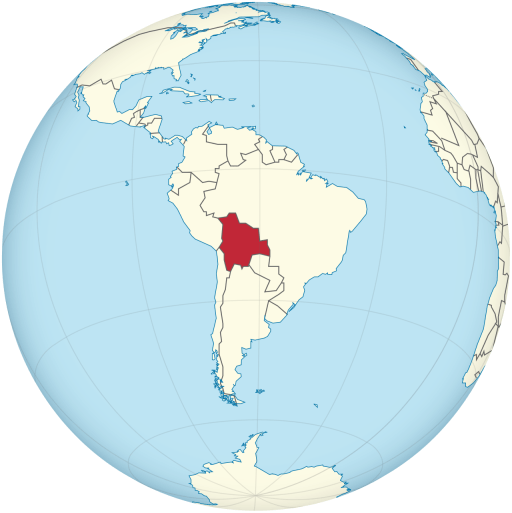
What happened:
Bolivia just voted the leftist MAS party out of the presidency after almost 20 years. With 95% counted, Senator Rodrigo Paz Pereira (a longtime politician, son of a former president, seen as a pragmatic moderate) of the Christian Democratic Party (a centrist party, not new) leads the first round (yes, Bolivia uses two rounds if no one wins over 50%) with about 32%, followed by former president (2001--2002) Jorge "Tuto" Quiroga of the conservative Libre alliance at roughly 27%. They head to a runoff on October 19 (yes, all voters have to return to the polls).
MAS's official candidate, Eduardo del Castillo, took about 3% (he was little-known nationally, and the leftist vote was all over the place and nowhere).
As a result, in Congress, MAS collapses to one deputy (which means almost no legislative weight, no ability to block or shape major laws) and no senators.
Why this matters:
Labels don't win elections. Strategy does. Two decades in power ended the moment MAS stopped persuading people outside its base.
Tell me more:
Heading to runoff are Rodrigo Paz Pereira and Jorge "Tuto" Quiroga. Here are some info snacks about these two gentlemen:
- Rodrigo Paz Pereira, 55, a Virgo moderate with a surprise breakout. Rodrigo Paz is the son of former president Jaime Paz Zamora. He's been mayor of Tarija (gas-rich) and a senator. He appeals to younger urban voters tired of Morales-era polarization and is seen as an alternative to the more radical right.
- Jorge "Tuto" Quiroga, 65, a Taurus hard-right conservative (who reminds me of Jeb Bush: well-educated, businesses love him, predictable and elite). Tuto Quiroga briefly took over the presidency after Hugo Banzer died in office in 2001. He is often labeled 'representing the most radical wing of the right' by outlets like El País. In the runoff, however, Rodrigo Paz most likely has the edge.
What are Rodrigo Paz's ideas?
Basically, he's offering change without extremes: not radical left, not far-right, but centrist reform. Rodrigo Paz is running on constitutional reform that would abolish presidential reelection (a major issue because Evo Morales pushed for multiple reelections), as well as a decentralization push (important because many regions feel ignored by the central government and want more control over resources) and fiscal tightening (important because state coffers are nearly empty and inflation is high). He has floated a "50--50" split of public funds between central and regional levels and closing loss-making state firms (popular because people are frustrated with waste and corruption in bloated state companies). He also talks about going back to the 80s style of "pacted democracy," meaning negotiated coalitions in Congress.
Good to know:
Back then, this "pacted democracy" concept helped Morales and MAS to power in 2005. Critics saw a closed club that ignored Indigenous and poorer constituencies.
BTW, about Evo Morales:
The country's first Indigenous president (around half the population is Indigenous) is apparently no saint. Morales was barred from running this year after a tribunal ruling on term limits. He faces separate criminal cases related to alleged statutory rape of a 15-year-old girl (this is not the first allegation); judges issued arrest orders in January 2025. He denies the allegations and calls them politically motivated.
How did the MAS lose so phenomenally?
- The economy: 12-month inflation hit 24.86% in July, meaning people's salaries buy less each month (for comparison, the EU thinks only 2% is OK). U.S. dollar scarcity (banks and exchanges have run out of U.S. dollars, which people and businesses need for imports of everyday goods and savings), and fuel shortages (the government doesn't have enough U.S. dollars to import fuel, so stations run dry) bit hard. Btw, whoever wins the runoff in October will inherit this mess.
- The ballot: Morales urged supporters to invalidate ballots (by deliberately marking them incorrectly, leaving them blank, or writing slogans). Null votes were around 19%, unusually high in a country with compulsory voting.
- The left was split: Luis Arce (the sitting president since 2020, and formerly Morales' finance minister) didn't run. His approval ratings had collapsed under 20% last year because of the economic crisis, and he had fallen out with Morales (over who controls MAS and who runs in 2025), so he lacked backing even inside MAS. Morales was disqualified, MAS nominated del Castillo who landed near 3%, while left ally-turned-rival Andrónico Rodríguez (young ex-MAS leader, once seen as Morales's heir, now independent) drew about 8%. On X/Twitter, he was like, "Blinded by power, they waged a relentless battle against us, as if we were mortal enemies, forgetting their true political adversaries, or rather, paving the way for them." (Fair, tbh.)
Zoom out:
This is part of a wider regional hate-parade on leftist projects and ideas, after Argentina's 2023 switch-up and elsewhere. Expect market-friendly policy pressure in Bolivia next year regardless of who wins the runoff.
At least 700,000 people live in Dharavi, Asia's largest informal settlement. The country wants to re-develop it. But for whom?
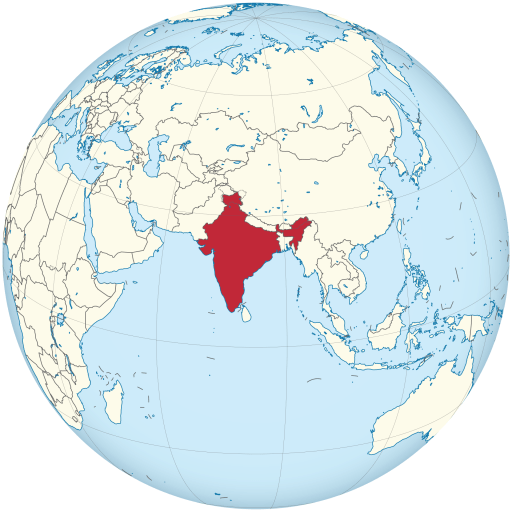
What happened:
The Dharavi neighborhood in central Mumbai is Asia's largest informal settlement (about the size of 350 football fields). Between 700,000 and 1.2 million people live and work here. Now it's facing the biggest change in its history: redevelopment by the government and the Adani Group, one of India's most powerful conglomerates.
Why this matters:
Dharavi is literally a front-row...
Please log in or subscribe for free to continue reading this issue.
We could use your help to make this issue better. Take a look at the requests below and consider contributing:
- Submit a piece of artwork for this issue
- Submit a news, academic or other type of link to offer additional context to this issue
- Suggest a related topic or source for future issues
- Fix a typo, grammatical mistake or inaccuracy
Below you'll find some of the sources used for this issue. Only sources that support "media embedding" are included.
-
El hijo del expresidente Paz Zamora, de centroderecha, dio la sorpresa en la primera vuelta y lideró la votación frente al representante de la derecha más radical
-
El hijo del expresidente Paz Zamora, de centroderecha, dio la sorpresa en la primera vuelta y lideró la votación frente al representante de la derecha más radical
-
The Evo Morales case: When sexual violence against women gets stuck in the political mud | International | EL PAÍS EnglishRecent accusations of sexual abuse levied against the former president of Bolivia point to a pact of silence in service of the country’s political elite and a troubling history with the legal status of statutory rape
-
Las acusaciones contra Evo Morales y el sorprendente caso de Noemí
-
The European Central Bank (ECB) is the central bank of the European Union countries which have adopted the euro. Our main task is to maintain price stability in the euro area and so preserve the purchasing power of the single currency.
-
Divided Opinions After Failed Coup Underscore Bolivia’s Political Fragility | Royal United Services InstituteWhile supporters of Bolivia’s president have rallied behind him after an apparent coup attempt, others have dismissed it as a stunt designed to bolster his popularity ahead of forthcoming elections.
-
The struggle between President Arce and Evo Morales for control of the MAS party is consuming national politics and jeopardizing the economy.
-
Last month, Maharashtra Chief Minister Devendra Fadnavis approved the Dharavi Redevelopment Master Plan, a colossal project with an investment of a whopping Rs 95,790 crore.
-
The Dharavi neighborhood in Mumbai — Asia’s largest informal settlement — is located on prime real estate. Many people who live there now are under pressure to relocate to an area near a toxic landfill.
-
Sahapedia2.0
-
At least half a million residents in Gaza City and its surrounding areas are officially living under famine, according to a hunger monitoring group that the United Nations and international aid groups rely on for assessing global crises.
-
At least five people have been killed and 18 others wounded in Sulaymaniyah, in northern Iraq, following the arrest of a prominent Kurdish political figure.
-
Locals and Alevi groups view the opening of the prayer room as part of assimilation policies.
-
Kurdish Studies Association Co-Chair Remziye Alparslan and Kurdish linguist Zana Farqînî criticize the ban on speaking Kurdish at the committee formed for the peace process, stressing that issues related to the mother tongue lie at the core of the Kurdish question.
-
Nigerian troops have killed more than 35 ISWAP terrorists in a coordinated operation around Kumshe, a border community in Borno state.
-
Three major Guinean political parties, including Alpha Conde's, suspended for three months before the constitutional referendum. Protests planned amidst concerns over junta's power.
-
The United Nations high commissioner for human rights has condemned “brutal” attacks by Rapid Support Forces in Sudan’s Darfur region.
-
Kabila, 53, went on trial in his absence in July for his alleged support for Rwanda-backed M23 militants. Kabila's party called the proceedings 'a political trial.'
-
A Ugandan official said the country would prefer to receive people from African nationalities under the agreement.
-
A long wait for justice comes to an end in Kenya. The UK government has agreed to pay £2.9 million, or $4 million, in compensation to over 7,000 residents in Laikipia, after a wildfire sparked by a British military exercise devastated the region in 2021.
Each week, What Happened Last Week curates news and perspectives from Asia, Africa, and the Americas. The newsletter is written by Sham Jaff and focuses on stories that rarely receive sustained attention in Western media.
Read the free edition every week. VIP subscribers receive additional stories, recommendations on what to watch, read and listen, and more.