

I'm still waiting on my interview partner, but I'm hopeful it'll come through soon. I'd teased before that I wanted to focus on innovations in Asia, Africa, and the Americas that are happening regardless of U.S. aid cuts. I think I've found the perfect match for that. Just a little more patience.
This issue is taking you to Niger and Peru. A piece of Mars landed in Niger, then landed again at Sotheby's in New York, US. Niger wants it back. And in Peru, the government just granted amnesty for war crimes and basically pretended that international law does not exist (yet).
Also inside: France's half-apology to Cameroon, Bad Bunny's boost to Puerto Rico's economy, a push to replace the Mercator map, deadly flash floods in Pakistan and India, China poisoning Zambia's Kafue River, what life looks like for women and girls in the Sahel, elephants versus their sworn enemy (bees), Kenyan country music fans, and much more.
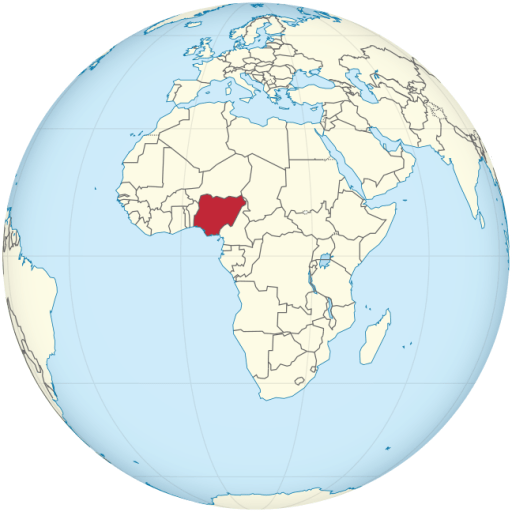
A meteorite landed in Niger and was sold off for US$5 million in New York
Refresher:
The largest piece of Mars ever found on Earth was sold for more than US$5 million at a New York auction last month. It was a world record. The 25-kilogram meteorite was unearthed in the Sahara Desert in Niger.
What happened last week:
Now, Niger says, 'it was smuggled out of the country' and have launched an investigation.
Tell me more:
The rock has a name, NWA 16788, and a sad background story (I'm projecting, I know). It was blown off the surface of Mars by a massive asteroid strike and traveled 225 million kilometers to Earth. In November 2023, it was discovered in the Sahara somewhere northwestern in Niger by a meteorite hunter (the auction house didn't disclose his identity nor that of the buyer). According to the Heritage academic journal, the rock was sold to an international dealer before it ended up in a private galley in Italy. A team of scientists from the University of Florence examined the rock last year to learn more about its structure and where it came from before falling to Earth, the publication said. The meteorite was also briefly on display in Rome before it was next seen in public in New York last month during the auction.
Did you know:
that meteorite hunters (yes, that job title exists) like to 'hunt' in the Sahara? Though meteorites can fall anywhere on Earth, the Sahara has become the spot for their discovery; mostly because they're well-preserved there. Hunters often search for space rocks that they then sell to collectors or scientists.
So, why is Niger investigating?
Basically, they're like, 'um, pretty sure this was illegal. How did it even get out of the country so easily? You must have fooled us.' The auction house said in a statement sent to The Associated Press that the meteorite was exported from Niger and transported in line with all relevant international procedures.
What does international law say?
According to Patty Gerstenblith, a cultural heritage lawyer, 'yes, meteorites can qualify as cultural property.' However, Gerstenblith said Niger needs to be able to prove it owned the meteorite and that it was stolen. "If the meteorite was not stolen and if it was properly declared upon import into the U.S., then it would not seem that Niger can recover the meteorite," she told the AP. Paul Sereno disagrees. Sereno, a paleontologist who has spent years uncovering dinosaur fossils in Niger's Sahara, is campaigning to return the country's cultural and natural heritage, including meteorites. "When you have laws that clearly say rare minerals like meteorites are cultural artifacts, you cannot simply come in and take something that is so unique and valuable to a country," he told the AP. "We're just not in the colonial era anymore," he added.
Some countries, like Morocco, one of the leading sources of meteorites on the international market, require restitution if the objects are discovered on their territory. But enforcement has been challenging due to the vast desert areas and informal trading networks.
Why this matters:
I wanted to tell this story to remind us all: even outer space isn't outside capitalism. A meteorite falls from the sky, but instead of being treated as a shared natural wonder, it's bought, sold, and speculated on like any other commodity.
Peru granted amnesty for war crimes
Refresher:
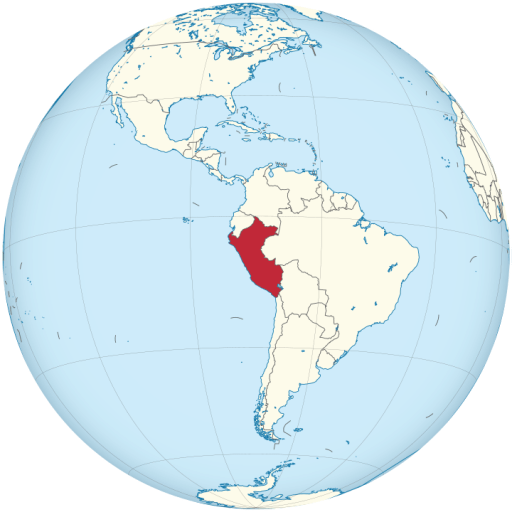
Between 1980 and 2000, almost 70,000 people were killed and 20,000 went missing. Members of The Shining Path Maoist guerilla group were responsible for about 54% of the deaths, and the military was responsible for most of the rest. The Shining Path wanted to overthrow the government and replace it with a communist state based on Mao Zedong's ideas. They believed violence was the only way to change Peru's deeply unequal society. The government, in turn, launched a counterinsurgency campaign to defeat them. This meant both the army and police were deployed heavily in rural areas, especially Indigenous communities in the Andes. Both sides committed very serious crimes.
What happened:
Last week, Peru's government gave a blanket amnesty to all military and police officers accused of human rights crimes during that period. Families of victims and human rights groups are furious.
Why this matters:
Under international law, crimes like torture, forced disappearance, and extrajudicial killings are considered war crimes; crimes so serious that no government is allowed to simply erase them with an amnesty or a time limit. The UN, the Inter-American Court of Human Rights, and...
Please log in or subscribe for free to continue reading this issue.
We could use your help to make this issue better. Take a look at the requests below and consider contributing:
- Submit a piece of artwork for this issue
- Submit a news, academic or other type of link to offer additional context to this issue
- Suggest a related topic or source for future issues
- Fix a typo, grammatical mistake or inaccuracy
Below you'll find some of the sources used for this issue. Only sources that support "media embedding" are included.
-
A 54-pound meteorite from Mars has sold for over $5 million at a New York auction, setting a world record.
-
Families of victims and advocacy groups condemn law that covers internal armed conflict from 1980 to 2000
-
Peruvian President Dina Boluarte has signed into law an amnesty bill that grants impunity for serious crimes committed during the country’s internal armed conflict.
-
Dina Boluarte rejects criticism of law giving immunity to hundreds accused of committing atrocities during Maoist insurgency.
-
The 85-year-old was pictured leaving prison in Lima where he was serving a 25-year sentence for human rights abuses
-
A new study warns that rising sea levels could threaten Easter Island’s iconic moai statues by the end of the century.
-
Health officials in Sudan have launched a 10-day cholera vaccination campaign in the capital, Khartoum, to curb what humanitarians call a rapidly spreading outbreak.
-
Zambia's government says the water is safe to drink after the US embassy ordered its staff to withdraw.
-
A U.N.-backed investigator says his team has turned up significant evidence of “systemic torture” in Myanmar’s detention centers, including electric shocks, strangulations, gang rape and burning of sexual body parts.
-
Officials say flash floods triggered by torrential rains have killed over 280 people in India and Pakistan and left scores of others missing.
-
Brazil's Supreme Court has announced that it will deliver a verdict and sentence in the coup trial against former Brazilian President Jair Bolsonaro early next month.
-
The Brazilian government has unveiled a plan to support local exporters affected by U.S. tariffs. President Luiz Inácio Lula da Silva announced on Wednesday a credit lifeline of $5.5 billion as part of the "Sovereign Brazil" plan.
-
South Korean court orders arrest of Kim Keon Hee, the wife of jailed former President Yoon | AP NewsThe wife of South Korea’s jailed former President Yoon Suk Yeol has been arrested as investigators seek to charge her over various suspected crimes, including bribery, stock manipulation and meddling in the selection of a candidate.
-
The human ancestor fossil known as Lucy has left Ethiopia for display in a European museum. Lucy’s skeleton, which is 40% complete, left Ethiopia on Thursday and will be displayed at the Czech National Museum in Prague for approximately two months.
-
Australia has launched its largest military exercises with Philippine forces, involving over 3,600 personnel in live-fire drills and a beach assault near the South China Sea.
-
A Ugandan judge refused to grant bail on Friday to veteran opposition figure Kizza Besigye, who has been in jail for nearly nine months on treason charges.
-
Mexico’s statistics agency says more than 8.3 million people in Mexico were pulled out of poverty between 2022 and 2024.
-
Thousands of tourists are descending on Puerto Rico this summer for one of Bad Bunny’s concerts as part of the rapper's residency that has boosted the U.S. territory’s fragile economy.
-
Emmanuel Macron writes to Cameroonian president with findings of joint commission on country’s colonial past
-
President Donald Trump extended a trade truce with China for another 90 days, at least delaying once again a dangerous showdown between the world’s two biggest economies.
-
Three women in Gambia have been charged over the death of a one-month-old girl who underwent female genital mutilation.
-
Farmers in Kenya face challenges with elephants raiding crops and sometimes causing harm. Richard Shika, a local farmer, has had close calls with these animals.
-
With participation from the family of Roberto Clemente, the documentary Clemente will be released in theaters this fall.
-
Pilot reportedly removed all his clothes and walked into reception area of Cape Verde hotel after drinking session
Each week, What Happened Last Week curates news and perspectives from Asia, Africa, and the Americas. The newsletter is written by Sham Jaff and focuses on stories that rarely receive sustained attention in Western media.
Read the free edition every week. VIP subscribers receive additional stories, recommendations on what to watch, read and listen, and more.