

I've been reading Vincent Bevins' "If We Burn" and just hit the chapter on Brazil's 2013 protests. They started over a 20-cent hike in bus and metro fares. The protests were led by the Movimento Passe Livre, a group pushing for free public transport as a social right. That tiny fare increase tipped years of frustration into one of the biggest protest movements in recent Brazilian history. The ending isn't pretty (no spoilers), but it made me think about our 58-euro Deutschlandticket. Imagine a Germany where public transport was free. Luxembourg already does it, for everyone, not just residents. It's still the only country to do so.
Other than that, this issue is about hot commodities: gold and AI. Allow me to take you to Ghana and the Gulf. Last week, two ministers (and six other people) died in a helicopter crash. They were on their way to an event about illegal mining in the country, and I took the chance to dig into that: what's actually being mined, and who's making money from it? The second focus is on AI in the Gulf, and why it makes zero sense that some of the driest, hottest countries on Earth are rushing to build huge data centers.
Plus, Liberian kickball, an Iraqi cookbook from a thousand years ago, what it means to be stateless, a memoir by a survivor of the 2002 Gujarat riots in India (where more than 1,000 people died), and the rumors of a doppelgänger of the late Nigerian president.
A helicopter crashed in Ghana, killing two ministers on their way to an event about illegal mining. So, let's talk about that
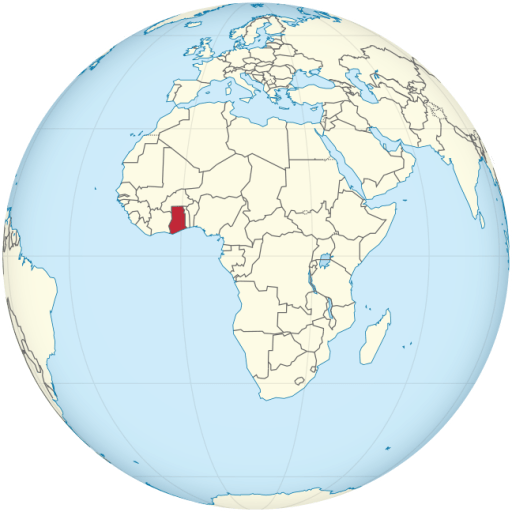
What happened:
Last week, a military helicopter crashed in the Ashanti region, killing eight people, including two high-profile government ministers. Among the victims were Edward Omane Boamah (Minister of Defence) and Ibrahim Murtala Mohammed (Minister of Environment, Science, and Technology). They were flying from Accra to Obuasi.
Why this matters:
Most outlets only reported the crash (after all, this is one of Ghana's worst air disasters in over a decade, after major incidents in 2014 and 2012). However, the context matters, too. The helicopter was headed to an anti-illegal mining event, so I'm taking this as an opportunity to talk about exactly that, too. Ghana is a top gold producer and the second-largest cocoa producer. Illegal mining is huge and destructive, and it touches security, food, water, and politics.
Tell me more:
Let's start with the crash. President John Mahama was originally supposed to go, but sent the ministers instead. The aircraft lost contact and crashed into a forested hillside. State media described it as a "national tragedy," with flags flying at half-mast and three days of national mourning declared throughout the country. Vice-President Jane Naana Opoku-Agyemang and other top officials personally visited the families of the victims to offer condolences. The government and parliament expressed their sorrow, while the ruling NDC mourned the loss of key members.
Will there be an investigation?
Yes. Both the Armed Forces and the Fire Service are investigating. The flight recorder (the "black box") was recovered a day after the crash, but the cause remains unclear. Witnesses said the helicopter was flying unusually low in bad weather just before the crash. Now, let's talk mining.
What should I know about mining in Ghana?
Illegal mining (locals call it galamsey) is a massive problem that touches almost every part of Ghana. Unlike the bigger mining companies (like Newmont or Gold Fields) that operate under government rules, galamsey is uncontrolled: small groups dig for gold, often using toxic chemicals like mercury and cyanide when they're washing the gold. Then these substances run off to rivers, pollute them so much that they leave water undrinkable and land unusable. Rivers like the Pra are so polluted that an artist, Israel Derrick Apeti, literally painted with the water to show the "ecocide." Communities have lost thousands of hectares of land (more than the size of many European cities). Important crops, including Ghana's famed cocoa and rice, are also threatened. Experts warn that mercury can stay in water for centuries and move up the food chain. Protesters and musicians have raised their voices, making galamsey a national issue.
- For example, at The Tidal Rave Concert in Accra, Black Sherif (from Konongo, a town badly hit by galamsey) stopped mid-performance to show a video of the destruction.
Btw:
"Galamsey" is a Ghanaian slang that comes from "gather them and sell." It used to describe the literal (illegal) gold diggers (with their bare hands, no heavy equipment), who would process it by hand, and sell the gold. Over time, galamsey became short for all kinds of informal and illegal gold mining in Ghana.
Why has it gotten so bad?
In the past, miners used simple hand tools to search for gold, but now, foreign business interests (especially from China) have made the industry more "sophisticated" and destructive. There are stories of farmers being bullied off their land and forests cleared overnight.
What is the government doing?
A new mining law has indeed come into effect as of July / August 2025. The reforms are among the country's most significant in nearly two decades and reshape how mining licenses are issued, renewed, and enforced. Even so, with unemployment high and the global price of gold rising, thousands of young Ghanaians still see illegal mining as their best, or only, way to earn a living.
Where does the gold then go?
Maybe you've been paying attention to this, maybe not. On my TikTok FYP certainly, investing in gold has popped up (and I haven't been looking for it specifically). Naturally, the more interested people are in investing in gold, the higher the prices. And the higher the prices, the more people are digging for gold. The (illegal)...
Please log in or subscribe for free to continue reading this issue.
We could use your help to make this issue better. Take a look at the requests below and consider contributing:
- Submit a piece of artwork for this issue
- Submit a news, academic or other type of link to offer additional context to this issue
- Suggest a related topic or source for future issues
- Fix a typo, grammatical mistake or inaccuracy
Below you'll find some of the sources used for this issue. Only sources that support "media embedding" are included.
-
Enjoy the convenience of free transport in Luxembourg with free bus, tram and train services. Learn how to get around this picturesque country using reliable and free public transport.
-
The authorities have not confirmed the cause of the crash, described as a "national tragedy".
-
Since taking office in 2017, Ghanaian President Nana Akufo-Addo has promised to rid the country of "galamsey," the name given by locals to these illegal mines where deadly accidents frequently occur.
-
The Chief Executive (EC) of the Ghana Cocoa Board, Joseph Boahen Aidoo, has disclosed that illegal mining (Galamsey) is causing a decline in Cocoa Production with activities primarily concentrated in swampy areas, critical for cocoa cultivation. “Yes, it has a toll on the industry, cocoa doesn’t like too much water, so the cocoa cannot thrive […]
-
Mohammed Ismail Sherif, commonly known as Black Sherif, has become the latest sensation to condemn the negative impacts illegal mining (galamsey) is having on our water bodies and forest reserves. Read more.
-
-
People are protesting the practice known as ‘galamsey’
-
OpenAI, Google, and Microsoft are expanding in the Gulf, where AI data centers could use 426B liters of water a year by 2030.
-
The Study Of Data Center Water Consumption In The Middle East And Africa is expected to reach 119.34 billion liters in 2025 and grow at a CAGR of 29% to reach 426.31 billion liters by 2030. Equinix, Inc., Digital Realty Trust Inc., MEEZA, Etisalat and Africa Data Centres are the major companies operating in this market.
-
New data on WRI's Aqueduct platform ranks the world's most water-stressed countries. One-quarter of the global population regularly use up their entire water supply.
-
Haiti’s government says it is implementing a three-month state of emergency in the country’s central region as gang violence surges.
-
UN rights chief Volker Turk says the violence resulted in ‘one of the largest documented death tolls’ despite a truce.
-
BUJUMBURA, Burundi — President Évariste Ndayishimiye on Tuesday announced a sweeping cabinet reshuffle, appointing a new prime minister and overhauling several key ministries. Nestor Ntahontuye has been named the new Prime Minister, replacing Gervais Ndirakobuca, who had served in the role since 2022. Ndirakobuca was recently elected senator and has since assumed the position of
-
A reward for information leading to the capture of Maduro, who the US accuses of drug trafficking, has been doubled.
-
Prabowo joins Singapore’s national day parade - Asia & Pacific - The Jakarta Post
-
Nagasaki has marked the 80th anniversary of the U.S. atomic attack on the southern city in Japan. Survivors are determined to make their hometown the last place on Earth hit by a nuclear bomb.
-
“When I was fighting for my South African citizenship, the department told me, ‘There's nothing we can do for you. To us, basically, you don't even exist.’”
-
Kickball is beloved among women in Liberia, where many sporting activities are male-dominated. The sport in Liberia has the rules of baseball but there are no bats, and players kick a soccer ball instead of the larger, lightweight ball used in other places.
Each week, What Happened Last Week curates news and perspectives from Asia, Africa, and the Americas. The newsletter is written by Sham Jaff and focuses on stories that rarely receive sustained attention in Western media.
Read the free edition every week. VIP subscribers receive additional stories, recommendations on what to watch, read and listen, and more.