

I finished reading "In the Shadow of a Saint" by Ken Wiwa (the son of Ogoni environmental activist Saro Ken-Wiwa). In the final chapters, he sits down with Steve Biko's son and Nelson Mandela's daughter and asks: what does it mean to have a father who was politically powerful, but emotionally absent? I cannot recommend the book enough, not only for what it teaches about the Ogoni struggle against Shell and the Nigerian government, but for what it says about fathers and sons, legacy, and the weight of being someone's unfinished sentence.
In the beginning of the year, I picked up Vincent Bevins' "If We Burn", which I enjoyed, but dear goddess, it felt too dense at the time to finish, so I set it aside. Now that I'm finally back to enjoying reading, I've decided to revisit it again. Last morning, for example, I learned about where the term "Arab Spring" comes from, and I saved it in case I need to include it in a book one day (hint hint).
This week, I'm talking about famine in Sudan, banana execs behind bars in Colombia, and what justice looks like (or doesn't). Also in here: the state of the Chinese military, what Yezidis want 11 years after the Sinjar genocide, India's new chess prodigy, and an art scene in Côte d'Ivoire you should absolutely know about, and so much more.
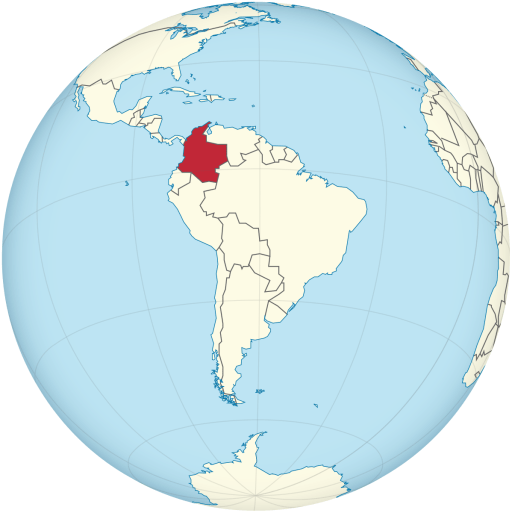
It's bananas! Colombia sentenced former Chiquita execs to prison for funding far-right death squads
What happened:
A Colombian court sentenced seven former execs of the multinational banana company Chiquita Brands to more than 11 years in prison and a US$3.4 million fine for financing far-right paramilitary groups during the country's armed conflict.
Why this matters:
This is the first time in Colombia that individual executives have been convicted in national court for financing paramilitary violence. Plus, they each got jail time. Most corporate cases end in fines, damages, and settlements, meaning the company is held liable and is therefore paying up (like in the case of Ken Saro-Wiwa v. Shell in 2009; Shell settled for $US15.5 million).
Tell me more:
This case was heard under a special part that's part of Colombia's Justice and Peace system, that was set up in 2005 to go after paramilitary crimes and hold both individuals and companies accountable. Its goal? Justice for victims, truth about what happened, and reparations for the damage done. That includes digging into whether corporations like Chiquita helped fuel the violence.
Here's what the court found:
- Details: Between 1997 and 2004, Chiquita's Colombian subsidiary Banadex made over 100 payments to a paramilitary unit called Bloque Bananero, part of the far-right AUC (United Self-Defense Forces of Colombia). Prosecutors named Raúl Hasbún, known by the alias "Pedro Bonito," as the key go-between linking the company and the paramilitary group.
- Chiquita's defense? They said they were under threat and had no choice. But the court wasn't buying it. It ruled that the payments were made knowingly, not under pressure (which they always claimed), and that they were systematic, planned, and deliberate.
- The government's take: Colombia's Labor Minister Antonio Sanguino called the verdict "exemplary" and said it sends a strong message: when business and violence mix, someone has to answer for it. His words: "No company is above the law."
Context:
This isn't Chiquita's first time in the hot seat. The company's roots go back to United Fruit Company (if you've read up on imperialism, well, they are the original poster child for corporate imperialism in the Americas). Historians say United Fruit played a role in the 1954 U.S.-backed coup in Guatemala and was linked to the 1928 massacre of banana workers in Ciénaga, Colombia on plantations owned by the United Fruit Company, where up to 1,000 people were reportedly killed.
The bigger picture:
Colombia's armed conflict was a decades-long war between leftist guerrilla groups, far-right paramilitaries, and the state. Guerrillas said they were fighting for land and equality. Paramilitaries claimed to protect communities but often worked with the army and drug traffickers, and targeted civilians. The result: more than 9.5 million registered victims, according to the government's Unidad de Víctimas. At least 450,000 people were killed between 1985 and 2018, according to the country's Truth Commission, with over 120,000 forcibly disappeared. About 80% of those killed were civilians (mostly farmers, Indigenous communities, Afro-Colombians, and Raizal and Palenquero peoples); and most responsible for these deaths were paramilitary groups (45%), guerrillas (27%), state agents (12%). The whole thing is still sort of a fresh wound. If you're interested in further reading, in May, there was a NPR story about a government task force that dug up mass graves of executed civilians, and the task force was getting some hands-on help from the perpetrators themselves (to avoid prison time).
Is Chiquita the only company with ties to paramilitaries in Colombia?
Several other international companies have been accused of ties to paramilitaries in Colombia.
- Just this month, prosecutors seized two Bogotá offices of Perenco, an Anglo-French oil company accused of working with paramilitaries in the Casanare region.
- And since 2023, execs from Drummond, a U.S. mining company, have been on trial for alleged links to paramilitary killings in the department of Cesar.
What now?
Victims' families want more. They're calling for broader investigations into how deep the banana industry's ties with armed groups really go. As for Chiquita, it's still unclear if the company will appeal the July 23 ruling.
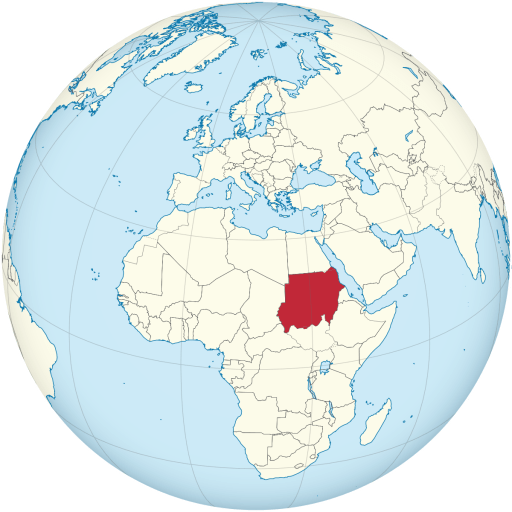
13 children died of hunger last month in one camp in Sudan, and it's getting worse. I talked to Sudan Doctors Network about it
Refresher:
Sudan has been in a civil war since April 2023, when fighting broke out between the army and a rival paramilitary group called the Rapid Support Forces (RSF). What started as a power struggle between generals has turned into a war that's destroyed cities, shut down supply routes, and pushed over 13 million people from their homes. It is the largest displacement crisis in the world right now. The U.N. and human rights groups say the RSF and allied militias have committed mass killings, gang rapes, and targeted violence against ethnic communities in Darfur (acts that likely amount to war crimes and crimes...
Please log in or subscribe for free to continue reading this issue.
We could use your help to make this issue better. Take a look at the requests below and consider contributing:
- Submit a piece of artwork for this issue
- Submit a news, academic or other type of link to offer additional context to this issue
- Suggest a related topic or source for future issues
- Fix a typo, grammatical mistake or inaccuracy
Below you'll find some of the sources used for this issue. Only sources that support "media embedding" are included.
-
A son's journey to understand his father's legacy -
-
Sué Gonzales Hauck offers a feminist perspective on the interplay of power dynamics between the state and corporations, focusing on the historical role of the United Fruit Company. By examining its connections to contemporary multinationals and state actors, the author underscores the corporation's pivotal role in shaping international legal history and the strategies employed to…
-
Colombia has been on the road to peace and reconciliation for several years. At each of the major stages in this long and challenging process, the country was always able to count on the support of the European Union (EU).
-
Commission calls for sweeping changes to Colombia’s drug policy as it presents final report into long-running conflict.
-
Colombia’s Truth Commission was established as a result of the 2016 Peace Accord between the Colombian Government and the FARC- EP. The Commission released their final report on 28 June 2022, this was the culmination of exhaustive research and interviews with nearly 24,000 people in Colombia and of exiles living abroad. The Commission is holding...
-
In Colombia, former soldiers accused of atrocities during the country's guerilla war are helping to locate and exhume remains of their civilian victims.
-
A doctors' group in Sudan says 13 children have died from malnutrition-related causes in a camp for displaced people as civil war rages.
-
Indian authorities have expelled hundreds of ethnic Bengali Muslims to Bangladesh in recent weeks without due process, claiming they are “illegal immigrants.
-
Bengali Muslim migrants have been repeatedly labelled as Rohingyas and/or Bangladeshis, therefore “illegal immigrants”, forced to flee, and ultimately deserted by their home state; left to live in fear of the domicile thousands of kilometres away.
-
Israel controls the flow of food into Gaza. It has calculated how many calories Palestinians need to stay alive. Its data shows only a fraction has been allowed in
-
Company to carry out more tests on its Santos basin find as it continues shift from renewables back to fossil fuels
-
Conservation scientists in South Africa are injecting rhino horns with radioactive isotopes. The doses are too weak to harm the animals, but strong enough to set off nuclear security system alarms at international border crossings.
-
On the 11th anniversary of the Yazidi genocide, spiritual leader Baba Sheikh demanded a special court for the perpetrators, reconstruction of Sinjar, and intensified efforts to find the 2,827 missing. He urged justice, compensation, and constitutional protection for Yazidis.
-
President Trump said he would pose an additional penalty on India for its trade relations with Russia, which Trump is trying to pressure over its war with Ukraine.
-
US smartphone shipments rose 1% in Q2 2025. Apple shifts production to India, Samsung grows 38%, Motorola expands; tariffs reshape supply chains.
-
Iraqi forces arrested Ajaj Ahmed Hardan, the "executioner" of Nugra Salman prison, accused of genocide and torture against Kurds during the Anfal campaign. His capture follows a six-month intelligence operation, ending decades on the run after he allegedly faked his death.
-
The 73-year-old is the first ex-president in Colombia's history to be convicted of a crime.
-
A collection of ancient gems linked to Buddha's remains has been repatriated to India after authorities slammed their planned auction by Sotheby’s in Hong Kong.
-
Play chess online for free on Chess.com with over 200 million members from around the world. Have fun playing with friends or challenging the computer!
-
After spending most of his life behind bars, Leonard Peltier now lives in a home on the Turtle Mountain Band of Chippewa reservation in North Dakota. He says he has no regrets but still harbors resentment over his imprisonment.
-
Hââbré is one word for scarification, the age-old practice of performing a superficial incision in a person’s skin
Each week, What Happened Last Week curates news and perspectives from Asia, Africa, and the Americas. The newsletter is written by Sham Jaff and focuses on stories that rarely receive sustained attention in Western media.
Read the free edition every week. VIP subscribers receive additional stories, recommendations on what to watch, read and listen, and more.