

Lately, I've been thinking about who gets platformed, and what actually changes people's minds. Mehdi Hasan's appearance on Jubilee with far-right extremists isn't it. Like Suchitra Vijayan and Taylor Lorenz said: it's not about debate. Jubilee relies on false balance. Sometimes I think debates can't even change minds, especially not in formats designed for spectacle.
That's why, in this issue, I'm choosing to platform a foreign reporter who was in Gaza himself. I spoke to journalist Afeef Nessouli, who entered Gaza in late March, just as Israel broke the ceasefire. He saw the famine up close.
As a journalist, I rely on first-hand accounts, the work of human rights organizations, and those documenting events from the ground. And the picture they present is clear: this famine is not caused by bad logistics. It's the result of deliberate Israeli policy.
That's no longer just the view of outside observers. This week, two leading Israeli human rights groups, B'Tselem and Physicians for Human Rights--Israel, called it a genocide. Their report points to starvation as a central method, not a side effect. They join many others, including Amnesty International, over 20 UN experts, and multiple governments across the world, who have either used the term or taken legal steps based on it. That language matters.
Inside the rest of the issue: a former president in DR Congo is on trial for treason, Lebanon's Ziad Rahbani, a story on a Tamil musical tradition for the haters, Liberia's plan to pay its people not to cut trees in the forest, and so much more.
I asked a reporter who was in Gaza: Is aid being used as a weapon?
What happened:
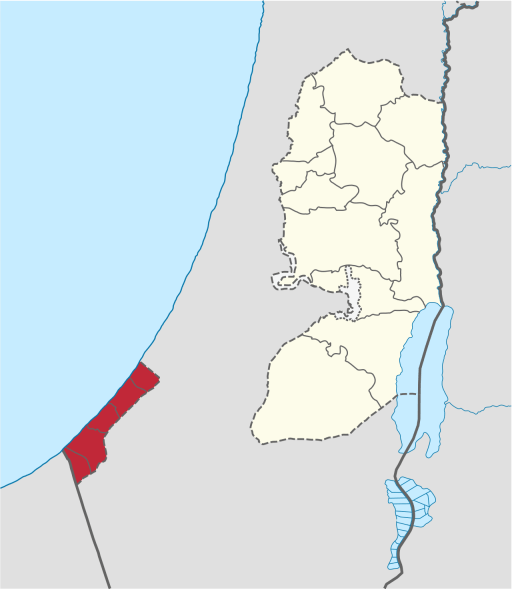
Few foreign journalists have been able to report from inside Gaza since October 2023. Afeef Nessouli was one of them. He entered the Strip in late March, just as Israel broke the ceasefire, and spent six weeks volunteering at a medical NGO and reporting during off-hours.
During that period, a new aid system was set up: the U.S. and Israel backed the formation of the Gaza Humanitarian Foundation (GHF), which operates just four distribution hubs under Israeli military oversight. Traditional aid agencies like UNRWA and WFP were blocked from operating; many donors had paused UNRWA funding earlier, though most have since resumed support (except for the U.S. and UK). GHF was set up as a militarized alternative, increasingly criticized by international organizations after over a thousand people were killed near its sites between late May and July 2025.
In the following interview, I ask Afeef what he witnessed on the ground.
Why this matters:
This is not an endorsement of any political actor. It's an attempt to understand what's going on. For readers in Germany and elsewhere, I invite you to sit with this testimony. Not as a provocation, but as evidence.
I posted the interview as a standalone post here:
https://gishty.com/interviews/interview-with-afeef-nessouli
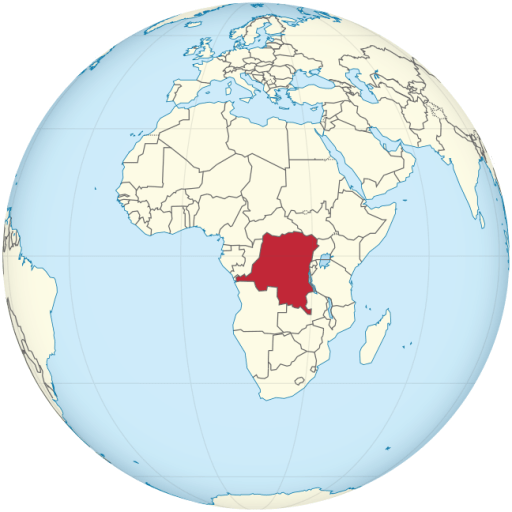
For the very first time, a former president is being put on trial in DR Congo
Refresher:
A ceasefire between M23 militants and the Congolese government was negotiated recently. However, fighting has continued.
What happened last week:
Former president Joseph Kabila is now on trial for treason at a military court in Kinshasa. Prosecutors accuse him of supporting armed rebellion and trying to remove current President Félix Tshisekedi from power.
Why this matters:
Apart from the fact that civilians in eastern DR Congo still face deadly violence and deserve real protection, this is the first time a former president is being put on trial. It sets a major precedent in a country where former heads of state were, until now, untouchable. What happens next will shape how power and accountability work in DR Congo for years to come.
Tell me more:
The charges against him are serious: Torture, taking part in an armed rebellion, and seizing control of the city of Goma by force. According to AFP, prosecutors say Kabila helped start the Congo River Alliance, a new militant coalition that includes the M23, one of the most powerful armed groups in eastern Congo, along with other militias. In short, authorities are accusing him of helping to organize and support violent militant activity against the Congolese state. The UN and some Western countries say they have evidence that Rwanda supports M23 and has even sent thousands of soldiers into DR Congo. Rwanda denies this and says it only wants to keep violence away from its borders. Kabila is also accused of working with Rwanda to remove President Tshisekedi, though both he and Rwanda deny it. Kabila says he's innocent, didn't attend the hearing, and wants to be tried without being present.
Good to know:
In the Democratic Republic of Congo, former presidents automatically become senators for life and are protected from prosecution. But in May, the Senate voted to remove Joseph Kabila's immunity, which means he can now be officially taken to court and face trial. The charges relate to actions allegedly taken after his presidency, in his role as a senator, not during his time as president.
Who is Kabila?
Joseph Kabila, now 54, ruled the Democratic Republic of Congo for 18 years after taking over from his father, Laurent Kabila, who was assassinated in 2001. He became president at just 29 and eventually handed over power to Félix Tshisekedi in 2019 after a controversial election. The two later fell out. Kabila had been living in self-imposed exile in South Africa for two years before returning to Goma in May. That same month, he released a YouTube video (later deleted) where he called the Congolese government a "dictatorship" and accused it of weakening democracy. Government spokesperson Patrick Muyaya dismissed the comments, saying Kabila had "nothing to offer the country." In June, they even cut him off from all media. Christian Bosembe, the president of the country's media regulator, announced that national...
Please log in or subscribe for free to continue reading this issue.
We could use your help to make this issue better. Take a look at the requests below and consider contributing:
- Submit a piece of artwork for this issue
- Submit a news, academic or other type of link to offer additional context to this issue
- Suggest a related topic or source for future issues
- Fix a typo, grammatical mistake or inaccuracy
Below you'll find some of the sources used for this issue. Only sources that support "media embedding" are included.
-
More than 1,000 Palestinians have been killed by Israeli forces since May while trying to get food in Gaza, mostly near food sites run by an American contractor, the U.N. human rights office said.
-
The people of Gaza face starvation under the joint U.S.-Israeli food distribution system run by the Gaza Humanitarian Foundation.
-
The declaration says both parties must sign a final peace deal by mid-August.
-
Where are rebels causing havoc in eastern DR Congo getting their funding?
-
Il est désormais interdit aux médias congolais de parler de l'ancien président Joseph Kabila, de diffuser ou de commenter les activités de sa formation politique, le Parti du peuple pour la reconstruction et la démocratie (PPRD). Le président du Conseil supérieur de l’audiovisuel et de la communication (CSAC), Christian Bosembe, l’a annoncé mardi 3 juin lors de son
-
Joseph Kabila denies backing the M23 rebels, who have seized large parts of the mineral-rich east.
-
Emmanuel Ramazani Shadary, nicknamed "Make It Happen", is the president's preferred successor in this month's vote.
-
The assault in Komanda city is believed to have been carried out by ADF rebels, wielding guns and machetes.
-
The attack, blamed on the Sunni militant group Jaish al-Adl, took place at a court building in southeastern Sistan-Baluchistan province.
-
-
The police say that the "Hong Kong Parliament" group is guilty of crimes against national security. The pro-democracy group held an online vote to form a "legislature" aimed at "opposing one-party dictatorship."
-
Syrian rescuers and war monitors say an explosion at an ammunition depot in the country's north killed at least seven people and wounded scores.
-
In Ethiopia’s fractured west, civilians navigate a treacherous landscape of militias, extortion, and shifting loyalties
-
Bénin : La chanteuse Ciara devient citoyenne aux côtés de deux autres Afro‑descendants - La Nouvelle TribuneLe processus de reconnexion entre le Bénin et sa diaspora s’est matérialisé ce samedi 26 juillet 2025 à travers la remise d’attestations de nationalité béninoise à trois personnalités afro-descendantes : Joseph Gabendy, Smeralda David Romuald et Wilson Ciara Princess. La cérémonie, organisée à Cotonou, s’est tenue dans un cadre solennel…
-
Indian Prime Minister Narendra Modi has announced a $565-million line of credit to the Maldives during his visit to the Indian Ocean archipelago.
-
KOROR, Palau — A proposal from the United States to relocate asylum seekers to Palau has been firmly rejected by Palau’s National Congress and the Council
-
International Criminal Court judges have found two leaders of a predominantly Christian rebel group in the Central African Republic guilty of multiple counts of war crimes and crimes against humanity.
-
Plagued by illegal logging and corruption, Liberia has been losing its forests at an alarming rate. But its new strategy to make direct payments to communities that agree to prohibit cutting and protect their trees is seen as a potential model for other developing nations.
-
The Future of Africa—how AI, innovation & tech are transforming the way Africans live, work & play. Discover insights on iAFRICA.COM.
-
The fighting, now in its fourth day, has killed at least 33 people and displaced more than 168,000.
-
Son of legendary Fairuz and composer Assi Rahbani, he was also a playwright, pianist and political provocateur.
-
’Marwan: A Soul in Exile’ opens at Christie’s London, dedicated to the late Syrian artist. Ridha Moumni, chairman of Christie’s MEA, delves into its importance
-
A day after the national film awards were announced, musician Linulal, in a Facebook post, said the award should have been given to a professional.Nanchiyamma, Ayyappanum Koshyum, Kalakkatha Sandanamera, Alphonse Puthren, national film awards, criticism, Linulal
-
On Seoul’s streets today, seeing someone clad in a CNN hoodie, Kodak pants, Yale socks, a Discovery jacket, a National Geographic backpack and a BBC E
Each week, What Happened Last Week curates news and perspectives from Asia, Africa, and the Americas. The newsletter is written by Sham Jaff and focuses on stories that rarely receive sustained attention in Western media.
Read the free edition every week. VIP subscribers receive additional stories, recommendations on what to watch, read and listen, and more.