

I'm back into reading (it's been a few months that I read more than one book in two months). I'm a chaotic reader, so right now it's three books at once: Annie John by Jamaica Kincaid (Antigua), In the Shadow of a Saint by Ken Wiwa (Nigeria), and Women of Komala by Fatemeh Karimi (Kurdistan/Iran). My cortisol levels are high, my body's been showing the cost of nonstop doomscrolling, and I needed a shift. So I'm reading again, not to escape, but to learn. To remember things can move slower, and deeper.
For this week's issue, it's hard not to talk about Palestine/Israel all the time (I do that on my social media instead of here). But I started this newsletter to focus on what isn't already being dissected from every angle in the media pipeline (however you define that). So, this week like every other week, I'm digging into two main stories that didn't get nearly enough airtime:
- What the end of France's military presence in Senegal really says about West Africa's changing relationship with France
- Why UNESCO World Heritage designations are actually like getting verified on Instagram
Also in this issue:
- Mia Khalifa on shame
- Photography from/about Mali that skips the gallery walls and shows up on Bamako's minibuses instead
- Lebanon's homegrown hemp project that says: forget McKinsey's blueprint, here's another way
- Polish tombs that just snatched the "older than Egypt" headline
France is officially out of Senegal -- and West Africa, too
What happened last week:
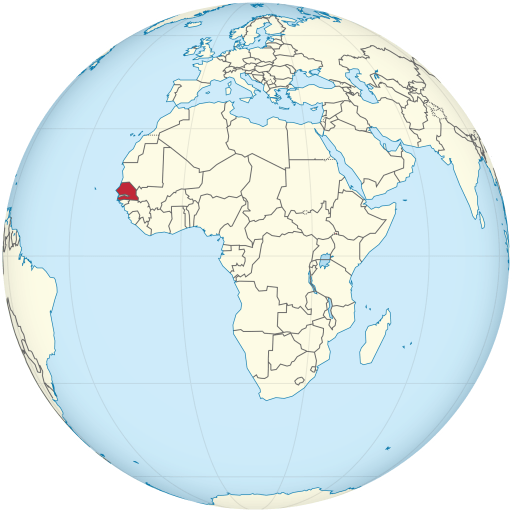
France just pulled its last group of soldiers out of Senegal. The main base was near Dakar, and about 350 troops left between March and June this year.
Why this matters:
France had military bases in Senegal since the country gained independence in 1960. This means there are now no more permanent French military bases in West Africa.
Tell me more:
The new Senegalese president, Bassirou Diomaye Faye, last November said, "if we're really independent, we shouldn't host foreign troops at all." And then, Prime Minister Ousmane Sonko echoed this in the country's New Year address late December, saying France's presence was not acceptable and announcing plans to close all foreign bases (meaning France; there are no other foreign forces in the country). Apparently, this all had come as a surprise to France. A week later, President Macron tried to say this wasn't a "kick-out" but part of a new strategy of theirs in Africa, claiming it was all based on agreements and even said African leaders "forgot to say thank you" for France's "help." That went down badly. Senegal's Prime Minister, Ousmane Sonko, replied on the same day: "There were no talks. This was our decision, and only ours." He also reminded Macron that "during World War II, African soldiers helped fight for France. Many of them were forced to, and some were later betrayed. So maybe France should be more careful when talking about who owes who." (I'm paraphrasing here.) In March, France kicked off a phased exit, and troops began to pack up.
Good to know:
Many sovereign countries host foreign troops. Most of the time, it is done so in a structured, voluntary, and regulated way. However, it comes with political, legal and public scrutiny, especially when national pride or the environment are in play.
What about the rest of West Africa?
The anti-France campaign is part of a bigger shift across the region. Many West African countries are now saying no to what they see as a leftover from the colonial era. In recent years, Mali, Burkina Faso, Niger, Chad, and Côte d'ivoire have all asked French troops to leave. Some of these countries have military governments now, and instead of working with France or "the West," they're turning to Russia for military help (not necessarily a good thing either, but more on that later.)
So, is France totally gone from Africa?
Not really. France still has around 1,500 troops in Djibouti (in East Africa), some training missions in Gabon and Côte d'Ivoire with a few hundred soldiers. But the era of big French bases in West Africa is over.
What now?
Remains to be seen. France and West Africa have just come out of a toxic relationship, so to speak. Especially, Mali, Niger and Burkina Faso all have military governments now (there were "anti-imperial" or "anti-Western" coups, remember), and they all each have a lot of problems, like big security challenges (especially jihadist attacks), struggling with inflation and economic isolation, losing foreign investment, and they're partnering with Russian forces, some of whom have been accused of serious human rights violations (look up Wagner Group, now called the Africa Corps).
In short, yes, these governments want to stand on their own feet, but the region is still unstable. And just removing France won't solve anything. It's just one step in one direction.
UNESCO just added 26 new World Heritage Sites
What happened:
UNESCO has added 26 new locations onto its list of World Heritage sites.
Why this matters:
Most people didn't major in archaeology, but you don't need a degree to care about history. I treat announcements like this as an excuse to learn. It's like online backpacking (zero emissions, zero budget). Thanks, internet.
Tell me more:
Getting UNESCO status is like getting verified on Instagram. It doesn't make a place inherently better, but suddenly everyone knows its name, wants a selfie, and might throw some funding its way (no guarantees though). It also comes with global visibility (hello, Lonely Planet mentions and travel bloggers), a bit of legal protection, which can help block sketchy developments or mining projects, and access to technical and emergency support (if your ancient temple floods or your forest catches fire, UNESCO might actually send help). More importantly, it pressures governments to take heritage seriously, not just to cash in on tourism, but to keep it standing.
Here...
Please log in or subscribe for free to continue reading this issue.
We could use your help to make this issue better. Take a look at the requests below and consider contributing:
- Submit a piece of artwork for this issue
- Submit a news, academic or other type of link to offer additional context to this issue
- Suggest a related topic or source for future issues
- Fix a typo, grammatical mistake or inaccuracy
Below you'll find some of the sources used for this issue. Only sources that support "media embedding" are included.
-
A son's journey to understand his father's legacy -
-
Dans un entretien au « Monde », le président sénégalais, défenseur d’une politique souverainiste, évoque le massacre de Thiaroye, survenu en 1944 et longtemps passé sous silence, et les relations qu’il entend tisser avec la France, dont l’influence est de plus en plus remise en question en Afrique francophone.
-
Senegal’s prime minister has announced the closure of “all foreign military bases” in the country, a statement essentially aimed at France, the African nation's former colonial ruler.
-
It’s been a tumultuous month for France and its relationship with former colonies in Africa, as its influence on the continent faces the biggest challenge in decades.
-
The report examines IS Sahel's shift from mass violence toward territorial control and its future trajectory.
-
Downloadable! This article aims to identify the determinants of inflation trends in the ASS (Alliance of Sahel States) zone using the ARDL model, over the period 2019M1-2023M12. The main results of our analyses show that: (1) there is a short-term relationship between the explanatory variable and the explained variables. In fact, reading the adjustment coefficient of this information means that, when inflation is far from its short-term equilibrium and to reach long-term equilibrium, its annual speed of adjustment is 14.7%; (2). The results of the bounds cointegration test confirm the existence of a cointegrating relationship between the model's explanatory variables, thereby, confirming the long-term relationship between the series of study variables; (3) the long-term relationship between inflation and the money supply shows that a 1% increase in money supply generates a 0.60% increase in inflation. Therefore, the Covid-19 has a significant impact on inflation and economic activity in the long term in the ASS zone.
-
As mercenaries leave Mali, experts say remaining Kremlin-controlled Africa Corps is more than just ‘Wagner rebranded’.
-
Five culturally and historically significant sites on the African continent have made the list. They include Maputo National Park in Mozambique and the Gola-Tiwai Complex in Sierra Leone, two important natural reserves home to many endangered animal and plant species.
-
The Inca road system formed a network known as the royal highway or qhapaq ñan, which became an invaluable part of the Inca empire. Roads facilitated the movement...
-
Islamic Republic of Iran - the Cultural Landscape of Masouleh | World Heritage - UNESCO Multimedia ArchivesThis cultural landscape is located in the Alborz Mountains in northern Iran, in the transitional zone between the Hyrcanian Forests and the arid highlands. It is a bowl-shaped area that extends around the historic city of Masouleh. The landscape has been shaped by nomadic and then semi-nomadic pastoralism over millennia, as well as by ancient mining, smelting and blacksmithing activities. The strategic location of Masouleh along important communication routes, yet protected by the steep terrain, turned the area into a refuge for populations from different regions in the plains and into a trading centre. Two living traditions, the semi-nomadic Taleshi herders and sedentary craftspeople and traders, coexist in the historic city of Masouleh.
-
Fighting in Sudan’s Kordofan region and ongoing violence in Darfur have deepened the country’s humanitarian crisis.
-
Officials say eastern Libyan authorities have deported 700 Sudanese migrants back to Sudan. The migrants were recently detained in central and southeastern Libya.
-
Gaza’s Health Ministry says the territory has experienced its deadliest day for aid-seekers in over 21 months of conflict, with at least 85 Palestinians killed while seeking aid.
-
WESTMORELAND, Jamaica — Corporal Elaine Stewart, who will appeal the five-year sentence she was handed for her culpability in Mario Deane’s 2014 death, wept openly in the Westmoreland Circuit Court Tuesday evening after the case was adjourned. It had been a long day with a lengthy run-up by Justice Courtney Daye in which he provided his rationale for the sentences handed down. All three convicted cops walked out of the...
-
Social media tributes pour in for 'Sleeping Prince'
-
-
Grok isn't the first platform to be blocked in Turkey. In a separate move, a block was also imposed on eSIM providers, and Spotify may be next.
-
Brazil’s former President Jair Bolsonaro has been ordered to wear an ankle monitor, his press office has confirmed.
-
Brazil’s lower house has passed a controversial bill that overhauls environmental legislation. Critics argue it undermines safeguards and harms Brazil’s credibility ahead of hosting U.N. climate talks in November.
-
The megalithic tombs, located in Poland, are likely around 5,500 years old.
-
Practice Architecture’s house is built from the plant growing in the fields around it. The project addresses a vital issue – the energy consumed and carbon emitted during construction
-
Critics say women's bodies should not be policed in the name of cultural pride.
Each week, What Happened Last Week curates news and perspectives from Asia, Africa, and the Americas. The newsletter is written by Sham Jaff and focuses on stories that rarely receive sustained attention in Western media.
Read the free edition every week. VIP subscribers receive additional stories, recommendations on what to watch, read and listen, and more.