
I've been dealing with pinched nerves the past few days. And honestly, nothing humbles you faster than waking up with a stiff neck. That's when you remember: life could always be worse. I'm still recovering, but the news cycle famously doesn't sleep. Between the developments around Öcalan and Turkey and that wild agreement between representatives from Kanaky and France last week, I couldn't delay this issue any longer.
I also spoke to Kurdish political scientist Dr. Rosa Hêlîn Burç to get a sharper take on what's next for the PKK.
What else is coming:
- two video essays --- one on how scarf trends today are straight out of South Asian textile traditions, not "Scandi chic", and one on why that so-called "Chinese font" you see on takeout boxes is actually a Western creation, soaked in stereotype
- an Iraqi pop star who drops just one song a year because "I tell people what to like, not TikTok"
- and yes, the story of a Thai woman who seduced and blackmailed Buddhist monks, only to lose all the money to online gambling.
Kanaky is getting more autonomy
Refresher:
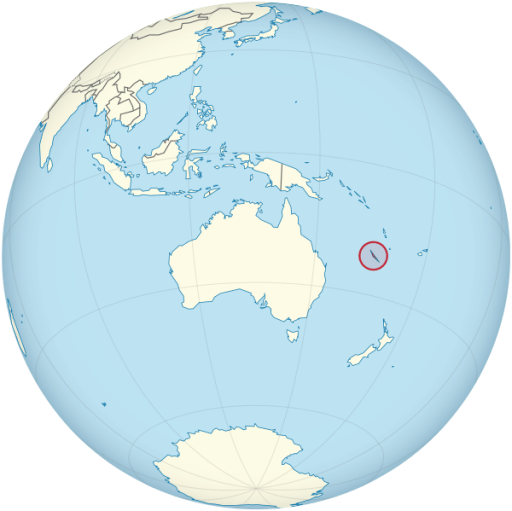
(For those tuning into Season 10 of Kanaky, here's the backstory) Kanaky is the name many Indigenous people use for this group of islands in the Pacific, near Australia. It's far from France geographically, but still part of the French Republic. France colonized it in the 1850s, and Indigenous Kanaks have been fighting for more control over their land ever since. France still officially calls it "New Caledonia", but the question of what to call it, and who gets to decide, is part of a long political struggle between the indigenous Kanak community and (descendents of) European settlers there. The Kanak community is about 40% of the population. Europeans are around 25%. There were three referendums on independence between 2018 and 2021. All ended with "no." But the last one in 2021 was controversial. Kanak leaders had asked for a delay due to COVID-19 and boycotted it when France refused. So even though 97% voted to stay with France, only 44% of the population voted. That made it hard to see the result as legitimate. In 2024, France tried to change the voting rules to include more recent settlers. Kanaks saw this as a threat, thinking that it would weaken their voice in elections. 14 people died in protests, most of them Kanak. Over 10,000 people fled the islands (and the region only has a population of about 270,000). Hospitals and clinics still haven't fully recovered. Now, fast-forward to last week.
What happened last week:
Last Saturday, France and political representatives from across Kanaky's spectrum (both pro-independence groups and those wanting to stay within France) announced a new agreement. It gives Kanaky more local power, but not full independence.
Why this matters:
Kanaky has 8% of the world's nickel. Whoever shapes Kanaky's political future is also shaping its economic future.
Tell me more:
The full details aren't public yet, but here's what's been made public so far: Kanaky would become its own "state" inside France, written into the French Constitution. It would have more power over local decisions, there would be a new Kanaky nationality (people can hold both French and Kanaky nationalities), and French people who have lived on the islands for 10 years could now get the new "New Caledonian nationality." Most importantly, other countries might be able to officially recognize Kanaky (still legally referred to as "New Caledonia" in French law). Oh, and, the 2024 proposed changes to the voting system? Those have also made it into the new deal, meaning that in the next election, the voting list will now include people who have lived in the islands for 15+ years.
Who's in charge in Kanaky now?
In January, Alcide Ponga, a Kanak politician, became president. He's anti-independence but closely tied to his roots. Former mayor of a small mining town and a former nickel industry executive, Ponga believes independence isn't the only path to empowerment. His party, Le Rassemblement, supports staying within France. He argues that Kanaky needs French support to attract investors and revive its nickel sector (two major nickel plants are still idle after the protests last year). Ponga also wants stronger ties with neighbors like New Zealand and Australia: "We've neglected the Pacific and our Melanesian neighbours too much," he said. "We need to build our own relationships at our level."
Who's who in the pro-independence camp?
The strongest voice is FLNKS, a left-wing alliance pushing for full independence since 1984. It's currently led by Christian Tein, seen as more radical and tied to grassroots movements like the CCAT, which played a big role in organizing last year's protests. Then there's Emmanuel Tjibaou, son of the legendary Kanak leader Jean-Marie Tjibaou (assassinated in 1989). Emmanuel was elected in 2024, becoming the first pro-independence MP in decades. He supports a gradual path to sovereignty through negotiation and international recognition. (He shares parliamentary representation with right-wing, "let's stay within France"-Nicolas Metzdorf.)
How big is the nickel industry?
Nickel is Kanaky's economic backbone. The 2024 protests shut down much of the industry. One in five workers lost all or part of their income, and many are still unemployed. The economy hasn't bounced back. Whoever can restart and stabilize the nickel sector will hold serious political leverage.
What do locals say?
Mixed feelings. The most common word in street interviews you hear is "hope." Many feel the agreement is a real step forward. Some say they finally feel calmer. But there's also a lot of confusion. People don't fully understand what the deal means or how it'll be applied. There's a clear need for political education, so everyone knows what's coming.
What's next?
In February 2026, the people of Kanaky/New Caledonia will vote on whether they accept this new deal. Local elections will happen in May or June 2026.
Zoom out:
Apart from Kanaky, France has 13 overseas territories around the world (in the Caribbean, Indian Ocean, South America, Pacific, and beyond). They include: Guadeloupe, Martinique, Réunion, Mayotte, French Guiana. These are departments, meaning they have the same legal status as mainland France. Then there's Kanaky/New Caledonia, French Polynesia, Wallis and Futuna. These are territories or collectivities with more autonomy but still under French rule. Some are just small islands or military bases. They all send representatives to the French Parliament, but: Decisions are still heavily influenced by Paris, colonial histories are unresolved, and economic and racial inequalities remain deep.
The PKK has officially laid down its weapons
Refresher:
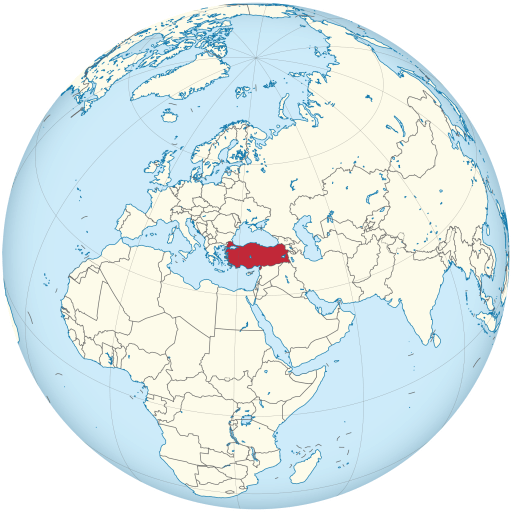
Kurds are an ethnic group of at least 35 million people split between Turkey, Iraq, Syria, and Iran after World War I redrew borders. In Turkey, the PKK was founded in 1978 aiming for an independent Kurdish state. By the 1990s, under the leadership of Abdullah Öcalan, it shifted toward seeking autonomy within Turkey. Öcalan, arrested in 1999 and imprisoned on İmralı Island, has been the central ideological figure behind the transformation of the PKK's mission. Over decades, both PKK attacks and Turkish military operations, along with alleged...
Please log in or subscribe for free to continue reading this issue.
We could use your help to make this issue better. Take a look at the requests below and consider contributing:
- Submit a piece of artwork for this issue
- Submit a news, academic or other type of link to offer additional context to this issue
- Suggest a related topic or source for future issues
- Fix a typo, grammatical mistake or inaccuracy
Below you'll find some of the sources used for this issue. Only sources that support "media embedding" are included.
-
New Caledonia marks anniversary of French colonization with tight security and simmering tensions | AP NewsNew Caledonia has marked the anniversary of its French colonization. There's tight security and simmering tensions between the pro-independence Indigenous Kanak people and the white settler communities loyal to Paris.
-
France has announced an agreement aimed at granting more autonomy to New Caledonia in the south Pacific, but stopped short of the independence sought by many Indigenous Kanaks.
-
-
Ils n'y croyaient plus, ils ont trouvé le temps long... Ce dimanche 13 juillet, NC La 1ère a demandé à plusieurs Calédoniens comment ils accueillaient l'accord politique signé par les élus à Paris. Malgré les zones de flou, la confiance domine.
-
The PKK took the first step for disarmament as part of a peace process with Turkey.
-
Three of the limited number of attendees spoke to bianet, sharing their reflections on the PKK’s disarmament ceremony.
-
A veteran Kurdish politician from Turkey said Ankara must amend its terrorism law, speaking on Thursday ahead of a historic disarmament of the Kurdistan Workers’ Party (PKK).
-
U.N. health officials have estimated that more than 14 million children did not receive a single vaccine last year.
-
On Monday, as anti-government protests swept across parts of Kenya, 12-year-old Bridgit Njoki sat watching television in her family's modest home.
-
The Amazon rainforest -- considered one of the world's most important climate regulators - continues to face serious threats in 2025.
-
A new Forbes report has revealed that eight African-born billionaires are among the record 125 foreign-born individuals who have built billion-dollar fortunes while living in the United States. | Business Insider Africa
-
The existence of the scheme could not be reported until now because of a court injunction.
-
LatamGPT, an open-source LLM trained on regional data, aims to fix the cultural and linguistic blindspots of ChatGPT and other global AI platforms.
-
Three independent experts working for the U.N.’s top human rights body who focus on Israel and the occupied Palestinian territories have announced their resignations, citing personal reasons and a need for change.
-
The megalithic tombs, located in Poland, are likely around 5,500 years old.
-
For years, the West has relied on so-called ‘chop suey’ fonts to communicate “Asianness” in food packaging, posters and ad campaigns. But such fonts perpetuate problematic stereotypes.
-
Reclaim real African artifacts from Western museums in this Africanfuturist heist game. Recruit crew members, plan escape routes, acquire the precious cargo, and bounce out of the joint as fast as you can.
-
Police in Thailand have arrested a woman who allegedly enticed a string of Buddhist monks into sexual relationships and then pressured them into making large payments to cover up their intimacy.
Each week, What Happened Last Week curates news and perspectives from Asia, Africa, and the Americas. The newsletter is written by Sham Jaff and focuses on stories that rarely receive sustained attention in Western media.
Read the free edition every week. VIP subscribers receive additional stories, recommendations on what to watch, read and listen, and more.