

The plans to create a bigger market between South America and Europe have just become more concrete. Ethiopia, Egypt, South Sudan and Sudan are still figuring out how to share water with one another. Algerians are finding out about sex work under French colonial rule, Ken Saro-Wiwa's sham trial just turned 30, this was an exciting year for African startups, Cuba is now part of the BRICS group (as a side dude), and so much more.
The plans to create a bigger market between South America and Europe have just become more concrete
What happened last week:
Mercosur (a South American trade group composed of Argentina, Brazil, Uruguay, and Paraguay) and EFTA (a non-EU European trade group made up of Switzerland, Norway, Iceland and Liechtenstein) just finished negotiating a free trade deal that would open up markets for over 97% of their exports. It still needs approval, but if it goes through, it'll cover nearly 300 million people and over US$4 trillion in economic power.
Why this matters:
The idea that "free trade is always good" has been pushed for decades, but it's more complicated than that. This is a huge trade deal but... it has the potential to skip over who wins and who loses (like any other free trade deal). And often, those losses hit workers, small producers, and the environment, especially in the so-called Global South. So next time you see news about a new trade pact, ask yourself: Whose interests are being served? And who's getting left behind?
Refresher: What's a Free Trade Agreement (FTA)?
An FTA is a deal between countries that lowers or removes taxes on goods and services they sell to each other. These taxes are called tariffs. The goal is to make trade easier and cheaper.
Tell me more:
Talks for this deal started a decade ago, but they were stuck for years. Brazil's foreign minister said they're hoping to wrap up the deal later this year, when Brazil takes over Mercosur's rotating presidency, and hopefully finalize the (much larger) EU-Mercosur deal too (that one's been stuck since December because countries like France are worried it could hurt their farmers). The Mercosur-EFTA agreement covers way more than just lower (sometimes no) tariffs on goods like cars, red wine, coffee or beef. It also includes services like consulting, and even intellectual property like patents or copyrights. There's also a chapter on "sustainable development," although it's unclear how strong the enforcement is.
So, who might benefit and who might lose?
Big Business in both trade groups benefit immensely, obviously. Yes, some goods will be cheaper for many people. However, small-scale farmers or workers' rights, for example, will pay a heavy price. Plus, environmental groups and Indigenous people have warned that the deal also lacks strong enforcement on deforestation and climate safeguards. In Norway, one watchdog called it "a lost opportunity to protect the Amazon," since the pact relies on dialogue, not real sanctions, and may actually boost exports of soy and meat linked to forest destruction.
What now?
The deal still has to go through parliaments in all eight countries, plus any required legal reviews. That entire process could stretch into 2026. Essentially, the floor is open, meaning expect lobbying from big exporters, farmers, green groups, workers' unions; everyone's got something to say. This is when public campaigns and policy amendments matter most.
Ethiopia, Egypt, South Sudan and Sudan are still figuring out how to share water with one another
What happened last week:
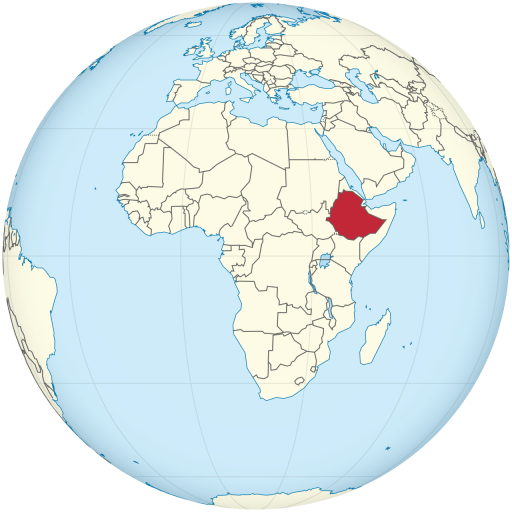
Ethiopia has finished building the GERD, short for the Grand Ethiopian Renaissance Dam. It is a US$5 billion mega-dam on the Blue Nile (a key tributary of the Nile River), and Africa's largest hydroelectric project.
Why this matters:
About 250 million people in Nile Basin countries depend on the river for daily needs across Ethiopia, South Sudan, Sudan, and Egypt.
Tell me more:
Ethiopia's built the dam because of one major reason: To generate electricity. The dam, more than a mile long and 145m high, is on the Blue Nile tributary in the northern Ethiopia highlands, from where 85% of the Nile's waters flow. It will more than double Ethiopia's national power capacity. This is crucial, because 60% of Ethiopians don't have reliable electricity, and this is a massive domestic infrastructure win... for Ethiopia. However, Egypt and Sudan are mad about it.
Why are Egypt and Sudan mad?
Well, both are downstream countries. They rely on Nile water for drinking, farming, and industry. For example, Egypt gets ~97% of its freshwater from the Nile. It has argued that even a 2% drop in flow could wipe out 200,000 acres of farmland. With climate change being real, as Kim Kardashian once tweeted, unpredictable rainfall is, too. So, if Ethiopia decides to store more water in the dam during dry periods, Egypt and Sudan could face water shortages, raising the risk of regional conflict or diplomatic standoffs.
Are they working towards an agreement anytime soon?
In a statement announcing the completion of the project, Prime Minister Abiy Ahmed sought to reassure his neighbours. "To our neighbours downstream, Egypt and Sudan, our message is clear: the Renaissance Dam is not a threat, but a shared opportunity," he said. They're also both invited to the official inauguration in September (yes, he went there). However, as of right now, no final agreement exists on water sharing, and talks have dragged on for 15 years without resolution.
Good to know:
There is one forward-looking agreement, but it's not very popular. Last year, South Sudan joined a treaty called the Cooperative Framework Agreement (CFA), also known as the Entebbe Agreement. This step finally gave...
Please log in or subscribe for free to continue reading this issue.
We could use your help to make this issue better. Take a look at the requests below and consider contributing:
- Submit a piece of artwork for this issue
- Submit a news, academic or other type of link to offer additional context to this issue
- Suggest a related topic or source for future issues
- Fix a typo, grammatical mistake or inaccuracy
Below you'll find some of the sources used for this issue. Only sources that support "media embedding" are included.
-
The Signatory State Parties of MERCOSUR (the Republic of Argentina, the Federative Republic of Brazil, the Republic of Paraguay and the Oriental Republic of Uruguay) and the EFTA States (Iceland, the Principality of Liechtenstein, the Kingdom of Norway and the Swiss Confederation) have announced, at the MERCOSUR Summit
-
Representatives of Brazil’s indigenous community have strongly warned Switzerland against ratifying the free-trade agreement with the Mercosur states.
-
Avtalen gir norsk laks og olje nulltoll til Brasil, men mangler reelle mål og muligheter til å beskytte regnskogen i Amazonas, ifølge fondet.
-
The dam on the Blue Nile has caused major tensions with Egypt and Sudan, and raised fears of war.
-
A landmark multinational agreement on managing the waters of the Nile River has entered into force - over the vehement objections of Egypt
-
An estimated 90% of the capital Port-au-Prince is now under control of criminal groups who are expanding attacks not only into surrounding areas but beyond into previously peaceful areas.
-
Authorities in Turkey have arrested three opposition mayors from southern cities. According to state media, the mayors, all from the Republican People’s Party or CHP face allegations of bribery and organized crime.
-
The Kazakhstan president signed a law banning face coverings in public places as a security measure.
-
Suriname will have a female president for the first time. The country's parliament, which chooses the president, elected Dr. Jennifer Geerlings-Simons on Sunday.
-
Cameroon’s President Paul Biya faces an election challenge from two close allies who recently resigned and announced their candidacy.
-
The Ondo State Police Command has disclosed that the activities associated with the celebration of July 7 (7/7) will not be tolerated in the state, advising those planning such to desist.
-
Breaking news published on 02/07/2025 at 14:00 GMT - According to news obtained by Africa Intelligence, President Donald Trump is expected to bring together five African heads of state in Washington - 7/2/2025
-
They raised $1.4 billion in the first six months of 2025, a 78% increase over the same period last year.
-
Read 17 reviews from the world’s largest community for readers. Tourists know it as the City of Joy. For Ouled Nail dancers, Bousaada is a city of horrors.…
-
Read 1,040 reviews from the world’s largest community for readers. Younes is still an impressionable young boy when his family loses everything and is forc…
-
Read 8 reviews from the world’s largest community for readers. Few outsiders have had the privilege to get to know Algeria and its youth so intimately—or t…
-
Read 7 reviews from the world’s largest community for readers. Best of Modern Middle Eastern Literature This engaging memoir provides a vivid account of a…
-
Hamza Koudri wants readers to understand that there is no one-size-fits-all approach to culture. Read the full interview.
-
The Republic is a narrative podcast series exploring pivotal Nigerian and broader African historical events and figures. Available everywhere.
Each week, What Happened Last Week curates news and perspectives from Asia, Africa, and the Americas. The newsletter is written by Sham Jaff and focuses on stories that rarely receive sustained attention in Western media.
Read the free edition every week. VIP subscribers receive additional stories, recommendations on what to watch, read and listen, and more.