

Ten years ago, 50,000 people from two communities in the Niger Delta sued Shell for oil spills there. Last week, their case just got a new push, and it almost looks like environmental justice might be around the corner (aka 2027). Plus, criticizing the Nicaraguan president can be deadly these days, especially if you're in Costa Rica. Also: Colombia is looking for more "Global South" partner countries to do business with, Pakistan unironically announced that it will nominate Donald Trump for a Nobel Peace Prize, and pharmacists in the Amazon use AI to better serve overburdened public clinics, and so much more.
A UK court ruled that Shell can be sued for years of oil damage in Nigeria, past or present
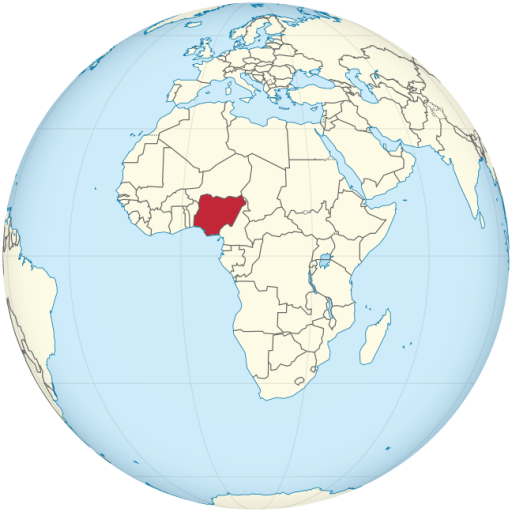
Refresher:
The people of Bille and Ogale (a combined population of around 50,000) sued Shell in the UK in 2015. They say Shell's oil operations ruined their land, polluted their water, and killed fish, making it impossible to farm or fish, which is how they made a living. They say over 100 oil spills have happened over the years --- many never cleaned up. Shell tried to stop the case from moving forward, using legal technicalities, but the court said: No. The case can go ahead. In 2021, the UK Supreme Court ruled that Shell's parent company (not just its Nigerian subsidiary) could potentially be responsible. But progress was slow, and many people from these communities died while waiting for justice.
What happened last week:
Now, in June 2025, a UK High Court has said: the full trial will go ahead in 2027, and Shell and its former Nigerian subsidiary can be held legally responsible for decades of oil pollution that harmed two Nigerian communities -- Bille and Ogale, both located in the oil-rich Niger Delta.
Why this matters:
This judgment is big because it says: Multinational corporations can't just walk away from pollution they caused years ago, especially if they never fixed it. It challenges the idea that time limits alone can protect companies from accountability, and it opens the door to more environmental justice cases in international courts. And for the communities in the Niger Delta, this ruling gives them hope that they'll finally get cleanup, compensation, and some measure of justice.
Tell me more:
Shell has been drilling for oil in Nigeria's Niger Delta for decades, and that's come with a long, messy history of oil spills. These spills have ruined water sources, farmland, and fishing areas, affecting how people live and make a living. Understandably, that's led to a lot of protests and lawsuits.
What does Shell argue?
Several arguments here. Shell tries to argue that it isn't responsible because:
- It's just the parent company (Royal Dutch Shell, based in the UK),
- The actual oil operations were handled by its subsidiary in Nigeria,
- And anyway, some of the damage was caused by oil theft (people illegally tapping into pipelines to steal oil). To that, critics say: 'Even if that's true, Shell still didn't do enough.' They say the company didn't properly maintain its equipment or clean up the mess afterward. So the issue isn't just who caused the spill, it's also about whether Shell did its job as a responsible operator.
- Plus, the communities in Nigeria, Shell says, had waited too long to sue. In UK law, there's usually a five-year time limit for filing certain legal claims. Shell said: 'If the spill happened more than five years ago, too bad, you're out of time.'
What did the judge say?
The judge didn't buy it. Here's an overview over the counterarguments made:
- People can still sue you for your yesterday's mistakes'Actually, if Shell didn't clean up the pollution, that's not just a past problem, it's an ongoing one. And every day that the oil is still there could count as a new legal violation. So the communities can still sue, even for spills that happened a long time ago, as long as the damage is still affecting them.'
- If you haven't cleaned it up yet, you're still in the wrong. Even more, the judge said that oil pollution left on someone's land could count as trespassing. And under trespass law, every single day that the oil is still sitting there counts as a fresh wrong. (That's a big legal shift for all environmental cases globally. It means corporations could be held responsible for old pollution if it's still hurting people today.)
- Right to life (Nigerian constitution) The communities also argued that Shell violated their fundamental rights. like their right to life, because oil pollution poisoned their water and land. The judge agreed that this kind of pollution can threaten the right to life under Nigeria's constitution. But she didn't rule on that part because she's a UK judge, and she felt that interpreting the Nigerian constitution is something Nigerian courts should do.
I want to hear from the directly affected
Actually, King Okpabi, a leader from the Ogale community in the Niger Delta, talked on a panel discussion held at the London School of Economics a few months ago, where he talked about growing up in the 1960s and 70s, when "white Shell workers" came in their "Land Rovers" with "Danger Wide Load" signs. As a child, he admired them and helped push their vehicles. He went into detail about the abundance of nature: farming, fishing, traditional medicine, forest foods, and how little they needed from outside, and explained how children played with empty tins and wrappers from Shell camps. Everything they needed came from the land, he said. He also spoke to the loss: how Shell, despite being treated with hospitality, slowly destroyed the ecosystem. Streams dried up, palm trees died, medicinal plants disappeared, and new diseases emerged. He reflects on the health effects (e.g., birth defects, low sperm count), contaminated water (citing a UN study showing 900x the acceptable benzene level), and how even warning signs didn't help if there's no alternative water source.
What now?
The UK judge has made it clear: the case can move forward. But there are still a couple of hurdles and a long road ahead.
- Next stop: Nigerian courts. The UK judge said she couldn't decide on whether Shell violated constitutional rights, because that's something for Nigerian courts to determine. So, the Nigerian legal system now has to decide whether pollution by a company like Shell can be treated as a human rights violation under Nigerian law.
- Main trial in 2027. The actual trial in the UK, where Shell will be directly challenged on the environmental damage, its role in...
Please log in or subscribe for free to continue reading this issue.
We could use your help to make this issue better. Take a look at the requests below and consider contributing:
- Submit a piece of artwork for this issue
- Submit a news, academic or other type of link to offer additional context to this issue
- Suggest a related topic or source for future issues
- Fix a typo, grammatical mistake or inaccuracy
Below you'll find some of the sources used for this issue. Only sources that support "media embedding" are included.
-
The UK High Court trial finds that Shell plc and its former Nigerian subsidiary can be held legally responsible for legacy oil pollution in Nigeria.
-
Check out this page via the Business and Human Rights Centre
-
Exiled Nicaraguan officer Roberto Samcam was assassinated in Costa Rica. U.S., Solís, and exiles blame Ortega’s regime. Investigation underway.
-
Costa Rican officials say that a member of the Nicaraguan opposition has been shot seven times and is in serious condition in Costa Rica.
-
Costa Rica has become a precarious refuge for thousands of Nicaraguan exiles. In the streets of San José, they continue to feel President Ortega’s reach
-
Far from recognizing its responsibility in this humanitarian crisis, the dictatorship announced that Nicaragua was withdrawing from UNHCR.
-
Retired army officer Roberto Samcam was killed in San José by gunmen, the latest of several attacks on Ortega’s critics
-
Your cigars will take longer to leave the factory, literally. Since the start of this month, the government has cut the maximum speed limit in half.
-
The new rules were introduced based on an amendment to the Mediation Law rather than the Civil Code, which women's rights advocates describe as "circumventing women's inheritance rights."
-
The sites targeted include a uranium enrichment facility at Fordo.
-
Mali’s military government has passed a bill extending junta leader Gen. Assimi Goita’s reign for five more years, starting in 2025.
-
Islamabad says US president helped resolve India conflict but critic says ‘Israel’s sugar daddy in Gaza’ not candidate for any prize
-
Vietnam, Singapore to exchange 1,000 talented workers each year under new program - VnExpress InternationalThe Innovation Talent Exchange program will see Vietnam and Singapore sending 300 highly skilled workers to each other in its first year, increasing to at least 1,000 annually subsequently. - VnExpress International
-
In the adopted text, Dutch lawmakers declared that the Soviet-led deportation of Crimean Tatars, which took place between May 18 and 21, 1944, constitutes genocide by contemporary legal and historical definitions.
-
Pharmacists in remote clinics use an AI tool developed by NoHarm to catch prescription errors, a potential model for low-resource health systems globally.
-
The Netherlands has returned to Nigeria a 600-year-old stolen artefact, the Ife Terracotta, which has been received by Nigeria's Minister of Information and Culture, Alhaji Lai Mohammed.
-
EL ALTO, Bolivia (AP) — Bolivians gathered in the mountains and city viewpoints to celebrate the Andean New Year, a tradition rooted in pre-Hispanic culture and aligned with the southern hemisphere’s winter solstice.
-
Health workers in Uganda and people in the rural communities they serve say they're enjoying the benefits of having bikes especially designed for rugged terrain
Each week, What Happened Last Week curates news and perspectives from Asia, Africa, and the Americas. The newsletter is written by Sham Jaff and focuses on stories that rarely receive sustained attention in Western media.
Read the free edition every week. VIP subscribers receive additional stories, recommendations on what to watch, read and listen, and more.