

The Norwegian Refugee Council published their annual report, saying that we all have been neglecting what's happening in Cameroon ("most neglected displacement crisis worldwide"), and in Brazil, the government has teamed up with two companies to let citizens manage and sell their own personal data. It's an experiment with a lot of pros and cons, I think (maybe mostly cons? I'm undecided). Plus, thirsty data centers in Chile, allegations of "slavery-like" conditions at Chinese automaker BYD, Dubai's exclusive (literally) AI industry, why cricket in India is Netflix's biggest streaming rival, Ethiopian coffee is trending again, Yemen's Jewish community, and so much more.
Cameroon has "world's most neglected displacement crisis", says NGO
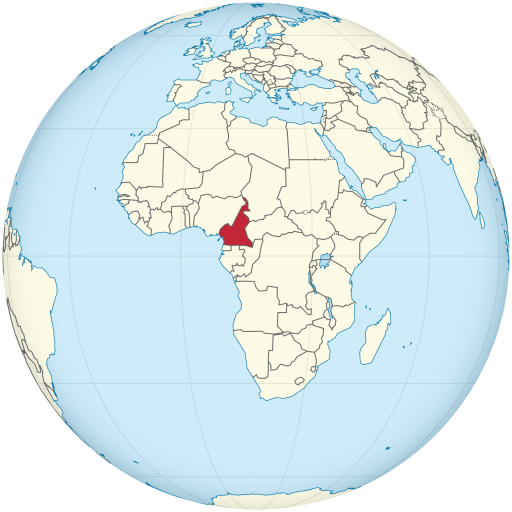
What happened:
In their new report, the Norwegian Refugee Council (NRC) writes that Cameroon has become "the world's most neglected displacement crisis." The country tops NRC's annual list, which each year ranks crises based on three factors: lack of media attention, lack of political action, and lack of humanitarian funding.
Why this matters:
When a conflict or war breaks out, there are usually three ways "the world" can respond: through diplomacy (governments apply pressure or try to mediate), humanitarian aid (organizations provide food, shelter, and protection), and media coverage (journalists inform the public and raise awareness). In Cameroon's case, all three are missing.
Tell me more:
The NRC, Norway's largest humanitarian organization, reviewed over 30 crises worldwide. Eight of the ten most neglected are in Africa. This year, Cameroon ranks first, followed by Ethiopia, Mozambique, Burkina Faso, Mali, Uganda, Iran, DR Congo, Honduras, and Somalia. "Cameroon is a textbook case of global neglect," said NRC spokesperson Laila Matar in an interview with DW. It scored extremely low in all three categories:
- Media coverage: categorized as "negligible."
- Political will: 0 out of 30 possible points.
- Funding: Only 45% of needed aid was provided.
Why Cameroon?
Cameroon has two very different but ongoing violent conflicts:
- The Anglophone Crisis (West Cameroon): Since 2017, English-speaking regions have been in a de facto civil war. The roots go back over 100 years. After World War I, Cameroon was split between French and British rule. Today, Anglophone regions are demanding independence and declared a breakaway state in 2017. Thousands have died in clashes between separatists and the army.
- The Boko Haram Crisis (Far North): The extremist group Boko Haram operates across the Lake Chad region. In 2024 alone, there were over 10 attacks in Cameroon's Logone-et-Chari area. Boko Haram has split into two factions: ISWAP and JAS. Both are extorting civilians, forcing them to pay taxes or to cooperate. As a result, 1.1 million Cameroonians are displaced within the country. Only 30% of internally displaced people live in official camps; the rest survive in makeshift housing with little access to services or rights.
And then, there are around 480,000 refugees, mostly from the Central African Republic (CAR), who also live in Cameroon. CAR has been a very unpredictable and violent place for civilians for the past two decades. There's some small sign of hope, though. Last year, the UNHCR wrote that, in 2024, over 12,000 Central African refugees in Cameroon chose to return home after more than a decade in exile -- now that parts of CAR are considered safe due to the progress of a peace agreement. Overall, more than 49,000 Central Africans have returned since 2017.
- Meanwhile, the CAR government announced that it will tokenize over 1,700 hectares of land using its national meme coin, $CAR, built on the Solana blockchain. President Touadéra says this marks a "new era of access and transparency," allowing people to buy land online using crypto. However, crypto cannot replace core state services. Stability and actual infrastructure are still urgently needed --- especially for those returning home.
What now?
Above all, the country needs security. Countries in the Lake Chad region have been working together militarily for years to bring about said security, but progress is really slow. There's a "regional stabilization plan", but according to security expert Remadji Hoinathy in a recent DW AfricaLink podcast, "after more than a decade of fighting Boko Haram, the regional cooperation is showing signs of fatigue."
The NRC warns that unless media, governments, and donors re-engage, Cameroon's future looks even worse. Spokesperson Laila Matar criticized wealthy countries for cutting humanitarian budgets while paying more for military spending. "Just three to four days of global military spending in 2024 could have covered the entire humanitarian funding gap," she writes in the report. "These crises are solvable, with political will."
On a not-too-related note (because this newsletter will not let its readers associate Cameroon with "there's violence" only), Nigeria's women's football team last week also beat Cameroon 2-0 in a friendly game as part of their prep for the upcoming Women's Africa Cup of Nations (WAFCON) (check out this photo series on female Cameroonian footballers), and The Guardian last week also wrote about Jail Time Records, a music label in Douala, that started inside a prison, and Mongobay wrote about how gorillas and chimps are surviving in parts of Cameroon where no one thought they could (btw, this shows that wildlife is adapting to human-dominated areas).
In a world first, Brazil will be paying its citizens for their data
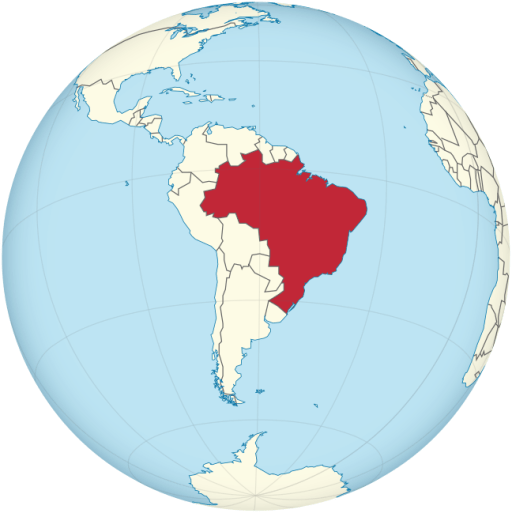
What happened:
Brazil is testing something totally new: letting people make money off their own personal data, like what websites they visit, what apps they use, what they buy, etc. Right now, big companies like Amazon or Google collect and sell that info, and we, the users, get nothing. Brazil wants to change that, reports Gabriel Daros from São Paulo for rest of world.
Why this matters:
This is the first such nationwide initiative in the world, and it is more than just a tech experiment --- it's about who controls the digital economy. The global data market is...
Please log in or subscribe for free to continue reading this issue.
We could use your help to make this issue better. Take a look at the requests below and consider contributing:
- Submit a piece of artwork for this issue
- Submit a news, academic or other type of link to offer additional context to this issue
- Suggest a related topic or source for future issues
- Fix a typo, grammatical mistake or inaccuracy
Below you'll find some of the sources used for this issue. Only sources that support "media embedding" are included.
-
As the security situation improves in some areas of the Central African Republic, UNHCR has supported more than 12,000 refugees to return home from Cameroonm and other neighbouring countries this year.
-
Central African Republic will tokenize over 1,700 hectares of land using its national meme coin $CAR, President Touadéra said Thursday.
-
Joint military action between Niger, Chad, Cameroon and Nigeria suppressed Boko Haram in the Lake Chad region. But discord in the Lake Chad Basin Commission and difficulties in the countries' ability to protect civilians has led to a resurgence of the Islamist group in northern Cameroon.
-
Captain Rasheedat Ajibade scored twice as Nigeria's Super Falcons recorded a dominant 2-0 victory over regional rivals Cameroon in an international friendly on Tuesday, getting their Women's AFCON build up underway.
-
“I wanted to make sure that the women and girls felt like they were actors in their own story,” says photographer Benjamin Rasmussen, who spent two weeks with Petrichor Football Association in Yaoundé.
-
Brazil is piloting dWallet, a program that lets citizens earn money from their data, but experts warn it could deepen inequality.
-
Dados do Indicador de Alfabetismo Funcional acendem alerta sobre a necessidade de políticas públicas para reduzir desigualdade entre a população.
-
Explore our comprehensive study on the digital divide in Brazil's major cities, analyzing the link between income inequality and internet speeds, and the impact on education and regional development.
-
Worldcoin is suspended in some countries over data protection issues, but the company behind it lobbied Colombian authorities for months before the launch.
-
Israel's defence minister says climate protester Greta Thunberg and others onboard are "Hamas propaganda spokespeople".
-
Laila Soueif, the mother of jailed Egyptian activist Alaa Abdel Fattah, has been hospitalised in London due to the effects of her ongoing hunger strike.
-
At Dubai AI Week, companies like Microsoft, Nvidia, and G42 touted growth. While Western professionals land high-paying roles, others face rejection and low offers.
-
Earthquake Today: A 6.5 magnitude earthquake shook Colombia's capital city of Bogota on Sunday, as people in the city rushed out onto the street to seek safety.
-
The African version of the US-founded Professional Fighters League is getting ready for launch in July.
-
Canal+ has a 45% stake in MultiChoice and last year offered to buy the remaining shares it did not own for $1.9 billion.
-
The firm is eyeing new World Bank financing to boost sales in the world’s most electricity-deprived country.
-
Billionaire Microsoft co-founder Bill Gates is moving ahead with plans to give away nearly all of his wealth and shutter the Gates Foundation by 2045.
-
US military strikes on the Ras Issa Port in Hodeidah, Yemen, on April 17, 2025, caused dozens of civilian casualties and significant damage to port infrastructure.
-
The country’s booming coffee industry has been spared the worst of US tariffs, unlike its rival Vietnam.
-
NCCIA uncovers dark web network operating from Muzaffargarh
-
In Empire of AI, journalist Karen Hao reports on how Indigenous communities in Chile are fighting to protect their land from AI-driven resource extraction.
-
Read reviews from the world’s largest community for readers. Barbara Jenkins writes about the experiences of a personal and family-centred life in Trinidad…
-
Read 64 reviews from the world’s largest community for readers. From award-winning journalist Ira Mathur, Love The Dark Days is about accrued intergenerati…
-
AsiaOne - AsiaOne is a free access news portal delivers latest breaking news and top stories updates in Singapore, Asia Pacific and across the World.
Each week, What Happened Last Week curates news and perspectives from Asia, Africa, and the Americas. The newsletter is written by Sham Jaff and focuses on stories that rarely receive sustained attention in Western media.
Read the free edition every week. VIP subscribers receive additional stories, recommendations on what to watch, read and listen, and more.