
This week, I'm looking at two countries once ruled by the British (yes, them again; who didn't they colonize?). Trinidad and Tobago just had an election that shook things up, and Guyana is stuck in a tense border standoff with its neighbor. Over in Kenya, a BBC exposé is reigniting calls for justice after police shot protesters dead last year. And in Japan, a student risked his life twice to climb Mount Fuji --- all for a lost phone.
T&T's ruling party just lost big, both its leaders quit and Kamla is back
What happened:
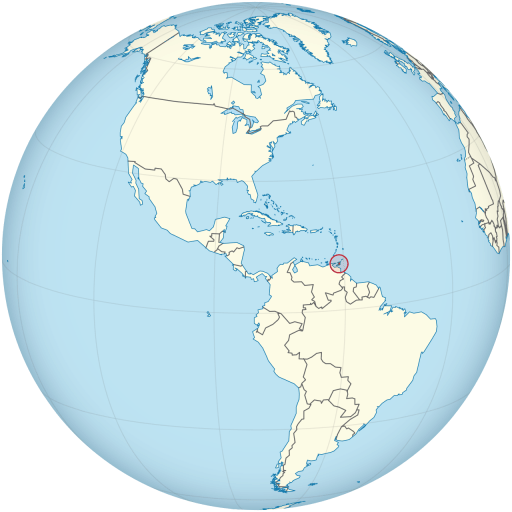
On April 28, 2025, people in Trinidad & Tobago (locals call it T&T) voted in a general election, and it was a big shake-up. All 41 seats in the House of Representatives were up for grabs, and the opposition party, the United National Congress (UNC), came out on top.
Why this matters:
This ends 10 years of rule by the People's National Movement (PNM) and brings back Kamla Persad-Bissessar as Prime Minister --- the first woman to ever hold the job in T&T. She's also the country's first female Attorney General, Opposition Leader, and the first woman of Indian descent to lead a country outside of South Asia. It's a big comeback.
Tell me more:
Kamla's UNC won 26 seats. The PNM --- led by outgoing PM Keith Rowley, with Stuart Young lined up as his successor --- dropped to 13. A new regional party, the Tobago People's Party (TPP), won the remaining 2 seats. This was also the first vote after redrawing electoral boundaries, which may have helped shake things up. After the loss, both Rowley and Young stepped down as party leaders.
Good to know:
- Population: 1.54 million
- Voting system: First-past-the-post in 41 single-member districts. The party with the most seats forms the government.
Give me the lowdown on the politics
T&T has two major parties:
- PNM (mostly supported by Afro-Trinidadians), leans center to center-left, bit more liberal and nationalist.
- UNC (largely backed by Indo-Trinidadians), also center-left, but focuses more on labor rights and multiculturalism.
There are also smaller parties. In Tobago, as I mentioned, the TPP is rising fast. The party's main agenda is greater autonomy for Tobago --- meaning more control over its own affairs, resources, and development, rather than decisions being made from Trinidad.
Who makes up Trinidad & Tobago?
Afro-Trinidadians and Indo-Trinidadians.
- Afro-Trinidadians are descendants of enslaved Africans brought by European colonizers.
- Indo-Trinidadians are descendants of Indian laborers brought by the British under a system called indenture (1845--1917). After slavery ended, Britain needed new workers for sugar plantations, so they brought Indians on 5-year contracts. It sounded fair --- wages, housing, return ticket --- but conditions were often harsh, and many never made it back to India. Over time, they built new lives and passed on traditions like Hinduism, Islam, and festivals like Divali and Eid.
Today, both groups each make up around 35--40% of the population. Politics has historically reflected this make-up, but younger generations are increasingly mixing, and identities are getting more fluid.
What's next?
Kamla was sworn in on May 1. Just minutes after, she swore in her full leadership team, even created an AI ministry and laid out her government's to-do list. Her top priority is repealing a controversial law, the TTRA Act, that would have created a new tax collection agency. Kamla's team wants to scrap it right away. Plus, she's also announced that she wants to make it easier for "law-abiding citizens" to get guns and explore new energy partnerships with Guyana, Suriname, and even Grenada, which (might) have major offshore oil and gas reserves. We'll see what she can actually deliver --- but it's clear: a new era has started in T&T.
Essequibo makes up 2/3 of Guyana --- Venezuela says it's theirs & plans to govern it
Refresher:
Venezuela has announced that it plans to hold elections on May 25, 2025 to choose officials for the Essequibo region. But here's the catch: Essequibo is not currently part of Venezuela and is a territory that's administered and controlled by Guyana (Venezuela only claims it as their own). Guyana took the matter to the International Court of Justice (ICJ), arguing that Venezuela is violating international law.
What happened:
Last week, the ICJ responded and told Venezuela to stop the election plans. Venezuela said, 'Nope', rejected the ruling and insisted it will proceed.
Why this matters:
This is one of the continent's most explosive unresolved border disputes. Venezuela says the 1899 border ruling was unfair (when Guyana was still a British colony) and claims Essequibo as part of its territory. Guyana controls Essequibo today and sees it as an essential part of its land---2/3 of its territory and home to 125,000 (of 800,000) people. Whoever holds Essequibo gets access to huge economic wealth, especially from oil. The region is packed with natural resources---gold, diamonds, timber, and offshore oil that's pumping out 650,000 barrels a day. That's why Venezuela is pushing so hard, and why Guyana sees the ICJ case as critical.
Tell me more:
Venezuela's government basically said: 'we don't recognize the UN court, and it has no right to tell us not to hold our election.' Venezuela also doubled down on its claim, calling Essequibo "an inalienable part" of its...
Please log in or subscribe for free to continue reading this issue.
We could use your help to make this issue better. Take a look at the requests below and consider contributing:
- Submit a piece of artwork for this issue
- Submit a news, academic or other type of link to offer additional context to this issue
- Suggest a related topic or source for future issues
- Fix a typo, grammatical mistake or inaccuracy
Below you'll find some of the sources used for this issue. Only sources that support "media embedding" are included.
-
The opposition United National Congress in Trinidad & Tobago won Monday's parliamentary general election in that country, unseating the incumbent P
-
Prime Minister Kamla Persad-Bissessar wasted no time outlining her government’s legislative priorities, naming the repeal of the Trinidad and Tobago Revenue Authority (TTRA) Act as her first order of business mere minutes after her Cabinet was sworn in on Saturday.
-
Request for help came after Venezuelan president announced series of measures to formalize a referendum Sunday evening
-
Guyanese president says Venezuelan coastguard patrol approached oil facility in latest incident in longstanding feud between the two nations
-
Sheikh Mowafaq Tarif called on Israel to act: "Israel must not stand idly by while this is happening in Syria."
-
Three killed and one injured in two separate insurgent attacks in Yala, despite government peace efforts and tightened security measures.
-
Police say at least seven people were killed and 16 wounded after a powerful bomb went off outside the office of a pro-government peace committee in a former stronghold of the Pakistani Taliban in the restive northwest.
-
Violence reportedly flaring up in region long plagued by ISIL affiliate in West Africa Province (ISWAP) and Boko Haram.
-
Graphic footage aired by the Houthis’ al-Masirah satellite news channel showed what appeared to be dead bodies and others wounded at the site.
-
A Kenyan opposition legislator was shot dead in the capital Nairobi in what police have described as a “targeted and premeditated” crime.
-
South Korea's former President Yoon Suk Yeol is to be additionally charged with abuse of authority. He is already being tried for insurrection over his failed bid to impose martial law.
-
South Korea’s Supreme Court overturned an earlier ruling that had cleared election frontrunner Lee Jae-myung of election law violation, throwing into doubt his eligibility to run for the presidency.
-
Vietnam has celebrated the end of the war with the United States and the formation of its modern nation 50 years ago with a military parade and a focus on a future of peace.
-
Garowe (HOL) — Puntland and Somaliland authorities on Wednesday carried out a prisoner exchange involving combatants captured during the 2023 conflict in the contested Sool region.
-
Russian President Vladimir Putin on Monday declared a unilateral 72-hour ceasefire next week in Ukraine to mark Victory Day in the Second World War as the U.S. presses for a deal to end the three-year-old war. Kyiv insisted on a longer and immediate truce.
-
A BBC investigation identifies members of the security forces who shot dead protesters last June.
-
He returned to Mount Fuji four days after his initial rescue in the hopes of finding his phone.
Each week, What Happened Last Week curates news and perspectives from Asia, Africa, and the Americas. The newsletter is written by Sham Jaff and focuses on stories that rarely receive sustained attention in Western media.
Read the free edition every week. VIP subscribers receive additional stories, recommendations on what to watch, read and listen, and more.