

This week, we're going places---from Aotearoa to Abidjan. I'm digging into what Māori justice looks like in New Zealand right now, and why Tunisia just handed out decades-long prison sentences to some of its most powerful political elites.
Also in the mix: white farmers in Zimbabwe are rejecting compensation, Sudan's genocide case against the UAE may fall apart over a technical issue, Ecuador's President Noboa just won another term, and the ex-CEO of Credit Suisse wants to be president of Côte d'Ivoire.
Plus: how to follow Japan's cherry blossoms from anywhere, why data political, a beautiful short film on Egypt's Sudanese community, a new African fantasy series on Cartoon Network, how steak sauce ended up in a conversation about AI.
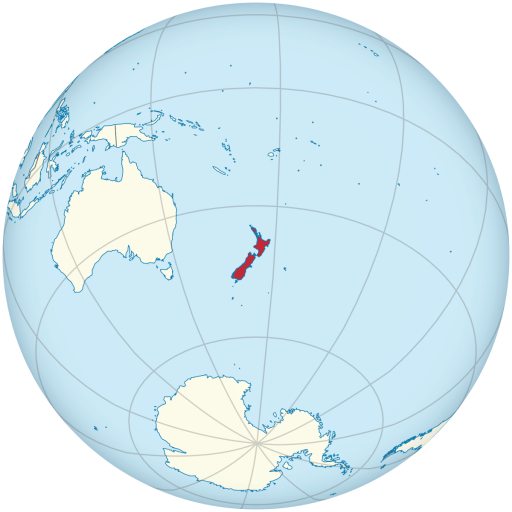
Māori justice is backlogged --- and the government might make it worse
What happened:
Fifty years ago, Aotearoa/New Zealand set up a tribunal with a simple goal: to hold the government accountable to its promises to the Māori people. Those promises go all the way back to 1840, when the British Crown signed a treaty with Māori leaders --- an agreement meant to protect Māori land, language, and sovereignty. That treaty, known as Te Tiriti o Waitangi, has been broken more times than remembered. But the Waitangi Tribunal, created in 1975, gave Māori communities a way to push back --- to name injustices, investigate government actions, and demand better.
It doesn't have the power to enforce anything. But through decades of hearings and reports, it's forced real change: land returned, language revived, policies rethought. Now, 50 years later, that same tribunal is under political fire.
Why this matters:
After the 2023 general election, Aotearoa/New Zealand ended up with a center-right coalition government made up of three parties: National Party (the main conservative party; think pro-business, big on law-and-order stuff), ACT (right-wing, wants small gov, lower taxes), and NZ First (nationalist, right-wing, with a history of anti-immigration, anti-Māori and "NZ-first" rhetoric). As a result, Māori rights, language, and political representation have been caught in the crossfire of this coalition's agenda.
Tell me more:
The new coalition government wants to "review" the tribunal and shrink its role. The government includes NZ First --- a right-wing, anti-Māori party --- and they want the tribunal to stop looking into current public policy. According to them, its job is done. But that's misleading. The tribunal has always looked at both past and present issues. Māori communities clearly disagree. Since the 2023 election, they've filed a record number of new claims --- over everything from dismantling a Māori health authority to plans for rewriting the treaty's principles. One of those bills a few months back sparked mass protests across the country, the biggest Māori rights demonstration in decades. Legal experts and advocates warn that the tribunal's critics aren't just frustrated with its process --- they're frustrated that it exists at all.
Good to know:
Until recently, Aotearoa/New Zealand had a separate Māori Health Authority --- run by Māori for Māori, working alongside the national health system. It was set up to address the massive health inequities Māori face (shorter life expectancy, higher rates of illness, etc.). But the new government scrapped it, claiming it was "separatist."
What does the tribunal actually do?
It listens, investigates, and holds public inquiries into how the government is doing --- or failing --- in upholding the Treaty of Waitangi. The cases range from stolen land to ignored language rights, to health, education, and environmental policy. A panel made up of Māori and non-Māori experts leads the work and then issues recommendations. They're not binding, but they matter --- because they've shaped laws, shifted funding, and helped make wrongs visible.
Some of its biggest moments?
- In the 1980s, the tribunal backed a claim that Māori should have equal status with English. The result? Te reo Māori became an official language, with its own media and funding.
- After protests at Takaparawhau/Bastion Point in the late '70s, the tribunal ruled in favor of the Ngāti Whātua tribe. The land was eventually returned.
- It has also released findings saying Māori had never ceded sovereignty. (That's huge.)
What now?
To be determined. The Tribunal (away from all this politics-talk) is actually completely overwhelmed --- and a big new review just said what many people have known for a while: it needs more people, more money, and clearer processes to do its job properly.
To ACT and NZ First politicians, here's a reminder from Kenyan Justice Jacqueline Mogeni: "There is clearly a gap in how we, as judges, approach cases involving indigenous communities. We need more training, more exposure, and a willingness to see the world from their perspective. We must ensure that our legal frameworks evolve to support the rights of indigenous communities."
On the bright side (just a little bit)
Apple Maps just added 250+ Indigenous placenames across Australia --- and will start showing Māori names in Aotearoa too, developed with local iwi. Google Maps already does this in Aotearoa/New Zealand, but not in Australia yet. Meanwhile, running shoe brand Hoka is under fire for using a Māori word ("hoka" = "to fly") without proper cultural acknowledgement.
And for fun:
The blobfish --- yes, that blobfish --- just won Aotearoa/New Zealand's fish of the year. Goes to show: You never know.
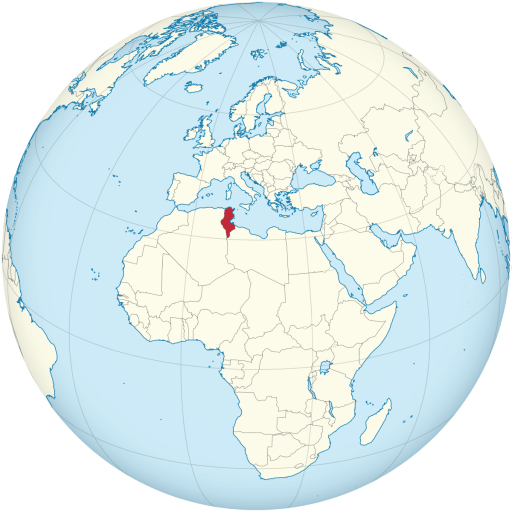
Tunisia sentenced dozens of opposition figures -- some even got 66 and 48 years
What happened:
On Saturday, a court just sentenced a group of Tunisian politicians, lawyers, and businesspeople to prison---some for as long as 66 years. It's part of a big trial that many people say was never really about justice. Instead, they believe it's the president's way of getting rid of anyone who challenges him.
Why this matters:
Tunisia, once seen as the success story of the so-called Arab Spring, is now locking up nearly all of its major political opposition. What started as a (fragile) democracy is increasingly starting to look like one-man rule with a courtroom to back it up.
Tell me more:
Since becoming president in 2019, Kais Saied has shut down parliament in 2021, took over decision-making by ruling without a parliament, and got rid of the independent council that oversees the courts. In 2022, he even fired dozens of judges. In 2024, he was re-elected with 90.7% of the vote---a result that raised concerns internationally. Now, most of the people leading political parties in Tunisia are either in jail or have left the country. It's getting harder for anyone to speak up or run against him. That includes Abir Moussi (a controversial secular nationalist from the Free Constitutional Party) and Rached Ghannouchi (leader of Ennahda, a moderate Islamist party and former speaker of parliament). Both were seen as major political rivals to Saied.
Who was sentenced?
Two men in particular got really high sentences.
- Kamel Ltaif, wealthy businessman who was once close to former president/dictator Ben Ali---was sentenced to 66 years in prison.
- Khayam Turki, a former finance minister, key opposition figure and known critic of Saied, got 48 years.
Several other high-profile figures, who were each sentenced to 18 years:
- Ghazi Chaouachi, lawyer and ex-minister who's been openly critical of Saied,
- Issam Chebbi, leader in the National Salvation Front, one of the few remaining organized opposition groups, -...
Please log in or subscribe for free to continue reading this issue.
We could use your help to make this issue better. Take a look at the requests below and consider contributing:
- Submit a piece of artwork for this issue
- Submit a news, academic or other type of link to offer additional context to this issue
- Suggest a related topic or source for future issues
- Fix a typo, grammatical mistake or inaccuracy
Below you'll find some of the sources used for this issue. Only sources that support "media embedding" are included.
-
Protesters have converged in the New Zealand's capital in protest of a bill which would reinterpret a 184-year treaty with the Māori people.
-
The review of the Waitangi Tribunal’s strategic direction comes as the coalition Govt looks to change the tribunal’s scope and jurisdiction, writes Laura Walters.
-
Intellectual property experts say company’s Māori name – which means ‘to fly’ – needs to be acknowledged and ‘respected’
-
Known as the world's ugliest animal for its lumpy appearance, the blobfish makes a stunning comeback.
-
Thousands take to streets after exit polls give conservative academic more than 70% of the vote
-
States known for their human rights abuses are appearing on a new European list used to turn down asylum requests
-
The Ugandan government intends to introduce a law to allow military tribunals to try civilians for certain offences even after the practice was banned by the Supreme Court.
-
Em cinco décadas, a exploração petrolífera no bioma desmatou florestas, contaminou águas, despejou gases na atmosfera, invadiu territórios indígenas e aprofundou desigualdades. Agora, uma nova onda exploratória ameaça repetir essa história.
-
Seit der gewaltsamen Niederschlagung regierungskritischer Proteste im Juli 2022 dringen kaum noch unabhängige Nachrichten aus Karakalpakstan. In der Teilrepublik im Westen Usbekistans demonstrierten...
-
El escritor hispano peruano, premio Nobel de Literatura en 2010, fue autor de obras maestras como ‘Conversación en La Catedral’. Ha fallecido en Lima a los 89 años
-
Forbes публикует 39-й ежегодный рейтинг богатейших людей мира. За год количество миллиардеров из России в мировом рейтинге Forbes увеличилось на 21 человека, 15 из них — новички рейтинга. Еще 10 человек вернулись в список, а четверо бизнесменов, наоб
-
Author: Zwelithini Eugene Xaba International lawyer On Thursday 6 March 2025, Sudan initiated proceedings against the United Arab Emirates (UAE) before the International Court of Justice (ICJ/Court) alleging the violation of the Convention on the Prevention and Punishment of the Crime of Genocide (the Genocide Convention).[1] The application relates to the ongoing conflict in the…
-
‘They chanted as they killed people in their homes’: survivors describe attack on Sudan’s Zamzam camp | Global development | The GuardianOn 11 April Rapid Support Forces paramilitaries attacked the country’s largest displacement camp. The extent of the brutality remains unclear, but accounts are now emerging
-
The UK is promising an extra £120m ($159m) worth of food and medical assistance.
-
A group representing many of the white farmers whose land was seized during Zimbabwe’s land reforms over two decades ago has rejected a compensation deal with the government.
-
Tidjane Thiam, a former Credit Suisse CEO, won a near-unanimous vote to represent the Democratic Party of Ivory Coast in an upcoming presidential election, the party announced.
-
Center-right incumbent Daniel Noboa defeated Correa-backed Luisa González by a wide margin.
-
サクラの季節がやってきました。見ごろを迎えた各地の様子を、全国で取材する記者が撮影し、地図と写真でお伝えします。
-
How Middle Eastern Data Outlets Use Data to Challenge Narratives and Advance Accountability – Global Investigative Journalism NetworkData journalism in the Middle East has been driven by organizations that have produced collaborations and projects that combine innovative techniques with nuanced local knowledge.
-
Zanele Muholi creates powerful visual activism about queer life in South Africa. Precious Adesina talks to Muholi, and explores an extraordinary body of work.
-
{{ $root.seo.metaDescription | translate | stripHtml }}
-
When Linda McMahon called AI “A.1.” at a summit, Kraft Heinz and Mischief turned the viral blunder into a spicy social media moment, even getting a shoutout from John Oliver.
Each week, What Happened Last Week curates news and perspectives from Asia, Africa, and the Americas. The newsletter is written by Sham Jaff and focuses on stories that rarely receive sustained attention in Western media.
Read the free edition every week. VIP subscribers receive additional stories, recommendations on what to watch, read and listen, and more.