

This week, I'm watching the elections in Gabon and breaking down what U.S. tariffs mean for countries like Bangladesh, Sri Lanka, and Cambodia --- spoiler: nothing good. I spoke to Transform Trade, a UK-based charity pushing for fairer trade rules, about what's at stake when trade is built to serve corporations, not people.
Also inside: Egyptian street rap, why Japan's ambassador to the UK might be more British than the Brits, a Kurdish documentary on kolbars (smugglers) along the Iran--Iraq border, and how Ethiopians are taking Meta to court in Kenya (finally) over violence linked to hate speech on Facebook. I also have a rare profile on five Sudanese children, news that Andrée Blouin's memoir is finally back in print (and why you absolutely should read it), and the latest on Sudan taking the UAE to the International Court of Justice over alleged genocide support. And yes, there's more.
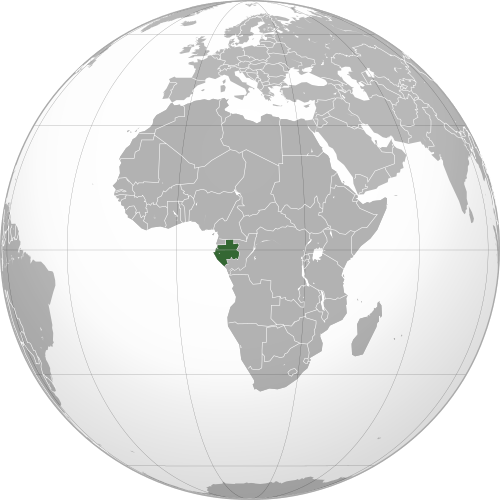
Gabon's got a new president, and yes, it's the general who led the coup in 2023
What happened:
Gabon just held a presidential election, and the guy who led a coup, ended nearly 60 years of Bongo family rule and has been calling the shots for the past 19 months---General Brice Oligui Nguema---is officially president. Like, "90% of the vote" big. [Insert skepticism here.]
Why this matters:
This small, oil-rich country in Central Africa (population: 2.5 million) punches well above its weight economically---ranking among Africa's wealthiest by income per person (World Bank says US$7,800). But like a lot of resource-rich nations, the wealth hasn't trickled down. One-third of Gabonese people live on less than US$6.85 a day.
Tell me more:
Nguema ran against seven others, including ex-PM Alain Claude Bilie-by-Nze (who got just 3%). Turnout was solid---over 70% of registered voters showed up. But... there were some issues: delays, missing names on voter rolls, and claims of unsecured ballots. Plus, several big-name opposition candidates weren't allowed to run. Critics say the new constitution and voting rules were tweaked to help Nguema win.
Fun fact:
His campaign slogan was "C'BON" -- a play on his initials and the French word "c'est bon", meaning "it's good".
Who is General Nguema?
He's 50 years old and from Haut-Ogooué, a southeastern province that's a Bongo family stronghold [The Bongos were Gabon's ruling family for decades and they have deep roots and loyal support here]. Some whisper General Nguema is even a cousin of Ali Bongo. He led the Republican Guard [Gabon's most powerful and well-armed military unit, kinda like the president's personal security force] and spent 10 years in exile after falling out with the Bongos. Quietly returned, worked his way to the top of the army, and in 2023, he forcibly took over of the government to remove President Ali Bongo after a messy election. [The UN, the African Union and France condemned the coup; it was the eighth to take place in West and Central Africa since 2020].
Since then, he's been working on a rebrand: taking back control of foreign-run oil operations, bringing opposition figures into government, paying off unpaid pensions, and talking up anti-corruption. He's also managed to unite Gabon's army, which was previously split along ethnic lines [meaning loyalty in the military often followed tribe or region, not rank].
Zoom out:
Since 2020, five countries in West and Central Africa have had coups. Gabon's the only one that's moved toward civilian rule and kept close with France [a big deal, since many of these former French colonies have recently been ditching ties with France].
What now?
Nguema's seven-year term starts now. He's promised to:
- Move Gabon away from oil dependency [oil makes up a huge chunk of the economy; the country is also loaded with timber and minerals like manganese, a metal used in steel and batteries]
- Improve housing rules and government efficiency
- Attract skilled Gabonese folks living abroad
- Crack down on corruption [although, awkwardly, he's been accused of some himself]
What these paused U.S. tariffs really mean for countries like Bangladesh, Cambodia or Sri Lanka -- interview with "Transform Trade"
What happened:
On April 2, 2025, President Trump rolled out a new wave of tariffs --- calling it "Liberation Day." Basically, he slapped a 10% tax on pretty much all imports (except Canada and Mexico), and added even higher tariffs for countries that sell more to the U.S. than they buy.
For countries like Cambodia (49%), Bangladesh (37%), and Sri Lanka (44%), that's a serious hit --- especially since so much of their economy depends on exporting clothes and goods to the U.S.
The only break? Those big tariffs are paused for now. They're set to kick in this July, so there's a 90-day window where countries can try to negotiate their way out of the worst of it.
Why this matters:
Even with the pause, the clock's ticking --- and the damage could be massive. Countries in the "Global South" don't have the cushion to absorb this kind of shock. Take Cambodia: nearly half of its exports go to the U.S. If orders dry up, so do factory jobs, wages, and whole livelihoods. This isn't just trade drama in D.C. --- it's about real people losing work, struggling to eat, or being forced into worse jobs just to survive.
Tell me more:
I spoke with Transform Trade, a UK-based charity advocating for fair trade practices. They support producers worldwide and campaign for a trade system that prioritizes people over profit. Recently, they've launched a petition opposing these "weaponized" tariffs. They believe trade should work for people, not just big corporations. So I wanted to hear their take on what's happening --- and what's at stake.
The Interview with Transform Trade
Sham Jaff:
What is the most overlooked consequence of these tariffs on countries like Bangladesh, Cambodia, and Sri Lanka?
Transform Trade:
It's the scale of the tariffs that is the most shocking. Such high rates are devastating, especially since the U.S. is a major market for these countries. For instance, the U.S. accounts for 40% of Cambodia's exports. These nations have limited alternatives and can't easily offset the impact. Efforts to increase imports from the U.S., like Bangladesh's plan to buy more cotton from the U.S., could further strain their economies and affect other cotton-exporting countries in West Africa.
Sham:
Transform Trade has warned that the added costs are often pushed down the supply chain to those least able to pay. Can you share a concrete example of how this dynamic is playing out right now --- perhaps in agriculture or garment production?
Transform Trade:
The phenomenon of costs being pushed down the supply chain is well known, and it gets worse in a crisis. For example, during the COVID-19 pandemic, many companies canceled orders or refused payment, even for shipped goods. Workers faced wage cuts, reduced hours, or sudden unemployment. In crises, manufacturers often pass costs down the supply chain, targeting labor expenses since other costs like energy or materials are less negotiable.
Sham:
You describe these tariffs as "weaponized." How so? And: What makes this trade policy fundamentally different from previous US approaches?
Transform Trade:
Trump is clearly using tariffs not just to achieve U.S. goals in areas like industrial strategy or even trade. These tariffs are used punitively, based on a misunderstanding of trade deficits. Historically, since 1974, the U.S. offered favorable trade terms to 119 of the world's poorest countries, acknowledging their economic challenges. Now, tariffs on some products have jumped from zero to over 10%, and in many cases, much higher.
Sham:
What would "trade that builds peace and progress" look like, especially for vulnerable "Global South" countries?
Transform Trade:
The world has...
Please log in or subscribe for free to continue reading this issue.
We could use your help to make this issue better. Take a look at the requests below and consider contributing:
- Submit a piece of artwork for this issue
- Submit a news, academic or other type of link to offer additional context to this issue
- Suggest a related topic or source for future issues
- Fix a typo, grammatical mistake or inaccuracy
Below you'll find some of the sources used for this issue. Only sources that support "media embedding" are included.
-
This was the first presidential vote since the near-six-decade-long Bongo dynasty was overthrown.
-
Who is Gen Brice Nguema, the man who overthrew the president he was supposed to protect?
-
Trump says he will raise US tariffs on Chinese exports to 125% and unveils 90-day pause for other countries
-
For decades, we've stood against destructive and unfair tariffs that get in the way of progress - now we need your help more than ever. The Trump administration's wave of worldwide tariffs is the biggest upheaval to world trade in 100 years. Workers and producers in the Global South are likely to be hardest hit. Bangladesh is facing 37% tariffs, Sri Lanka 45%, Cambodia 49%.
-
Even after South Sudan admitted Makula Kintu, a US deportee Juba said was a Congolese citizen, the US has yet to undo its visa ban.
-
The deaths are linked to antimicrobial resistance infections due to overuse or misuse of some medications.
-
Temperatures exceeding 40C trigger deadly thunderstorms, as Mali agency issues hot weather warning
-
Musician best known for tracks such as Chase the Devil and War Ina Babylon rose to fame in the 1960s
-
Step is requirement for restructuring country’s debt, including new IMF programme
-
In just one year of operation, this Nigerian 'OnlyFans' has paid out over ₦1 billion to adult content creators. Now, the platform is gearing up for a pan-African expansion.
-
Opposition party Chadema’s national chairman, Tundu Lissu, who was arrested on Wednesday, April 9, 2025, in Ruvuma, has been arraigned before the Kisutu Resident Magistrate’s Court
-
Sudan's government alleges that the UAE is arming its civil war opponents, which it denies.
-
The memoirs of the Central African revolutionary Andrée Blouin tell the story of a woman who witnessed firsthand the ecstatic highs and tragic lows of Africa’s struggle for independence.
-
Ink, angels and hard graft: the artists keeping Ethiopia’s ancient illuminated manuscript craft alive | Global development | The GuardianIn an Addis Ababa workshop, sacred texts are painstakingly crafted on goat skin using methods dating back to early Christianity – plus a bit of inspiration from Google Images
-
Son of murdered academic calls on Facebook owner to ‘radically change how it moderates dangerous content’
-
By William Blick. A survivalist story and an unobtrusive, objective gaze into the bleak lives of dedicated, seemingly forgotten people….” In a time when the arts and culture are under assault from all angles, artists find a way to survive and thrive. Such is the case with Kurdish film director, […]
-
Pints at the pub, vinegar on fish and chips, and Welsh national anthem are all part of a day’s diplomacy for Hiroshi Suzuki
Each week, What Happened Last Week curates news and perspectives from Asia, Africa, and the Americas. The newsletter is written by Sham Jaff and focuses on stories that rarely receive sustained attention in Western media.
Read the free edition every week. VIP subscribers receive additional stories, recommendations on what to watch, read and listen, and more.