
This issue focuses on one of my favorite tools in international law: the Permanent Peoples' Tribunal. Their latest verdict is in on Rojava vs. Turkey --- and it's packed with recommendations for, well, pretty much everyone. Then, on Friday, India's government decided to change the rules for Muslim charities. It now wants receipts, a seat at the table, and the final say on who owns what. With 200 million Muslims in the country, let's just say the response wasn't quiet --- protests kicked off immediately.
Also inside:
An African history of Africa (finally), Iraqi fiction that roasts ISIS, a Cuban film legend whose work you should absolutely watch before your next date (trust me), an Argentinian Y2K throwback, and a Japanese rat... in soup. Yes, soup.
Rojava vs. Turkey: The verdict is in
What happened:
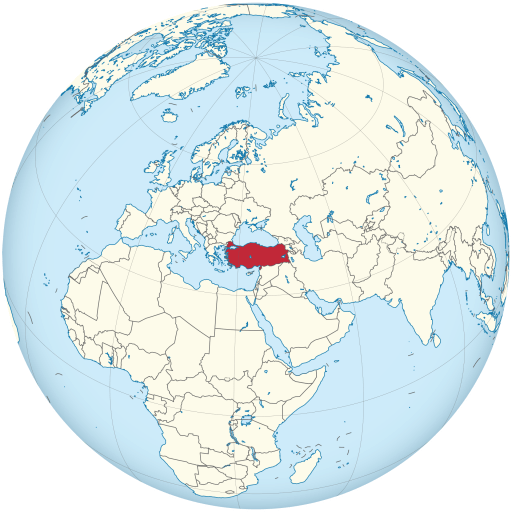
On March 26, at the European Parliament, the Permanent Peoples' Tribunal (PPT) came to a close in the case of Rojava vs. Turkey. The 54th session of this citizen-led tribunal was all about Turkey's action in north-east Syria, especially in the Kurdish region known as Rojava. The big takeaway? The international panel found serious cause for concern over Turkey's military actions there.
Good to know:
- The Permanent Peoples' Tribunal isn't a formal court, but its verdicts carry moral and political weight. Past sessions have examined apartheid, genocide, and colonialism. It gives legitimacy and visibility to causes ignored by mainstream international courts, and gathers testimonies, evidence, and expert analysis that can be used later in real legal settings. But: It has no legal power, and can't arrest, sanction, or enforce any rulings.
- Rojava's administration is known for gender equality policies, ethnic diversity, and bottom-up governance---rare traits in the region.
Why this matters:
The verdict lands right when the Kurdish people's struggle for recognition---and peace---in both Syria and Turkey is reaching a critical point.
Tell me more:
The tribunal was hosted by the Free University of Brussels (VUB) and had brought together human rights activists, legal experts and witnesses of Turkey's military operations in the region--basically people who've seen what's been going on since around 2018, when Turkey took control of Afrin, a region in northern Syria. The tribunal's conclusion? The Turkish state is committing war crimes and crimes against humanity. No one from the Turkish government showed up, even though they were invited, so the tribunal went ahead without them -- basically a trial in absentia.
Give me the details:
They heard testimony about:
- Kurdish people being kicked out of their homes in Afrin -- about 300,000 displaced
- Homes being handed over to Sunni Arabs and Turkmen (who were also displaced during the war)
- Street signs and education being "Turkified" -- Kurdish language and names were basically erased
- Bombings in 2019 that displaced another 140,000 people
- Even allegations of using banned weapons
- And the bigger picture: a systematic effort to wipe out Kurdish identity and culture
Turkey, for its part, says it's just defending its borders and going after the YPG, the Kurdish militia that controls parts of northeast Syria. Turkey sees the YPG as basically the same as the PKK, a Kurdish group that's officially labeled as a terrorist organization by Turkey, the US, and the EU because of its armed conflict inside Turkey.
Zoom out:
The tribunal didn't just call out Turkey---it handed out a to-do list for several players: Turkey, Syria, the UN, the EU, and the broader international community. Here's what each one was told to do:
For Turkey:
- Leave Afrin and stop backing the armed groups there.
- Stop attacking Rojava and respect Syria's borders.
- Let UN and human rights groups in to investigate reported war crimes.
- Open up prisons and detention centers in areas it controls.
For the Syrian government:
- Recognize Rojava's self-rule and its local government.
- Respect its values, like gender equality and ethnic/religious representation.
- Push back on Turkey's cross-border attacks, and if they don't stop, take the issue to the International Court of Justice.
For the United Nations:
- The Security Council, UNHCR, and Commission of Inquiry on Syria should take action.
- The Secretary-General is urged to get involved too.
For the EU and European countries:
- Start legal proceedings against Turkey through European human rights institutions.
- Speak out clearly against war crimes committed in Rojava.
For the international community:
Support the global recognition of Rojava's autonomy as part of building peace for the Kurdish people across the region.
Dig deeper:
What are Permanent Peoples' Tribunals, and how do they interact with international law? I've created a NotebookLM audio podcast based on the book "Peoples' Tribunals and International Law" (2017) for you. Listen to it here (25 min).
The government in India just changed the rules for Muslim charities
What happened:
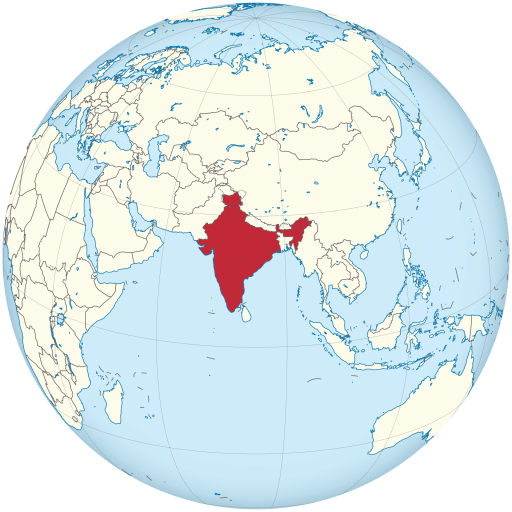
India has just passed a major and highly controversial law that changes how Muslim charitable properties are managed. These properties, known as waqf, have been donated over centuries by Muslims for the benefit of their communities.
Why this matters:
This isn't just about land --- it's about power, trust, and who gets to manage community spaces. For some 200 million Muslims in India, the waqf system is one of the few remaining institutions under their own stewardship. Changing that structure without their full participation risks deepening feelings of exclusion. But at the same time, calls for greater transparency and modernization aren't new --- and real reform could help protect these propertiesif it's done in partnership with the communities they serve.
Tell me more:
The bill was passed despite huge opposition from Muslim leaders and opposition parties, who say it's unconstitutional and strips minority communities of control over their own institutions. There have been large protests in cities like Kolkata and Delhi. While the government claims the bill is about transparency, critics see it as part of a pattern of the ruling BJP undermining Muslim rights.
What's changing?
Until now, waqf properties didn't always need paperwork --- if land was donated by word of mouth or had been used by the Muslim community for years, that was often enough. But under the new law, Waqf Boards now have to show official documents to prove a property belongs to them. And if there's a disagreement --- especially over land the government also wants --- it's the state that gets the final say.
The bill also:
- Allows non-Muslims on waqf boards and tribunals
- Removes the final authority of waqf tribunals --- now courts can step in
- Requires all waqf properties to be registered centrally within six months
- Gives the government more control over surveys and oversight
What do critics fear?
- Losing control over their own community spaces: Waqf properties --- like mosques, schools, and graveyards --- have always been managed by Muslim communities themselves. Now, critics say the government's taking over too much, especially with plans to let non-Muslims sit on the waqf boards and to give the state the final say in land disputes.
- Old donations could be at risk: A lot of waqf land was donated informally, sometimes just by word of mouth or through community tradition. Under the...
Please log in or subscribe for free to continue reading this issue.
We could use your help to make this issue better. Take a look at the requests below and consider contributing:
- Submit a piece of artwork for this issue
- Submit a news, academic or other type of link to offer additional context to this issue
- Suggest a related topic or source for future issues
- Fix a typo, grammatical mistake or inaccuracy
Below you'll find some of the sources used for this issue. Only sources that support "media embedding" are included.
-
Thank you for supporting what happened last week! I’m exploring what to build next — whether that’s a new newsletter, a podcast, or something completely different. Your feedback will help shape it. This will only take ~5 minutes.
-
Peoples' Tribunals and International Law - January 2018
-
Opposition leaders allege the bill dilutes the rights of Muslims, which the government denies.
-
Kamel Maddouri’s dismissal comes amid economic and political crises under President Kais Saied, who rules by decree.
-
Could the release of certain prisoners of conscience promise a new phase in which the regime decides to let up on its policy of repression? Nothing is less certain. Paranoia around the case involving those accused of “plotting to undermine national security”—a trial which opened with a remote hearing and which authorities have attempted to bury under an imposed media blackout—does not bode well.
-
Mogadishu (HOL) - U.S. Africa Command (AFRICOM) has conducted an airstrike targeting ISIS militants in northern Somalia's Al-Calmiskaad Mountains as part of ongoing operations to weaken the group's presence in the region.
-
Authorities blame the deadly attack in the town of Kokorou on the Islamic State in the Great Sahara, an ISIL affiliate.
-
Myanmar’s ruling military government has announced a temporary ceasefire in operations against armed opposition groups to aid recovery efforts following Friday’s devastating earthquake that killed more than 3,000 people.
-
Among the atrocities listed are the torture and death of Ali Boumendjel, a prominent lawyer, which France only acknowledged in 2021.
-
Comprehensive up-to-date news coverage, aggregated from sources all over the world by Google News.
-
As Angola steps back from its role as mediator in the DRC's conflict, peace efforts face new uncertainties. Challenges such as unclear roles, funding issues, and external influences continue to hinder the peace process.
-
K-pop anthems, tearful protests show nation divided The Constitutional Court of Korea voted unanimously to remove President Yoon Suk Yeol from office, deliverin
-
Robin Yassin-Kassab acclaims dark short stories from a taboo-busting Iraqi writer
Each week, What Happened Last Week curates news and perspectives from Asia, Africa, and the Americas. The newsletter is written by Sham Jaff and focuses on stories that rarely receive sustained attention in Western media.
Read the free edition every week. VIP subscribers receive additional stories, recommendations on what to watch, read and listen, and more.