
This issue focuses on human rights in Balochistan, and the latest IOM report that confirms what many journalists had been saying all along: 2024 was the deadliest year for migrants ever. Plus, Turkey's Erdogan and Israel's Netanyahu are sacking their political and legal enemies, an Indonesian TikToker was jailed for telling Jesus to get a haircut, Sudan's army is gaining some ground in the capital (we're almost back to square one), how not to report on Eastern Congo, why "White Lotus" is orientalist, Vietnam's hottest province, and Ratatouille in Japan. And so much more.
One of Pakistan's most prominent human rights activists has been arrested
What happened:
(Dr.) Mahrang Baloch, one of Pakistan's most well-known human rights activists, was arrested on March 22 in Quetta, along with 17 other protesters. They were part of a protest organized by the Baloch Yakjehti Committee (BYC) --- a grassroots group that fights for Baloch rights and speaks out against enforced disappearances.
Why this matters:
This isn't just about one protest or one arrest. It's the latest episode in a decades-long tug-of-war between the Pakistani state and the Baloch people --- a marginalized ethnic group in a resource-rich province that's still somehow the poorest in the country. And Mahrang isn't some fringe voice. She's become the face of peaceful Baloch resistance, and the fact that the state arrested her? Not a great look. Human rights groups, both local and international, are now saying: this isn't just a crackdown --- it's a pattern.
So, what led to the protest?
It depends on who you ask. The official version: The Balochistan government claims BYC was protesting in support of militants killed in a train hijacking earlier this month. They say the police were just "managing the crowd." Activists --- and outlets like the BBC --- say something very different: The protest began after 13 unidentified bodies were buried in Quetta without without notifying families or confirming who they were. Many feared they were forcibly disappeared Baloch men --- something that's sadly routine in the region. Authorities insisted the bodies were militants. But there's no independent proof, and the protesters were asking for the bodies to be identified and returned.
Things escalated. Fast. Three protesters were killed, over a dozen injured. BYC says police opened fire, then came back at 5:30 a.m. with a pre-dawn raid: batons, tear gas, water cannons --- the whole riot gear starter pack. They also say the bodies were seized before funeral prayers could happen. The government says protesters attacked a hospital and were armed. Both sides are pointing fingers----classic he said/she said, only one side brought tear gas.
What happened next?
Mahrang was like, "Cool. Let's shut the whole place down." She called for a province-wide strike, and Balochistan listened. Cities like Turbat, Gwadar, Mastung, Khuzdar, Dalbandin----all shut. Roads were blocked, tyres were burned, and protests popped up across the province. And while all this was happening, internet and mobile services in Quetta mysteriously went offline --- no official reason. Oh, and just to really hammer it home: Mahrang and the rest were charged with terrorism, sedition, and murder.
Who actually is Mahrang Baloch?
Mahrang's activism began when she was 16, after her father Abdul Gaffar Langove went missing in an alleged enforced disappearance. He was a well-known Baloch nationalist who once worked for the Pakistani government, but later left to focus on advocating for Baloch rights and safety. In early 2009, he disappeared, and his body was found three years later.
She now is one of the leaders of BYC, which campaigns for justice and visibility for Baloch people. In 2024, TIME named her one of its "TIME100 Next" rising leaders, but Pakistan blocked her from traveling to the U.S. to attend the event. She's since become a symbol of peaceful resistance --- especially in a region where protests are increasingly led by Baloch women in the absence of their missing brothers, fathers, and sons.
How are people reacting?
- UN Special Rapporteur Mary Lawlor said she was "very concerned" about Mahrang's arrest.
- The Human Rights Commission of Pakistan (HRCP) condemned the use of force and wants all the protesters released --- like, now.
- The Balochistan Bar Council boycotted courts in protest.
- Akhtar Mengal, head of Balochistan's moderate nationalist party (BNP-M), said she was arrested for "speaking the truth."
- Even PTI, the main opposition party, called the crackdown "brutal" --- and they've never been super into Baloch issues.
- South Asia scholar Michael Kugelman warned the government that arresting a woman with this much global attention? Big mistake. It's just going to amplify the cause.
Quick history lesson: What is the Baloch struggle about?
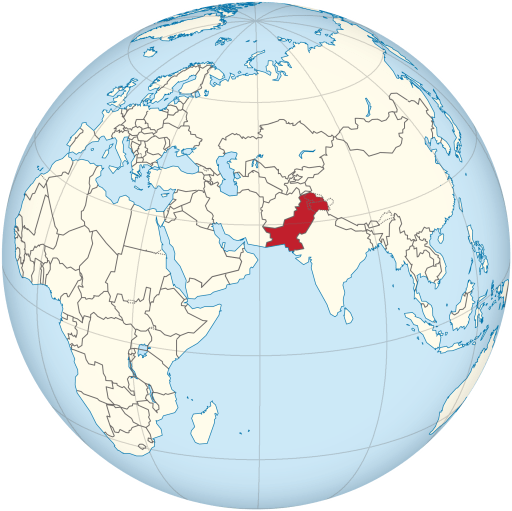
The Baloch are an ethnic group who mostly live in Balochistan, a large region that stretches across Pakistan, Iran, and Afghanistan. In Pakistan, they live in a province also called Balochistan --- a region annexed by Pakistan in 1948, months after independence.
Balochistan makes up 44% of Pakistan's land but only 6--7% of its population (about 15 million people). It's rich in natural resources --- copper, gold, coal, gas --- but it's also the poorest province in the country.
Many Baloch feel the federal government profits off their resources, while locals get little in return --- not in infrastructure, jobs, or political power. Some groups demand more autonomy, others push for full independence.
Good to know: Who is the BLA?
The Baloch Liberation Army (BLA) is a militant separatist group fighting for Balochistan's independence. Pakistan, the UK, and the US all call them a terrorist organization.
The BLA has carried out bombings, assassinations, and just two weeks ago, on March 11, the group has hijacked a train in southwestern Pakistan (the one I mentioned earlier), holding 400 passengers hostage for 36 hours. The standoff ended with dozens killed, including civilians and militants.
The BLA also targets Chinese workers and infrastructure, especially anything tied to CPEC --- a US$62 billion China-backed megaproject building roads, ports, and pipelines through Balochistan. They see it as modern-style colonial exploitation, with China and the Pakistani state profiting off Baloch land while locals are excluded.
**How has...
Please log in or subscribe for free to continue reading this issue.
We could use your help to make this issue better. Take a look at the requests below and consider contributing:
- Submit a piece of artwork for this issue
- Submit a news, academic or other type of link to offer additional context to this issue
- Suggest a related topic or source for future issues
- Fix a typo, grammatical mistake or inaccuracy
Below you'll find some of the sources used for this issue. Only sources that support "media embedding" are included.
-
Women across generations in Pakistan's Balochistan are demanding answers about the missing men in their lives.
-
Find out how Mahrang Baloch is shaping the future and defining the next generation of leadership.
-
Cubans, Haitians, Nicaraguans and Venezuelans who entered the US under a Biden-era programme face deportation.
-
Rights groups have condemned the sentence, made under a controversial online hate-speech law.
-
The appeal by UNICEF comes as a new school year began in Afghanistan without girls beyond sixth grade.
-
Unesco report highlights ‘unprecedented’ glacier loss driven by climate crisis, threatening ecosystems, agriculture and water sources
-
Those killed included a 16-year-old boy who underwent surgery two days ago, the Health Ministry said. Also killed was Ismail Barhoum, a member of Hamas’ political bureau, the militant group said.
-
Former Supreme Court Justice Ayala Procaccia Gave a Speech at the Protest, Saying 'Breaking the Independence of Key Institutions in the State Will Bring Us, at Lightning Speed, to a Complete Transformation of the Country's Character'
-
How Is It Possible to Square the Defense of Israel's Democratic Values With a Situation in Which on the Other Side Tens of Thousands of Palestinian Lives Are Being Cut Short in a Single Blow?
-
The Israel-Lebanon border saw the heaviest exchange of attacks since Israel and Hezbollah agreed to a ceasefire four months ago. It comes as Israel says it will intensify its offensive in Gaza until Hamas releases the remaining Israeli hostages. Josef Federman of the Associated Press joins John Yang to discuss the latest developments.
-
“It's an honor to be a part of this process to, as a basic scientist, be able to play a small role in improving the lives of these patients."
-
Thai characters are few and far between and the country is depicted as beautiful and hedonistic Asian Las Vegas.
-
Western media coverage of the DRC conflict is riddled with inaccuracies, oversimplifications, and racial bias—reinforcing dangerous narratives rather than informing the world.
-
Explore the largest community of artists, bands, podcasters and creators of music & audio
-
(PLVN) - Chỉ sau hơn 1 ngày ra mắt, MV “Bắc Bling” đứng top 1 trending YouTube Việt Nam làm bố mẹ của ca sỹ Hòa Minzy và người dân khu phố Lạc Xá cảm thấy rất tự hào.
Each week, What Happened Last Week curates news and perspectives from Asia, Africa, and the Americas. The newsletter is written by Sham Jaff and focuses on stories that rarely receive sustained attention in Western media.
Read the free edition every week. VIP subscribers receive additional stories, recommendations on what to watch, read and listen, and more.